
Margaret Thatcher: Architect of Modern Britain and Enduring Enigma
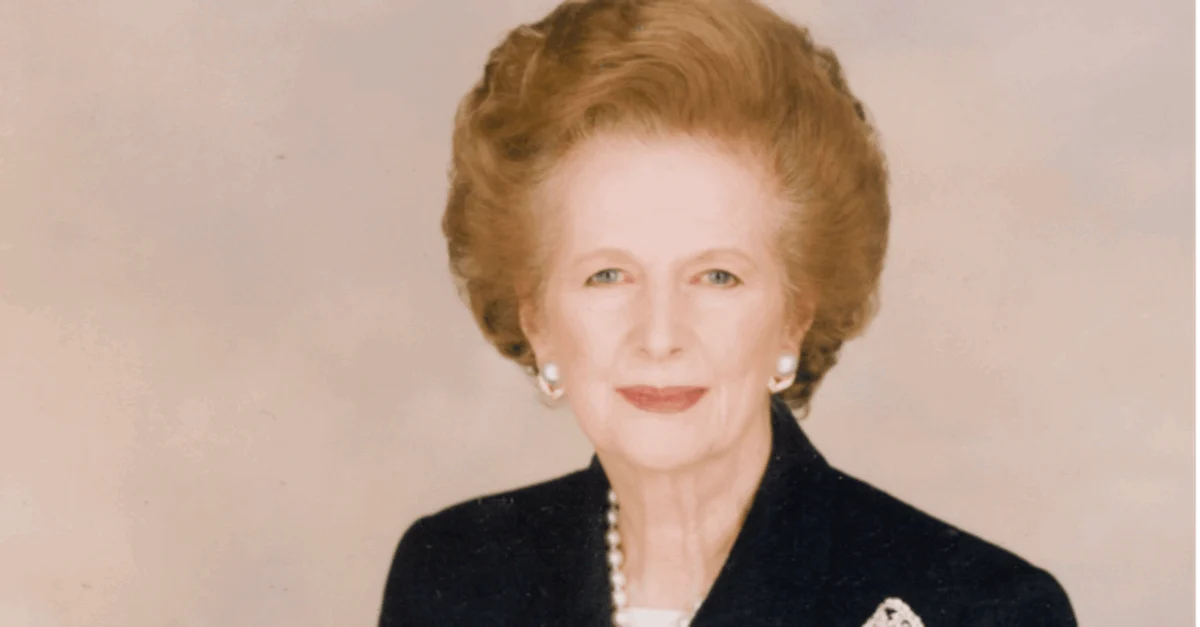
London, UK – Margaret Thatcher, who served as Prime Minister of the United Kingdom from May 4, 1979, to November 28, 1990, remains one of the most transformative and polarizing figures in modern British political history. As the nation’s first female prime minister, her eleven-year tenure was marked by a radical reorientation of the British economy and society, driven by a staunch commitment to neoliberal principles. Emerging from a post-World War II Britain grappling with persistent debt, high inflation, and industrial strife, Thatcher spearheaded policies of privatization, monetarism, and a decisive curbing of trade union power. Her leadership, often characterized by unwavering conviction and a willingness to confront opposition, earned her the moniker "The Iron Lady" and indelibly shaped the course of the United Kingdom.
Chronology: From Grantham Grocer’s Daughter to Downing Street
Early Life and Formative Years
Margaret Hilda Roberts was born on October 13, 1925, in Grantham, Lincolnshire, a market town with a modest population of 20,000 during the interwar period. Her early life was profoundly influenced by her father, Alfred Roberts, a successful tradesman who owned two grocery stores and was a prominent local politician, serving as a Methodist lay preacher and mayor. From him, Margaret imbibed a strong work ethic, a deep sense of self-reliance, and an ardent belief in free-market principles. These values, which she would later famously describe as "Victorian values" crucial to making Great Britain "Great," formed the bedrock of her political philosophy. Her mother, Beatrice Ethel Roberts, a seamstress before marriage, provided a domestic anchor, though Margaret later recalled their relationship being more centered on discipline than intellectual engagement.
In 1943, amidst the tumult of the Second World War, Margaret secured a place at Somerville College, Oxford, to study chemistry – a rare achievement for a woman at the time. While pursuing her scientific studies, she simultaneously embarked on her political journey, joining the Oxford University Conservative Association (OUCA) and becoming its president in 1946. This early immersion in conservative politics at Oxford signaled her true aspirations, even as she initially pursued a career as a research chemist in Manningtree, Essex, after graduation.
Her political ambitions quickly crystallized. In 1950, at the age of 24, she was adopted as the prospective parliamentary candidate for the Dartford constituency in Kent, becoming the youngest female Conservative candidate in the general election. Though she lost both the 1950 and 1951 elections, her spirited campaigns significantly reduced Labour’s vote share, demonstrating her formidable campaigning skills and determination.
A pivotal personal development occurred in 1951 when she met Denis Thatcher, a successful businessman heading a company specializing in wood preservatives and industrial chemicals. She described him as "very reserved but quite nice," with "plenty of money" and "a perfect gentleman." Their marriage on December 13, 1951, provided Margaret with both emotional and crucial financial support, enabling her to pursue a law degree. She enrolled in the Inns of Court School of Law, specializing in tax law, and was called to the Bar in 1953, the same year her twin children, Mark and Carol, were born.
Ascension to Power
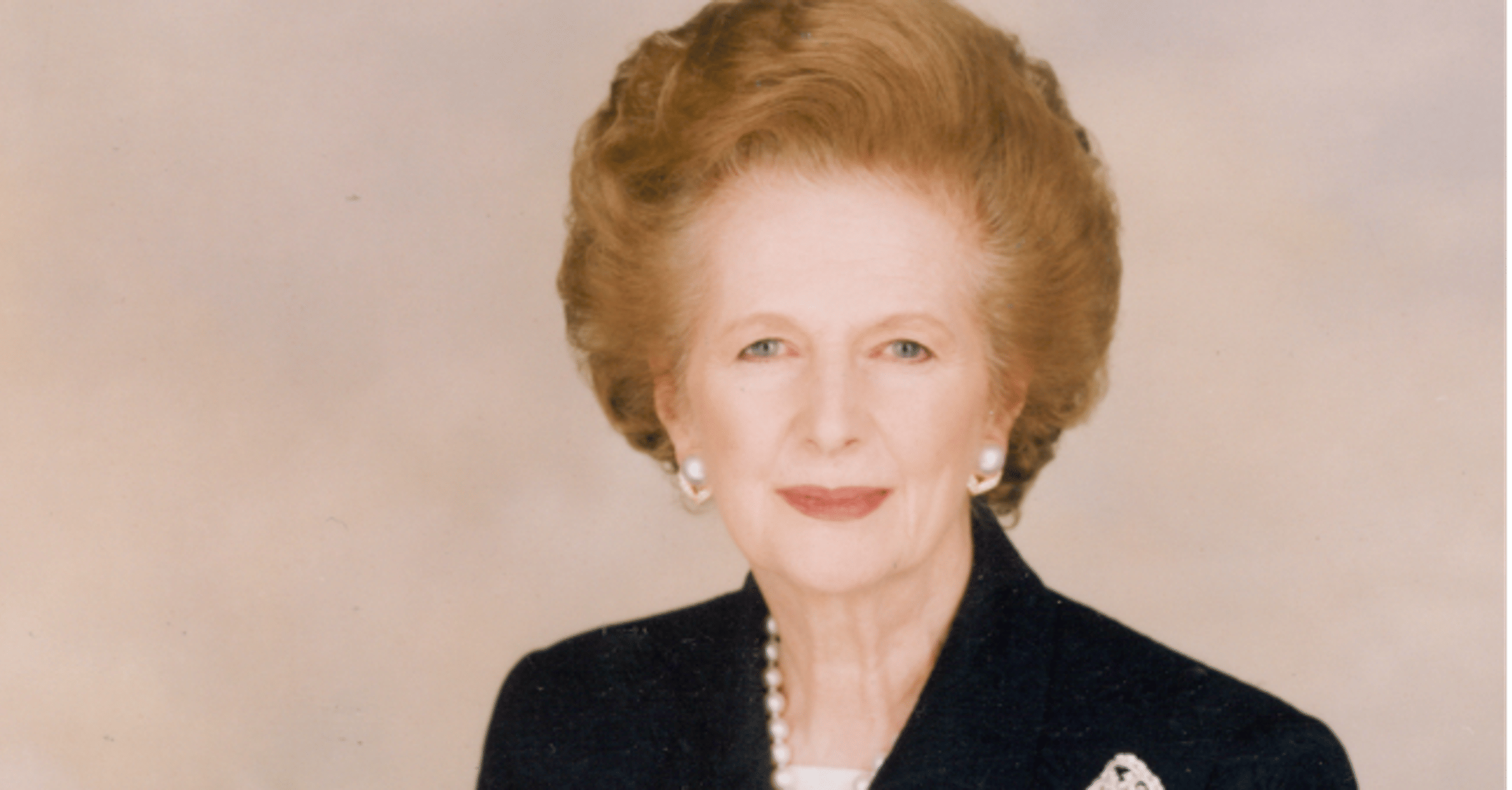
Thatcher’s entry into Parliament came in 1959, when she was elected as Member of Parliament for Finchley. She was one of only twelve women Conservative MPs at the time. Her initial foray into government came in 1961 when Prime Minister Harold Macmillan appointed her as Minister of Pensions. This role, alongside education, was often considered a "feminine" issue, reflecting prevailing societal attitudes.
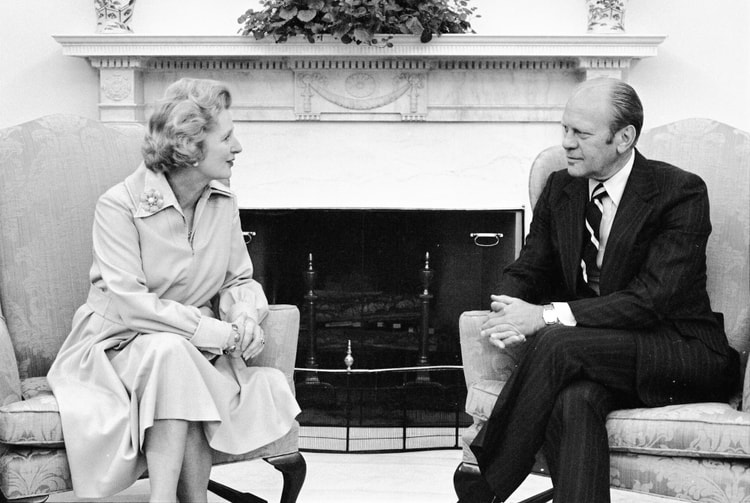
From 1964 to 1970, the Conservative Party was in opposition. This period proved invaluable for Thatcher, offering her opportunities to travel extensively to the Soviet Union, Israel, Sweden, and twice to the United States. Her visits to America, in particular, solidified her conviction that the free-market principles, low taxes, and entrepreneurial spirit she observed there were precisely what Britain needed to rejuvenate its struggling economy.
When the Conservatives returned to power in 1970 under Edward Heath, Thatcher was appointed Secretary of State for Education and Science. It was in this role that she faced her first major public relations crisis, earning the enduring and pejorative nickname "Thatcher, the milk snatcher." Her decision to discontinue free milk for children over the age of seven, a cost-cutting measure aimed at preventing the closure of the pioneering Open University, sparked widespread media backlash and public outcry. This incident, however, also showcased her early resolve to make unpopular decisions for what she believed was the greater good.
The mid-1970s created the conditions for Thatcher’s dramatic rise. Edward Heath’s four-year premiership (1970-1974) had been characterized by economic difficulties and a perceived U-turn from his initial free-market promises towards interventionist policies, including concessions to powerful trade unions. His consecutive electoral defeats in February and October 1974, coupled with his distant and autocratic leadership style, left the Conservative Party disillusioned. In the ensuing leadership contest of 1975, Margaret Thatcher, an energetic and uncompromising advocate for free markets and against union power, emerged as the unlikely challenger. She secured 130 votes against Heath’s 119 in the first round, forcing his resignation and ultimately winning the leadership. As Seldon and Collings note, "Mrs Thatcher became leader of the Conservative Party in February 1975 principally because she was not Edward Heath, not because of a widespread commitment to her views. She was the only senior candidate willing to challenge Mr Heath at a time when the majority of Tory MPs wanted a change."
The Winter of Discontent and the 1979 Election
The backdrop to Thatcher’s ascent to Prime Minister was a Britain in deep economic and social malaise. Decades after World War II, the nation was still heavily indebted, its once-glorious empire largely dismantled, and its economy plagued by high inflation, stagnant growth, and frequent industrial unrest. Successive governments had increased public spending, placing immense pressure on both the treasury and taxpayers. The Labour government of James Callaghan (1976-1979) struggled to contain the crisis, famously dismissing public concerns with the ill-fated remark, "Crisis? What crisis?".
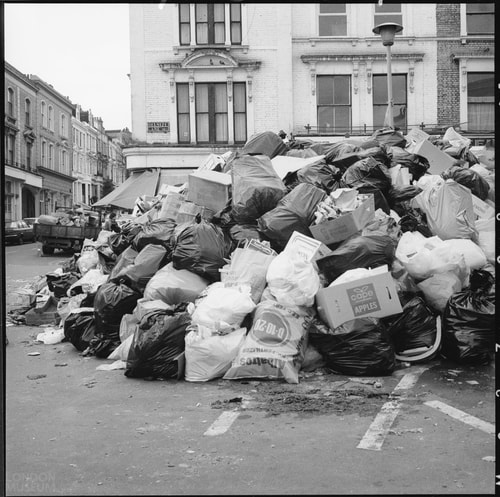
The winter of 1978-79, known as the "Winter of Discontent," brought Britain to a standstill. Widespread strikes by public sector workers – including garbage collectors, gravediggers, and ambulance drivers – paralyzed essential services, leaving streets piled with rubbish and exposing the perceived excessive power of trade unions. This chaotic period created a powerful public appetite for change and resonated deeply with Thatcher’s message of restoring order and tackling union militancy.
In the 1979 general election, the Conservative Party, under Thatcher’s leadership, campaigned on a manifesto titled "The Conservative Manifesto 1979," with the memorable slogan "Labour isn’t working." The manifesto outlined a radical program: privatization of state-owned industries, significant reductions in government spending, a decisive curtailment of trade union power, and the implementation of monetarist policies to control the money supply and combat inflation. On May 3, 1979, the Conservatives secured a decisive victory with 339 seats to Labour’s 269. The following day, Margaret Thatcher was summoned to Buckingham Palace by Queen Elizabeth II to form a government, thus becoming the first female Prime Minister of the United Kingdom.
The Era of Thatcherism: Economic and Social Transformation
Thatcher’s premiership inaugurated a new era of British politics, characterized by the implementation of "Thatcherism" – a blend of free-market economics, a strong state, and a commitment to individual liberty.
-
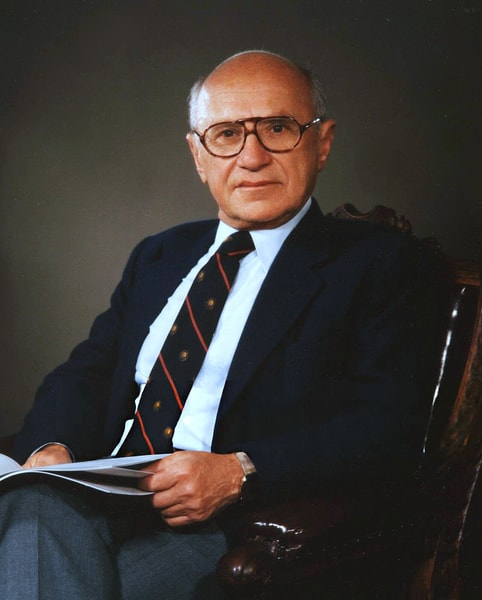
Foundations of Thatcherism: At its heart, Thatcherism was deeply influenced by neoliberal thought, particularly the ideas of American economist Milton Friedman, a 1976 Nobel laureate and a staunch advocate of free-market capitalism. Friedman was the primary intellectual architect of Thatcher’s monetarist policies and her push for reducing the state’s role in the economy. The prevailing neoliberal view held that the interventionist state was a major impediment to economic development. They argued that the state should not own the means of production, nor should it dictate prices or provide extensive welfare services. Instead, areas like insurance, housing, pensions, health, and education were seen as more efficiently managed by the private sector. Thatcher wholeheartedly embraced these tenets.
-
Monetarism and Fiscal Discipline: Addressing the legacy of post-WWII debt and the costs of the welfare state, Thatcher’s government initially focused on controlling the money supply to curb rampant inflation. To stimulate the private sector and encourage enterprise, the top rate of income tax was dramatically cut from 83% to 60%, and the basic rate from 33% to 30%. These measures, alongside significant cuts in public spending, aimed to reduce the burden on taxpayers and foster economic growth. While inflation initially continued to rise during her first year, peaking at over 20% in 1980, it eventually fell to 5.4% by 1982. This period tested her resolve, but Thatcher famously declared, "I do not greatly care what people say about me… This is the road I am resolved to follow. This is the path I must go. … You turn if you want to. The lady’s not for turning." This uncompromising stance became a hallmark of her leadership.
-
Housing Act 1980 – The "Right to Buy": One of Thatcher’s most impactful domestic policies was the Housing Act of 1980. This legislation granted tenants living in council houses (public housing) the right to purchase their homes or apartments at significant discounts, ranging from 33% to 50% (and up to 70% for apartments) after a minimum residency period. The "right to buy" initiative aimed to foster a property-owning democracy, particularly among the working class, thereby aligning more people with conservative free-market ideology. It also sought to reduce the state’s role in housing provision. By 1984, half a million people had become homeowners through this scheme, profoundly altering the social landscape of Britain, though it also led to a long-term shortage of affordable public housing.
-
Privatization Drive: Privatization became a cornerstone of Thatcher’s economic policy. State-owned behemoths, including British Telecom (BT), British Gas, British Airways, and later electricity and water utilities, were sold off to private investors. The rationale was to increase efficiency, stimulate competition, and generate revenue for the government. This policy not only transformed the ownership structure of key national industries but also significantly broadened share ownership among the general public, fulfilling a key objective of creating a "popular capitalism."
Confronting the Trade Unions
A defining characteristic of pre-Thatcher Britain was the immense power wielded by trade unions, often capable of bringing the country to a halt. Thatcher saw this as a fundamental obstacle to economic progress and a challenge to parliamentary sovereignty. She embarked on a systematic campaign to curb their influence.
-
Legislative Reforms: Her government passed a series of Employment Acts (1980, 1982, 1984) that progressively restricted union powers. Key measures included outlawing secondary picketing, making trade unions liable for damages caused by unlawful industrial action, and requiring secret ballots for strike votes, which significantly reduced the ability of union leaders to call strikes unilaterally.
-
The Miners’ Strike (1984-85): The ultimate showdown came with the National Union of Mineworkers (NUM). Recognizing the strategic importance of coal in the energy sector and the NUM’s historical strength, Thatcher’s government meticulously prepared for a confrontation, stockpiling coal to ensure power plants could operate for years. In 1984, when the government announced plans to close 20 unprofitable coal mines, the NUM, led by Arthur Scargill, launched a year-long strike. This was a brutal and divisive conflict, marked by serious clashes between striking miners and police. Thatcher, unwavering, refused to back down. The strike ultimately collapsed in March 1985, a decisive victory for the government and a devastating blow to the power of organized labor in Britain, fundamentally reshaping industrial relations.
Foreign Policy and Global Standing
Thatcher approached foreign policy with the same resolute conviction she applied to domestic affairs. Lacking extensive high-level diplomatic experience upon taking office, she was driven by a singular ambition: to restore Britain’s global standing and make it "Great" once more. Her worldview was often described as "black-and-white," dividing the political world into "friends and enemies, goodies and baddies." She harbored a deep suspicion of the Soviet Union and communism, and was openly dismissive of international bodies like the United Nations, which she "scorned as no more than a talking shop."
-
Strained European Relations: Britain’s relationship with the European Economic Community (EEC), which it had joined in 1973, was contentious under Thatcher. She famously demanded "I want my money back," arguing that Britain’s financial contributions to the EEC budget (an estimated £800 million in 1978) far exceeded the benefits it received, particularly in agricultural subsidies. This led to prolonged and acrimonious negotiations, culminating in the 1984 Fontainebleau Agreement, which secured a permanent rebate for Britain. Her stance on Europe laid the groundwork for future Euroscepticism within the Conservative Party.
-
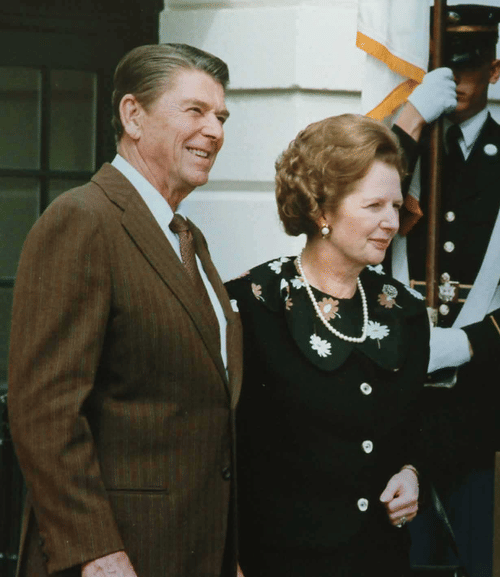
The Special Relationship: In stark contrast to her European skepticism, Thatcher forged a deep and ideologically aligned "special relationship" with the United States, particularly with President Ronald Reagan, who took office in 1981. She "did not regard them as foreign." Sharing a profound belief in free markets, limited government, and a strong stance against communism, Thatcher and Reagan formed a powerful Anglo-American alliance that significantly influenced the latter stages of the Cold War. They cooperated closely on defense and economic policy, presenting a united front against the Soviet bloc.
The Falklands War: A Defining Moment
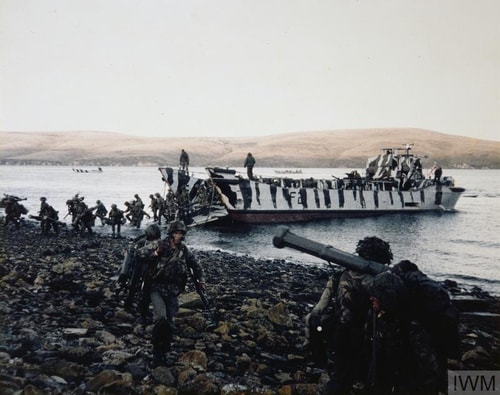
The Falklands War in 1982 proved to be the riskiest and most defining moment of Thatcher’s premiership, solidifying her "Iron Lady" image and transforming her political fortunes. The Falkland Islands, a remote British dependency in the South Atlantic, had been under British rule since 1833, though Argentina had long claimed sovereignty, referring to them as the Malvinas.
- The Invasion: On April 2, 1982, a military junta in Argentina, led by General Leopoldo Galtieri, seeking to divert public attention from severe domestic economic problems, invaded and swiftly neutralized the small British garrison on the islands.
- Thatcher’s Resolve: While many international leaders and even some within her own government urged caution and diplomatic compromise, Thatcher stood firm. She unequivocally refused to concede. Rallying international support, she secured a United Nations Security Council Resolution condemning the invasion and affirming Britain’s right to self-defense.
- The Task Force: With diplomatic efforts failing, Britain rapidly assembled and dispatched a naval Task Force, comprising over 100 ships and 28,000 personnel, on an 8,000-mile journey to retake the islands. The conflict saw significant naval engagements, including the sinking of the Argentine cruiser General Belgrano on May 2 and the British destroyer HMS Sheffield two days later.
- Victory and Political Impact: British troops landed at San Carlos Bay on May 21, and after fierce fighting, Argentina surrendered on June 14. The swift and decisive victory, achieved against considerable logistical odds, galvanized national pride and demonstrated Britain’s capacity for military action on the global stage. It profoundly boosted Thatcher’s popularity and was a key factor in her landslide re-election victory in 1983, allowing her to pursue her reform agenda with renewed mandate.
Challenges and Controversies
Despite her electoral success and popular standing after the Falklands, Thatcher’s second and third terms were marked by significant challenges and controversies.
-
Brighton Hotel Bombing (1984): On October 12, 1984, the Irish Republican Army (IRA) launched a daring assassination attempt, planting a long-delay bomb in the Grand Hotel in Brighton during the Conservative Party’s annual conference. The attack, motivated in part by resentment over the deaths of Irish hunger strikers in 1981, aimed to eliminate Thatcher and her cabinet. The explosion, at 2:54 a.m., severely damaged the building, killing five people and injuring 30. Miraculously, Thatcher and her husband, Denis, survived unharmed. Her calm and defiant public appearance the next morning, declaring that "The business of government and of the conference will go on," further cemented her image of indomitable strength. The attack underscored the ongoing complexities of the Northern Ireland conflict, which later saw the signing of the Anglo-Irish Agreement in 1985, a landmark treaty that accepted no change in Northern Ireland’s status without the consent of its majority.
-
The "Big Bang" (1986): On October 27, 1986, the Thatcher government orchestrated the "Big Bang" – a radical deregulation of the London Stock Exchange (LSE). This event abolished fixed commission fees, opened up ownership of brokerage firms to foreign entities, and digitized trading systems, replacing archaic paper-based methods. The aim was to modernize London’s financial markets, enhance competitiveness, and attract global capital. The Big Bang successfully transformed London into a leading international financial center, drawing billions in investment from American and European banks. However, many economists argue that this loosening of regulations also encouraged banks to take excessive risks, with some tracing the roots of the 2008 global financial crisis back to this period of uncontrolled liberalization.
The Fall of the Iron Lady
Despite being re-elected for a third term in 1987, Margaret Thatcher’s long and transformative premiership came to an abrupt end in 1990, largely due to a controversial domestic policy and internal party dissent.
-
The Community Charge (Poll Tax): The policy that proved to be her undoing was the Community Charge, or "Poll Tax," introduced in 1990. Thatcher believed the existing system of local government taxation, based on property values, was unfair because everyone benefited equally from local services like garbage collection and libraries, regardless of their home’s value or income. Her solution was a flat-rate per capita tax, meaning every adult paid the same amount, regardless of income or property ownership. This was met with widespread public outrage, seen as deeply inequitable, placing an undue burden on lower-income households. Millions refused to pay, leading to mass protests and riots across the country, most notably at Trafalgar Square in March 1990, where violent clashes erupted between demonstrators and police.
-
Internal Party Dissent and Resignation: The Poll Tax proved immensely unpopular and severely eroded Thatcher’s public support. More critically, it sparked significant internal opposition within the Conservative Party. Her increasingly autocratic style and growing Euroscepticism also alienated key cabinet members. In November 1990, Deputy Prime Minister Geoffrey Howe resigned with a devastating speech criticizing her European policy, which acted as a catalyst for a leadership challenge. Although Thatcher won a majority in the first ballot of the leadership contest, she failed to secure the necessary threshold to avoid a second round. Recognizing that her party had effectively abandoned her, Margaret Thatcher tearfully resigned on November 28, 1990, bringing to an end an eleven-year premiership that had fundamentally reshaped Britain.
Implications: A Divisive and Enduring Legacy
Margaret Thatcher remains one of the most polarizing figures in modern British history, simultaneously revered as a national savior and reviled as a destroyer of communities.
- Economic Transformation: Her legacy is undeniably one of profound economic restructuring. She successfully tackled inflation, privatized numerous state-owned industries, and transformed London from an industrial hub into a dominant global financial center, a trend that continues to this day. She championed individualism over collectivism, advocating for self-reliance and reduced dependence on state aid, believing this would unleash entrepreneurial spirit and economic dynamism.
- Social Impact and Division: However, these policies came at a significant social cost. The decline of heavy industry, exacerbated by the weakening of trade unions, led to mass unemployment and devastated traditional working-class communities, particularly in northern England, Scotland, and Wales. Critics argue that her emphasis on individualism eroded the sense of solidarity in society and contributed to growing social inequality.
- Regional Disparity: The geographical divide in her legacy is stark. In southern England, she is often remembered as a leader who modernized and enriched the country, fostering prosperity. Conversely, in the industrial heartlands of the North, Scotland, and Wales, she is largely remembered as the figure who destroyed their industries and disintegrated their communities. This deep-seated division was starkly evident upon her death in 2013: while London held a lavish ceremonial funeral, celebrations and parties erupted in many of the regions most impacted by her policies.
- Political Landscape: Politically, Thatcher’s impact was equally profound. She irrevocably weakened the power of trade unions, a shift that fundamentally altered industrial relations in Britain. Her reforms also forced the Labour Party to undergo a significant ideological transformation, eventually leading to the emergence of "New Labour" under Tony Blair, which accepted many of Thatcher’s economic reforms. Her complex relationship with Europe continues to fuel debates and has influenced subsequent British governments, contributing to the nation’s eventual departure from the European Union.
Margaret Thatcher’s leadership was characterized by an unshakeable belief in her convictions and an extraordinary will to implement her vision, regardless of opposition. Her era marked a decisive break from the post-war consensus, ushering in a new political and economic landscape that continues to shape the United Kingdom. Her legacy remains a subject of intense debate, a testament to the enduring impact of "The Iron Lady."



Leave a Comment