Na Hong-jin’s "Hope" Unveils Unsettling Visions and Cosmic Dread, Hinting at a Genre-Bending Masterpiece
Seoul, South Korea – The cinematic world is abuzz with anticipation as the first trailer for Na Hong-jin’s latest directorial effort, Hope, offers a disquieting glimpse into a world where the line between the monstrous and the human is terrifyingly blurred. Na, acclaimed for his visceral and psychologically harrowing films like The Wailing, appears poised to deliver another unforgettable experience, blending creature horror with his signature blend of suspense, dark humor, and profound thematic inquiry. Set to premiere on September 9th, Hope promises to challenge audience perceptions, redefine genre conventions, and solidify Na Hong-jin’s reputation as one of contemporary cinema’s most audacious storytellers.
A Glimpse into the Uncanny: The Trailer’s Disturbing Reveals
The recently released trailer for Hope is a masterclass in unsettling revelation, deliberately cultivating a sense of dread through its unconventional creature design and cryptic imagery. From the outset, Na Hong-jin signals his intent to subvert typical alien invasion narratives, focusing on the grotesque and the inexplicably bizarre rather than conventional sci-fi aesthetics.
Unconventional Creature Design: The Hairy Anomaly
Perhaps the most striking and conversation-sparking visual from the trailer is an alien creature depicted erupting sideways from a building. This entity is not merely monstrous; it possesses long, streaming hair – a detail that profoundly "weirded out" early viewers and critics. Its limbs are alarmingly elongated, its claws fierce, and its capacity for destruction evident. Yet, it is the unexpected human-like characteristic of hair that truly disarms, injecting a layer of uncanny realism and biological perversion into what would otherwise be a straightforward monster design. This choice immediately distinguishes Na’s vision from the sleek, biomechanical, or classically monstrous aliens often portrayed in cinema. Another creature, distinct from the first, is shown adorned with menacing spikes, further hinting at a diverse and unsettling ecosystem of extraterrestrial threats.
This deliberate choice of an "un-alien-like" feature such as hair forces the audience to confront a creature that defies easy categorization. It challenges our preconceived notions of what an alien should look like, pushing into a realm of body horror that is both fascinating and repulsive. Is the hair an evolutionary trait, a grotesque mimicry, or a symbolic flourish? This single detail transforms the creature from a mere threat into an enigma, a testament to Na Hong-jin’s meticulous approach to world-building and psychological impact.
The Enigmatic "Dead Baby-Thing"
Beyond the hairy alien, the trailer also teases an "eerie dead baby-thing," an image that, even in its brief appearance, suggests a profound and disturbing narrative undercurrent. This grotesque visual immediately raises questions about the nature of the creatures, their reproductive cycles, and the extent of the havoc they wreak. Is it an infant alien, a mutated human, or something else entirely? The presence of such a vulnerable yet corrupted image often symbolizes a loss of innocence, a defilement of life, or a fundamental perversion of the natural order within the film’s universe. In Na Hong-jin’s cinema, where moral decay and existential dread are common themes, this "dead baby-thing" could signify the absolute despair gripping the South Korean village of Hope Harbor, suggesting that no life, however nascent, is safe from the encroaching cosmic tragedy. It adds a layer of visceral horror that is deeply personal and universally unsettling, pushing the narrative beyond simple monster-movie tropes into something far more profound and psychologically damaging.
Chronology of Anticipation: The Road to "Hope"
The journey to Hope‘s release has been marked by a steadily building wave of anticipation, fueled by the director’s formidable reputation and the intriguing, albeit sparse, details that have emerged.
From "The Wailing" to Global Expectations
Na Hong-jin burst onto the international scene with his 2016 masterpiece, The Wailing. A potent blend of folk horror, police procedural, and supernatural thriller, The Wailing captivated audiences and critics alike with its relentless tension, intricate plot, and morally ambiguous characters. The film’s unflinching exploration of good versus evil, faith versus superstition, and the insidious nature of doubt cemented Na’s status as a visionary director. Before that, films like The Chaser (2008) and The Yellow Sea (2010) established his penchant for gritty realism, intense action sequences, and narratives steeped in human depravity and desperation.
Given this impressive filmography, any new project from Na Hong-jin automatically garners significant attention. Hope arrives seven years after The Wailing, a period during which fans have eagerly awaited his next foray into the dark recesses of human and supernatural horror. The long gestation period only heightened expectations, suggesting a project of significant scope and ambition.
The Buzz Builds: Early Production Details
Initial reports about Hope indicated a project with an ambitious international scope, evidenced by the casting of prominent Hollywood actors alongside a stellar South Korean ensemble. The announcement that stars like Alicia Vikander, Michael Fassbender, and Taylor Russell would join the cast, playing "aliens" and possibly being unrecognizable, sparked immediate curiosity. This cross-cultural collaboration suggested a film aiming for a global audience while retaining the distinct voice and vision of its South Korean director.
The film’s setting in the remote South Korean village of Hope Harbor immediately drew parallels to the isolated rural backdrop of The Wailing, promising a return to a familiar yet inherently unsettling environment. The gradual release of the synopsis, followed by the cryptic trailer, served to amplify the mystique surrounding the project, deliberately withholding key plot details while tantalizing viewers with bizarre visuals and thematic hints. Each piece of information, however small, was scrutinized, contributing to the narrative that Hope would be more than just another genre film, but a profound cinematic event.
Deeper Dive: Supporting Data and Thematic Speculation
The available information, though limited, allows for considerable speculation about the deeper layers of Hope, particularly when viewed through the lens of Na Hong-jin’s established artistic tendencies.
Na Hong-jin’s Signature Style: Visceral Horror and Moral Ambiguity
Na Hong-jin is a director who revels in discomfort. His films are rarely neat or easily digestible, often forcing audiences to confront the darkest aspects of human nature and the terrifying unknown. In Hope, the synopsis — "What begins as ignorance plants the seed of disaster, escalating through human conflict into a tragedy of cosmic proportions" — perfectly aligns with his thematic preoccupations. His characters are frequently pushed to their breaking points, grappling with moral dilemmas in extreme circumstances. The "eerie dead baby-thing" and the grotesquely hairy alien are not merely shock value; they are likely manifestations of a deeper corruption or a challenge to our understanding of existence itself, much like the ambiguous evil at the heart of The Wailing.
The very title, Hope, becomes an ironic counterpoint to the impending cosmic tragedy. In Na’s universe, hope is often a fleeting illusion, easily shattered by the brutal realities of human failings and inexplicable horrors. This contrast suggests a narrative that will explore the resilience and fragility of the human spirit when faced with overwhelming despair.
The Blending of Genres: Horror, Thriller, and Dark Comedy
Hope is described by New Yorker critic Justin Chang as "A riotous mashup of thrillingly staged and daringly attenuated chase scenes, mordant small-town comedy, and delightfully craptacular C.G.I." This description is highly indicative of Na Hong-jin’s unique directorial voice. His previous works, even in their most harrowing moments, often contain pockets of dark humor or observational comedy that serve to heighten the tension or offer brief, unsettling reprieves. The "mordant small-town comedy" element suggests that the initial human response to the alien invasion might be tinged with the absurd, setting the stage for a dramatic escalation.
The mention of "delightfully craptacular C.G.I." is particularly intriguing. In an era where hyper-realistic visual effects are often the benchmark, Na’s choice, or perhaps the outcome, of "craptacular" CGI could be a deliberate aesthetic decision. Rather than aiming for flawless photorealism, which can sometimes render fantastical elements sterile, deliberately imperfect CGI can contribute to an unsettling, uncanny valley effect, making the creatures feel more alien, more "wrong," and thus more terrifying. It could also be a subtle nod to classic B-movie creature features, injecting a meta-awareness into the horror. This blend ensures Hope is not just a straightforward horror film but a complex tapestry of cinematic influences and emotional registers.
An International Ensemble: Stars Beyond Recognition
The casting of Alicia Vikander, Michael Fassbender, and Taylor Russell, known for their roles in international productions, adds a significant layer of intrigue. The fact that they are playing "aliens" and might be "unrecognizable" is a bold move. It raises questions about the extent of their physical transformation, whether through prosthetics or advanced CGI, and how their star power will be utilized if their identities are obscured.
This choice could serve several purposes:
- Subverting Expectations: Using recognizable stars in unrecognizable roles challenges traditional casting norms and focuses attention purely on performance and character, rather than celebrity.
- Global Appeal: Their presence instantly broadens the film’s international marketability and draws in audiences who might not typically gravitate towards South Korean cinema.
- Thematic Resonance: If these "aliens" are indeed human-like or even formerly human, their unrecognizable forms could underscore the film’s themes of transformation, loss of identity, or the horrifying consequences of the cosmic event.
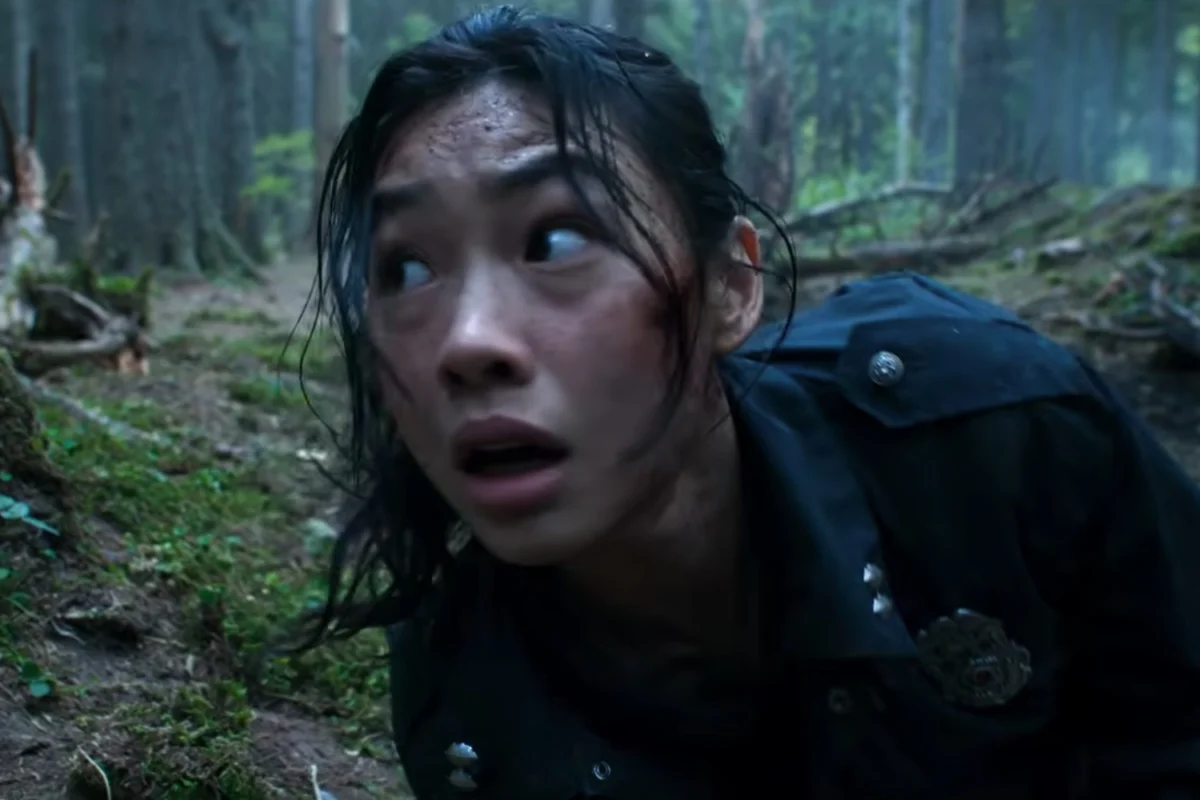
Alongside these international names, the film features a powerhouse South Korean cast: Hwang Jung-min (who also starred in The Wailing) as police chief Bum-seok, Hoyeon (from Squid Game) as officer Sung-ae, and Zo In-Sung as hunter Sung-ki. This combination of established Korean talent and international stars suggests a film with significant production value and a commitment to compelling performances, regardless of the characters’ monstrous appearances.
Hope Harbor: A Microcosm for Cosmic Tragedy
The remote South Korean village of Hope Harbor serves as the primary setting for the unfolding disaster. This choice is deeply resonant with Na Hong-jin’s previous work, particularly The Wailing, which used a similar isolated rural community as a crucible for supernatural terror and human paranoia. In such settings, traditional beliefs often clash with modern rationality, and the close-knit nature of the community can quickly devolve into suspicion and infighting when faced with an external threat.
The synopsis highlights this: "What begins as ignorance plants the seed of disaster, escalating through human conflict into a tragedy of cosmic proportions." This suggests that the human response to the mysterious creature – likely characterized by misunderstanding, fear, and internal divisions – will be as destructive as the creature itself. Hope Harbor, therefore, becomes a microcosm of humanity’s larger struggle, where local conflicts amplify a cosmic threat, turning a regional incident into an existential crisis. The village name itself, "Hope Harbor," carries a heavy irony, suggesting a place that should offer refuge but instead becomes the epicenter of despair.
The Question of Identity: Aliens or Something More Human?
The most tantalizing question posed by the trailer and synopsis is whether the creatures are truly extraterrestrial "aliens" or if "perceptions can be misleading," hinting that they might be something else entirely – perhaps mutated humans, ancient entities, or even manifestations of collective human fear. Na Hong-jin’s narratives often thrive on ambiguity, forcing audiences to question the reality presented to them. The "hairy alien" with its oddly human characteristic further fuels this theory.
If the "aliens" are indeed people, or a corrupted form of humanity, the film’s thematic weight would shift dramatically, transforming it from a simple invasion story into a profound exploration of identity, transformation, and the monsters that lie within. This ambiguity is a hallmark of Na’s storytelling, allowing for multiple interpretations and ensuring that the horror is not merely external but also deeply psychological and existential. The director having already written a sequel underscores his confidence in the narrative’s depth and potential for expansion beyond a single, straightforward monster plot.
Critical Acclaim and Early Responses
Even before its widespread release, Hope has begun to generate significant buzz, with early critical impressions aligning with the high expectations surrounding Na Hong-jin’s work.
The Official Synopsis: A Cryptic Premise
The official synopsis provides the foundational narrative framework:
"In the remote South Korea village of Hope Harbor, police chief Bum-seok (Hwang Jung-min) and officer Sung-ae (Hoyeon) are called to find a mysterious creature that has wreaked havoc on the village. In the nearby forest, a coterie of hunters, including Sung-ki (Zo In-Sung) set out to track the beast and find themselves hunted instead. But all is not as it seems, and perceptions can be misleading. What begins as ignorance plants the seed of disaster, escalating through human conflict into a tragedy of cosmic proportions."
This synopsis is a carefully crafted piece of promotional material, revealing just enough to intrigue while maintaining the core mystery. It establishes the initial conflict, introduces key characters, and, crucially, emphasizes the themes of deception and escalating human folly, setting the stage for a multi-layered narrative that goes beyond simple creature-feature tropes. The "tragedy of cosmic proportions" suggests a scope that extends beyond the village itself, hinting at existential stakes.
Justin Chang’s Early Appraisal
New Yorker critic Justin Chang’s early review snippet is particularly illuminating: “A riotous mashup of thrillingly staged and daringly attenuated chase scenes, mordant small-town comedy, and delightfully craptacular C.G.I.” Chang’s words confirm many of the speculations about Na Hong-jin’s approach. The "riotous mashup" points to a genre-defying experience, while "thrillingly staged and daringly attenuated chase scenes" promise the relentless, exhausting tension that characterized The Chaser and The Wailing. The "mordant small-town comedy" suggests a darkly humorous undercurrent, providing texture to the horror. And the "delightfully craptacular C.G.I." is perhaps the most intriguing comment, hinting at an intentional aesthetic choice that leans into the uncanny and bizarre rather than striving for conventional polish. This early appraisal suggests that Hope is not just a return to form for Na but a bold evolution of his distinct cinematic language.
Implications and Future Prospects
Hope has the potential to leave a significant mark on both Na Hong-jin’s career and the broader landscape of South Korean and international genre cinema.
Reshaping South Korean Genre Cinema
Na Hong-jin has consistently pushed the boundaries of genre filmmaking in South Korea, earning critical acclaim and commercial success by infusing traditional horror and thriller elements with profound philosophical and social commentary. Hope, with its international cast, ambitious scope, and unique creature design, is poised to further elevate South Korean cinema’s global profile. It demonstrates a growing confidence in telling uniquely Korean stories with universal appeal, leveraging international talent without compromising artistic vision. The film’s success could inspire more cross-cultural collaborations and encourage other Korean directors to explore genre films with even greater audacity and scale.
The Potential for a New Cinematic Universe
The revelation that Na Hong-jin has already written a sequel to Hope is a strong indicator of his long-term vision for this story. In an industry increasingly dominated by franchises and interconnected universes, Na’s proactive approach suggests he believes Hope has the narrative depth and world-building potential to sustain multiple installments. This could signal the birth of a new, major horror franchise originating from South Korea, one that distinguishes itself through its intellectual rigor, psychological complexity, and uncompromising vision, rather than relying on jump scares or conventional monster lore. The "cosmic proportions" mentioned in the synopsis hint at a vast, unexplored mythology that a sequel could delve into, potentially expanding the narrative beyond Hope Harbor to a global or even intergalactic scale.
Conclusion: Awaiting the Descent
As September 9th approaches, the anticipation for Na Hong-jin’s Hope continues to build, fueled by a trailer that is as perplexing as it is terrifying. With its uniquely designed creatures, cryptic plot, and a director known for pushing the boundaries of horror, Hope promises to be a cinematic event that challenges perceptions and lingers long after the credits roll. It is a film that, by all accounts, we desperately need – a bold, genre-defying vision that reminds us of cinema’s power to disturb, provoke, and utterly captivate. The stage is set for Na Hong-jin to deliver another masterpiece, plunging audiences into a cosmic tragedy where hope is a fragile commodity and the true monsters might just be ourselves.