Navigating a Whimsical World: The Rise of Marupoyo and the Evolution of Tilt-Based Platforming
The landscape of independent gaming is frequently defined by its ability to take established mechanics and refine them into something both nostalgic and innovative. At Gamescom this year, amidst the high-budget spectacles and complex RPGs, a vibrant, physics-based platformer titled Marupoyo: The Round Chick’s Adventure captured the attention of attendees. Developed with a dual-focus on extreme accessibility and high-skill mastery, Marupoyo represents a growing trend in the industry: "intergenerational gaming." By utilizing tilt-based controls and a charming aesthetic, the title seeks to bridge the gap between toddlers picking up a controller for the first time and seasoned players looking for a nuanced challenge.
Main Facts: A New Contender in the Physics-Platformer Genre
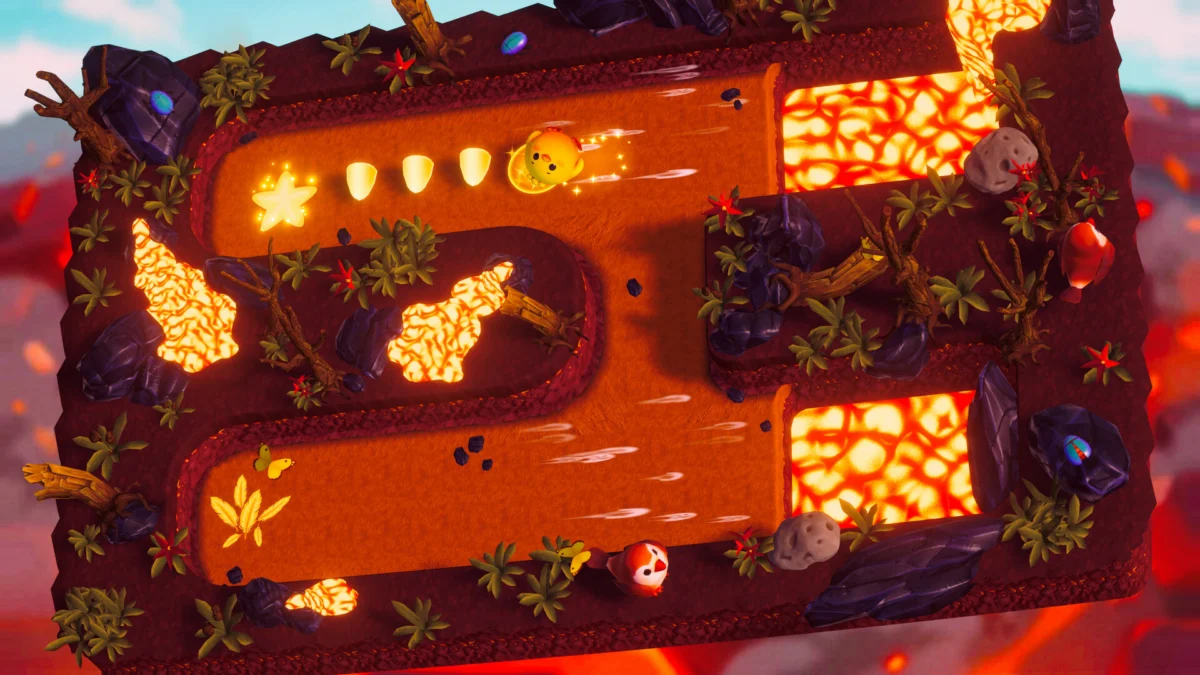
Marupoyo is a single-screen, tilt-based platformer that places players in control of a titular round chick. Unlike traditional platformers that rely on "jump" and "run" inputs, Marupoyo utilizes the physics of momentum and gravity. Players tilt the entire environment (or the character’s center of gravity) to roll the protagonist through a series of increasingly hazardous levels.
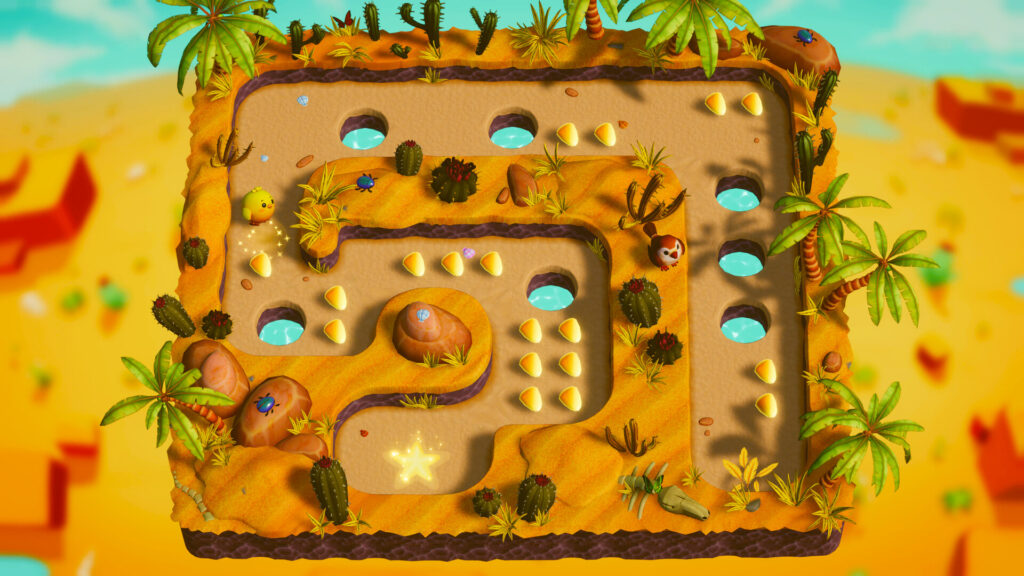
The game is structured around 120 distinct levels, each designed to fit within a single screen. This design choice eliminates the "camera frustration" often found in 3D platformers, allowing the player to focus entirely on the physics of the movement. The primary objective in each stage is to collect corn—the game’s primary currency and progression marker—and reach the exit without falling victim to environmental hazards such as water, lava, or bottomless pits.
A standout feature of Marupoyo is its "Child-Friendly Mode." Recognizing that physics-based games can often be punishing for younger players with developing motor skills, the developers implemented a toggleable safety net. When activated, this mode covers hazardous areas with fluffy clouds, effectively preventing the character from falling to their doom. This allows children to enjoy the tactile sensation of rolling the chick and collecting corn without the frustration of constant restarts.
Chronology: From Concept to Gamescom Reveal
The journey of Marupoyo mirrors the trajectory of many successful indie projects that prioritize "feel" over complex narrative.

- Conceptualization and Prototyping: The core mechanic of Marupoyo was born from an exploration of tilt-controls, a control scheme that saw its heyday during the early Nintendo Wii and mobile gaming eras but has since become a niche specialized mechanic. The developers aimed to create a character that felt "weighted" yet responsive.
- Level Design Expansion: Once the physics engine was stabilized, the team moved into level production. The decision to create 120 levels was intentional, providing a steady difficulty curve that introduces new mechanics—such as wind gusts and bouncing mushrooms—every few stages.
- The Narrative Layer: To provide a sense of purpose beyond high scores, the developers introduced a "rescue" mechanic. Throughout the game, players encounter the protagonist’s siblings. Rescuing them not only provides narrative beats through "dancing and laughing" cutscenes but also unlocks these siblings as playable skins, each adding a layer of personality to the experience.
- Gamescom Debut: The demo showcased at Gamescom allowed the public to experience the game’s tactile responsiveness for the first time. The feedback highlighted the effectiveness of the tilt controls and the visual appeal of the vibrant, "kawaii" art style.
- Future Roadmap: Currently, Marupoyo is available for wishlisting on Steam. While a definitive release date has yet to be announced, the developers have confirmed that a Nintendo Switch version is in the works—a platform uniquely suited for the game’s control scheme due to its integrated gyroscopic sensors.
Supporting Data: Mechanics, Hazards, and Replayability
The depth of Marupoyo lies in its environmental variety. While the early levels serve as a tutorial for basic movement, the latter half of the 120-level campaign introduces complex physics interactions that require precision.
Environmental Hazards and Mechanics
- Dynamic Wind Gusts: In certain stages, players must contend with wind that pushes the round chick in specific directions. This requires counter-tilting, adding a layer of resistance to the movement.
- Bouncing Mushrooms: These act as the game’s "jump" mechanic. Players must calculate their momentum and the angle of their tilt to bounce off mushrooms and reach higher platforms.
- Moving Blocks: Timing becomes crucial as players must navigate platforms that shift horizontally and vertically, often over lava pits.
- The "Corn" Economy: Collecting corn is not merely for points; it serves as the metric for unlocking later stages and ensuring that players have mastered the mechanics of a specific "world" before moving on.
Accessibility Statistics
The inclusion of the "Child-Friendly Mode" is backed by user-experience data suggesting that physics-based platformers have one of the highest "bounce rates" (players quitting early) among children under the age of seven. By removing the "fail state" while keeping the "goal state" (collecting corn), Marupoyo ensures a high retention rate for the youngest demographic. Conversely, for adult players, the "Hard Mode" requirements for 100% completion provide a significant challenge that rivals classic titles like Super Monkey Ball.
Official Responses: Design Philosophy and Platform Strategy
During the Gamescom showcase, insights into the development philosophy of Marupoyo emerged. The development team emphasized that the game was designed to be "inclusive by design, not by compromise."
"We wanted to create a game where a parent and a child could sit on the couch and both find something to love," a representative noted during the demo. "The child enjoys the colors and the simple joy of rolling a round chick, while the parent can challenge themselves with the precision required to clear the later, more dangerous levels."
Regarding the choice of platforms, the developers were clear about the importance of the Nintendo Switch. "While the game plays excellently on a standard PC controller using the analog sticks to simulate tilt, the Nintendo Switch is the spiritual home for Marupoyo. The ability to physically tilt the console or the Joy-Cons adds a level of immersion that perfectly complements the ’round chick’ physics."

The team also addressed the narrative elements, stating that while Marupoyo is a platformer first, the emotional hook of "reuniting a family" was essential to give the player a sense of progression and warmth. The "lost siblings" are not just collectibles; they are the heart of the game’s world-building.
Implications: The Resurgence of Tactile Gaming
The emergence of Marupoyo carries several implications for the broader gaming industry and the indie market specifically.
1. The "Cozy-Challenging" Hybrid
There is a growing market for games that utilize a "cozy" aesthetic (soft colors, cute characters, low-stress environments) but pair it with challenging gameplay. Marupoyo fits into this niche perfectly. It appeals to the "Cozy Gamer" demographic on TikTok and YouTube while satisfying the "Platformer Purist" who demands tight controls and clever level design.
2. Accessibility as a Core Feature
Marupoyo’s cloud-based "Child-Friendly Mode" sets a precedent for how developers can handle difficulty. Rather than simply giving the player more health or making enemies weaker, the game changes the geometry of the level to remove the most frustrating fail states. This "structural accessibility" is likely to be emulated by other indie developers looking to capture the "family gaming" market.
3. The Vitality of the Nintendo Switch for Indies
The continued development of titles like Marupoyo for the Nintendo Switch, even late in the console’s life cycle, underscores the platform’s dominance in the indie sector. The Switch’s unique hardware features—specifically its gyro sensors—continue to inspire developers to create games that cannot be fully replicated on more powerful but less "tactile" consoles like the PlayStation 5 or Xbox Series X.
4. The Return to Single-Screen Design
In an era of sprawling open worlds and procedurally generated infinite maps, Marupoyo’s return to the single-screen format is a breath of fresh air. It proves that there is still immense value in "contained" challenges where the player can see the beginning, middle, and end of a goal simultaneously. This design philosophy is particularly effective for portable gaming, where sessions are often shorter.
Conclusion
Marupoyo: The Round Chick’s Adventure is more than just a simple game about a rolling bird. It is a calculated blend of physics-based challenge and extreme accessibility, wrapped in a charming package. As it moves toward its eventual release on Steam and the Nintendo Switch, it stands as a testament to the power of a single, well-executed mechanic. Whether you are a parent looking for a way to introduce your child to gaming or a platforming veteran looking for a new test of precision, Marupoyo promises a "rolling" good time that balances the scales between frustration and fun.
For now, enthusiasts can add the title to their Steam wishlists and await further announcements regarding the official launch date and the highly anticipated Nintendo Switch port. In a world of complex simulations, sometimes the most satisfying experience is simply tilting the world and watching a round chick find its way home.