The Human Toll of Imperial Violence: Reed Van Dyk’s ‘Atonement’ and the Long Shadow of the Iraq War
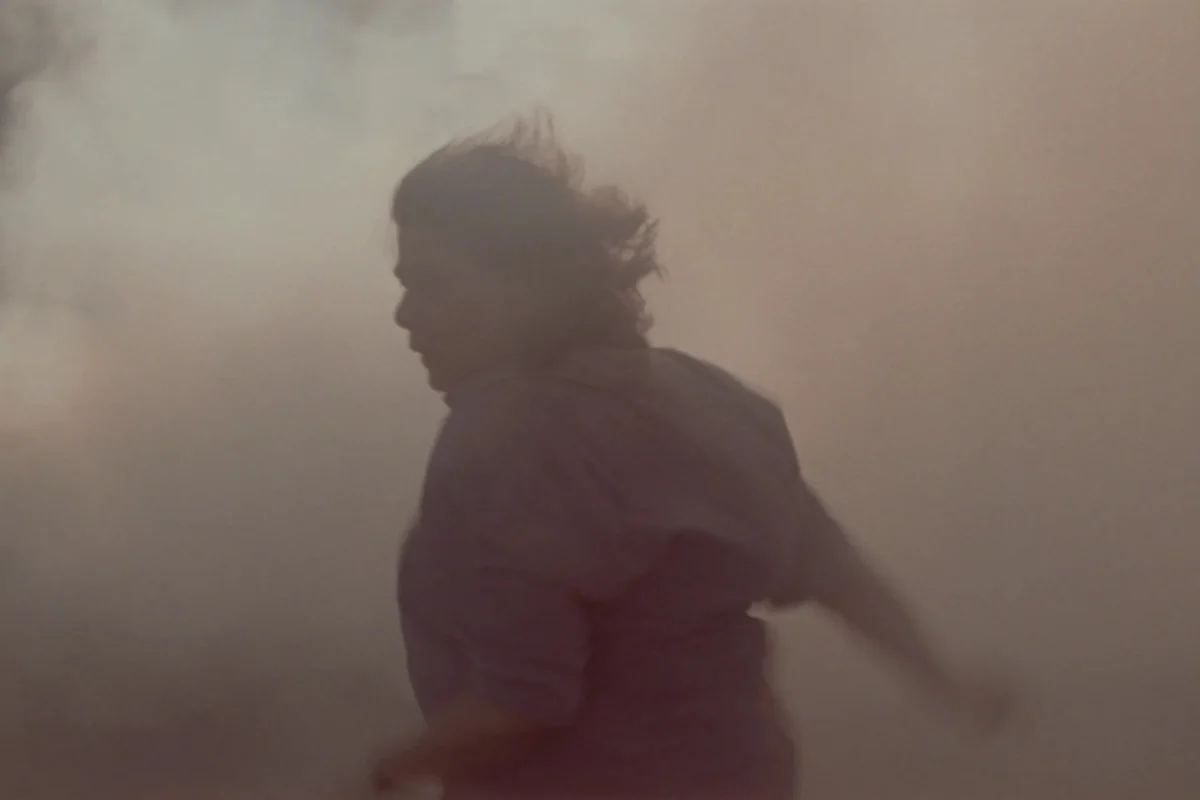
CANNES, France — In the landscape of contemporary war cinema, the focus often oscillates between the adrenaline of combat and the bureaucratic coldness of geopolitical strategy. Rarely does a film manage to bridge the chasm between the perpetrator and the victim with the surgical precision and emotional intelligence found in Atonement, the feature directorial debut of American filmmaker Reed Van Dyk.
Premiering at the 2026 Cannes Film Festival in the Directors’ Fortnight section, and slated for an October 2 theatrical release via Kino Lorber, Atonement is an adaptation of Dexter Filkins’ seminal 2012 New Yorker article, "Atonement After Iraq." It is a film that refuses the easy comforts of melodrama, opting instead for a psychologically astute investigation into the enduring scars of U.S. imperial violence. By centering on a single, devastating event in the Baladiyat district of Baghdad on April 8, 2003, Van Dyk has crafted a masterpiece of empathy that forces the audience to inhabit the skin of those shattered by the machinery of war.
Main Facts: From Investigative Journalism to Cinematic Elegance
The genesis of Atonement lies in the rigorous reporting of Dexter Filkins, whose original piece chronicled the aftermath of a tragic shooting involving U.S. Marines and an Iraqi family. Van Dyk, who admitted during the Cannes premiere that he "cried all the way through" his first reading of the article, has translated that visceral reaction into a narrative that is both intimate and expansive.
The film stars the venerable Palestinian actress Hiam Abbass as Mariam Khachaturian, the matriarch of a Christian-Armenian Iraqi family, and Boyd Holbrook as Lou, a former U.S. Marine haunted by his actions during the invasion. Supporting roles are filled by Kenneth Branagh, playing a surrogate for Filkins named Michael Reid, and Gratiela Brancusi as Lou’s partner, Anna.
Unlike traditional war epics that rely on pyrotechnics, Atonement is built on the quietude of domestic life and the jarring, irreversible nature of violence. Its narrative structure is divided into two distinct but spiritually linked halves: the immediate terror of the 2003 invasion and the slow, agonizing process of seeking forgiveness a decade later in Los Angeles.

Chronology: A Decade of Dislocation
April 2003: The Siege of Baghdad
The film opens in the Baladiyat district on a morning that feels heavy with the weight of memory. The Khachaturian family—three generations strong—is gathered in a temporary refuge provided by Mariam’s sister. The details are tactile and mundane: Mariam’s daughter Nora (played with haunting grace by Gheed) spits cherry pits into a bowl; children play with a ball in the street; the television hums with the defiant rhetoric of Saddam Hussein.
Despite the falling bombs and the intermittent loss of electricity, the family’s internal bonds remain a sanctuary. However, a nearby blast forces their hand, leading them to flee in a two-car convoy. Simultaneously, the film introduces Lou and his unit of Marines. Their arrival is marked by a toxic blend of youthful bravado and "self-obliviousness," as they joke about each other’s families while occupying a city they do not understand. The collision of these two worlds—the fleeing family and the jittery, rooftop-bound soldiers—results in a shooting that serves as the film’s central trauma. The sequence is handled with a restraint that makes the eventual violence feel like a physical blow to the viewer.
2013-2014: The Echoes in Los Angeles
The narrative then shifts ten years forward to California. Lou is no longer the muscular, arrogant youth of 2003. As portrayed by Holbrook, he is a "haunted, traumatized shambles." He suffers from tremors, insomnia, and an all-consuming guilt that his partner, Anna, struggles to mitigate.
The bridge between the past and the present is Michael Reid (Branagh), the journalist who documented the Khachaturians’ story. When Lou discovers Reid’s article, his abstract guilt finds a concrete destination. The Khachaturian survivors have since relocated to California, setting the stage for a confrontation that is less about cinematic "closure" and more about the fragile possibility of grace.
Supporting Data: Casting and Visual Language
The success of Atonement rests heavily on its performances, particularly that of Hiam Abbass. Known for her roles in Succession and Bye Bye Tiberias, Abbass brings a "solemn authority" to Mariam. Her performance is a study in internalized suffering; she portrays a woman who has lost almost everything but maintains a self-possessed, godly clarity. When Mariam finally breaks, the impact is described by critics as a "miniature earthquake."

Boyd Holbrook’s performance provides the necessary counterpoint. He avoids the tropes of the "troubled vet" by leaning into the physical manifestations of PTSD—the unironed clothes, the thousand-yard stare, and the involuntary shaking.
The film’s aesthetic, captured by Van Dyk’s choice to film in Jordan (subbing for Iraq), emphasizes the "texture" of the war zone. The contrast between spent gun shells and children eating peaches serves as a recurring visual motif, highlighting the absurdity and cruelty of conflict. The camera remains tight on faces, prioritizing the "glancing looks and unsaid worry" over the spectacle of explosions.
Official Responses and Directorial Vision
During the Directors’ Fortnight screening at Cannes, Reed Van Dyk spoke extensively about the ethics of the film. He emphasized that Atonement was not interested in "establishing a warzone by showing peripheral acts of violence." Instead, every frame is dedicated to the "build-up, execution, or aftermath" of the central shooting.
Van Dyk’s approach has been praised for avoiding the pitfalls of "American exceptionalism" or "special pleading" for the perpetrator. By showing the Iraqi family’s life in such vivid, loving detail before the tragedy, the film ensures that the audience views the soldiers not as heroes, but as catalysts of an avoidable catastrophe.
The critical consensus has been overwhelmingly positive, with an initial "A-" grade from major outlets. Reviewers have noted that the film’s title, Atonement, is almost too grand for the "quiet designs" of the story. It does not promise a happy ending; it promises only a "grace note" between two people who have been permanently linked by a moment of horror.

Implications: Redefining the War Narrative
Atonement arrives at a time when the legacy of the Iraq War is being re-examined through a more critical, human-centric lens. Its implications for the genre are significant:
- The De-Centering of Combat: By focusing on the "human cost of U.S. imperial violence" rather than the mechanics of the military campaign, Van Dyk shifts the focus from the "how" of war to the "who."
- The Ethics of Representation: The film challenges the notion of "killer and victim" as binary roles. Through the character of Anna, who remarks that "when a bullet is fired, it shoots both ways," the film explores the collective trauma inflicted on both the occupied and the occupier, without equating their suffering.
- The Power of Journalism in Art: The use of Michael Reid as a surrogate for Dexter Filkins highlights the vital role of investigative journalism in preserving the stories of the marginalized. The film suggests that truth-telling is the first step toward any form of reconciliation.
The final act of the film, which brings Lou and Mariam into the same room, is a masterclass in tension and tenderness. It evokes the spirit of the poet Rumi: "Somewhere beyond right and wrong, there is a garden, I will meet you there." Atonement does not claim that the garden is easy to find, nor that the wounds will ever fully heal. Instead, it posits that the mere willingness to stand in that space together is an act of profound courage.
As Kino Lorber prepares for the film’s October release, Atonement stands as a definitive cinematic statement on the Iraq War—a film that is as much about the endurance of the human spirit as it is about the devastating reach of the bullet. It is an essential, if painful, viewing experience that demands we look at the faces of those we too often relegate to the footnotes of history.