
Navigating the Moral Compass of Cinema: Deconstructing "Noblebright" and "Grimbright" in Film
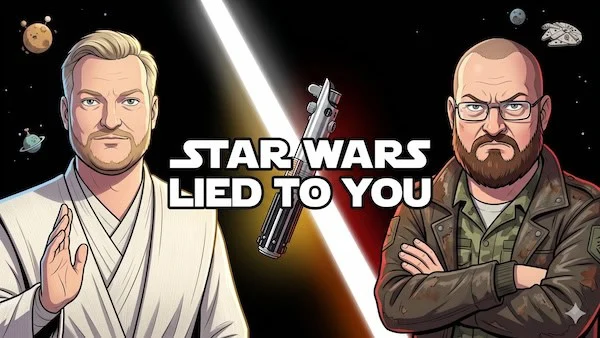
In the intricate landscape of storytelling, the perceived moral tenor of a narrative can profoundly shape its impact on audiences. A recent discourse, facilitated by film enthusiasts Thomas and Jonathan, delves into a fascinating framework for analyzing cinematic narratives: the "Noble/Grim + Bright/Dark" axis, a four-quadrant model inspired by the generational turnings theorized by William Strauss and Neil Howe. This framework offers a nuanced lens through which to understand how films evoke feelings of optimism, despair, heroism, or cynicism, and how these elements coalesce to create enduring and resonant stories.
Defining the Quadrants: Noblebright, Grimbright, and Their Counterparts
At its core, this analytical model posits four distinct narrative quadrants:
- Noblebright: This quadrant embodies the adage, "Hard men make good times." It depicts a world where noble sacrifice, often by stalwart individuals, leads to peace and prosperity for the common populace. The narrative emphasizes altruism, duty, and the triumph of good through selfless acts.
- Grimbright: Characterized by the sentiment, "Good times make weak men," and a cynical outlook of "The world is absurd and corrupt, but let’s have fun robbing it anyway." Grimbrigh narratives often feature anti-heroes who pursue personal gain with dark humor, yet the overall tone remains entertaining. The world may be morally ambiguous or corrupt, but there’s an underlying sense of dynamic engagement and, often, a darkly comedic resilience.
- Nobledark: This quadrant represents a world of harsh realities and difficult times ("Bad times make strong men"), where individuals exhibit noble qualities in the face of overwhelming darkness. Sacrifice is still present, but the outcomes are not necessarily bright or prosperous. Instead, nobility is tested and often demonstrated through resistance against insurmountable odds, with the emphasis on moral fortitude rather than tangible victory.
- Grimdark: The antithesis of Noblebright, Grimdark paints a picture of utter despair and hopelessness. "Bad times make weak men" often describes the pervasive mood. The world is irredeemably corrupt and bleak, with no possibility of redemption or meaningful positive change. Characters are often morally bankrupt, and any semblance of hope is quickly extinguished.
Thomas and Jonathan’s discussion centers on the interplay between Noblebright and Grimbright, viewing them as contrasting forces that help illuminate each other, much like a positive and negative image. They argue that understanding Grimbright is crucial for grasping Nobledark, as it serves as its "photo negative."
The Shifting Tides of Generational Turnings and Cinematic Reflection
The conversation begins by situating these narrative quadrants within the Strauss-Howe generational theory, which posits a cyclical pattern of four turnings in history, each with distinct societal characteristics. Currently, the discourse suggests society has transitioned from the third turning, characterized by "good times make weak men" (a Grimbright era), into the fourth turning, defined by "bad times make strong men" (a Nobledark era). This societal shift, they contend, is reflected in the evolving themes and tones of popular culture.
Kelly’s Heroes: A Case Study in Grimbright Deception
Thomas shares his experience re-watching the 1970 World War II film Kelly’s Heroes with his sons, intending to introduce them to a more palatable depiction of the war than the graphic Saving Private Ryan. He initially recalled the film as a fun, action-packed adventure featuring tanks and a hippie driver. However, upon closer inspection, he found himself "horrified," recognizing Kelly’s Heroes as a quintessential "second-turning, awakening, grimbright story."
The plot, involving a group of GIs stealing Nazi gold behind enemy lines, presents a seemingly "bright" outcome in the context of winning the war. Yet, Thomas argues the film is not truly about World War II. The soldiers are depicted as disheveled and out of uniform, a visual echo of the Vietnam War, which was ongoing at the time of the film’s release. The underlying message, he asserts, is one of disillusionment: "Why are we even fighting this war? What’s the point? Let’s just get rich."
The film’s climax, where the GIs team up with an SS officer to abscond with the gold, further solidifies its Grimbright classification. This alliance with actual Nazis, portrayed as pragmatic criminals rather than ideological villains, underscores the narrative’s focus on personal gain over moral rectitude. Despite the overarching "bright" context of winning the war, the characters operate under a self-deceptive premise that the world is inherently broken and evil, justifying their cynical pursuit of wealth. This, for Thomas, is the essence of Grimbright: a fundamentally optimistic external reality being undermined by characters driven by self-interest and a warped sense of the world.
Contrasting Westerns: Nobility and Cynicism in the Frontier
The discussion then pivots to the Western genre, a fertile ground for exploring these narrative archetypes.
The Magnificent Seven vs. The Good, the Bad and the Ugly
Thomas introduces The Magnificent Seven (1960) as an example of Noblebright storytelling. In this film, seven gunslingers are hired to protect a village of farmers from bandits, with most of them ultimately sacrificing their lives. This narrative arc aligns with the "hard men make good times" ethos, where noble sacrifice paves the way for a brighter future.
Jonathan, however, offers a counterpoint, suggesting The Magnificent Seven leans towards Grimbright. He argues that while the outcome is bright, the protagonists are not inherently "good men." They are, in fact, gunfighters, criminals, and mercenaries. The recruiter might possess nobility, but the individuals he enlists are morally compromised. Jonathan emphasizes the grim reality of the world depicted – a world where the powerless are oppressed, and the only ones willing to stand against it are outlaws.
Thomas acknowledges the interpretive nuance, noting that the film, released at the cusp of the first and second turnings, displays elements of both. While the gunslingers possess flaws like cowardice and drunkenness, their ultimate willingness to fight and die for seemingly no personal gain, to protect strangers, elevates them to a heroic status that leads to a bright future.
In contrast, The Good, the Bad and the Ugly (1966) is presented as an early and seminal Grimbright story. Its revolutionary nature stemmed from its departure from the more straightforward morality of earlier Westerns. The characters are driven by greed and self-preservation, navigating a morally ambiguous landscape with a cynical wit. This film, and by extension Kelly’s Heroes, exemplifies the Grimbright characteristic of characters operating with a cynical, self-serving agenda within a world that, on a larger scale, might be progressing towards a positive outcome (or at least, not an utterly bleak one).
The Seven Samurai: A Nuance of Nobledark and Noblebright
The discussion extends to Akira Kurosawa’s Seven Samurai (1954), the inspiration for The Magnificent Seven. Thomas observes that Seven Samurai delves into class division, a theme less pronounced in the American adaptation. He posits that Seven Samurai begins as a Nobledark story, depicting a grim world where a group of ronin are hired by desperate farmers. Their journey culminates in a Noblebright outcome where their noble sacrifices secure a better future for the villagers. Crucially, the samurai themselves do not get to enjoy the peace they fought for, a hallmark of the selfless sacrifice in Noblebright narratives.
Blending Turnings: The Art of Resonant Storytelling
The conversation highlights the potential for blending narrative turnings within a single story to create more complex and enduring appeal. Thomas suggests that successfully integrating elements from different turnings can resonate with a wider audience, particularly during periods of societal transition. He points to the enduring popularity of "grimdark" themes, referencing a viral music video depicting aggressive masculine behavior as an example of current cultural resonance.
Star Wars: A Tale of Two Protagonists?
The iconic Star Wars saga becomes a central point of contention, with Thomas and Jonathan debating its classification.
Thomas initially puzzles over whether Star Wars is Noblebright or Grimbright, concluding that the answer hinges on the perceived protagonist. If Luke Skywalker is the protagonist, the narrative is clearly Noblebright: clear good versus evil, with morality triumphing. However, if Han Solo is considered the protagonist, the film shifts to a Grimbright interpretation. Han, driven by self-interest and money, embodies the cynical anti-hero found in The Good, the Bad and the Ugly and Kelly’s Heroes.

The brilliance of The Empire Strikes Back, Thomas argues, lies in its subversion of these roles. Luke becomes disillusioned and jaded (a Grimbright characteristic), while Han evolves into a hero who sacrifices himself for the Rebellion. This shift, where Han’s Grimbright sensibilities are pulled towards a Noblebright outcome through his sacrifice, is key to the film’s enduring power.
Jonathan strongly disagrees with this interpretation of Luke’s arc in The Empire Strikes Back. He contends that Luke remains fundamentally Noblebright throughout, even during his moments of disillusionment. His struggles, such as his perceived dip in heroism or his confrontation in the cave, are presented as part of his growth towards becoming a hero, not a descent into cynicism. Jonathan posits that Luke’s actions are driven by fear, a natural survival instinct and a path to the dark side, rather than cowardice or a loss of nobility. He views Luke’s realization of darkness within himself as a testament to his complex character arc, not a definitive shift to Grimbright.
The Grimness of Empire vs. The Nobility of Return of the Jedi
Thomas maintains that Luke’s arc in The Empire Strikes Back exhibits "grimness" due to his growing disillusionment and the dire circumstances. He interprets Luke’s encounter with Vader, where he sees himself, as a representation of evil and the dark side. This, for Thomas, aligns with the "good times making weak men" trope, where even a fundamentally good person can falter under pressure.
Jonathan counters that Luke has faced nothing but hardship, and his actions are driven by exhaustion and a desire to save his friends, not weakness. He distinguishes fear from cowardice, arguing that Luke’s fear is a response to potential failure and the overwhelming darkness he confronts. Jonathan emphasizes that Luke’s core nobility remains intact, even when facing the horrifying revelation of his parentage.
The emotional tone of The Empire Strikes Back, Thomas argues, is more akin to Kelly’s Heroes or The Good, the Bad and the Ugly than The Magnificent Seven. The audience experiences a sense of "grimness of defeat" and "compromise," rather than a clear triumph of good. However, he qualifies this by noting the presence of lingering hope with Luke’s survival, marking it as a blend of Grimbright with elements of Nobledark or even a nascent Noblebright trajectory.
Return of the Jedi: A Shift in Resonance
In contrast, Return of the Jedi is seen as more overtly Noblebright. Thomas suggests its resonance is diminished because it arrived at a time when the cultural zeitgeist had firmly shifted towards Grimbright. The "Ewoks conquering the evil Empire" narrative, while enjoyable, felt out of sync with the prevailing mood. He also notes that the dynamic interplay between Luke and Han, a key element of Empire’s appeal, diminishes as their arcs converge.
Jonathan defends Return of the Jedi, viewing it as the culmination of Luke’s arc, a journey from initial nobility through a dark period of character development, and a return to Noblebright. He points to Luke’s rejection of the Emperor’s offer of power and his throwing away of his lightsaber as definitive acts of nobility. Jonathan also highlights Han Solo’s transformation, arguing he moves from Grimbright to Noblebright by sacrificing his own safety for the mission, a development that would have been unthinkable in the first Star Wars film.
Thomas, however, sees a visual grimness in Luke’s journey, noting his costume shifts from white to black. Jonathan dismisses this as purely superficial, asserting that Luke’s spirit remains untainted by the darkness of his surroundings. He contrasts this with Anakin Skywalker’s visual transformation, which he sees as a more profound reflection of his inner state.
Defining the Edges: Grimdark and the Nuances of Perception
The discussion touches upon the definition of Grimdark, with Jonathan asserting it signifies an insurmountable defeat and an inability to win. Thomas counters that The Matrix is Grimdark, despite Neo’s eventual power, because the underlying system of oppression remains largely intact.
Rogue One and the Brightness of the Ending
The conversation briefly touches upon Rogue One: A Star Wars Story, which Jonathan labels as Grimbright. His justification lies in the film’s ending: despite the grim circumstances and morally compromised actions of characters like Cassian Andor (who kills informants), the ultimate mission is accomplished, leading to a "bright" conclusion. This highlights a key tenet of Grimbright: the emphasis on the outcome, even if the journey is fraught with moral ambiguity.
Helsreach: A Debate on Nobledark vs. Grimbright
A significant portion of the latter half of the discussion revolves around the Warhammer 40,000 novel Helsreach. Thomas initially categorizes it as Nobledark due to its "win in the end" scenario and the thematic emphasis on righteous action. Jonathan, however, argues for a Grimbright classification, emphasizing the book’s grim setting and the protagonist’s internal struggle against cynicism. The core theme, "We are judged in life for the evil we destroy," and the protagonist’s eventual broadened perspective, which encompasses appreciation for all heroes, contribute to a "bright ending." This debate underscores the subjective nature of interpreting these categories and the importance of specific thematic elements.
Jonathan elaborates on his perspective as someone who has worked with individuals in demanding, often morally grey professions. He explains that while the perception of their actions might be "noble" due to the positive outcomes, the actual work involves "doing dark things in dark places to dark people to destroy evil." This highlights the distinction between internal motivation and external perception, a crucial element in differentiating these narrative archetypes.
The Grim/Noble Axis Applied to Luke Skywalker
Revisiting Luke Skywalker, Thomas reiterates his belief that The Empire Strikes Back depicts "good times making weak men" in Luke’s character arc. He interprets Luke’s vision of himself as Darth Vader as a manifestation of evil and the dark side, a sign of his character weakening.
Jonathan strongly disagrees, arguing that Luke has experienced constant hardship and is not weak but "tired." He maintains that Luke’s vision of Vader represents fear, a literal path to the dark side as stated in the films. He emphasizes that Luke’s fear is not cowardice but a natural response to immense pressure and the potential to fail his mentors and destiny. Jonathan argues that Luke’s nobility is tested but not broken, and his internal struggle is a hallmark of a noble character facing darkness, rather than a grim character succumbing to it.
The Enduring Power of Narrative Frameworks
The discourse between Thomas and Jonathan, though at times contentious, provides a valuable framework for analyzing the emotional and moral undercurrents of cinematic narratives. By dissecting films like Kelly’s Heroes, The Magnificent Seven, and the Star Wars saga through the lens of Noblebright and Grimbright, they illuminate how these archetypes resonate with audiences and reflect the broader societal shifts described by generational theory. The exploration of these concepts, from the cynical machinations of Western anti-heroes to the existential struggles of galactic heroes, underscores the enduring power of storytelling to grapple with the complexities of human nature and the ever-evolving moral landscape. As the discussion concludes, the invitation for audience engagement—to consider their own interpretations and classifications—underscores the dynamic and subjective nature of these narrative analyses, encouraging a deeper appreciation for the art of filmmaking.



Leave a Comment