"The Mandalorian & Grogu": A Deep Dive into a Disappointing Cinematic Offering
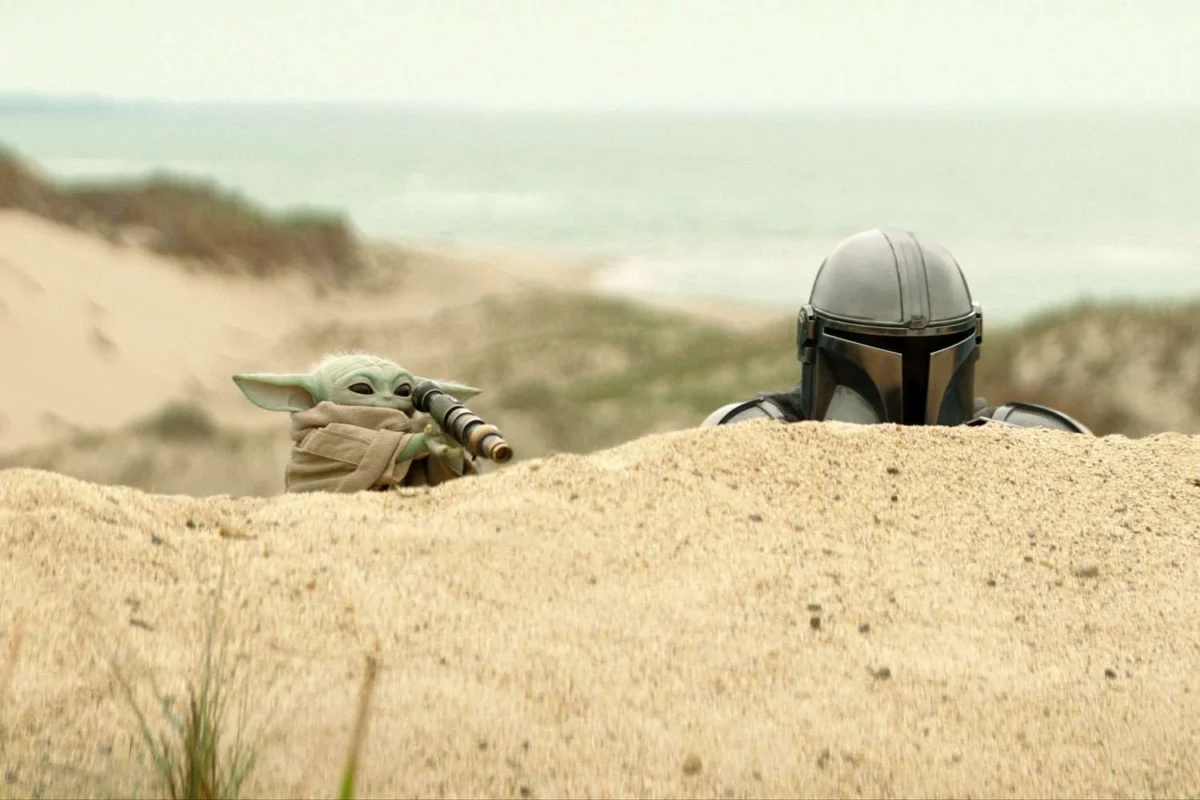
Introduction: A Critical Examination of a Highly Anticipated Star Wars Entry
The cinematic landscape of science fiction is often dominated by established franchises, and few hold as much cultural sway as Star Wars. The recent release of "The Mandalorian & Grogu," a feature film continuation of the beloved Disney+ series, arrived with immense anticipation. However, rather than a triumphant leap to the big screen, the film has sparked a debate among critics and fans alike regarding its narrative depth, character development, and overall impact. This article aims to dissect the film’s strengths and weaknesses, moving beyond a simple like-or-dislike assessment to explore the underlying storytelling principles that may have led to its perceived shortcomings.
The initial reaction to "The Mandalorian & Grogu" has been polarized. While some audiences have embraced the return of Din Djarin and Grogu, others, like this publication’s reviewer, have found the experience to be surprisingly hollow. The core sentiment expressed is one of a film that, despite its exciting premise and impressive visual execution, ultimately fails to resonate on a deeper level. This analysis will delve into the specific elements that contribute to this feeling, focusing on the film’s narrative structure, character portrayal, and the crucial concept of stakes within storytelling.
H2: The Film’s Core Disconnect: Excitement Without Substance
One of the most perplexing aspects of "The Mandalorian & Grogu" is the disconnect between its perceived excitement and its actual impact. As one observer noted, the film can be simultaneously "exciting" and "boring." This paradox suggests a film that prioritizes spectacle over substance, delivering a barrage of action sequences that, while visually impressive, lack the narrative weight to truly engage the audience. The observation that the film felt like "a straight line" further underscores this point, implying a predictable and uneventful journey, despite the constant onscreen activity.
For storytellers and critics, the inclination to dissect the "how" and "why" of a narrative is not merely an academic exercise but an intrinsic part of understanding the craft. This analytical approach, while potentially hindering pure enjoyment, allows for a deeper appreciation of what makes a story compelling. In the case of "The Mandalorian & Grogu," this dissection reveals a film that, while technically proficient, struggles to evoke the emotional investment and narrative tension necessary for a truly memorable cinematic experience.
H2: Navigating Personal Bias and Objective Critique
It is crucial to acknowledge the subjective nature of film criticism. The reviewer’s personal history with the Star Wars franchise, which is described as both a general love and a "complicated relationship," undoubtedly informs their perspective. This is not an attempt to invalidate personal enjoyment; rather, it is an acknowledgment that individual experiences and emotional connections play a significant role in how a film is perceived.
Furthermore, the article explicitly states that this critique is not intended to diminish the enjoyment of those who appreciated the film. The principle that "this shit ain’t math" emphasizes that subjective taste is valid, and there is no single correct way to experience a story. The comparison to the commercial success of "The Super Mario Bros. Movie," which the reviewer disliked, highlights the potential for personal taste to diverge from broader audience reception. This preamble serves to frame the subsequent analysis as a personal opinion, informed by storytelling principles, rather than an objective declaration of the film’s failure.
The reviewer’s established affection for "The Mandalorian" television series, particularly its first season, is also noted. This prior positive engagement sets a baseline expectation, and the film’s inability to meet even these lowered expectations further contributes to the reviewer’s critical assessment. This transparency is essential for understanding the depth of the disappointment.
H3: Acknowledging the Film’s Strengths: Moments of Cinematic Merit
Despite the overarching criticisms, "The Mandalorian & Grogu" is not without its merits. Acknowledging these positive aspects provides a more balanced perspective.
- The Soundtrack: The film’s score is lauded as "banging," with the iconic Mandalorian theme singled out as one of the best in the Star Wars universe. This underscores the enduring power of the series’ musical identity.
- Visual Effects: Generally, the visual effects are described as "rock solid" and "impeccable." However, a notable exception is the CGI rendering of Rotta the Hutt, which is criticized for its uncanny valley effect, reminiscent of earlier controversial CGI additions in the franchise.
- Grogu’s Puppet Design: The physical puppet of Grogu is highlighted as "the best," contributing significantly to the character’s charm and presence.
- Grogu’s Central Role: A sequence later in the film that is described as "All Baby Yoda" is identified as one of the film’s strongest moments, suggesting that the character’s inherent appeal can elevate the narrative when given space to shine.
- Moments of Quiet and Dialogue: The film is at its most effective when it allows for quieter moments and character interaction. These instances, though infrequent, are seen as a "win for the movie, and for the audience."
- Jon Favreau’s Direction: Director Jon Favreau is praised for his "rock solid" direction, characterized by well-framed shots and visually appealing sequences that possess an almost painterly quality.
These elements demonstrate that the film possesses technical proficiency and moments of genuine artistic success, even if they are overshadowed by larger narrative concerns.
H2: The "Anhedonic Sensation": When Excitement Fails to Land
The reviewer describes an "anhedonic sensation" while watching the film – a feeling of being meant to enjoy it, yet experiencing numbness. This disconnect is likened to eating a bland burger or having a theoretically perfect date with no chemistry. The parade of images and action attempts to stimulate joy, but ultimately "slid off" the reviewer’s mind. This profound lack of emotional engagement is the central problem the film faces.
The core question then becomes: why does a film that combines beloved characters, thrilling action, and a familiar universe fail to connect? The answer, the reviewer posits, lies in the fundamental principles of action filmmaking and storytelling.
H3: The Problematic "Start with Action" Trope
A common piece of advice in action filmmaking is to "start with action." However, the article argues that many of the genre’s most successful films deviate from this formula.
- Die Hard: Begins with a domestic drama and the setup of John McClane’s marital issues, with significant action not occurring until nearly twenty minutes in.
- John Wick: While commencing with a visually striking aftermath, the first substantial action sequence, characterized by puppy killing, doesn’t occur until the 15-minute mark, with the full-blown shootouts commencing even later.
- Raiders of the Lost Ark: Leads with "adventure" and tension-building in a dungeon crawl, with action escalating but then receding before its major set pieces.
The article acknowledges that some classics, like "The Matrix" and "Mad Max: Fury Road," do indeed jump into action immediately. Crucially, it notes that "Star Wars: A New Hope" also begins with immediate action, and it works.
However, "The Mandalorian & Grogu" also starts with action, and for the reviewer, it did not work. This leads to a deeper exploration of why this opening failed.
H3: The Crucial Element of Heroic Struggle in Action Openings
The reviewer identifies two key reasons why the film’s opening action sequence faltered:
- Characters We Care About and Context: While we care about the Mandalorian due to his established presence, the initial victims in the opening scene lack any context, diminishing our ability to connect with their plight.
- Opening Action Leading to Heroic Struggle: In successful action films, the opening often sees the hero facing significant setbacks. John Wick’s dog is killed; John McClane is ill-equipped and outnumbered; Mad Max is in dire straits from the outset. These struggles establish the hero as an underdog, someone who could lose.
In contrast, "The Mandalorian & Grogu" presents an opening where Mando and Grogu "do pretty great." There is "little complication, little twist, little turn, little danger." The victims are quickly removed from the narrative. This pattern of effortless success continues throughout the film.
H2: The Absence of Stakes: The "Straight Line" of Consequence-Free Action
The pervasive issue identified is the lack of meaningful stakes. The film’s action sequences are characterized as "breezy, consequence-free, tension-free." Mando is depicted as near-invincible, his armor deflecting all threats, and Grogu’s Force abilities often provide a convenient solution. This creates a narrative that, as the reviewer’s son aptly put it, is "just a straight line" – a "people-mover moving people."
The action scenes feel "effortless" and akin to "cotton candy" – a quick hit of sugar with no lasting substance. This is attributed to the absence of genuine peril for the protagonists. Unlike Superman in some iterations, who endures significant beatings, Mando rarely faces a credible threat.
H3: Defining Stakes: The Foundation of Narrative Tension
The article defines stakes as "what can be won or lost in this narrative." This can range from simple life-threatening danger to more complex emotional, political, or universal consequences.
- Life-Threatening Danger: The most basic form, where characters we care about are at risk of physical harm or death. In "The Mandalorian & Grogu," the audience is aware that Mando and Grogu are unlikely to be killed, diminishing this fundamental stake. Lucasfilm is not perceived as being "bold enough" to eliminate its main protagonists early on.
- World-Building Stakes: The classic "universe in danger" scenario common in Star Wars.
- Emotional Stakes: Personal conflicts such as divorce, addiction, or custody battles.
- Threats to Secondary Characters: Heroes fighting to save characters the audience also cares about.
The interplay between desire (what we want to see won) and fear (what we fear will be lost) is what gives rise to tension.
H3: Tension: The Engine of Narrative Engagement
Tension is defined as "the thing I don’t want to happen is in danger of happening" or "the thing I want to happen is in danger of not happening." While sophisticated storytelling can create tension through uncertainty and emotional complexity, the article posits that in a "pulp-action, two-fisted Star Wars story," tension arises from threatened success and seemingly certain failure.
Stakes are likened to a "weight on our shoulders." Greater stakes press down more, making the audience carry a "narrative burden." This burden, while seemingly negative, is crucial for making the audience feel "under threat."
The absence or lightness of stakes risks reducing or removing tension. While this might be acceptable in some genres, it’s detrimental to the expected experience of a Star Wars action film. The article also cautions that huge stakes can fall flat if the audience doesn’t care about the elements involved. The success of "A New Hope" is attributed to its grounding of grand galactic stakes in smaller, personal stories (Luke’s desire to escape mundane life, Leia’s burden, Han’s debts).
H2: The Missing Ingredient: Characters We Care About
Ultimately, the article argues that even stakes and tension are insufficient without "characters we care about." This is presented as the "hardest easy thing to do." It’s easy in that giving a character a difficult problem to solve is the foundation, but hard due to the "magic" of narrative empathy. The goal isn’t just likability, but characters we can "live with," find "interesting and fascinating," and whose struggles resonate with us.
The film, for the reviewer, fails most significantly here, presenting "action figures" rather than "actual characters."
H3: Action Figures vs. Characters: A Lack of Depth and Arc
- Absence of Personal Problems and Arcs: Few characters exhibit the traits of true characters. They lack personal problems or arcs to complete. Mando’s primary struggle is a job that goes well until it doesn’t, with no connection to his identity.
- Grogu as a Cute Puppet: Grogu is largely presented as a charming prop, lacking any significant character arc.
- Villains as Mini-Bosses: The villains are largely forgettable, with few memorable names.
- Nameless Side Characters: Supporting characters, including guest appearances by actors like Steve Blum (Zeb) and Sigourney Weaver, are present more as placeholders than developed individuals. Zeb, in particular, is described as merely "marked present."
H3: Unpacking the Narrative Mechanics: A Plot Without Purpose
The article then delves into the film’s plot structure, highlighting its perceived lack of narrative drive:
- Reintroduction Issues: The film assumes prior knowledge of "The Mandalorian" series but does little to reintroduce key concepts like the Force or Mando’s identity, leaving newcomers adrift and fans with a diluted experience.
- The New Republic and Imperial Remnants: The premise of hunting Imperial remnants is introduced, but the threat posed by these individuals is abstract, presented as faces on a Sabacc deck. Commander Coin, a potential villain, is a "nothingburger."
- Rotta the Hutt’s Role: Freeing Rotta the Hutt is presented as the central task, with Rotta himself being the film’s only "real character," though even his arc is minimal.
- Predictable Progression: The journey involves a series of events that become "hard, then easy, then the easy part gets complicated," culminating in a "Sacred Infant Yoda show" (which is acknowledged as a stronger segment) followed by more action.
- Lack of Transformation: The endeavor results in little meaningful change for the characters or the galaxy. The status quo endures.
- Underutilized Characters: Even characters like Embo are reduced to "aura farming," serving no narrative purpose.
- Minimal Series Connections: The film offers few meaningful connections to the series, with notable absences of key characters like Ahsoka and unresolved plot points from the show, such as Mando’s rule about not showing his face, which is presented without explanation or resolution.
The overall impression is a narrative that resolves without any significant gains or losses, both plot-wise and character-wise, leaving the audience with a sense of anticlimax.
H2: The Summation of Shortcomings: A Frayed Narrative Rope
The core problems with "The Mandalorian & Grogu" can be distilled into several key points:
- Muddy and Small Stakes: The consequences of the events are unclear and lack significance.
- Characters as Action Figures: The individuals lack depth, personal struggles, and meaningful development.
- Soft, Not Taut, Tension: The lack of genuine peril and consequence prevents the build-up of suspense.
- Nothing Really Happens: Despite the action, the overarching narrative arc is stagnant.
The film suffers from a lack of galactic complications, personal struggles, and emotional entanglements. There is little threat, and the missed opportunity to explore the New Republic’s morally questionable dealings with the Hutts is cited as an example of its narrative shallowness. Individual action scenes are "effortless, airless, cool for the sake of cool," contributing to a feeling of "rearranging deck chairs." The narrative rope is described as "sloppy, frayed," lacking the tightness needed to hold the story together. While minor plot holes exist, they are secondary to the fundamental lack of narrative weight.
H2: A Comparison: "The Rise of Skywalker" vs. "The Mandalorian & Grogu"
Interestingly, the reviewer posits that "The Mandalorian & Grogu" is, in some ways, a "worse" movie than "The Rise of Skywalker," despite the latter’s widely acknowledged flaws. While "The Rise of Skywalker" is technically a "better content product" in terms of its narrative coherence and visual polish, it is argued that it "reaches for something." It takes "big, big swings," even if it misses them. It possesses an "ethos" and "emotion," even as it betrays prior films.
In contrast, "The Mandalorian & Grogu" feels more akin to AI – not literally, but in its lack of discernible structure and its tendency to string scenes together without adhering to traditional act structures. It offers "safe, unchallenging content" that eschews architectural integrity for a predictable, "straight line" progression.
H2: Addressing the "Turn Your Brain Off" Defense
The article anticipates and refutes the common defense that the film is simply a "fun movie" meant for kids.
- Fun Movies Can Be More: Fun films often strive for more than mere entertainment; many are designed to be fun yet still possess depth.
- The Need to Engage the Brain: The ability to enjoy something should not necessitate turning off one’s critical faculties. A good film should engage the mind.
- Kids’ Movies Can Be Deep: Even films aimed at children can be profound. Furthermore, "The Mandalorian & Grogu" clearly caters to adult nostalgia, making the "for kids" argument insufficient. The film’s depiction of violence also leans away from a purely child-centric audience.
- The Cost of Entry: Given the significant financial investment required for such a cinematic experience, audiences are justified in expecting more than "warm content."
H2: The Indictment of "Uninteresting" Storytelling
The article concludes by reflecting on a past conversation where a Star Wars executive stated, "We can’t really do anything interesting right now." This sentiment, applied to the franchise’s self-referential nature, is seen as an indictment. The reviewer believes that the most basic goal of storytelling is to create something "interesting," and if that cannot be achieved, the endeavor lacks justification.
"The Mandalorian & Grogu" is seen as embodying this lack of interest. It leaves "no impression – no footprint on the universe, or in my mind, or on my heart." The film is perceived as existing primarily to sell merchandise, a stark contrast to the narrative ambition that should define a franchise of this caliber.
Conclusion: A Missed Opportunity for Meaningful Engagement
In its final assessment, "The Mandalorian & Grogu" is presented not as a failure of execution in every aspect, but as a failure of narrative purpose. While technically sound and visually appealing, it lacks the fundamental elements of compelling storytelling: meaningful stakes, well-developed characters, and genuine tension. The film’s "straight line" progression, devoid of significant conflict or character growth, leaves the audience with a sense of unfulfilled potential. It stands as a cautionary tale, illustrating that even within a beloved universe and with proven talent, the absence of a strong narrative core can result in a cinematic experience that, while perhaps visually engaging, ultimately fails to resonate or leave a lasting impact. The film’s existence, the reviewer suggests, feels less like a story being told and more like a product being manufactured, a sentiment that casts a shadow over its place within the grand tapestry of the Star Wars saga.