
Navigating the Moral Compass of Cinema: Unpacking Noblebright and Grimbright Tropes
Introduction: A Framework for Understanding Narrative Morality
In an era saturated with diverse storytelling, discerning the underlying moral framework of a film or narrative can offer profound insights into its message and impact. A recent discussion among cultural commentators, notably featuring Thomas and Jonathan, has illuminated a compelling conceptual tool: the "Noble/Grim + Bright/Dark" axis. This framework, an adaptation of the Strauss-Howe generational turnings, provides a sophisticated lens through which to analyze classic films and contemporary narratives, categorizing them into four distinct quadrants: Noblebright, Grimbright, Nobledark, and Grimdark. This article will delve into these categories, explore their application to iconic cinematic examples, and examine the nuanced debate surrounding their interpretation.
The Four Quadrants: Defining the Moral Landscape
The Noble/Grim + Bright/Dark axis presents a binary system to map narrative morality. The "Noble/Grim" axis addresses the internal character of the protagonists and the moral choices they make, while the "Bright/Dark" axis reflects the overall outcome and the perceived state of the world within the narrative.
-
Noblebright: This quadrant embodies the adage, "Hard men make good times." In Noblebright narratives, noble sacrifice and virtuous actions by strong, principled individuals lead to peace, prosperity, and a brighter future for ordinary people. The emphasis is on selfless heroism and the triumph of good over evil, often with clear moral lines.
-
Grimbright: Contrasting with Noblebright, Grimbright narratives operate under the premise, "Good times make weak men." Here, the world might be inherently absurd or corrupt, yet the characters, often cynical anti-heroes, pursue personal gain with a dark humor that keeps the tone entertaining. While the circumstances may be bleak, the narrative maintains an engaging, often darkly comedic, tone. The "bright" aspect often comes from the characters’ ability to thrive or find amusement within the grim reality, rather than a genuine improvement of the world’s state.
-
Nobledark: This quadrant describes situations where difficult or "bad times make strong men" who exhibit noble qualities. The world itself is dark, fraught with peril and moral ambiguity, but the characters, despite facing immense hardship, strive to act with honor and integrity. Their actions may not immediately lead to a universally "bright" outcome, but their noble perseverance in the face of darkness is central.
-
Grimdark: The most pessimistic of the quadrants, Grimdark stories depict a world where all hope seems lost, and characters are often driven by self-interest or survival in a bleak and unforgiving environment. There is little to no hope of a positive outcome, and the darkness of the world permeates the characters and their actions. Morality is often non-existent, or deeply compromised, with no clear sense of justice or eventual triumph.
The Strauss-Howe Generational Turnings: A Societal Parallel
The framework draws a parallel to the Strauss-Howe generational theory, which posits that American history unfolds in cyclical "turnings" driven by distinct generational archetypes. The four turnings are:
-
The First Turning (High): A period of strong institutions and weak individualism. Often characterized by post-crisis rebuilding and a sense of collective purpose. This aligns somewhat with Nobledark in its emphasis on facing external threats with collective strength.
-
The Second Turning (Awakening): A period of cultural upheaval and spiritual exploration. Individualism rises, and established institutions are challenged. This is strongly associated with Grimbright, as cynicism and a focus on personal experience often emerge.
-
The Third Turning (Unraveling): A period of weakening institutions and strong individualism. Trust erodes, and society becomes more fragmented. This can lead to narratives that explore the darker aspects of human nature, potentially leaning towards Grimdark.
-
The Fourth Turning (Crisis): A period of secular upheaval and institutional destruction and recreation. Society faces existential threats, demanding collective action and often fostering a renewed sense of purpose and heroism. This aligns with the emergence of Nobledark narratives, where individuals must rise to meet dire circumstances.
The discussion posits that contemporary society has recently transitioned from a "Grimbright era" (the third turning, characterized by "good times make weak men") into a "Nobledark era" (the fourth turning, where "bad times make strong men"). Understanding the former, its opposite, is crucial for comprehending the latter.
Case Study 1: World War II Cinema – Kelly’s Heroes vs. The Magnificent Seven
Thomas’s exploration of Kelly’s Heroes offers a compelling illustration of Grimbright. Initially sought for its lighthearted WWII adventure, the film reveals itself as a commentary on the Vietnam War era, reflecting a sentiment of futility and self-interest. The GIs’ audacious plan to steal Nazi gold, while seemingly audacious, is framed not by patriotism but by a desire for personal enrichment. The film’s climax, where the soldiers team up with an SS officer to abscond with the loot, underscores a profound cynicism: morality is secondary to profit, and the "enemy" can become an accomplice in a shared pursuit of illicit gain. This aligns with the Grimbright ethos of "let’s have fun robbing it anyway," even within a context of global conflict.
In contrast, The Magnificent Seven (and its inspiration, The Seven Samurai) is presented as a more classic Noblebright narrative. Seven gunslingers, despite their own flaws and mercenary origins, ultimately sacrifice themselves to protect a village of farmers from bandits. Their "noble sacrifice" creates a "bright future" for the villagers. However, a nuanced debate arises. Jonathan argues that the gunslingers, being criminals and mercenaries, are not inherently "good men." He suggests the film begins in a "grim" world, where only those on the fringes of society are willing to stand against oppression. Yet, Thomas counters that their willingness to fight and die for strangers, for little personal gain, elevates their actions to nobility. The narrative, in this interpretation, transitions from a "nobledark" beginning in a bleak world to a "nobledark" ending where their sacrifice, though noble, means they do not live to see the bright future they created.
Case Study 2: The Spaghetti Westerns – The Good, the Bad and the Ugly
The Good, the Bad and the Ugly is cited as an early and revolutionary example of Grimbright. Its departure from the more heroic archetypes of earlier Westerns, where clear moral lines were drawn, marked a significant shift. The film’s protagonists are driven by greed and self-preservation, navigating a morally ambiguous landscape where allegiances are fluid and actions are dictated by opportunism. This resonates with the Grimbright characteristic of cynical anti-heroes pursuing personal gain within a corrupt or absurd world, even if the "bright" aspect is merely the characters’ ability to survive and profit from the chaos.
Case Study 3: The Star Wars Saga – A Complex Blend
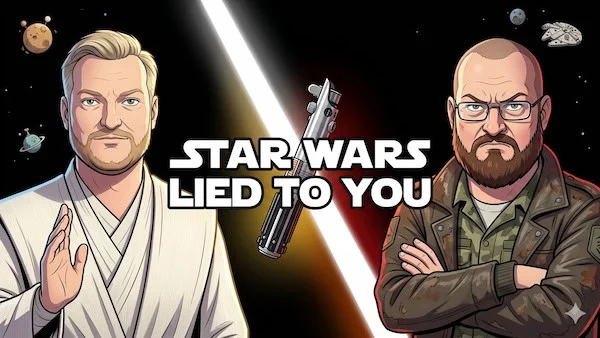
The Star Wars saga, particularly the original trilogy, becomes a focal point for discussing the blending of turnings and the subjectivity of interpretation. Thomas initially frames Star Wars through the lens of protagonist choice:

-
Luke Skywalker as Protagonist (Noblebright): If Luke is the central figure, the narrative is a clear-cut Noblebright story. Luke embodies goodness, the Empire represents pure evil, and good ultimately triumphs through heroic sacrifice.
-
Han Solo as Protagonist (Grimbright): However, viewing Han Solo as the protagonist shifts the perspective. His initial motivation is purely mercenary – he’s "just in it for the money." This aligns him with the cynical, self-serving characters of Grimbright narratives like The Good, the Bad and the Ugly and Kelly’s Heroes.
The discussion then delves into the brilliance of The Empire Strikes Back, which masterfully blends these archetypes. In this installment, Luke Skywalker experiences disillusionment and hardship, exhibiting traits that could be seen as aligning with Grim-leaning narratives. Conversely, Han Solo undergoes a transformation, evolving into a hero who sacrifices himself for the Rebellion, moving from his Grim-rooted cynicism towards a Noble sacrifice.
Jonathan challenges this interpretation, arguing that these are character arcs rather than a shift in the narrative’s fundamental quadrant. He contends that Luke remains Noblebright throughout, even as he faces challenges and emotional dips. His journey is one of disillusionment within a noble framework, not a descent into grimness. Han Solo, while exhibiting a moment of sacrifice, is argued to remain fundamentally cynical, with his "bright" moment being a temporary deviation from his core Grim disposition.
The Nuance of Character Arcs and Emotional Tone
The debate over The Empire Strikes Back highlights the critical distinction between a character’s arc and the overall narrative’s moral classification. Jonathan argues that Luke’s "grimness" is not a descent into cynicism but rather a struggle with fear and the realization of his own inner darkness. He emphasizes that fear, a natural survival instinct, is distinct from cowardice. Luke’s actions are driven by a noble desire to protect his friends, even when facing overwhelming odds. His eventual confrontation with Darth Vader and the revelation of their familial connection, while emotionally devastating, do not fundamentally alter his noble core.
Thomas, however, maintains that Luke’s journey in The Empire Strikes Back represents a weakening, a susceptibility to the "good times" (or perhaps the perceived comfort of his own path) making him "weak." He interprets Luke seeing himself as Vader as a manifestation of evil and the dark side, a grim realization of his potential for darkness.
The emotional tone of The Empire Strikes Back is a key point of contention. Thomas suggests the lingering sense of defeat and compromise at the film’s conclusion aligns more closely with the emotional impact of Kelly’s Heroes or The Good, the Bad and the Ugly than the triumphant resolution of The Magnificent Seven. This "grimness of defeat" coupled with lingering hope, he argues, is the essence of a blended, "grimbright" narrative.
The Shifting Sands of Cultural Context: The Fourth Turning and Beyond
The discussion then pivots to the broader implications of these narrative frameworks within societal shifts. Thomas posits that current times, characterized as the fourth turning ("bad times make strong men"), are "very outer-world focused." The emphasis is on action, on holding the line against external threats, and on doing the "right things" regardless of personal belief. This aligns with a more Nobledark sensibility, where individuals must act heroically in dire circumstances.
However, he anticipates a future shift towards the second turning, where a "longing for unity" will emerge, necessitating a deeper internal alignment and belief. This future societal phase would resonate more with Grimbright narratives, where the internal world and emotional authenticity become paramount.
The Enduring Question: Return of the Jedi and its Resonance
Return of the Jedi is presented as a film that doesn’t resonate as strongly as its predecessor. Thomas attributes this to its more overtly Noblebright resolution. By the time it was released, he argues, the cultural zeitgeist had firmly shifted into the "Grimbright era," making the more straightforwardly heroic narrative of Ewoks defeating the Empire feel out of sync. The blending of Luke and Han’s archetypes, which was compelling in Empire, becomes less dynamic in Jedi, as they converge towards a similar moral compass.
Jonathan offers a counterpoint, viewing Return of the Jedi as the triumphant conclusion of Luke’s Noblebright arc. He highlights Luke’s ultimate rejection of the dark side, symbolized by his discarding of his lightsaber and his declaration of being a Jedi. This act, for Jonathan, is a testament to his increased nobility, even if it doesn’t guarantee a swift victory. He also praises the humorous portrayal of the Ewoks and Han Solo’s evolution from Grim to Noblebright, demonstrating his capacity for profound sacrifice.
The Visual Language of Morality: Luke Skywalker’s Journey
The visual evolution of Luke Skywalker, from his pristine white attire in A New Hope to the darker, more somber clothing in Return of the Jedi, is brought up as evidence of a "grimness" in his story. However, Jonathan argues that this visual shift does not fundamentally alter Luke’s character or spirit. Even when operating in darker environments, like Jabba’s Palace, his motivations remain noble: to rescue his friend and dismantle a criminal enterprise. His nobility, he contends, is an internal quality that transcends external appearances.
This leads to a fascinating point of agreement: the idea that the "visual component to the setting, but it doesn’t touch his spirit." Thomas declares this the very definition of Grimbright. Jonathan refines this, stating that "Grim" is a perspective, a pragmatic approach, while "Bright" relates to the ending. Rogue One, for instance, is described as Grimlight due to its bleak narrative and the morally compromised actions of its characters, but its ultimate sacrifice for the Rebellion provides the "bright" ending.
Grimdark vs. Grimbright: A Crucial Distinction
The article grapples with the subtle but significant difference between Grimdark and Grimbright. Jonathan defines Grimdark as a state where "you can’t win," a pervasive hopelessness. Grimlight, conversely, involves a grim setting with "bright characters," or a bleak world with a "bright" ending, often achieved through sacrifice or resilience. This distinction is crucial for understanding narratives where characters face immense darkness but retain their humanity or achieve a meaningful, albeit not entirely triumphant, conclusion.
The example of Helsreach, a Warhammer 40,000 novel, is used to illustrate this point. While many characters die and the circumstances are dire, the protagonist’s journey from cynicism to heroism, culminating in a perspective that appreciates all heroes of mankind, provides a "bright ending." This, for Jonathan, categorizes it as Grimlight, not Grimdark.
Conclusion: The Ever-Evolving Narrative Landscape
The exploration of Noblebright and Grimbright, Nobledark and Grimdark, offers a valuable framework for analyzing the moral and thematic underpinnings of cinematic and literary works. The subjective nature of interpretation, as demonstrated by the debate surrounding Star Wars, underscores the complexity of these categories. Ultimately, these frameworks serve not as rigid boxes, but as tools to deepen our understanding of storytelling and its reflection of our evolving societal and individual landscapes. As we navigate different "turnings," the stories we tell and the ways we interpret them will continue to evolve, offering new perspectives on the enduring human quest for meaning, heroism, and hope.




Leave a Comment