
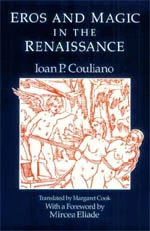
Unearthing the Enchanted Mind: Ioan P. Couliano’s Eros and Magic in the Renaissance Challenges Modernity’s Foundations
FOR IMMEDIATE RELEASE
[City, State] – [Date] – In an era often characterized by a triumphant narrative of scientific rationalism, a profound historical and philosophical work continues to resonate, challenging the very bedrock of modern thought. Ioan P. Couliano’s seminal Eros and Magic in the Renaissance (University of Chicago Press) offers a startling re-evaluation of the transition from a world imbued with magic and animism to the mechanistic worldview that dominates today. Far from being a mere historical curiosity, Couliano’s scholarship reveals how our contemporary understanding of imagination and desire as purely subjective, having no bearing on external reality, is not an immutable truth but a relatively recent and, arguably, "ill-considered aberration."
This groundbreaking book serves as both a meticulous historical sketch of the Renaissance’s vibrant intellectual landscape and a penetrating philosophical inquiry into the nature of magic itself. Couliano, a unique figure as both a practicing magician and a rigorous scholar who collaborated extensively with the famed historian of religions Mircea Eliade, brings an unparalleled freshness and vitality to his analysis. His work transcends conventional academic boundaries, offering insights informed by perspectives often overlooked in mainstream historical discourse.
Eros and Magic in the Renaissance asserts that the triumph of the mechanistic paradigm over the magical-animistic one was not a victory of inherent rationality over superstition. Instead, it was a complex interplay of cultural, religious, and political forces, heavily influenced by the puritanical sentiments of the Protestant Reformation. Couliano compels readers to reconsider the very foundations of modern science and the hidden "magic" that persists in various guises within contemporary society.
Main Facts: A Paradigm Shift Revisited
Ioan P. Couliano’s Eros and Magic in the Renaissance presents a compelling argument against the modern perception of imagination (vis phantastica) and desire (eros) as mere internal, subjective phenomena devoid of objective power. The book meticulously details how, in the Renaissance, these faculties were considered potent forces capable of influencing and even shaping reality. This perspective stands in stark contrast to our current understanding, which largely relegates such concepts to the realm of individual psychology, divorcing them from any tangible impact on the external world. Couliano identifies this modern bifurcation as a significant departure from historical norms, an "aberration" that has profoundly shaped our collective consciousness.
At its core, the book performs a dual function: it is a first-rate historical narrative charting the complex intellectual and cultural currents that flowed from the magical and animistic flourishing of the Renaissance into the more rigid, mechanistic frameworks of the post-Renaissance era. Simultaneously, it serves as one of the most insightful philosophical examinations of magic ever written. Couliano’s ability to weave together rigorous historical research with deep philosophical reflection is largely attributed to his unique background. As a scholar who worked alongside Mircea Eliade, a towering figure in the history of religions, Couliano inherited a tradition of profound historical-religious inquiry. However, his personal engagement with the practice of magic imbues his scholarship with an authenticity and an internal perspective that traditional academics often lack, lending his arguments a compelling depth and originality.
The central revelation of Eros and Magic in the Renaissance is its audacious claim regarding the victory of mechanism over magic. Conventional wisdom posits that the mechanistic worldview, with its emphasis on empirical observation, quantifiable data, and predictable laws, simply outcompeted magical thought due to its inherent rationality and superior explanatory power. Couliano meticulously dismantles this "triumphalist idea," arguing instead that the mechanistic paradigm gained ascendancy primarily because it aligned more congruously with the puritanical, disenchanting sentiments propagated by the Protestant Reformation. This re-framing shifts the historical debate from one of "reason versus unreason" to a more nuanced clash between "two different and incompatible ways of perceiving and experiencing the world," two distinct mythologies vying for cultural dominance. Couliano thus forces us to confront the uncomfortable possibility that the foundations of modern science are not solely built on pure reason, but also on specific cultural and ideological preferences that prevailed at a critical juncture in Western history.
Chronology: From Enchantment to Disenchantment
Couliano’s work meticulously traces a chronological arc, illustrating a profound shift in Western thought from a deeply enchanted worldview to a predominantly mechanistic one. This journey unfolds through several critical stages, each contributing to the gradual "disenchantment" of the world.
The Renaissance Enchantment: A Cosmos Alive with Agency
The Renaissance, far from being solely an age of classical revival and artistic flourishing, was also a period where magic, animism, and a remarkably nuanced understanding of the human psyche held significant sway. Couliano demonstrates that thinkers of this era perceived the cosmos not as an inert collection of matter, but as a living, interconnected entity teeming with subtle forces and intelligences. Central to this worldview were the concepts of vis phantastica (the imaginative faculty) and eros (desire). These were not merely internal states but active powers capable of interacting with and shaping the external world.
Prominent figures like Marsilio Ficino, a pivotal Neoplatonist, championed the idea of cosmic sympathy, believing that the human soul, through imagination and desire, could attune itself to celestial influences and effect changes in reality. His work on astral magic, seeking to draw down planetary energies, exemplifies this belief in the active power of the mind. Pico della Mirandola, in his "Oration on the Dignity of Man," celebrated humanity’s unique position and potential, suggesting a capacity to ascend or descend the great chain of being, a power rooted in intellectual and volitional agency.
However, it is Giordano Bruno whose life and magnificent work, particularly On Bonding in a General Sense (De vinculis in genere), receives especially extensive treatment in Couliano’s analysis, serving as a cornerstone for his intricate arguments. Bruno, an itinerant philosopher and magus, elaborated a complex cosmology where the universe was infinite, animated by a universal soul, and intimately connected through a web of "bonds" or "vincula." These bonds were not merely physical but psychological and spiritual, enabling the magician (or, more broadly, anyone with potent imagination and desire) to manipulate connections between things, people, and cosmic forces. Bruno’s system of operative magic was fundamentally a psychology of influence, where the imagination and the intensity of desire could create powerful "bonds" that reshaped perception and action. For Bruno, to understand the universe was to understand its bonds, and to wield power was to master the art of bonding – a direct application of vis phantastica and eros to reality.
The Reformation’s Culling: Stripping Away the Sacred
The advent of the Protestant Reformation, often lauded as a movement towards greater individual freedom and intellectual liberation, is re-characterized by Couliano as an "ultraconservative movement" in its impact on the enchanted worldview. Far from fostering a more liberal spiritual landscape, the Reformation’s fundamentalist zeal sought to purify Christianity by systematically stripping away what it perceived as "the last vestiges of animism" that had subtly persisted under the comparatively lax supervision of the medieval Catholic Church.
This rigorous cleansing aimed to eradicate practices, beliefs, and even aesthetic expressions that suggested an active, ensouled presence in the natural world or a direct, unmediated interaction between humanity and divine or spiritual forces outside of established scriptural channels. The Protestant emphasis on sola scriptura (scripture alone) and a transcendent, remote God created an intellectual and spiritual climate profoundly suspicious of any "enchanted view of the world." The direct manipulation of cosmic forces, the use of images or talismans for magical effect, or the belief in inherent spiritual properties of natural objects – all were increasingly condemned as idolatry, superstition, or outright demonic. This shift effectively desacralized the natural world, preparing the ground for a worldview where matter was inert and spirit was confined to a distant divine realm or the individual human soul.
The Clash of Paradigms: Magicians vs. Mechanists
Against this backdrop of religious reform, the emerging sciences of the period found themselves bifurcated into two fundamentally opposed camps. On one side were the "natural magicians," figures like Paracelsus, whose worldview was deeply rooted in the Renaissance’s animistic traditions. Paracelsus, a physician, alchemist, and astrologer, believed the human body was a microcosm reflecting the macrocosm, and that illness resulted from imbalances that could be remedied by understanding the inherent magical properties of nature – its "signatures" and sympathies. His approach to medicine was holistic, seeing the patient and the environment as intertwined, with spiritual and material aspects inseparable. For Paracelsus and his ilk, the world was a living organism, and scientific inquiry involved understanding its hidden sympathies and occult virtues.
Opposing them were the "proto-mechanists," a nascent group of thinkers who began to articulate a vision of the world as essentially a giant, intricate machine. This view posited a universe devoid of intrinsic will, spirit, or agency, where phenomena could be explained solely through material causes and efficient forces. Qualities like will, consciousness, and spirit were increasingly relegated exclusively to the human brain and a dualistic, remote Christian spirit world, separate from the physical cosmos. This conceptual division laid the groundwork for the Cartesian dualism that would profoundly influence subsequent Western philosophy and science. Figures like Robert Boyle and Isaac Newton, while complex in their own beliefs, contributed significantly to the development of this mechanistic understanding through their emphasis on quantifiable laws and material interactions.
The Mechanistic Triumph and Its True Nature
The latter, mechanistic view, albeit in a slightly modified form, ultimately solidified into the underlying worldview and mythology that underpins dominant strains of modern science. However, Couliano provocatively argues against the prevalent "triumphalist idea" that this mechanistic worldview simply won out over the magical, animistic one because it was inherently superior, more rational, or empirically verifiable.
Instead, Couliano contends that the proto-mechanists won the intellectual and cultural debate primarily because their worldview was "more congruous with the puritanical sentiments of the period." The Protestant Reformation’s desire to strip the world of enchantment and confine spiritual agency to a transcendent God made the inert, machine-like universe of the mechanists far more palatable and religiously orthodox than the vibrant, animated cosmos of the magicians. The debate, Couliano asserts, was not a clear-cut contest between reason and unreason, as the partisans of mechanism typically frame it. Rather, it was a clash between "two different and incompatible ways of perceiving and experiencing the world," two distinct "mythologies," each operating on its own set of fundamental premises about the nature of reality, causality, and human agency. The victory of mechanism was, therefore, not solely an intellectual triumph but a cultural and ideological one, reflecting the prevailing spiritual anxieties and aspirations of the age.
Supporting Data: Couliano’s Method and Magic’s Metamorphosis
Couliano’s arguments are bolstered by his unique methodological approach and his insightful reinterpretation of historical evidence, leading to a profound understanding of how magic, though ostensibly vanquished, merely transformed.
Couliano’s Unique Methodology: Scholar and Magician
The efficacy and groundbreaking nature of Eros and Magic in the Renaissance stem directly from Ioan P. Couliano’s exceptional background. His dual identity as both a "magician and a scholar" granted him access to perspectives and understandings that are typically inaccessible to conventional academics. While rigorous in his historical research and philosophical analysis, his personal familiarity with esoteric traditions allowed him to interpret Renaissance magical texts not merely as historical curiosities or naive superstitions, but as sophisticated systems of thought and practice with their own internal logic and efficacy.
His extensive collaboration with Mircea Eliade, a pioneer in the comparative study of religion and myth, further refined Couliano’s ability to discern universal patterns and underlying structures within diverse cultural phenomena. Eliade’s emphasis on the sacred, myth, and ritual provided a framework for Couliano to understand the profound human need for meaning and connection, which magic historically addressed. This combination of academic rigor and informed insider perspective brings "a great freshness and vitality" to his work, enabling him to bridge the chasm between historical fact and experiential insight, a rare feat in scholarly literature. He could, for example, grasp the operative principles behind Bruno’s On Bonding not just as a theory, but as a potential manual for influencing human perception and will.
Re-evaluating Historical Narratives: Beyond Triumphalism
Couliano’s work stands as a powerful corrective to the "triumphalist idea" of scientific progress, which often presents the rise of mechanism as an inevitable march of reason against ignorance. He meticulously deconstructs this linear narrative, demonstrating that the historical debate was far more complex and contingent. By characterizing the conflict as one between "two different mythologies" rather than "reason and unreason," he challenges the very foundations of how we understand the development of Western thought.
This re-evaluation implies that the mechanistic worldview, for all its undeniable successes in technological and scientific advancement, is itself a "mythology" – a foundational narrative that provides a framework for interpreting reality. Like all mythologies, it is built upon a specific set of premises, assumptions, and values that are not necessarily universally true but are culturally constructed. This perspective doesn’t diminish the achievements of science but rather contextualizes them within a broader cultural and historical landscape, inviting a more critical and self-aware engagement with our scientific heritage. It suggests that the choices made during the Reformation and early modern period about what constituted legitimate knowledge were deeply entangled with theological and social agendas, not solely empirical evidence.
The Enduring Legacy of Magic: Resurfacing in Modern Guises
Perhaps one of Couliano’s most provocative and enduring insights is the argument that when the mechanists won public favor, magic did not disappear but simply "had to go underground." In a stunning leap of interpretation, he asserts that it "survives today under different names." He points to fields such as "psychology," "marketing," "advertising," and "personal development" as modern manifestations of these ancient magical impulses.
This connection is not arbitrary. Consider psychology: its very essence often involves understanding and influencing subjective states, beliefs, and desires – direct echoes of the Renaissance’s focus on vis phantastica and eros. Therapy, for instance, often works by helping individuals reframe their narratives, change their internal "bonds" to past traumas, and cultivate new desires for the future. Marketing and advertising are prime examples of the deliberate manipulation of desire and imagination to create bonds between consumers and products. They craft compelling narratives, evoke emotions, and construct aspirational identities, all designed to influence choice and behavior, strikingly similar to Bruno’s theories of bonding and persuasion. Similarly, the burgeoning industry of personal development is predicated on the idea that individuals can consciously reshape their inner worlds – their beliefs, motivations, and self-image – to achieve external results, a modern form of self-mastery rooted in the power of the mind to influence reality. Couliano essentially reveals that the underlying mechanisms of persuasion, influence, and subjective transformation, once categorized as magic, are now foundational to many ostensibly rational, secular disciplines.
Official Responses: Scholarly Reception and Unfinished Legacy
As a scholarly work, Eros and Magic in the Renaissance did not elicit "official responses" in the journalistic sense of government or corporate statements. Instead, its reception unfolded within academic circles, where it garnered significant praise for its originality, intellectual rigor, and challenging perspectives, while also sparking critical engagement and debate.
Scholarly Reception and Impact: A Provocative Masterpiece
Upon its publication, Eros and Magic in the Renaissance was widely hailed as a major contribution to the fields of Renaissance studies, the history of science, the history of religions, and cultural history. Its designation as a "first-rate historical sketch" and "one of the best books on the philosophy of magic" reflects a broad consensus among scholars regarding its exceptional quality and intellectual depth. Reviewers consistently lauded Couliano’s audacious thesis, his ability to synthesize vast amounts of historical material, and his unique interdisciplinary approach.
The book resonated particularly with scholars interested in the overlooked aspects of Renaissance thought, offering a powerful counter-narrative to the standard intellectual history of the period. It helped to illuminate the sophisticated and often rational underpinnings of Renaissance magic, moving beyond simplistic dismissals of it as mere superstition. While Couliano’s interpretations were, by their very nature, provocative and sometimes controversial, they stimulated crucial discussions about the nature of rationality, the historical contingency of scientific paradigms, and the enduring influence of non-rational elements in human culture. His work encouraged a more nuanced understanding of how cultural values and religious beliefs shaped scientific inquiry and philosophical development.
Couliano’s Posthumous Influence: A Legacy Cut Short
Tragically, Ioan P. Couliano’s life was cut short when he was murdered in 1993 under mysterious circumstances, a crime that remains unsolved. His untimely death undoubtedly impacted the full trajectory of his intellectual legacy. Had he lived, Couliano would likely have continued to develop and expand upon the themes introduced in Eros and Magic in the Renaissance, further exploring the intricate connections between ancient esoteric traditions and modern thought.
Despite this loss, the book has continued to exert significant influence, becoming a foundational text for subsequent generations of scholars working at the intersection of magic, science, and religion. It has informed studies on the history of psychology, the sociology of knowledge, and cultural theory, providing a critical lens through which to examine the historical construction of reality and subjectivity. Couliano’s work serves as a testament to the power of unconventional perspectives to unlock deeper truths about history and the human condition, solidifying his reputation as an incisive and courageous intellectual whose insights continue to challenge and inspire.
Implications: Re-Enchanting Our Understanding of Reality
The profound insights presented in Eros and Magic in the Renaissance carry far-reaching implications, inviting us to fundamentally re-evaluate our understanding of science, subjectivity, and the very fabric of reality. Couliano’s work is not merely a historical account; it is a lens through which to critically examine the present and consider alternative futures.
Reshaping Our Understanding of Science and Subjectivity
Couliano’s most potent implication is encapsulated in the statement, "After reading Eros and Magic in the Renaissance, you’ll never see magic or science in the same way again." This is not hyperbole. By demonstrating that the triumph of mechanism was not solely an intellectual victory but a cultural imposition driven by specific theological and ideological currents, Couliano forces a critical re-evaluation of modernity’s foundational assumptions. He reveals that our cherished notions of objective reality, dispassionate scientific inquiry, and the purely subjective nature of inner experience are historical constructs, not immutable truths.
This understanding has profound consequences for how we perceive scientific "facts" and the boundaries of legitimate knowledge. If science itself operates within a "mythology," then its claims, while powerful and effective, are not necessarily exhaustive or universally valid beyond its chosen premises. It opens a dialogue about phenomena often dismissed by mainstream science, such as the placebo effect, the power of belief in healing, or the influence of collective imagination on social realities. Couliano’s work encourages us to question the strict demarcation between mind and matter, reminding us that the way we conceptualize these elements is a product of historical contingency.
A Call for a More Holistic Worldview
Implicit in Couliano’s analysis is an argument for a more holistic worldview, one that moves beyond the reductive mechanistic paradigm that has dominated for centuries. By meticulously tracing the historical marginalization of imagination and desire as active forces, he subtly advocates for their re-integration into our understanding of reality. This doesn’t mean a return to pre-modern magical practices, but rather a recognition of the profound, often unconscious, ways in which our subjective experiences, beliefs, and collective narratives continue to shape our world.
Such a holistic perspective could enrich contemporary fields like psychology, sociology, and even economics, by acknowledging the deep historical roots of human agency and the subtle, often non-rational, forces that drive human behavior. It suggests that a complete understanding of consciousness, for instance, cannot simply be reduced to neural firings but must also account for its historical and cultural contexts, and its inherent capacity for meaning-making and world-shaping. Recognizing the "mythological" underpinnings of all worldviews, including the scientific one, fosters intellectual humility and opens avenues for interdisciplinary dialogue that transcends rigid disciplinary boundaries.
Lessons for Contemporary Society: Unmasking Modern Enchantments
Beyond academia, Eros and Magic in the Renaissance offers crucial lessons for contemporary society. In an age saturated with information, marketing, and the pervasive influence of digital narratives, Couliano’s insights into the power of vis phantastica and eros become incredibly relevant. His identification of "psychology," "marketing," "advertising," and "personal development" as modern guises for "magic" is prescient. These fields are, in essence, sophisticated systems for understanding, channeling, and manipulating human imagination and desire on a mass scale.
Understanding this historical lineage allows us to critically analyze the mechanisms of persuasion, influence, and belief formation in our own time. It sheds light on how dominant ideologies, whether political, economic, or cultural, continue to shape perceptions and realities, often by appealing to deep-seated desires and crafting compelling narratives that resonate with collective imaginations. Couliano’s work thus empowers individuals to become more discerning consumers of information and more self-aware agents in a world still profoundly shaped by "bonds" of persuasion and the enchantments of the mind. It is a powerful reminder that while the overt practice of magic may have receded, the underlying human capacity for creative imagination and potent desire remains an irreducible force, perpetually shaping the world, whether we call it science, art, or indeed, magic.


Leave a Comment