
PACTS: A Tiny Wargame with Titanic Depth Captivates Players
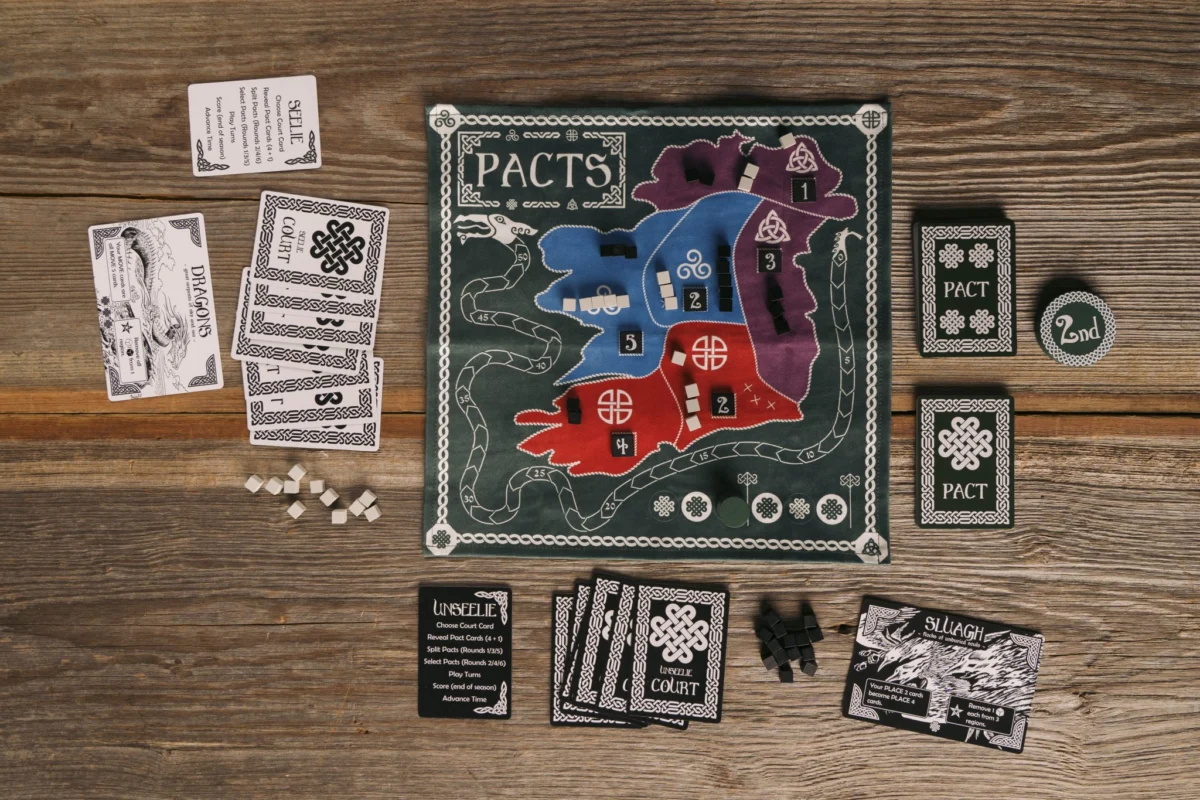
DUBLIN, IRELAND – [Date of Publication, e.g., April 22, 2024] – In an increasingly crowded landscape of complex board games, a diminutive contender has emerged, earning a coveted "Must Play" distinction. PACTS, an elegantly designed and beautifully produced tiny wargame, is captivating players with its deceptively simple mechanics that belie a strategic depth described as "titanic." This two-player head-to-head duel, set against the mystical backdrop of fae courts vying for control of ancient Ireland, distills the essence of area control, tactical card play, and psychological warfare into a compact, yet profoundly engaging experience.
At its core, PACTS is a masterclass in minimalist design, proving that monumental strategic engagement doesn’t require an sprawling board or an overwhelming component list. Reviewer Christopher John Eggett lauded the game for its ability to transform players "from wanting a casual quick game to being the scheming Sun Tzu of mythic Ireland in about 20 minutes." This swift, intense metamorphosis is the hallmark of PACTS‘s brilliance, offering immediate replayability and a compelling mental workout for strategists of all levels.
Unveiling the Strategic Heart of PACTS: Main Facts
PACTS pits two players against each other over six meticulously designed rounds, each a crucible of decision-making. The overarching objective is to dominate regions of mythic Ireland by strategically placing and moving influence cubes. Points are scored at the end of the third and sixth rounds, rewarding players who hold the majority of influence in specific areas, each assigned a unique points token.
The game’s primary engine is card play, directing players to execute fundamental actions: deploy influence cubes into designated regions, shift them between neighboring territories, or unleash potent faction-specific magical powers. While these mechanics might appear straightforward on the surface, the true genius of PACTS lies in its innovative and agonizingly tense card drafting mechanism. Each turn, five cards are drawn face-up. One player is tasked with splitting these cards into two piles and assigning a crucial "2nd Player marker" to one of them. The other player then faces the excruciating choice: which pile to take? This single decision, repeated throughout the game, forms the bedrock of PACTS‘s deep psychological interplay and strategic complexity.
The allure of going second in any given round is immense, granting the ability to react to an established board state, a tactical advantage that becomes "obviously pivotal" after just a few games. Coupled with the weighty impact of faction powers – which can convert opponents’ cubes, purge a region of all influence, or even relocate valuable points tokens – the value of the 2nd Player token and the cards themselves transforms into a dynamic, ever-shifting equation. PACTS is not merely about executing actions; it’s about anticipating, manipulating, and outmaneuvering an opponent through a series of calculated gambles and shrewd negotiations.
A Dance of Fae and Fate: Chronology of Gameplay
The journey into the strategic depths of PACTS unfolds rhythmically across its six rounds, each building upon the decisions and consequences of the last.
The Mythic Arena: Setup and Initial Stakes
Before the first card is dealt, players immerse themselves in the mythic landscape of Ireland, represented by a compact, artfully designed board. Regions are marked, and unique points tokens are distributed, setting the initial stakes for control. Each player aligns with one of the two distinct fae courts, each endowed with unique, game-altering faction powers. The initial setup is swift, laying the groundwork for the intense engagement to follow. The goal is clear: have more of your influence cubes in a region at the end of scoring rounds (rounds 3 and 6) to claim its points.
The Rhythm of Conflict: Turn Structure and Card Play
Each round commences with the core mechanism that defines PACTS: the five-card draw. These cards represent the available actions for the turn, but they are not simply dealt out. The player designated as the "first player" for the round assumes the critical role of the "splitter." This player must divide the five cards into two distinct piles – one larger, one smaller, or perhaps two of similar size, depending on their strategy. Crucially, they must also decide which of these piles will receive the "2nd Player marker."
Once the split is made, the onus shifts to the "second player." This player now has the unenviable, yet powerful, choice of which pile to claim. This single decision dictates not only the actions they will have access to but also whether they will act first or second in the upcoming phase. The player who takes the pile with the 2nd Player marker will, naturally, act second. This dynamic creates immediate tension, as players weigh the value of specific action cards against the tactical advantage of reacting to their opponent’s moves.
The Arsenal of Influence: Actions and Faction Powers
The cards claimed through the split-and-choose mechanism dictate the players’ actions for the round. These actions are elegantly simple yet strategically profound:
- Place Influence Cubes: Players can deploy their faction’s cubes onto the board in specific regions, directly asserting control.
- Move Influence Cubes: Existing cubes can be relocated to adjacent regions, allowing for swift redeployments, shoring up defenses, or launching surprise offensives.
- Activate Faction Powers: Certain cards allow players to unleash their unique fae court abilities. These powers are not mere embellishments; they are game-changers. Examples include:
- Converting Opponent’s Cubes: Turning enemy influence into your own, flipping control of a region in an instant.
- Removing All Influence: Wiping a region clean, resetting the battlefield and forcing both players to rebuild.
- Switching Points Tokens: Relocating the value of a region, dynamically altering scoring priorities and challenging established plans.
These powers introduce layers of asymmetry and tactical surprise, making the activation cards highly sought after and often central to the split-and-choose calculus.
The Shifting Sands: Early Game to Mid-Game Evolution
In the initial rounds, players often focus on understanding the fundamental value of each action card and the immediate impact of the 2nd Player token. The board state is relatively open, and players might experiment with different cube placements and basic movements. However, as the game progresses into the mid-game (leading up to the first scoring round at the end of round 3), the strategic landscape shifts dramatically.
The simple mechanics give way to a sophisticated psychological duel. The split-and-choose action transforms from a mere card distribution into a high-stakes negotiation. Players begin to anticipate their opponent’s likely moves, deduce their objectives, and craft card piles designed to either force inefficiency or deny crucial actions. The game leaves the physical board, moving into the minds of the players, becoming "a grapple between what you want to do, and what you think they want to do." Every choice of how to split the cards, and which pile to take, becomes a profound statement of intent and a test of wills.
The Climax: Late Game and Decisive Scoring
The latter half of the game, particularly leading into the final scoring round at the end of round 6, is a maelstrom of calculated risks and desperate maneuvers. Every cube placement, every movement, and every faction power activation is magnified in importance. Players, now keenly aware of the board state and their opponent’s likely strategies, make "big gambles" on what the other side might do next. The information is largely open – apart from the opponent’s final pile choice – which means the tension is almost unbearable. The elegance of PACTS lies in how quickly this intricate mental battle forms, turning seemingly simple actions into pivotal, high-leverage decisions that ultimately determine control of mythic Ireland.
The Art of Subtlety: Supporting Data and Strategic Depths
PACTS excels in its ability to generate profound strategic depth from minimal components. A handful of cards, a board "the size of a handkerchief," and a few dozen cubes are all that’s needed to orchestrate a sophisticated strategic ballet.
The Psychological Core: The Split-and-Choose Conundrum
The heart of PACTS‘s strategy lies undeniably in its unique card drafting mechanism. It’s not merely a way to distribute actions; it’s a constant, evolving negotiation. The "splitter" isn’t just dividing cards; they’re crafting a dilemma. "If you know what would be best for your opponent to do," the article notes, "what can you offer them across these two piles of cards that will either force them to be inefficient, or drain them of actions?" This question encapsulates the game’s brilliance. It forces players into a constant state of empathy and meta-analysis, attempting to divine their opponent’s priorities and weaknesses.
This creates a palpable tension. Will an opponent sacrifice immediate board advantage to secure a powerful faction ability? Will they take a less optimal pile of cards just to gain the invaluable 2nd Player token? These are the "deals" made turn by turn, shaping not just the board but the players’ understanding of each other. This dynamic transforms PACTS into a true "dueller" game, where mastering the art of the split-and-choose is paramount.
Layers of Strategic Mastery
Beyond the card draft, PACTS offers multiple layers of strategic consideration:

- Resource Management (of Actions): Every card taken is an action gained, but also an action denied to the opponent. Players must carefully consider which actions are most critical for their current objectives and which can be sacrificed.
- Tempo and Initiative: The 2nd Player token is a powerful tool for controlling the flow of the game. Acting last allows for direct responses to an opponent’s moves, potentially swinging control of a region at the crucial moment. Deciding when to prioritize this initiative over a more robust set of actions is a constant strategic puzzle.
- Area Control Nuances: It’s not just about having the most cubes. It’s about having them in the right places at the right time (scoring rounds), anticipating where an opponent might attack, and understanding how faction powers can disrupt the delicate balance of power.
- Faction Power Synergy: Each fae court’s powers introduce unique strategic avenues. Learning to leverage these powers effectively, often in combination with specific card plays, is key to developing a winning strategy. Some powers are best used defensively, others offensively, and some for pure disruption.
- Adaptive Strategy: The game’s quick playtime encourages experimentation. Players can test out new approaches, observe their opponent’s reactions, and quickly adapt their "meta" for the next rematch. This fosters a vibrant, evolving strategic landscape even within a single gaming session.
The Power of Replayability
The desire for an "immediate rematch" is a strong indicator of a game’s replayability, and PACTS delivers this in spades. This isn’t just due to the quick playtime, but also the inherent variability in each game:
- Dynamic Card Draw: The random draw of five cards each turn ensures no two turns are exactly alike.
- Player-Driven Variability: The split-and-choose mechanism means that players themselves introduce variation by how they divide the cards and what they prioritize.
- Faction Asymmetry: The distinct faction powers offer different strategic puzzles with each playthrough, encouraging players to try out both sides and understand their strengths and weaknesses.
- Evolving Meta: As players become more familiar with each other, a localized "meta" develops, leading to increasingly nuanced bluffs, counter-bluffs, and strategic adaptations.
Comparison to "The King is Dead Second Edition"
The article draws a compelling parallel between PACTS and The King is Dead Second Edition, another acclaimed tight-area control game. Both share the appeal of a "fast war that’s done in about 20 minutes," offering intense strategic depth in a short timeframe. However, PACTS is noted for its "more expansive and open feeling." This likely stems from the dynamic card drafting, the variability of faction powers, and the direct, player-driven negotiation inherent in the split-and-choose, which allows for a wider range of tactical expression compared to the more fixed action selection of The King is Dead. For fans of strategic efficiency and intense duels, PACTS offers a fresh, yet equally satisfying, challenge.
Crafting Elegance: Inferred Design Philosophy and Success
While the article doesn’t feature direct quotes from the designers of PACTS, the game’s mechanics and the overwhelming positive reception speak volumes about its underlying design philosophy. The elegance described by the reviewer suggests a deliberate pursuit of maximum strategic impact through minimal rules and components.
The Pursuit of "Titanic Depth from Simple Mechanics"
The core design goal appears to have been to create a game where every decision matters, yet the barrier to entry is low. The breezily simple actions – place, move, activate – are easy to grasp, allowing new players to quickly engage with the game. However, these simple actions are interwoven with a profound decision-making framework: the card draft. This demonstrates a keen understanding of how to layer complexity, introducing the most challenging decisions at the point of player interaction rather than through convoluted rules. The designers likely spent considerable effort fine-tuning the balance of the cards and the power of the 2nd Player token to ensure that the split-and-choose consistently presents genuinely agonizing, yet strategically rich, dilemmas.
Emphasizing Player Interaction and Psychological Warfare
The design clearly prioritizes direct player interaction. PACTS is not a game played in isolation; it is a constant dialogue between opponents. The designers seem to have recognized the power of open information combined with hidden intent. By making most of the board state and available actions transparent, they push the strategic tension into the realm of player psychology. The game isn’t just about optimizing one’s own turn; it’s about predicting, influencing, and reacting to the opponent’s every move. This focus on the "mind game" is a deliberate design choice that elevates PACTS beyond a mere tactical exercise.
Achieving High Replayability in a Small Package
The inherent replayability of PACTS is another testament to its thoughtful design. By incorporating variable card draws, asymmetrical faction powers, and a decision-making mechanism that changes based on player interaction, the designers ensured that each game feels fresh and offers new strategic puzzles. The quick playtime further enhances this, encouraging players to delve deeper into the game’s nuances through repeated plays rather than lengthy, one-off experiences. This efficiency in delivering a rich strategic experience within a short timeframe is a hallmark of excellent game design.
The success of PACTS lies in its masterful execution of these principles. It’s a game that respects players’ intelligence, inviting them to explore deep strategic waters with a deceptively simple vessel.
Implications: Who Should Play PACTS and Its Impact
PACTS isn’t just another board game; it’s a statement about what can be achieved with thoughtful design and a focus on core mechanics. Its implications extend to both individual players and the broader tabletop gaming community.
Target Audience: The Strategist’s Delight
PACTS is an absolute must-play for a specific type of gamer:

- Fans of "Dueller" Games: Players who thrive in direct, head-to-head competition where every decision is scrutinized by an opponent.
- Abstract Strategy Enthusiasts: Those who appreciate games where theme is elegantly integrated but the core satisfaction comes from pure strategic maneuvering and outsmarting an opponent.
- Time-Conscious Strategists: For players who crave deep strategic engagement but often lack the time for multi-hour epics, PACTS offers a complete, satisfying experience in a remarkably short playtime.
- Psychological Warfare Aficionados: If you enjoy anticipating opponents, bluffing, and engaging in mental chess matches, the split-and-choose mechanism will be incredibly rewarding.
- Minimalist Design Appreciators: Those who value elegance, efficiency, and games that do a lot with a little will find PACTS to be a breath of fresh air.
- "The King is Dead" Fans: As noted, if you enjoy the tight, fast-paced area control of The King is Dead, PACTS offers a similar, yet distinctively engaging, experience.
Impact on the Board Game Scene
In a market often dominated by sprawling games with numerous components and complex rule sets, PACTS serves as a powerful reminder that "less is often more." Its success highlights the enduring appeal of games that prioritize:
- Elegant Design: Demonstrating that strategic depth doesn’t require complexity for complexity’s sake.
- High Player Interaction: Proving that direct player engagement, especially through clever drafting mechanisms, can be incredibly compelling.
- Replayability: Showing that a dynamic core mechanic is key to keeping players coming back for more, even in short games.
- Accessibility of Depth: Making sophisticated strategic thinking accessible within a short learning curve.
PACTS is likely to inspire other designers to explore how much strategic richness can be extracted from simple rules and clever player interaction. It sets a high bar for "tiny wargames," proving that a small footprint can lead to monumental experiences.
A Future Classic?
Given its immediate impact and critical acclaim, PACTS has all the hallmarks of a future classic in the two-player strategy genre. Its enduring appeal will lie in its timeless mechanics, its capacity for emergent strategy, and its ability to consistently deliver intense, satisfying duels. While the article doesn’t explicitly discuss expansions or future content, the framework of PACTS is robust enough to potentially support new fae courts, additional action cards, or alternative scoring conditions, should the designers choose to expand upon its world. For now, its brilliance stands on its own, a testament to the power of focused, elegant game design.
Conclusion:
PACTS is more than just a game; it’s an experience. It distills the grand sweep of area control and strategic combat into a perfectly formed, intensely engaging package. With its breezy mechanics and profound strategic depth, it commands immediate attention and earns its "Must Play" status without question. For those ready to become the "scheming Sun Tzu of mythic Ireland" in a mere 20 minutes, PACTS awaits.
Review by Christopher John Eggett
PLAY IT?
YES, ABSOLUTELY! PACTS takes players from wanting a casual quick game to being the scheming Sun Tzu of mythic Ireland in about 20 minutes. Incredible.
WHAT’S IN THE BOX?
- A compact game board
- A deck of action cards
- Two sets of player influence cubes (in two colors)
- Points tokens
- A 2nd Player marker
- Rulebook
TRY THIS IF YOU LIKED…
The King is Dead Second Edition
If you’re a fan of a fast war that’s done in about 20 minutes, then PACTS scratches the same itch as The King Is Dead, but with a more expansive and open feeling.


Leave a Comment