Peak of Resilience: Oprah Winfrey and Oscar-Winning Directors Unveil the Soul of ‘Everest: The Other Side’
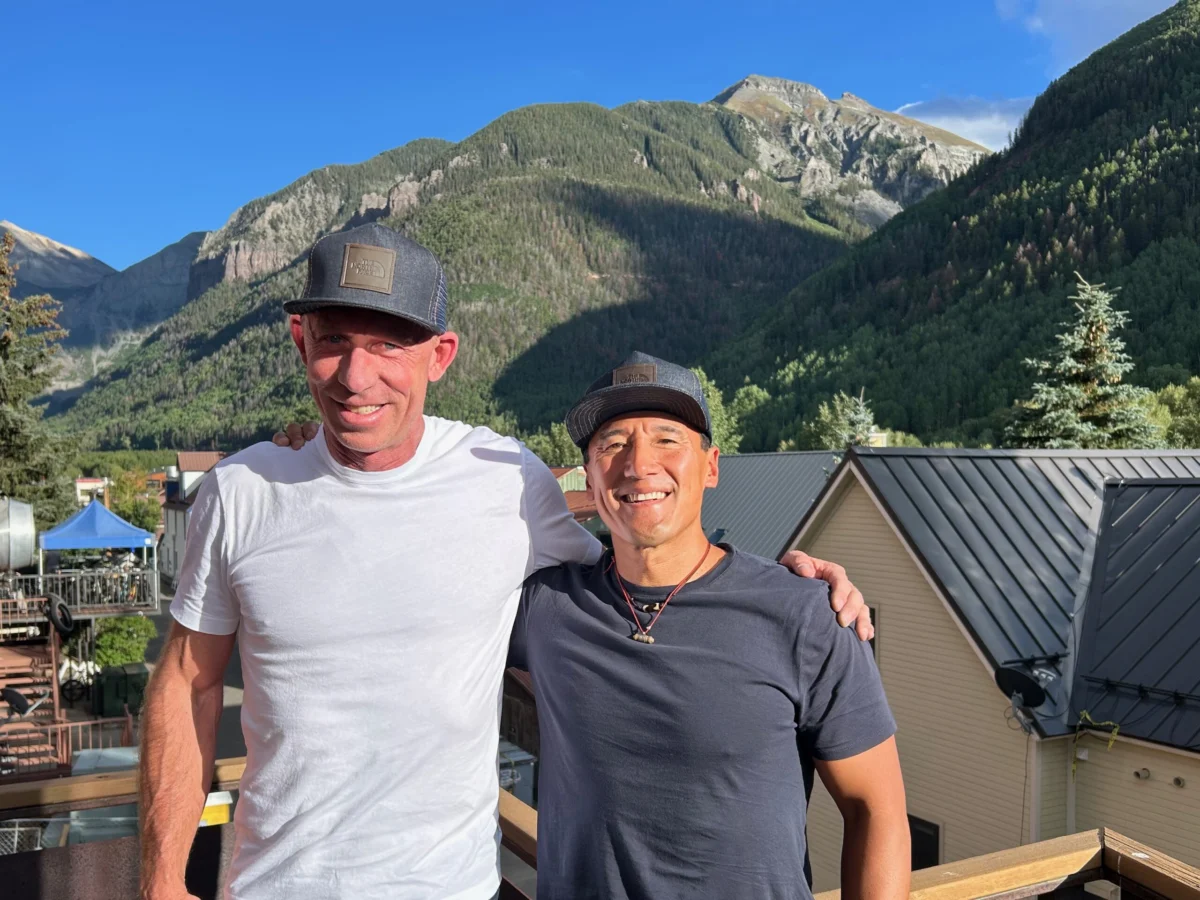
The Telluride Film Festival, nestled in the rugged San Juan Mountains of Colorado, is no stranger to star power or high-altitude drama. Yet, this year’s iteration witnessed a rare convergence of cultural influence and extreme human endurance that left audiences breathless. Oprah Winfrey, a part-time Telluride local known for her selective public appearances at the festival, stepped into the spotlight not just as a spectator, but as a passionate advocate for a new National Geographic documentary: Everest: The Other Side.
Moderating a poignant Q&A with the film’s subject, legendary ski mountaineer Jim Morrison, and its Oscar-winning directors Chai Vasarhelyi and Jimmy Chin, Winfrey framed the film not as a mere sports documentary, but as a profound meditation on the architecture of the human spirit. "As extraordinary a feat as climbing Everest and then skiing down the direct North Face is," Winfrey remarked to the hushed audience, "I think the most extraordinary thing about this man, Jim Morrison, is that he was able to climb back into his life after losing his two children, his wife, learning to love again, and then losing Hilaree."
Main Facts: A Convergence of Tragedy and Triumph
Everest: The Other Side is the latest offering from Little Monster Films, the production powerhouse led by Vasarhelyi and Chin. Following their success with Free Solo and The Rescue, the duo has turned their lens toward a story that is as much about the depths of the heart as it is about the heights of the Himalayas.
The film centers on Jim Morrison, a man whose life has been defined by unthinkable loss and gravity-defying ambition. In 2011, Morrison lost his first wife and two children in a tragic small-plane crash. In the decade that followed, he found a partner in Hilaree Nelson, one of the world’s most accomplished ski mountaineers. Together, they became the premier duo in high-altitude skiing, completing the first descent of the Lhotse Couloir in 2018.
However, their quest to ski the North Face of Everest—a feat never before accomplished—ended in disaster when Nelson was swept away by an avalanche in 2022. The documentary captures the raw, immediate aftermath of this tragedy and Morrison’s subsequent decision to return to the mountain in 2025 to complete the mission as a tribute to Nelson’s legacy.

Chronology: A Decade of Ascent and Loss
To understand the weight of the film, one must trace the timeline of Morrison’s life, which serves as the narrative backbone of the documentary.
2011–2015: The First Valley of Grief
In 2011, Morrison’s world was decimated when a plane crash claimed his family. For years, he navigated the "thin air" of grief, eventually finding solace in the mountains and a new connection with Hilaree Nelson. Nelson, a mother of two herself, understood the precarious balance between the domestic and the extreme.
2018–2021: The Golden Age of Ski Mountaineering
The couple pushed the boundaries of what was thought possible. Their 2018 descent of Lhotse (the world’s fourth-highest peak) solidified their status as icons. It was during this period that Morrison approached Jimmy Chin with the idea of documenting a North Face Everest expedition.
2022: The Manaslu Tragedy
While training and preparing for the Everest North Face project, the couple attempted to ski Manaslu. It was here that cinematographer Pemba Sherpa captured the chilling moment Hilaree Nelson skied into an avalanche and vanished. The film documents the harrowing search for her body and Morrison’s descent into a second, even more complex layer of mourning.
2025: The Final Summit
After years of reflection and preparation, Morrison returned to Everest. Supported by a team of 12, including Jimmy Chin (who summited alongside him), Morrison reached the 29,032-foot peak. In a feat of focused athleticism, he completed the first-ever ski descent of the North Face in four hours and five minutes, finally laying Nelson’s dream—and perhaps a part of his own grief—to rest.

Supporting Data: The Technical Marvel of High-Altitude Filmmaking
The production of Everest: The Other Side represents a new frontier in documentary filmmaking. While Free Solo captured the 3,000-foot verticality of El Capitan, Everest required operating at 29,000 feet—the cruising altitude of a commercial airliner.
The Logistics of the "Death Zone"
- The Team: A crew of 12, including elite Sherpas and high-altitude cinematographers, moved tons of equipment up the mountain.
- The Cinematography: High-altitude specialists Erich Roepke and Pemba Sherpa operated cameras where oxygen is scarce and mental clarity is compromised.
- The Aerial Feat: Drone pilot Leo Hoorn managed a complex hand-off system, flying two drones simultaneously to ensure the four-hour ski descent was captured in a continuous, cinematic flow. As one drone’s battery depleted, a second controller was ready to take over, providing a seamless perspective of Morrison’s descent.
- The Descent: Morrison’s four-hour, five-minute ski run covered the North Face, a route that had only been successfully climbed five times prior.
The Production Powerhouse
The film was financed by National Geographic, a partnership that has become synonymous with Vasarhelyi and Chin’s work. Despite the directors’ personal separation in 2025, they continue to operate Little Monster Films, with Vasarhelyi masterminding the complex six-year edit from New York while Chin led the physical expedition in Nepal.
Official Responses: Insights from the Condo Interviews
In a series of intimate interviews conducted at a Telluride condo, the principals of the film shared the emotional and physical toll of the project.
Chai Vasarhelyi on the Human Predicament
Vasarhelyi reflected on her initial attraction to the story, which was rooted in Hilaree Nelson’s candor. "I’d never met an athlete who was as candid about both her passion and obsession… as well as her conflict in terms of her dedication as a mother," Vasarhelyi said. She noted that the film evolved from a sports documentary into a "deeper examination of the human predicament—the audacity to have these crazy dreams and the grit to achieve them."
Jimmy Chin on the Calculus of Risk
Chin, who is as much an elite athlete as he is a filmmaker, emphasized that this project was the culmination of 25 years of experience. "We’re also old enough to know when not to go," Chin noted, referring to his and Morrison’s ages (both nearing 50 during the final climb). He described the North Face as the "ultimate line on the ultimate mountain," requiring a "calculus of risk" that younger climbers might not possess.

Jim Morrison on the "Bittersweet Sword"
For Morrison, seeing the footage of Nelson’s final moments remains difficult. "I almost regret having it," he admitted to interviewer Anne Thompson. "But that’s what happens when you work with Jimmy and Chai. We’re going to get all of it… Hilaree was passionate about it too; she always had her GoPro." He described the transition of stepping into his skis at the summit as a moment of total focus: "Everything becomes focused… I was in the zone for four hours doing exactly what I wanted to do."
Implications: The Legacy of Adventure and the Evolution of the Genre
Everest: The Other Side arrives at a pivotal moment for both the documentary genre and the culture of extreme sports. It marks a shift from "spectacle-first" filmmaking to a more nuanced, psychological approach to adventure.
1. The "Oprah Effect" on Niche Sports
Winfrey’s involvement signals that the themes of the film—resilience, grief, and the search for meaning—have a universal appeal that transcends the "dirtbag" climbing community. By championing Morrison’s story, Winfrey helps pivot the narrative from "why do people take these risks?" to "how do people survive the unthinkable?"
2. Redefining the "Sherpa" Narrative
The film makes a conscious effort to highlight the agency and talent of the Sherpa team. Pemba Sherpa is not just a guide but a "gifted eye" and a lead cinematographer. This reflects a broader movement in Himalayan climbing to recognize the local community as creative and athletic partners rather than mere logistical support.
3. The Psychology of High-Stakes Grief
The documentary serves as a case study in "active grieving." Morrison’s decision to return to the site of his trauma to complete a physical feat suggests that for some, the path to healing is not through stillness, but through movement and the fulfillment of shared dreams.

4. Technical Benchmarks
The use of dual-drone cinematography and long-lens telephoto captures at 20,000 feet sets a new standard for what audiences expect from outdoor films. It bridges the gap between the visceral, shaky-cam feel of a GoPro and the polished, cinematic sweep of a Hollywood epic.
Conclusion: Passage Granted
As the film prepares for its three-screening run at the Toronto International Film Festival (TIFF) before its October 30 theatrical release, the buzz from Telluride suggests a major awards contender.
At the close of the Telluride Q&A, Morrison provided the ultimate summary of the experience. He spoke of "Chomolungma" (the Tibetan name for Everest), saying the mountain "revealed herself to us and just granted us passage." In the end, Everest: The Other Side is not just about a man skiing down a mountain; it is about a man finding the strength to carry his loved ones with him, one turn at a time, from the highest point on Earth back down into the world of the living.