Echoes of an Obsession: John Hinckley Jr. Breaks Silence on Jodie Foster and the 1981 Assassination Attempt
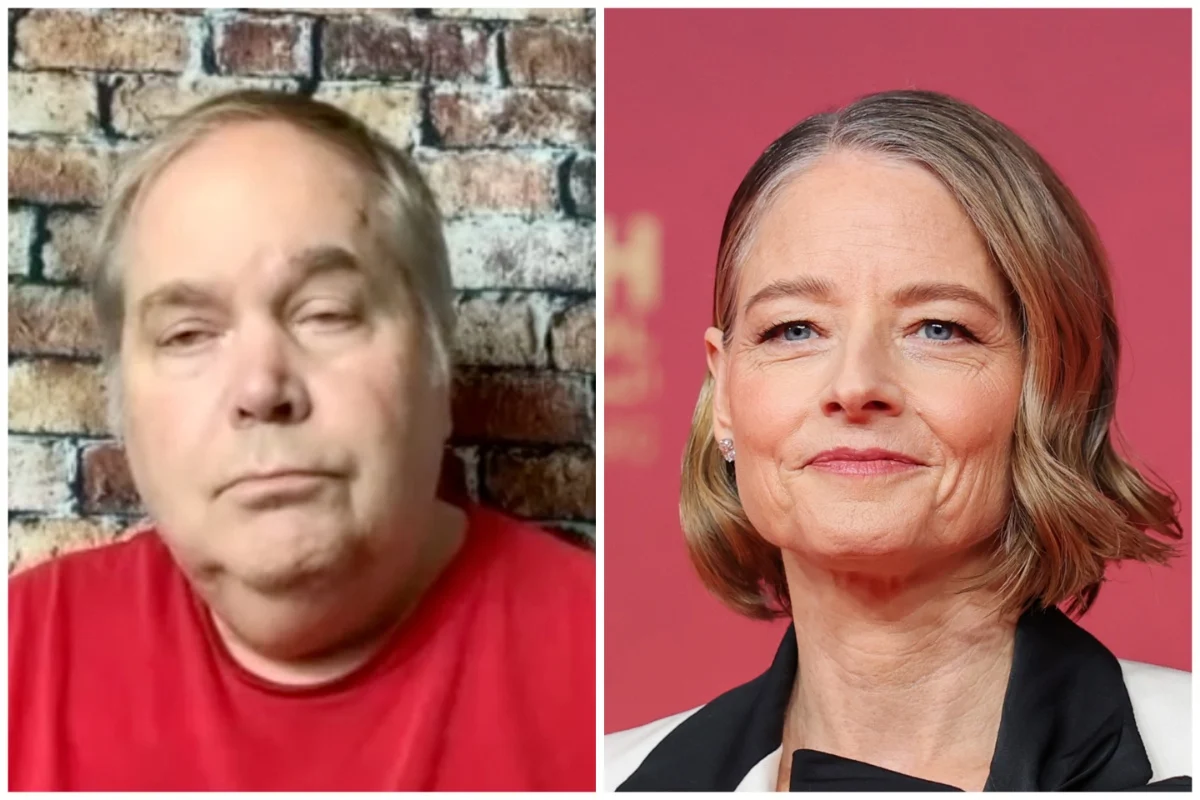
In a rare and unsettling convergence of past trauma and modern media, John Hinckley Jr.—the man who nearly altered the course of American history in a deluded bid to win the heart of actress Jodie Foster—has once again addressed the woman who served as his unwilling muse. During a recent appearance on the Mark Joseph Show, Hinckley, now 69 and living under full unconditional release, offered a message of "well wishes" to Foster, a gesture that serves as a stark reminder of the 1981 assassination attempt on President Ronald Reagan.
The interview provides a chilling look into the mind of a man whose psychiatric recovery has been the subject of decades of legal and medical debate. While Hinckley’s tone was described as placid, the content of his reflections underscores the profound impact of erotomania—a psychological disorder where an individual harbors the delusional belief that another person, usually of higher status, is in love with them.
Main Facts: A Message from the Past
Speaking to host Mark Joseph, Hinckley attempted to frame his current perspective on Foster as one of distant, benevolent detachment. "I just wish Jodie Foster well, you know," Hinckley stated during the interview. "I don’t really see her movies, but I wish her well, and I know she’s doing quite well. And that’s all I can say is just, I wish Jodie well, and I hope she has a good life."
This seemingly mundane statement stands in jarring contrast to the violence of March 30, 1981. For decades, the name Hinckley has been inextricably linked to Foster’s, much to the actress’s documented distress. When asked by Joseph what he had hoped to achieve by opening fire on the President of the United States, Hinckley was candid about his historical state of mind.
"I wanted to have a union with Jodie Foster and live the rest of my life with her and all these things that, of course, were delusional," Hinckley admitted. "But I was believing those things at the time, so the best outcome would have been a union with Jodie Foster."
He further detailed his expectation that Foster would essentially reward his act of violence with devotion. "I thought she would, you know, after things settled down, join me wherever I was," he added. "I wasn’t sure if I was gonna be in jail or the hospital or what… I had this notion that she was gonna join me wherever I was."
Chronology: From Stalking to the Steps of the Hilton
To understand the weight of Hinckley’s recent comments, one must revisit the timeline of his descent into obsession and the subsequent national tragedy.
1976–1980: The "Taxi Driver" Catalyst
Hinckley’s obsession began not with the real Jodie Foster, but with her portrayal of Iris, a child prostitute in Martin Scorsese’s 1976 film Taxi Driver. Hinckley reportedly watched the film dozens of times, eventually identifying with the protagonist, Travis Bickle (played by Robert De Niro), who plots to assassinate a presidential candidate.
When Foster enrolled at Yale University in 1980, Hinckley moved to New Haven, Connecticut, to be near her. He slipped poems and messages under her door and contacted her repeatedly by telephone. Despite her clear lack of interest and the intervention of campus authorities, Hinckley’s delusions intensified.
March 30, 1981: The Assassination Attempt
By early 1981, Hinckley decided that a "historic" act was necessary to gain Foster’s attention and "eternal" respect. After briefly considering an attempt on President Jimmy Carter, he shifted his focus to the newly inaugurated Ronald Reagan.
At approximately 2:27 p.m. on March 30, Hinckley waited outside the Washington Hilton Hotel. As President Reagan emerged from a speaking engagement and walked toward his limousine, Hinckley fired six rounds from a .22 caliber Röhm RG-14 revolver in just over two seconds.
The chaos that followed was captured on live television:
- The First Shot: Struck White House Press Secretary James Brady in the head.
- The Second Shot: Struck District of Columbia police officer Thomas Delahanty in the back.
- The Third Shot: Overflew the President and hit a window across the street.
- The Fourth Shot: Struck Secret Service agent Timothy McCarthy in the abdomen as he spread his body to shield Reagan.
- The Fifth Shot: Hit the bullet-resistant glass of the limousine.
- The Sixth Shot: Ricocheted off the side of the limousine, entered Reagan’s left underarm, fractured a rib, and lodged in his lung, inches from his heart.
Hinckley was immediately swarmed and pinned to the ground by bystanders, including labor official Alfred Antenucci, and Secret Service agents.
1982: The Verdict That Shocked a Nation
In 1982, Hinckley stood trial on 13 federal charges. His defense team argued that he was suffering from schizophrenia and erotomania, rendering him unable to appreciate the wrongfulness of his actions. On June 21, 1982, the jury returned a verdict of "not guilty by reason of insanity" (NGRI). The public outcry was immediate and visceral, leading to a fundamental shift in American law.
Supporting Data: The Medical and Legal Legacy
The Hinckley case remains one of the most significant legal touchstones in the history of American jurisprudence.
The Insanity Defense Reform Act
Prior to the Hinckley trial, the burden of proof in federal court often rested on the prosecution to prove that a defendant was sane. Following the "not guilty" verdict, Congress passed the Insanity Defense Reform Act of 1984. This law shifted the burden of proof to the defendant, who must now prove their insanity by "clear and convincing evidence." It also restricted the types of expert testimony allowed and created stricter criteria for the release of individuals found NGRI.
The Victims’ Toll
While Reagan recovered and returned to the Oval Office within weeks, others were not as fortunate. James Brady suffered permanent brain damage and spent the rest of his life in a wheelchair. His struggle led to the "Brady Bill," which mandated federal background checks for gun purchases. When Brady died in 2014, his death was ruled a homicide resulting from the 1981 shooting, though prosecutors declined to bring new charges against Hinckley.
Psychiatric Treatment
Hinckley was confined to St. Elizabeths Hospital in Washington, D.C., for over 35 years. During this time, his doctors noted a gradual remission of his psychosis. Starting in the early 2000s, he was granted increasingly long furloughs to visit his mother in Virginia, eventually moving in with her full-time under strict supervision in 2016.
Official Responses and Public Sentiment
The reaction to Hinckley’s gradual reintegration into society has been polarized.
The Reagan Family
The Reagan family, particularly the late Nancy Reagan and her daughter Patti Davis, remained steadfastly opposed to Hinckley’s release. In a 2016 op-ed, Davis wrote, "I hope the doctors are right when they say John Hinckley isn’t a danger to anyone… but I’m not a believer in ‘forgive and forget’ when it comes to a man who nearly ended a president’s life and shattered the lives of others."
The Secret Service
Former agents who were present on the day of the shooting have expressed mixed emotions. While some acknowledge the medical professionals’ findings that Hinckley is no longer a threat, others maintain that the gravity of his crime should have precluded him from ever regaining his freedom.
Jodie Foster’s Silence
Jodie Foster has spent the better part of four decades refusing to discuss the event in detail. In a 1982 essay for Esquire titled "Why Me?", she described the trauma of being a 19-year-old college student forced to testify in a trial where her stalker looked at her with "a frighteningly familiar" gaze. Since then, she has largely walked out of interviews where the subject was broached, seeking to decouple her legendary acting career from the actions of a "disturbed fan."
Implications: The Ethics of Redemption
Hinckley’s full release in June 2022 marked the end of court-mandated oversight. Since then, he has attempted to launch a career as a folk singer and songwriter, utilizing social media platforms like X (formerly Twitter) and YouTube to share his music.
The "Right to be Forgotten" vs. Public Safety
Hinckley’s presence in the public eye raises difficult questions about the nature of rehabilitation. Does a man who committed a high-profile, politically motivated (albeit delusionally so) act of violence have a right to a public platform?
In 2022 and 2023, several venues scheduled to host Hinckley for musical performances canceled his appearances following public backlash and security concerns. Critics argue that allowing him to perform "monetizes" his infamy, while his supporters (and Hinckley himself) argue that he has served his time and has a right to express himself.
The Lingering Shadow of Erotomania
Psychiatrists often point to the Hinckley case as a textbook example of the dangers of untreated erotomania. While Hinckley now claims to "wish Foster well," the fact that he continues to discuss her in interviews—even in a seemingly positive light—suggests that the two names remain linked in his psyche, if no longer through a lens of violent obsession.
Conclusion
John Hinckley Jr.’s recent comments on the Mark Joseph Show serve as a coda to a chapter of American history that many would prefer to remain closed. For Hinckley, the well-wishes are a sign of his "recovery" and his transition into a mundane, elderly life. For the victims, the legal system, and for Jodie Foster herself, the words are a haunting reminder that some shadows are too long to ever truly disappear.
As Hinckley continues his life as a free man, his legacy remains a complex tapestry of mental health failures, legal reform, and the enduring resilience of those whose lives he disrupted on a cold March afternoon in 1981.