
Peter Jackson Reportedly Eyeing Ambitious Adaptation of Tolkien’s "The Silmarillion"
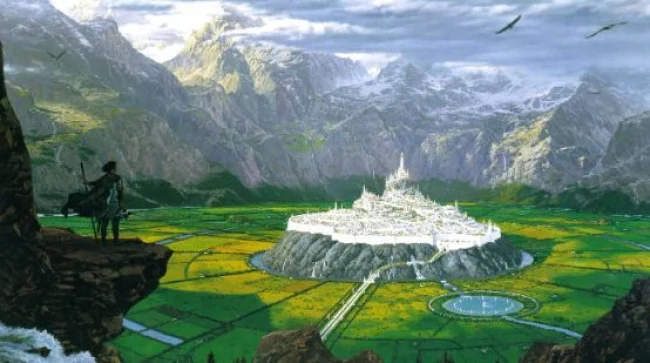
Rumors surface of the acclaimed director’s desire to tackle the legendary author’s foundational, yet notoriously complex, mythology.
London, UK – The echoes of Middle-earth may soon resonate on the big screen once more, as compelling reports suggest that acclaimed filmmaker Peter Jackson harbors a fervent desire to adapt J.R.R. Tolkien’s seminal, and often considered "unfilmable," work: The Silmarillion. This deeply mythological tome, often referred to as Tolkien’s "bible," chronicles the ancient history of Middle-earth and its surrounding realms, presenting a narrative far more sprawling and complex than the beloved hobbit tales that captivated global audiences.
For years, the prospect of a cinematic rendition of The Silmarillion has been a tantalizing, yet elusive, dream for legions of Tolkien enthusiasts and aspiring filmmakers alike. The primary obstacle has consistently been the intricate web of rights surrounding the book, which the Tolkien family has historically maintained with a protective grip. This very restrictiveness, however, has only served to amplify the intrigue and speculation, fostering a fervent hope that one day, the epic scope of Tolkien’s creation might be brought to life with the visual grandeur it deserves. Now, the whispers suggest that Peter Jackson, the visionary behind the immensely successful The Lord of the Rings and The Hobbit film trilogies, might be the one to finally bridge this gap.
The Allure of the Unfilmable: Why The Silmarillion Presents a Unique Challenge
The Silmarillion stands apart from Tolkien’s more accessible narratives like The Hobbit and The Lord of the Rings in several profound ways. While those works focus on the adventures of specific characters and the unfolding of a particular era, The Silmarillion is a sweeping epic of creation, cosmogony, and the foundational conflicts that shaped Middle-earth’s very existence. It is a tapestry woven from myth, legend, and intricate genealogies, tracing the origins of the world, the Valar (angelic beings), the Elves, Men, and the ultimate corruption of Melkor, later known as Morgoth, the first Dark Lord.
Unlike the character-driven plots of Frodo or Aragorn’s journeys, The Silmarillion often reads more like a collection of ancient histories, myths, and epic poems. Its narrative spans millennia, detailing the forging of the Silmarils, the rebellion of Fëanor, the tragic wars against Morgoth in the First Age, and the subsequent rise of Sauron in the Second and Third Ages. The sheer density of lore, the vast cast of characters (many of whom appear only fleetingly in historical accounts), and the abstract, often divine, nature of some of its protagonists present a monumental undertaking for any adaptation.
The book is significantly darker and more philosophical than its successors, delving into themes of divine creation, free will, the nature of evil, and the inherent tragedy of mortal existence. This profound thematic depth, while richly rewarding for readers, poses a considerable challenge for translating into a visual medium that often demands clear narrative arcs and relatable protagonists. The "hero" of The Silmarillion is arguably not a single individual, but rather the ongoing struggle between good and evil, the endurance of hope against overwhelming despair, and the enduring legacy of ancient deeds.
A History of Speculation: Decades of "What Ifs"
The idea of a Silmarillion adaptation has been a persistent one within Tolkien fandom for decades. Early attempts to secure film rights for the book were largely unsuccessful, with the Tolkien estate understandably cautious about preserving the integrity of the author’s most profound and foundational work. While the success of Peter Jackson’s The Lord of the Rings trilogy, which earned critical acclaim and billions at the box office, undoubtedly demonstrated the potential for bringing Tolkien’s world to life, the rights for The Silmarillion remained a significant hurdle.
The estate’s control over the rights has been a point of contention and fascination for fans. Unlike The Hobbit and The Lord of the Rings, which have been licensed for film and television adaptations, The Silmarillion has largely remained within the purview of literary interpretation. This has fueled a deep-seated desire among many to see the epic tales of the Elder Days realized visually, and it’s understandable why the cinematic magic of Peter Jackson, who so expertly captured the spirit of Middle-earth, would be the most sought-after solution.
The very difficulty in obtaining the rights has only added to the mystique of The Silmarillion. For years, fans have debated who could possibly tackle such a monumental task, and Jackson’s name has always been at the forefront of these discussions. His proven ability to balance vast world-building, intricate lore, and compelling character arcs within the context of epic fantasy filmmaking makes him a uniquely qualified candidate.
Supporting Data: The Jackson Factor and Tolkien’s Legacy
The potential for a Peter Jackson adaptation of The Silmarillion is not merely speculative; it is grounded in a demonstrable track record of success. The groundbreaking The Lord of the Rings trilogy (2001-2003) not only garnered widespread critical acclaim, culminating in The Return of the King winning a record-equalling eleven Academy Awards, including Best Picture, but it also redefined the fantasy genre in cinema. Jackson demonstrated an unparalleled ability to translate Tolkien’s dense prose and expansive world into a visually stunning and emotionally resonant cinematic experience.
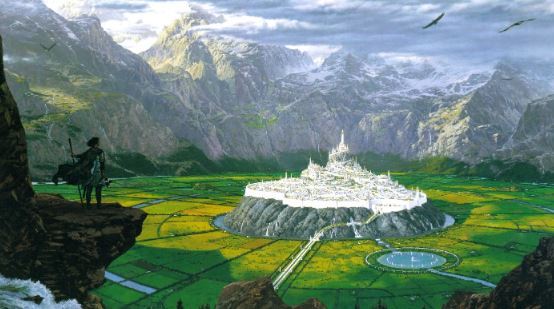
His subsequent adaptation of The Hobbit trilogy (2012-2014), while facing more mixed critical reception, still showcased his command of Middle-earth’s aesthetic and his commitment to bringing Tolkien’s creations to the screen. The technical innovation, the scale of production, and the sheer ambition involved in these projects underscore his capacity to handle the immense scope of The Silmarillion.
Furthermore, Jackson’s deep personal connection to Tolkien’s work is well-documented. He has spoken extensively about his love for the books and his lifelong fascination with Middle-earth. This passion, combined with his directorial prowess, suggests that he would approach The Silmarillion with the reverence and understanding necessary to do justice to its intricate mythology.
However, it is crucial to acknowledge the significant differences in the source material. The Silmarillion is not a narrative in the traditional sense. It is a collection of stories, poems, and histories. Adapting it would require a creative reimagining of its structure, potentially weaving together disparate narratives into a cohesive cinematic experience. This is a challenge that would demand a different approach than adapting a linear novel. Jackson’s experience with multiple storylines in The Lord of the Rings and his willingness to explore different narrative threads could prove invaluable.
Official Responses: A Landscape of Silence and Speculation
As of the current reporting, there have been no official confirmations or denials from Peter Jackson’s representatives, nor from the Tolkien Estate, regarding these burgeoning rumors. The silence from all parties involved is typical in the early stages of such potentially massive projects, where negotiations and discussions are often kept under tight wraps to avoid premature speculation and protect ongoing discussions.
The Tolkien Estate, overseen by Christopher Tolkien until his passing in 2020 and now managed by his heirs, has historically been very deliberate in its licensing decisions. Their primary concern has always been the preservation of J.R.R. Tolkien’s literary legacy. Any decision to license The Silmarillion for a major adaptation would undoubtedly involve extensive discussions about creative control, thematic integrity, and the overall vision for the project.
The lack of official comment only serves to fuel the fervent speculation within the fan community. Social media platforms and fan forums are abuzz with discussions, analyses, and fervent hopes for what a Jackson-directed Silmarillion might entail. Fans are dissecting potential casting choices, envisioning visual interpretations of key events like the forging of the Silmarils or the War of Wrath, and debating how the complex genealogical trees might be translated onto the screen.
Implications: A New Era for Middle-earth Cinema?
If these reports prove to be true, the implications for the future of Middle-earth on screen would be profound. A cinematic adaptation of The Silmarillion would unlock a treasure trove of untold stories, introducing a new generation of viewers to the very foundations of Tolkien’s legendarium. It would represent a monumental undertaking, potentially rivaling the scale and ambition of Jackson’s previous Middle-earth epics.
Such an adaptation would likely necessitate a departure from the traditional blockbuster format. Given the nature of The Silmarillion, a series of films, or perhaps even a high-budget television series, might be a more suitable medium to adequately explore the vast scope of its mythology. This could offer a unique opportunity to delve deeper into the lore and character backstories that are often only hinted at in the book.
The success of such a project would depend heavily on its ability to balance fidelity to the source material with the demands of cinematic storytelling. It would require a delicate touch to translate the often abstract and mythological elements of The Silmarillion into a visually engaging and emotionally resonant experience for a broad audience.
Ultimately, the prospect of Peter Jackson returning to Middle-earth to tackle The Silmarillion is an exciting, albeit still speculative, one. It represents the potential for a cinematic event that could redefine epic fantasy filmmaking once again, offering a breathtaking glimpse into the very genesis of a world that has captivated imaginations for generations. The question remains not only whether Jackson will indeed embark on this ambitious journey, but also, if he does, how he will manage to bring the "unfilmable" to life. The world of Middle-earth, it seems, still holds many untold stories, and the possibility of seeing them unfold under Jackson’s visionary direction is a prospect that will undoubtedly keep fans eagerly awaiting further news.



Leave a Comment