
The Ghost in the Code: How the "Reader Alice" Protocol is Saving Human Literature in 2045
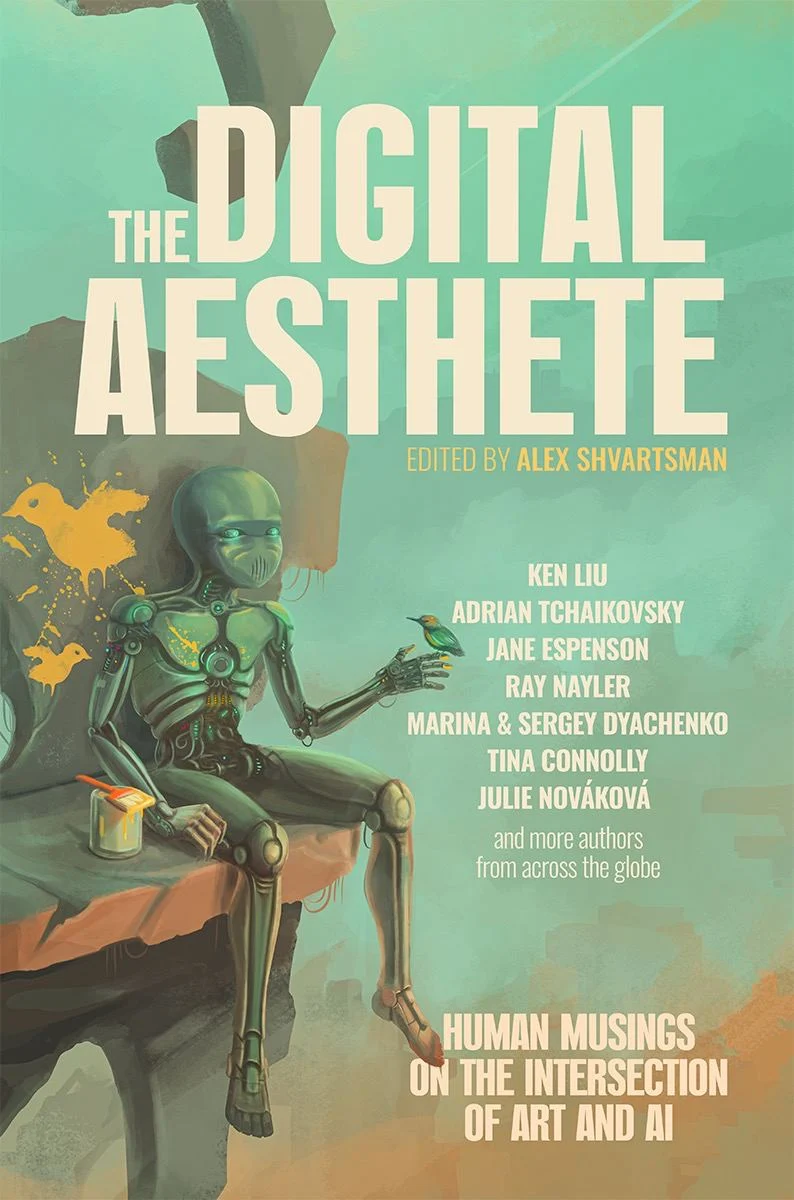
PORTLAND — In the heart of the Pacific Northwest, within the flickering overlays of the "Space Vision" goggles that have replaced the laptop as the primary tool of the creative class, a quiet revolution is taking place. As the publishing industry grapples with a deluge of content generated by Large Language Models (LLMs), a specialized editorial tool known as "Reader Alice" has emerged as the unlikely gatekeeper of human-authored prose.
While the "AI wave" of the mid-2020s initially threatened to drown out human voices, the landscape of 2045 reveals a more complex symbiosis. Today, editors like Bob, the long-time publisher of the science fiction magazine Twisted World, navigate a reality where the boundary between human and machine creativity is almost entirely invisible to the naked eye.
Main Facts: The State of the Industry
In the current publishing ecosystem, the sheer volume of submissions has necessitated the use of AI "agents" to perform the initial triage of manuscripts. Twisted World recently reported receiving over 9,000 submissions for a single issue—a number that would have been impossible for a human team to process twenty years ago.
Key data points regarding the 2045 publishing landscape include:
- The Rise of Space Vision: Traditional monitors have been replaced by laser retinal projection. "Space Vision" allows workers to pin virtual windows to physical locations, turning coworking spaces into three-dimensional desktops.
- LLM-Supplementation as Standard: Approximately 75% of submissions to major genre magazines are now "LLM-supplemented," meaning they are either prompted by humans or rewritten using specialized models like Cognitive Fictions or Style Compass.
- The Contributor Credit Crisis: To combat "pirate" LLMs, official models now require extensive attribution. A single AI-assisted story may carry a link to a cloud file containing over 5,000 names of authors and critics whose data helped train the model.
- The "Reader Alice" Phenomenon: Despite being an open-source, seemingly "clumsy" model, the Reader Alice agent consistently selects human-authored works at a rate far exceeding statistical probability, despite the texts being indistinguishable from high-end AI output.
Chronology: From the 2020s Wave to the Age of Space Vision
The transformation of the literary world followed a distinct timeline of technological and legal shifts:
2024–2029: The First Disruption
The "Third Wave" of automation began with generative AI. This era was marked by copyright lawsuits and the initial fear that human authors would be rendered obsolete. Authors began "voluntarily" participating in official LLMs to ensure they received micro-payments for their stylistic influence.
2030–2038: Integration and Retinal Projection
The hardware shifted from handheld devices to "Space Vision" goggles. This period saw the death of the mouse and trackpad, replaced by gesture-based interactions. In publishing, the "Admin Support" service Optimizer Oliver became the standard for handling contracts and accounting, while editorial agents began assisting with structural edits.
2039–Present: The "Reader Alice" Era
As AI-generated prose became indistinguishable from human writing, a mysterious open-source tool named "Reader Alice" was released. Developed by a prolific book reviewer known only as Alice, the tool became a cult favorite among editors for its "gut feeling" in selecting stories that resonated with human audiences.
Supporting Data: The Economics of Modern Fiction
The financial and logistical reality of publishing a 2,000-word short story in 2045 is starkly different from the pre-AI era. According to Bob of Twisted World, a purely human-authored story by a writer like Minoru Wakata takes approximately twelve days to move from first draft to publication.
In contrast, an LLM-supplemented version can be finalized in 24 hours but comes with significant overhead:
- Base Licensing Fees: Specialized models like Cognitive Fictions charge a flat $20 fee per story.
- Measured Royalty Rates: If a third of the story is rewritten by AI, a third of the author’s pay is diverted to the model’s training pool.
- The Credit Burden: To maintain "official" status and avoid piracy tags, a story must credit every contributor to the model. For a standard SF story, this often involves a list of over 5,000 names—making the "credits" longer than the fiction itself.
Because of these costs and the legal "link-to-cloud" requirements, many editors still prefer the "clean" one-person credit of a human author, provided they can find one in the haystack of 9,000 submissions.
Official Responses: Perspectives from the Coworking Space
Industry professionals view these tools not as replacements, but as essential filters. Cheryl, a "jack-of-all-trades" engineer and consultant in the Portland coworking scene, notes that the skill of the modern worker is no longer "doing the work," but "handling the agents."
"Everything—proposals, development, debugging, invoicing—has been taken over by AI agents," Cheryl stated in an interview. "Spend two weeks on a story? To an engineer, that’s absurd. But Bob is working with people. That’s a different kind of interface."
When asked about the "Reader Alice" protocol, Cheryl expressed skepticism about the model’s technical architecture. "It’s built on old GPT templates. It’s compression with hints. There’s nothing unique about the code. The ‘magic’ seems to be in the data—a file called alice.ckpt that has been updated daily for twelve years."
Bob, however, remains a believer in the "Alice" touch. "I have Reader Alice narrow the 9,000 submissions down to twenty. I don’t know if they are human or machine when I read them. But somehow, Alice’s list always contains the humans. I can’t tell by reading, but the agent can."
Implications: The "Alice Hypothesis" and the Future of the Human Spark
The mystery of how a machine (Reader Alice) can identify a human (the author) better than a human (the editor) can, was recently traced back to the developer herself. Alice, a resident of Portland and a frequent visitor to the Rose SF Wagon bookstore, built her model on a foundation of "obsessive reading."
The "Alice Hypothesis" suggests that the only way to distinguish human work from machine work in 2045 is through a massive, longitudinal immersion in the "human" style. Alice’s model was trained on over 10,000 personal reviews of books she read physically, allowing the AI to mirror her own evolved "instinct."
The Bookstore as a Data Point
Physical bookstores like Rose SF Wagon have become vital "analog hubs." By scanning physical shelves and comparing "human-certified" print books with digital submissions, developers like Alice are training a new generation of filters.
The Survival of the Generalist
The success of Twisted World suggests that the future of literature depends on three pillars:
- Human Authorship as a Premium Brand: Works by authors like Minoru Wakata, which require no AI credits, are becoming the "organic produce" of the literary world.
- The Human-in-the-Loop Filter: Editors like Bob use AI to manage the volume, but the final decision remains a human conversation (often over "cultured chicken kebabs" from a local food truck).
- The Persistence of the "Gut Feeling": As Alice herself noted when asked for the secret to finding human books: "The first step is just to read a lot."
As we move toward the 2050s, the "Reader Alice" phenomenon serves as a reminder that while AI can mimic the result of human creativity, it struggles to replicate the process. The "clumsy" open-source model that prioritizes human voices may be the most important piece of software in the 21st century—not because it creates, but because it remembers what it feels like to be a reader.
For more on the intersection of AI and culture, or to purchase the latest issue of "Twisted World," visit the Rose SF Wagon or access the Space Vision bookstore at [https://amzn.to/3MEG0RK].


Leave a Comment