
Publishing Landscape Shifts: Birth Rate Collapse, AI Disruption, and Evolving Reader Habits Dominate Week Ending May 15, 2026
New York, NY – May 15, 2026 – The publishing industry is navigating a turbulent period marked by significant market contractions, the pervasive influence of artificial intelligence, and a demonstrable shift in reader engagement. This week’s developments highlight a confluence of factors reshaping how books are created, discovered, and consumed, impacting authors, publishers, and readers alike.
The Middle Grade Market’s Steep Decline: A Perfect Storm for Publishers and Authors
The middle grade publishing sector is experiencing a significant downturn, prompting major consolidations and raising alarms for authors targeting this demographic. Publishers Penguin Young Readers and Macmillan Children’s Publishing Group have recently shuttered prominent imprints Dial Books for Young Readers and Roaring Brook Press, respectively, leading to layoffs and a broader industry consolidation. This contraction is attributed to a complex interplay of demographic shifts, evolving educational methodologies, and changing reader behaviors.
Shrinking Reader Pipeline: The Demographic Realities
The core demographic for middle grade literature, children aged approximately 8 to 12, is shrinking. Provisional CDC data indicates a continued decline in birth rates, with 3,606,400 births recorded in 2025, a 1% decrease from the previous year and part of a sustained downward trend from a 2007 peak of over 4.3 million births. This demographic reality translates directly into a narrowing audience for age-appropriate books.
A recent New York Times Upshot analysis underscores this trend, revealing that elementary school enrollment was already in decline before the pandemic due to lower fertility rates. The pandemic exacerbated this issue, with public schools losing over a million students and K-12 enrollment dropping in 30 states since the mid-2010s. Major districts, including Los Angeles Unified, have seen enrollment declines exceeding 20 percent. This shrinking pipeline of young readers directly impacts the total addressable market for middle grade content.

Educational Shifts and Absenteeism: Disrupting Discovery and Engagement
Compounding the demographic challenge, evolving educational philosophies are fundamentally altering how children engage with literature. A Gothamist investigation into New York City’s "NYC Reads" initiative highlights a mandated shift to structured literacy curricula. This pedagogical change means middle school teachers now expect students to complete only four to seven books per year, a stark contrast to previous levels of around twenty books annually. This reduction in reading volume significantly curtails exposure to narrative depth and literary exploration.
Furthermore, elevated student absenteeism continues to disrupt traditional avenues of book discovery. Chronic absenteeism rates reached approximately 23 percent in the 2024-25 school year across 39 states and Washington D.C., a figure roughly 50 percent above pre-pandemic baselines. Inconsistent classroom attendance reduces opportunities for read-alouds, engagement with school libraries, and participation in classroom reading cultures. This, coupled with funding pressures linked to enrollment, further constrains the purchasing power of educational institutions for middle grade titles.

Declining Literacy Scores and Reading Habits: A Concerning Trend
The erosion of reading proficiency and voluntary reading habits further exacerbates the crisis. The 2024 Nation’s Report Card reveals a decline in fourth-grade reading scores, with only 31 percent of fourth graders performing at or above the "NAEP Proficient" level. Eighth-grade scores show a parallel downward trend. Concurrently, voluntary daily reading among 13-year-olds has plummeted from 27 percent in 2012 to a mere 14 percent in 2023. The pervasive influence of short-form digital content directly competes for the sustained attention required by traditional middle grade narratives.
Publisher Consolidation and Risk Aversion: Adapting to Market Realities
These reader-side trends are demonstrably reflected in sales data and publisher responses. Middle grade print sales experienced a 5 percent drop in the first half of 2024, marking the weakest performance among children’s book segments, according to Circana BookScan. While overall children’s print sales saw slight growth in 2025, the category’s persistent softness has triggered imprint-level cuts in early 2026.

Retail policy changes, such as Barnes & Noble’s stricter initial hardcover order limitations for new middle grade fiction, further pressure the market. This policy shifts more titles to lower-margin paperbacks and diminishes shelf visibility for midlist works. Combined with rising printing costs and lower price points relative to Young Adult and adult books, publishers are facing squeezed margins. This has led to increased caution, a heavier reliance on backlist titles, established franchises, graphic novels, trend-driven concepts, and a preference for lower-risk acquisitions. The recent imprint closures at Penguin and Macmillan are direct manifestations of this industry-wide list rationalization.
Implications for Authors: Navigating a Narrower Path
For authors, these converging forces create a more selective acquisition landscape for traditional middle grade publishing. Debut and midlist authors face diminished pathways to breakout success through conventional bookstore and school channels. Diverse or innovative projects encounter greater friction, while backlist titles, high-concept works, and graphic novels gain a relative advantage. Authors are advised to adapt by focusing on series potential, building direct author-reader relationships, and strategically aligning their content with current market demands. The middle grade market is not disappearing, but it is consolidating around fewer, more proven titles and formats, requiring authors to meticulously map their strategies to demographic, educational, and economic realities.

Publishing Scams and AI Threats: The Evolving Landscape of Author Vulnerability
Beyond market shifts, the publishing world is grappling with sophisticated scams and the escalating threat of AI-driven content manipulation, impacting authors at various career stages.
A Multi-Million Dollar Publishing Scam Unraveled
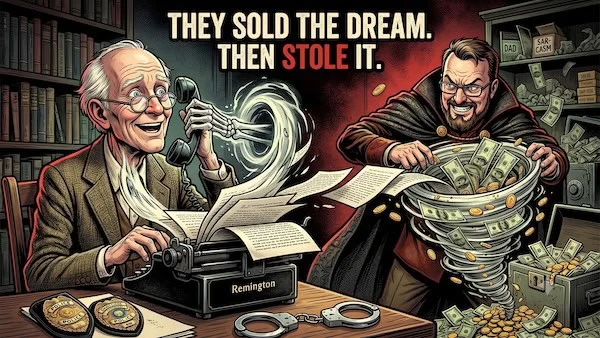
In a significant development, Michael Cris Traya Sordilla pleaded guilty on May 7, 2026, to conspiracy to commit mail and wire fraud and money laundering conspiracy. This plea is part of a sweeping operation that defrauded over 800 victims, predominantly seniors, of more than $48 million between 2017 and 2024. Sordilla, founder of Innocentrix Philippines, admitted his role in a scheme that utilized fake U.S. companies, such as PageTurner Press and Media LLC, to solicit upfront fees from authors for non-existent publishing and Hollywood deal services. Investigations by the FBI and U.S. Postal Inspection Service, supported by writer advocacy groups like Writers Beware and the Authors Guild, led to the indictment and arrest of Sordilla and three other defendants. This case serves as a stark reminder that legitimate industry professionals do not solicit large upfront payments.

Reputation Theft: AI-Generated Clones Erode Author Authority
The rapid advancement of AI has introduced new avenues for exploitation, including "reputation theft." An 80-year-old author, James Marcacci, recently experienced this firsthand when 13 AI-generated copycat books appeared on Amazon within a week of his historical work’s launch. These clones mimicked his title structure and visual branding, aiming to siphon sales and confuse readers. This phenomenon, where AI is used to generate inferior work that leverages an author’s established name, niche, or style, poses a significant threat to discoverability and reader trust. Authors are urged to actively defend their intellectual property through Amazon claims, robust metadata, and by building direct audience connections.
HarperCollins’ Parent Company Embraces AI as a Core Business
News Corp, the parent company of HarperCollins, has publicly declared its strategic pivot towards artificial intelligence, positioning itself as an "AI inputs company." CEO Robert Thomson announced significant licensing deals with Meta and OpenAI, valuing News Corp’s content as essential fuel for AI development. This move signifies a profound shift in how established media entities perceive their intellectual property – not just as products for consumers, but as valuable data sets for training advanced AI systems. This trend suggests a growing market for authors’ backlist content to be licensed for AI training, potentially creating new revenue streams.

AI’s True Cost: Unpaid Labor and the Illusion of Time Savings
An Oxford economist warns that AI’s purported time-saving benefits may be illusory, instead shifting labor from paid professionals to consumers in the form of unpaid "busywork." Economist Carl Benedikt Frey argues that AI tools, while enabling individuals to perform tasks previously outsourced, do not necessarily reduce overall effort but rather redistribute it into the household. This pattern mirrors historical shifts, such as the advent of the washing machine, which displaced professional laundresses but increased domestic labor for housewives. For authors, this means a potential trap of self-servicing tasks like editing and marketing, which can inadvertently consume creative time without delivering genuine efficiency gains. Authors are encouraged to audit their workflows and use AI judiciously, balancing its capabilities with strategic outsourcing and the protection of deep creative focus.
The Monet Experiment: How AI Labels Skew Perception
A viral social media experiment highlighted the potent influence of labels on perception. When an actual Claude Monet painting was presented as AI-generated, viewers offered harsh critiques, citing flaws in composition and execution. Upon the reveal that the painting was a canonical masterpiece, many of these critiques vanished. This demonstrates how the perception of AI-generated content can negatively bias judgment, even when the intrinsic quality of the work remains high. Authors using AI for creative processes must consider how transparency or opacity regarding AI involvement might affect reader reception.

ChatGPT’s Alleged Bias and Data Privacy Concerns
Allegations have surfaced regarding ChatGPT’s potential bias against Christian content, with reports of the AI refusing to share Bible verses while readily providing similar content from the Quran. While OpenAI attributes these instances to technical glitches, the repeated nature of these occurrences raises concerns about underlying biases within AI models. Furthermore, a class-action lawsuit alleges that OpenAI embeds tracking tools like Meta’s Facebook Pixel and Google Analytics on ChatGPT.com, potentially sharing user query topics and personal data with third parties without explicit consent. These issues underscore the critical need for authors to verify AI outputs and exercise caution regarding data privacy when using such tools for research or drafting.
Publishing Industry News and Author Alerts: Staying Informed
The publishing world continues to evolve, with significant developments impacting authors’ careers and understanding of the market.

The Four Loves: A Framework for Enduring Reader Loyalty
A recent episode of the Novel Marketing Podcast explored C.S. Lewis’s "The Four Loves" as a powerful framework for understanding and fostering deep reader loyalty. Author Angela Hunt joined host Thomas Umstattd Jr. to discuss how various forms of love – including eros, philia, storge, and agape – drive reader engagement and long-term sales. The discussion emphasized how understanding these emotional bonds can inform storytelling, strengthen plotlines, and create memorable climaxes. The conversation also touched upon a fifth, less-discussed Greek word for love, pragma, offering authors a comprehensive toolkit for crafting emotionally resonant fiction.
Children’s Grief Author Sentenced for Husband’s Murder
In a darkly ironic turn of events, Kouri Richins, an author known for her children’s book on grief following a father’s death, was sentenced to life in prison for the aggravated murder of her husband. Richins was arrested while promoting her book, which eerily mirrored the circumstances of her husband’s poisoning. This case serves as a chilling reminder of the potential disconnect between an author’s public persona and private life, and the importance of ethical conduct.

Zeitgeist: A Tale of Two Adaptation Strategies
The entertainment landscape is witnessing a divergence in how beloved intellectual properties are adapted. On one hand, a trend of "defilement of the temple" is evident, where creators deconstruct and alter established characters and narratives to fit contemporary worldviews. This has led to audience disappointment and commercial underperformance in franchises like Star Wars, Marvel, and The Rings of Power. Conversely, faithful adaptations that honor source material, such as Destiny 2’s "Renegades" expansion and the anticipated Warhammer 40k series starring Henry Cavill, are resonating with audiences and demonstrating the commercial viability of respecting original storytelling. This dichotomy underscores the value audiences place on authenticity and respectful interpretation.
Conclusion: Navigating a Transformative Era
The publishing industry is at a critical juncture. The confluence of declining birth rates, evolving educational priorities, and the pervasive influence of AI presents unprecedented challenges and opportunities. Authors and publishers must adapt by embracing new strategies for content creation, marketing, and audience engagement. Understanding demographic shifts, leveraging AI ethically, and prioritizing authentic reader connections will be paramount to navigating this transformative era and ensuring the continued vitality of the written word.




Leave a Comment