Rediscovering the Everyday Ritual: Why Folklore is More Relevant Than Ever
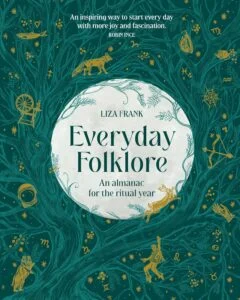
LONDON, UK – In an increasingly fast-paced and digitized world, the concept of folklore often conjures images of quaint historical curiosities or distant, esoteric practices. For many, it remains confined to the realm of fantastical tales, academic study, or perhaps a fleeting seasonal tradition. Yet, a burgeoning movement, championed by authors like Liza Frank, argues that folklore is not merely an echo from the past but a vibrant, living force deeply embedded in the fabric of our daily lives. From the precise method of brewing a cup of tea to the widespread observance of holidays, rituals and customs quietly guide our existence, offering a potent antidote to modern ennui and disconnection.
Frank, whose new book Everyday Folklore: An Almanac for the Ritual Year serves as a practical guide to engaging with these timeless practices, challenges the prevailing view of folklore as an "other" activity. Instead, she posits that conscious integration of folkloric elements can enrich personal experience, foster connection, and provide a much-needed sense of grounding. Her work, stemming from a year-long personal immersion in ritual practices, seeks to democratize folklore, inviting everyone to "feel the folklore fear and do it anyway." This article delves into the core arguments for embracing folklore, drawing on Frank’s insights and broader academic perspectives, to reveal its profound and often overlooked relevance in contemporary society.
The Genesis of "Everyday Folklore": A Year of Living Ritualistically
The inspiration for Everyday Folklore arose from Liza Frank’s ambitious "Everyday Lore Project," a dedicated immersion spanning from St Distaff’s Day in 2020 to Twelfth Night in 2021. During this period, Frank meticulously practiced and documented ritual year folklore every single day, transforming what might seem like an abstract concept into a tangible, lived experience. Her objective was not merely to observe, but to actively participate, to feel the rhythms of the year through its traditional customs and celebrations.
This rigorous, year-long commitment served as both a personal exploration and a meticulous research endeavor. Frank’s daily engagement involved a vast array of practices, from ancient seasonal rites to more contemporary cultural observances. The project forced a deliberate slowing down, an acute awareness of the changing seasons, and a deeper appreciation for the traditions that mark time. It was an exercise in mindfulness, connecting her to the natural world and the rich tapestry of human history woven into specific dates and periods. The culmination of this immersive journey was Everyday Folklore: An Almanac for the Ritual Year, a book designed not just to recount her experiences but to empower readers with a practical framework to integrate similar practices into their own lives. It offers a month-by-month compendium of traditions, spells, recipes, and insights, providing an accessible entry point for anyone curious about the ritual year. Frank’s personal chronology demonstrates that folklore is not a static academic subject, but a dynamic, actionable practice capable of profoundly shaping one’s perception of time and self.
The Five Pillars of Folkloric Engagement: Supporting Data and Insights
Frank outlines five compelling reasons why individuals should consciously incorporate folklore into their lives, offering a persuasive case for its modern utility. These points, buttressed by examples and academic understanding, illuminate the multifaceted benefits of engaging with traditional practices.
1. Slowing Down the Unrelenting Pace of Life
In an era characterized by relentless acceleration, folklore offers a powerful counter-narrative. Frank suggests that while folklore cannot literally halt time, engaging with the ritual year provides a mechanism for greater presence and mindfulness. Modern life often feels like a blur, with days cascading into weeks and months, leading to a pervasive sense of time slipping away. By actively participating in practices tied to specific dates, months, or seasons, individuals can anchor themselves to the present moment and develop a more profound appreciation for the cyclical nature of the year.
Consider the act of wassailing in January, a traditional practice to ensure a good apple harvest. This isn’t just a historical reenactment; it’s an act of participation, investing a personal stake in the natural world’s bounty. Similarly, counting fogs in August to predict winter snowfalls transforms a simple weather phenomenon into an interactive game of foresight. Observing lunar planting cycles or simply tracking the hedgerows as they transition from barren dormancy to burgeoning life and back again forces a deliberate observation of environmental shifts. These practices encourage a deeper attunement to one’s surroundings, fostering a slower pace of life that opens the door to possibility, wonder, and a richer, more textured experience of time. The academic study of folklore often highlights its role in structuring human experience, providing a temporal framework that transcends the artificial divisions of modern calendars and connects individuals to deeper, ancestral rhythms.
2. Amplifying Opportunities for Celebration
Beyond the standard roster of birthdays, anniversaries, and major holidays, the ritual year presents an astonishing array of occasions for joy and celebration. Frank enthusiastically points out that there are days dedicated to almost anything imaginable, offering an "endless capacity for marking the passage of time with excuses for joy." This expansive view of celebration challenges the notion that festivities must be grand or infrequent.
Want to honour nature? There are multiple days dedicated to trees. Curious about quirky anatomical observances? Festivals celebrating belly buttons take place in June and July. For the connoisseur, specific dates are earmarked for raising a glass to wine (August 19th), gin (the second Saturday of June), and rum (July 31st). Pop culture enthusiasts are catered to with Back to the Future Day, Star Trek Day, and the ubiquitous Star Wars Day ("May the Fourth be with you"). Even the absence of an event can be a cause for mirth, such as celebrating when it doesn’t rain on St Swithin’s Day. Furthermore, completing a folkloric task, like counting seven stars on seven consecutive nights to have a wish granted, transforms personal effort into a tangible, celebratory achievement. These diverse opportunities for celebration, both grand and intimate, provide vital moments of levity, community, and personal satisfaction, serving as crucial psychological anchors in the ebb and flow of everyday existence. They underscore folklore’s role not just in preserving the past, but in actively enriching the present.
3. A Potent Antidote to Boredom and Ennui
The pervasive modern ailments of boredom and ennui find a formidable opponent in the practical, hands-on world of folklore. Frank argues that engaging with folkloric activities provides a wealth of creative, physical, and mental stimulation. Rather than passively consuming entertainment, individuals can become active participants in traditions, transforming mundane moments into memorable experiences.
Leftover Christmas cake, for instance, can be repurposed not just as a snack but as the focal point for a "Great Fruitcake Toss," as famously celebrated in Manitou Springs, Colorado, injecting humour and community spirit into the post-holiday lull. The kitchen becomes a laboratory for recreating ritual year recipes such as Heg Peg Dumps, Harvest shot, or knotting-sowins, or simply baking a batch of scones for National Cream Tea Day. (Frank humorously advises caution with "plum duffs," especially when involving vegetarian suet and a favourite tea towel, highlighting the experiential learning curve). For those inclined towards performance and costume, the ritual year offers opportunities to embody characters, from becoming King for a weekend at the Porthcawl Elvis Festival to dressing as a badger for St Piran’s Day. More daring individuals can partake in the iconic Cooper’s Hill Cheese Rolling in May or the Dorking Wife Carrying Race in March. As Frank discovered during her "year of living folklorishly," there is always something to do, even if it involves the decidedly unconventional act of "conducting an exorcism at midnight by spitting black beans and walking backwards," as she humorously recounted her Lemuralia experience. These activities foster creativity, build community, and provide a sense of accomplishment, effectively combating the passive consumption that often leads to modern detachment.
4. Unearthing Fascinating Knowledge and Pub Quiz Triumphs
Folklore is a treasure trove of peculiar and wondrous facts, offering not just entertainment but a deeper understanding of human beliefs and interactions with the world. Engaging with folklore inevitably leads to the accumulation of intriguing trivia, making one a formidable opponent in any pub quiz. Frank highlights some truly remarkable examples.
Did you know, for instance, that spiders reportedly prefer classical music to techno? This peculiar insight, supported by research from Frings and Frings (1966), suggests a surprising aspect of arachnid behaviour and can even be linked to old auguries, where an uptick of indoor spiders in March traditionally portends rain. Such nuggets of information provide a unique lens through which to view the natural world. Another fascinating example concerns the Baikonur cosmonauts, who, since the early 1970s, have traditionally watched The White Sun of the Desert, a 1970 Russian Civil War comedy, the day before their space missions for good luck (Hollingham, 2014). This underscores the enduring power of ritual even in the most technologically advanced fields. Furthermore, bats, often maligned as symbols of the Devil, are crucial pollinators of agave plants (Menchaca et al., 2020). Without these winged wonders, our Margaritas might well be replaced by Manhattans, a stark reminder of the interconnectedness of ecology and culture. These surprising facts not only enrich conversation but also broaden perspectives, fostering a deep curiosity about the world and its countless hidden connections. The "folklore rabbit hole" is a boundless source of enlightenment, constantly revealing unexpected wonders.
5. Crafting Unforgettable Personal Narratives
Perhaps one of the most enduring benefits of engaging with folklore is the acquisition of unique and often outlandish personal stories. Frank candidly admits that some folklore is "just bonkers," while simultaneously validating the belief systems it represents. The more one participates, the more unusual and memorable anecdotes one collects.
Imagine recounting the time you thought you detected the scent of demonic sulphur while foraging for nuts in the woods in September, or confidently asserting that a cabbage leaf application visibly reduced a boil on your neck. These are not just fanciful tales; they are lived experiences that defy the ordinary. Frank shares her own amusing anecdote of slipping rosemary and a crooked sixpence under her pillow on St Luke’s Eve, hoping for a vision of her true love, only to dream of Mark Hamill (who, she notes, has yet to call). Such personal encounters with folkloric practices, whether they "work" or not, become indelible parts of one’s personal history. They provide rich material for storytelling, connecting individuals through shared laughter, disbelief, and wonder. While the aim is not to invalidate personal beliefs, the inherent whimsicality of many traditions makes for excellent conversation starters. A word of caution, however: Frank advises discretion in sharing some of the more esoteric anecdotes, suggesting that the story of failing to detect vampire activity in one’s gardening implements (Vukanovic, 1958) might be best saved for a second date, underscoring the social nuance involved in sharing these unique experiences. These tales, whether shared with close friends or kept as private eccentricities, add a vibrant layer to one’s personal narrative, enriching life with memorable moments and a unique perspective.
Academic Resonance and Official Perspectives
While Frank’s work emphasizes personal engagement, her insights resonate deeply with academic folklore studies. Scholars have long recognized folklore not as a collection of quaint superstitions, but as a vital lens through which to understand human culture, psychology, and societal structures. The references cited in Frank’s work, from Warshaver’s exploration of postmodern folklore to detailed studies on spider reactions to sound or the rituals of cosmonauts, highlight the interdisciplinary nature of the field.
Academics view everyday rituals as critical components of social cohesion and cultural identity. They are not merely archaic holdovers but dynamic practices that adapt and evolve, constantly being "re-negotiated" and "re-performed" in contemporary contexts. The importance of observing seasonal cycles, for instance, is not just about appreciating nature; it’s about connecting to ancient agricultural rhythms that shaped human civilization. The act of celebrating, even seemingly trivial events, reinforces communal bonds and provides psychological relief. Furthermore, the academic study of "folklorism" examines how traditional elements are consciously revived, commodified, or integrated into modern life, underscoring the enduring appeal and adaptability of these practices. Organizations dedicated to folklore preservation and study, like The Folklore Society, actively document and analyze these traditions, ensuring their legacy and providing platforms for contemporary exploration. Frank’s book, by offering a practical guide, bridges the gap between academic understanding and lived experience, demonstrating how these scholarly insights can translate into tangible benefits for the individual. It serves as an implicit "official response" to the question of folklore’s relevance, asserting that its study and practice are integral to understanding ourselves and our communities.
Implications for a Modern World: A Call to Action
The implications of consciously embracing folklore extend far beyond personal enrichment. In a world grappling with issues of isolation, environmental disconnection, and a perceived loss of meaning, the practice of folklore offers a potent, accessible pathway towards greater engagement. It encourages mindfulness, fosters community, stimulates creativity, and provides a sense of continuity with the past while actively shaping the present.
Frank’s central thesis is a powerful call to action: make a New Year’s resolution to intentionally weave a bit of folklore into your life. Be more curious, experiment with new traditions, and challenge yourself to step outside conventional routines. This isn’t about rigid adherence to ancient rules, but about thoughtful adaptation and personal interpretation. Folklore is inherently resilient and adaptable, constantly evolving with each generation that embraces it. The beauty of the ritual year, as Frank notes, is its inherent flexibility; should a resolution falter, there are always multiple "New Year’s Days" throughout the calendar to offer fresh starts and renewed opportunities.
By rediscovering and integrating these ancient yet ever-present rituals, we can reclaim a sense of wonder, forge deeper connections to our environment and communities, and infuse our daily lives with a rich tapestry of meaning and joy. Everyday Folklore: An Almanac for the Ritual Year stands as a testament to this enduring power, inviting readers to embark on their own journey of discovery and, in doing so, to make their lives a little more magical, a little more mindful, and a lot more storied. The time for folklore is not just in the past; it is now, in the everyday.

Everyday Folklore: An Almanac for the Ritual Year by Liza Frank is available now.
References
[1] Warshaver, G. E. (1991) On Postmodern Folklore. Western Folklore, 50(3), 219–229. https://doi.org/10.2307/1499876
[2] Frank, L. (2021) The Everyday Lore Project. https://liza-frank.com/the-everyday-lore-project/
[3] Frings, H. and Frings, M. (1966) Reactions of Orb-Weaving Spiders (Argiopidae) to Airborne Sounds. Ecology, 47, 578-588. https://doi.org/10.2307/1933935
[4] Hollingham, R. (2014) The strangest space launch rituals. https://www.bbc.com/future/article/20140610-the-strange-rituals-of-cosmonauts
[5] Menchaca, A., Arteaga, M.C., Medellin, R.A., Jones, G. (2020) Conservation units and historical matrilineal structure in the tequila bat (Leptonycteris yerbabuenae). Global Ecology and Conservation, Volume 23. https://doi.org/10.1016/j.gecco.2020.e01164
[6] Vukanovic, T. P. (1958) The Vampire. Journal of the Gypsy Lore Society, 37(1), 21-31. https://www.proquest.com/scholarly-journals/vampire/docview/1299021299/se-2