Unveiling Egypt’s Second Intermediate Period: A Time of Transformation, Not Just Turmoil
Cairo, Egypt – Often mischaracterized as a chaotic "dark age," Egypt’s Second Intermediate Period (circa 1782-1570 BCE) stands as a pivotal and complex era in ancient history. Spanning roughly two centuries, this period, following the grandeur of the Middle Kingdom and preceding the imperial might of the New Kingdom, was marked by political fragmentation, cultural exchange, and ultimately, a powerful resurgence that reshaped the destiny of the Nile Valley. Far from a mere interregnum of decline, recent archaeological and historical analyses reveal a dynamic landscape where foreign rulers, indigenous Egyptians, and southern kingdoms coexisted, traded, and eventually clashed, laying the groundwork for Egypt’s most glorious epoch.
Main Facts: A Divided Land
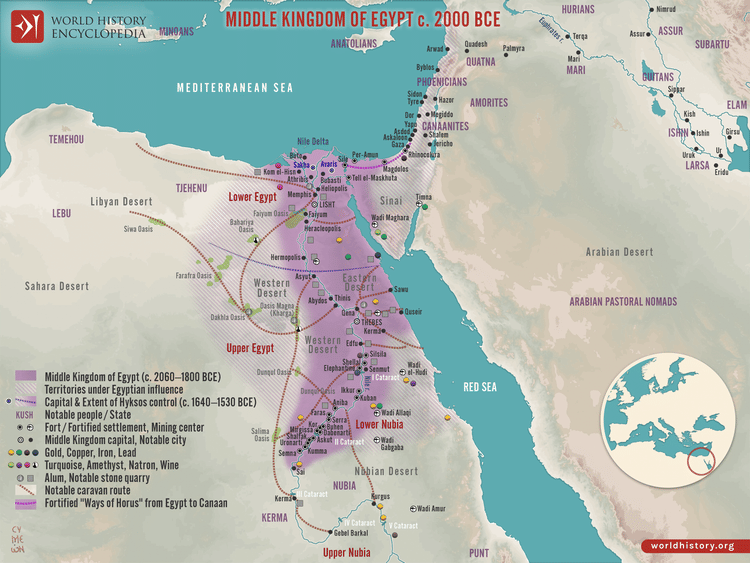
The Second Intermediate Period (SIP) is a modern academic designation, coined by 19th-century Egyptologists to categorize a specific phase of ancient Egyptian history. The ancient Egyptians themselves did not use this term. Its defining characteristic was a fractured Egypt, governed by three distinct powers:
- The Hyksos: A group of West Semitic-speaking peoples, who established a powerful dynasty in the northern Nile Delta, with their capital at Avaris.
- The Theban Egyptians: Ruling from the traditional heartland of Upper Egypt, centered at Thebes, they represented the indigenous Egyptian authority striving to maintain their heritage.
- The Nubian Kingdom of Kush: To the south, beyond Egypt’s traditional borders, the powerful kingdom of Kush emerged, controlling vast territories and exerting significant influence.
While earlier interpretations portrayed this era as one of widespread lawlessness and cultural stagnation, contemporary scholarship offers a more nuanced view. It was a time of disunity and shifting allegiances, certainly, but also one of significant innovation and adaptation, particularly through the influence of the Hyksos.
Chronology: From Unity to Fragmentation and Back
The unraveling of the unified Middle Kingdom and the subsequent emergence of the New Kingdom followed a distinct chronological progression:
- Circa 1782 BCE: Decline of the 12th Dynasty and the 13th Dynasty takes over. The powerful 12th Dynasty, a golden age of stability and cultural flourishing, gives way to the less stable 13th Dynasty. The capital is moved from Itj-tawi in Lower Egypt back to Thebes in Upper Egypt, effectively ceding control of the fertile northern Delta.
- Early 13th Dynasty: Rise of Avaris. The small trading town of Hutwaret (Avaris), founded by Amenemhat I of the 12th Dynasty, grows into a major international hub, attracting a significant influx of West Semitic-speaking immigrants.
- Mid-13th Dynasty: Hyksos consolidate power. These foreign settlers, known to the Egyptians as Heqau-khasut ("Rulers of Foreign Lands"), gradually accumulate wealth and political influence in the north, eventually establishing their own independent rule.
- Circa 1700-1600 BCE: Tripartite coexistence. For a significant period, Egypt exists as a divided realm, with the Hyksos controlling the north, the Thebans the center, and the Kingdom of Kush the south. Despite political fragmentation, trade and cultural exchanges persist among these entities.
- Circa 1580 BCE: Theban resurgence begins. King Seqenenra Taa of the 17th Dynasty, ruling from Thebes, initiates hostilities against the Hyksos, likely dying in battle.
- Circa 1575 BCE: Kamose continues the war. Seqenenra Taa’s son, Kamose, takes up the fight, launching aggressive campaigns against the Hyksos, driven by a strong nationalist ideology.
- Circa 1570 BCE: Ahmose I expels the Hyksos. Kamose’s successor, Ahmose I, definitively drives the Hyksos from Egypt, pursuing them into Canaan. He then campaigns south into Nubia, reunifying Egypt under Theban rule and inaugurating the illustrious 18th Dynasty and the New Kingdom.
Supporting Data: Archaeology Rewrites History
For centuries, the primary narrative of the Hyksos invasion stemmed from the 3rd-century BCE Egyptian historian Manetho, whose account, preserved by later writers like Flavius Josephus, painted a picture of brutal conquerors who ravaged Egypt, burned cities, and desecrated temples. Manetho wrote: "By main force they easily seized [the country] without striking a blow and, having overpowered the rulers of the land, they then burned our cities ruthlessly, razed to the ground the temples of the gods…"
However, modern archaeology has dramatically challenged this traditional view. Excavations at Avaris, the Hyksos capital, have yielded compelling evidence that contradicts Manetho’s destructive narrative. The city’s architectural styles show strong parallels with contemporary Canaanite and Syrian designs, indicating a vibrant, multicultural trading hub rather than a purely military stronghold. Crucially, there is no widespread archaeological evidence of systematic destruction across Egypt during the initial Hyksos ascent to power. Instead, the evidence points to a gradual accumulation of influence through trade and immigration, culminating in political control over a region already weakened by the waning 13th Dynasty. The Hyksos, far from being ruthless destroyers, appear to have greatly admired and adopted Egyptian culture, religion, and administrative practices, integrating themselves into the fabric of Egyptian society.
Further supporting data comes from the military front. The mummy of King Seqenenra Taa, discovered near the Valley of the Kings, bears gruesome wounds consistent with battle, suggesting he died violently from axe blows to the head. This provides tangible proof of the early conflicts between Thebes and Avaris. Kamose’s boasts of utterly destroying Avaris are also tempered by archaeological findings and later accounts, which indicate that Ahmose I still had to fight multiple fierce battles at Avaris before finally expelling the Hyksos and besieging their fortress at Sharuhen in Canaan for six years. The meticulous tomb inscription of Ahmose, son of Ibana, a soldier under Ahmose I, vividly details these hand-to-hand engagements, underscoring the prolonged and arduous nature of the conflict.
The trade relationship between the Egyptian garrisons in Nubia and the Kingdom of Kush is another crucial piece of supporting data. Scholar Marc van de Mieroop notes the thousands of sealings found in Nubian forts, bearing the names of 13th Dynasty kings and even some Hyksos rulers. These artifacts confirm intense trade activities, demonstrating that economic connections persisted despite the political fragmentation, undermining the idea of a completely isolated and chaotic period.
Official Responses: Narratives of Legitimacy and Nationalism
The "official responses" to the Second Intermediate Period evolved over time, particularly as the New Kingdom sought to legitimize its rule and forge a strong national identity.
New Kingdom Propaganda: Later Egyptian scribes and historians of the New Kingdom actively portrayed the Hyksos as foreign usurpers, a destructive force that plunged Egypt into chaos and disregarded ma’at (cosmic harmony and justice). This narrative served to glorify the Theban kings, especially Ahmose I, as saviors who restored order and purity to Egypt. The stories of Hyksos brutality, while largely unsupported by archaeological evidence for the initial takeover, became a powerful tool for nation-building, emphasizing a unified Egyptian identity against a foreign "other." This propaganda helped solidify the authority of the new dynastic line.
Theban Nationalist Rhetoric: The Theban rulers themselves, particularly Kamose, fueled this nationalist sentiment. Kamose’s inscriptions explicitly articulate his motivation for war: "To what end do know my own strength? One chief is in Avaris, another in Kush, and I sit here associated with an Asiatic and a Nubian! Each man has his slice in this Egypt and so the land is partitioned with me! …I shall grapple with him that I might crush his belly for my desire is to rescue Egypt which the Asiatics have destroyed." This fiery rhetoric framed the conflict not merely as a territorial dispute but as a righteous struggle to reclaim Egypt’s soul from foreign domination, directly appealing to a burgeoning sense of Egyptian identity.
Hyksos Self-Perception: Conversely, the Hyksos themselves, judging by their adoption of Egyptian titles, gods, and cultural practices, likely considered themselves legitimate rulers within the Egyptian tradition. They integrated into the existing administrative structures, issued decrees in Egyptian, and worshipped Egyptian deities alongside their own. Their interactions with Thebes, often characterized by trade and even a degree of diplomatic truce, suggest a perception of themselves as a co-equal, albeit distinct, power within the broader Egyptian sphere, at least initially.
Implications: The Catalyst for Empire
The Second Intermediate Period, far from being a mere footnote of decline, served as a profound catalyst for the monumental achievements of the New Kingdom. Its implications were far-reaching, fundamentally altering Egypt’s strategic outlook, military capabilities, and national identity.
A New Strategic Imperative: The "shock of the Hyksos invasion," as Egyptologist Barbara Watterson terms it, shattered Egypt’s age-old sense of inviolability. For the first time, a foreign power had successfully established rule over a significant portion of their homeland. This experience instilled a deep-seated realization that Egypt needed to proactively secure its borders and create buffer states to prevent future incursions. This strategic shift directly led to the expansionist policies of the New Kingdom, transforming Egypt from a largely insular kingdom into an imperial power that projected its influence across the Near East and into Nubia. The Hyksos had inadvertently taught Egypt the importance of offensive defense.
Military Innovations and Modernization: Perhaps the most tangible and immediate implication was the adoption of advanced military technology from the Hyksos. The Hyksos introduced several groundbreaking innovations that revolutionized Egyptian warfare:
- The Horse-Drawn War Chariot: A rapid, mobile platform for archers and spearmen, giving Egyptian armies an unprecedented tactical advantage.
- The Composite Bow: Superior in range and power to the traditional Egyptian long bow.
- Bronze Weapons: Including the bronze dagger and the short sword, offering greater durability and lethality than copper implements.
- Improved Fortification Techniques: The Hyksos themselves were adept at building strongholds, a skill the Egyptians undoubtedly observed and adapted.
These advancements enabled the New Kingdom pharaohs to conquer and control vast territories, solidifying their empire.
Reshaping Egyptian Identity and Foreign Relations: The presence of the Hyksos forced Egyptians to reconsider their ethnocentric worldview. Traditionally, the Egyptian word for "mankind" (rmt) referred only to Egyptians, with other groups often labeled with derogatory terms. The Hyksos demonstrated that other nations could wield significant power, challenging the notion of Egyptian inherent superiority. This exposure to diverse cultures, coupled with the military threat, led to a more pragmatic and outward-looking approach to foreign relations. Egyptians learned to engage with their neighbors not just as trade partners or distant barbarians, but as potential allies, rivals, or subjects within an expanding imperial framework.
Cultural Evolution and Resilience: Despite initial claims of cultural degradation, Egyptian culture proved remarkably resilient and adaptive. While some artistic styles may have seen a temporary decline in quality or a shift in focus, literature continued to be written, and religious rites were observed. The development of hieratic script (a cursive form of hieroglyphs) during this period, replacing the more complex hieroglyphic script for everyday administrative and literary purposes, demonstrates a pragmatic evolution in writing systems rather than a loss of literacy. The Hyksos themselves adopted many Egyptian deities, integrated into local customs, and even contributed new ideas and technologies, showcasing a period of genuine cultural synthesis.
Conclusion: The Forging of an Empire
The Second Intermediate Period, once viewed as a lamentable interlude, is now recognized as a crucible in which the foundations of the New Kingdom were forged. It was a time of immense challenge and geopolitical realignment, where Egypt grappled with internal fragmentation and foreign domination. However, it was precisely these challenges that spurred a powerful nationalist revival, triggered a military revolution, and fundamentally altered Egypt’s strategic consciousness.
The unified, expansive, and culturally vibrant New Kingdom, with its iconic pharaohs, monumental temples, and vast imperial reach, was not merely a return to a past golden age. It was a new creation, shaped by the lessons learned during the period of Hyksos rule and the Theban struggle for liberation. Ahmose I’s decisive victory over the Hyksos was more than just a military triumph; it was the birth of an empire, a direct consequence of the Second Intermediate Period’s transformative influence. This era, therefore, stands as a testament to Egypt’s enduring adaptability and its capacity to emerge stronger and more ambitious from periods of profound disruption.