Renaissance Mind Reassembled: Leonardo da Vinci’s Notebooks Digitally Reunited After 400 Years
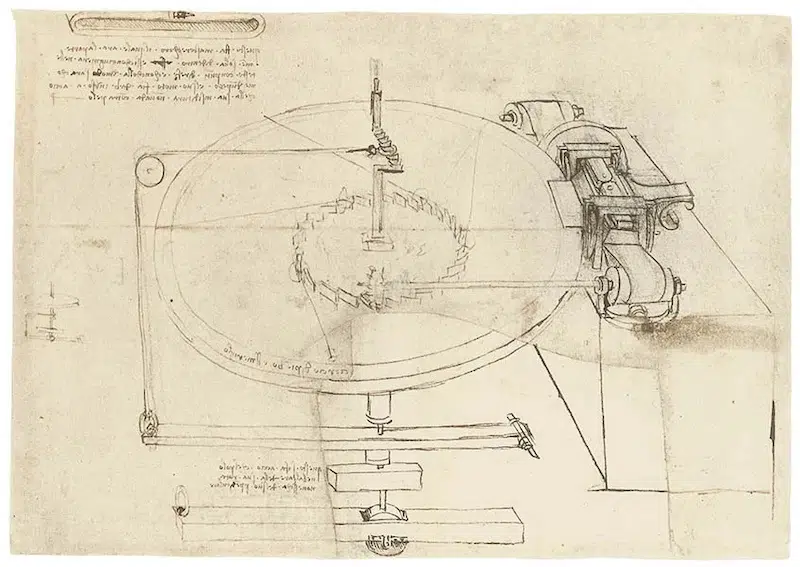
A monumental undertaking has brought together fragmented treasures of human genius, offering unprecedented access to the sprawling intellect of Leonardo da Vinci.
[City, Country] – June 24, 2026 – For centuries, the scattered leaves of Leonardo da Vinci’s notebooks have offered tantalizing glimpses into one of history’s most brilliant minds. Now, through a groundbreaking digital initiative, these scattered fragments have been painstakingly reassembled, virtually reuniting manuscripts that were physically separated for over 400 years. The project, aptly named "Leonardotheka," promises to revolutionize how we study and understand the polymathic genius of the Renaissance.
Leonardo da Vinci, a figure synonymous with the very concept of the "Renaissance man," was a painter, draughtsman, engineer, scientist, theorist, sculptor, and architect. His boundless curiosity and relentless pursuit of knowledge across disparate fields continue to inspire generations. His notebooks, filled with mirror-script writings and intricate sketches, are a testament to his unparalleled intellect, bridging the realms of art and science in ways that remain astonishingly relevant today.
The fragmentation of Leonardo’s literary legacy began in the early 17th century, following his death and the subsequent inheritance of his notebooks by his last student, Francesco Melzi. Pompeo Leoni, a sculptor and collector, eventually came into possession of these precious manuscripts. Dissatisfied with their eclectic nature, Leoni meticulously "dismounted and cut the folios, separating the materials into two albums according to his own judgment," as noted by the Italian Embassy in London. He created a larger album for technical and scientific topics, and a smaller one for Leonardo’s artistic and figurative work. This act of dissection, though intended to organize, inadvertently scattered the unified vision of Leonardo’s thought.
The Long Separation: A Historical Divide
The two principal albums created by Leoni embarked on divergent paths, leading to their physical separation for over four centuries. The larger album, now known as the Codex Atlanticus, was sold by Leoni’s son-in-law in the early 17th century to a count who subsequently donated it to the Veneranda Biblioteca Ambrosiana in Milan. This vast collection, comprising over 1,100 pages, has remained a cornerstone of art and science scholarship.
The fate of the smaller album, containing Leonardo’s more artistic and figurative writings, took a different trajectory. By around 1670, it had found its way into England’s Royal Collection. This collection, while significant, represented only a fraction of the original unified corpus of Leonardo’s private thoughts and observations.
This division, driven by an early collector’s organizational preferences, meant that scholars and enthusiasts alike were forced to consult separate institutions and collections to grasp the full breadth of Leonardo’s genius. The inherent connection between his scientific inquiries and his artistic expressions, so vital to his unique mode of thinking, was obscured by this physical and institutional separation.
The Birth of Leonardotheka: A Digital Renaissance
The culmination of a decade’s meticulous work, the Leonardotheka project has achieved what was once thought impossible: the digital reunification of these two historically separated collections. Spearheaded by a collaboration between the Veneranda Biblioteca Ambrosiana, the Biblioteca Leonardiana, and the Royal Collection Trust, this ambitious initiative has not only brought the two albums back together virtually but has also undertaken the complex task of reconstructing over 50 long-sundered individual pages and reintegrating them into their original contextual arrangements.
The Leonardotheka platform provides an unprecedented, high-resolution digital interface for exploring Leonardo’s notebooks. Users can now navigate through the combined works, experiencing the seamless flow of ideas that characterized Leonardo’s mind. This digital restoration allows for a more holistic understanding of his intellectual journey, revealing how his anatomical studies, designs for flying machines, landscapes, and even seemingly mundane musings were all intricately intertwined.
Unraveling the Interconnectedness of Genius
Anastasia Scott, writing for Discover magazine, highlights the profound implications of this reunification: "The notebooks combined decades of anatomical studies, flying machines, landscapes, and grocery-list-adjacent musings, all tangled together the way Leonardo’s mind may have worked." This underscores the fundamental point that Leonardo himself likely never intended to separate art from science. A single page might feature a mechanical drawing alongside a sketch of a horse and a fragment of a poem, demonstrating his holistic approach to understanding the world. Leoni’s division, therefore, severed connections that the artist had deliberately forged.
The Leonardotheka project, by restoring these connections, offers a powerful antidote to the modern tendency to compartmentalize knowledge into distinct disciplines like "humanities" and "STEM." In the 21st century, grappling with the perceived divide between these fields, the project allows us to witness firsthand how a truly integrated Renaissance mind functioned. It showcases a worldview where scientific observation informed artistic representation, and artistic sensibility fueled scientific inquiry.
Supporting Data and Scholarly Impact
The Leonardotheka project offers a wealth of digital resources for scholars, students, and the general public. The platform features:
- High-resolution scans: Allowing for detailed examination of Leonardo’s handwriting, sketches, and annotations.
- Contextual arrangement: Pages are reassembled based on historical and scholarly analysis, restoring original layouts and thematic connections.
- Searchable database: Facilitating the discovery of specific themes, drawings, or textual passages across the combined collections.
- Interactive features: Enabling users to zoom, annotate, and share their findings, fostering collaborative research and learning.
The digital reunification is not merely an archival exercise; it is a catalyst for new scholarly insights. Researchers can now more readily trace the evolution of Leonardo’s ideas, compare his artistic techniques with his scientific investigations, and gain a deeper appreciation for the interconnectedness of his creative and intellectual processes. This accessibility is expected to spur a new wave of research into Leonardo’s work, potentially uncovering previously overlooked connections and theories.
Official Responses and Global Recognition
The unveiling of the Leonardotheka project has been met with widespread acclaim from cultural institutions and academic bodies worldwide.
The Italian Embassy in London, a key partner in disseminating information about the project, stated, "This monumental undertaking not only preserves a crucial part of our shared cultural heritage but also makes it accessible to a global audience, fostering a deeper understanding of one of history’s most influential figures."
The Royal Collection Trust, custodians of one half of the reunited manuscripts, expressed their enthusiasm: "We are delighted to be part of this transformative project. The Leonardotheka offers an unparalleled opportunity to engage with Leonardo da Vinci’s extraordinary legacy in its fullest, most interconnected form."
Academics specializing in Renaissance studies have lauded the project for its potential to reshape research methodologies. Dr. Elena Rossi, a leading Leonardo scholar, commented, "For decades, we have been working with fragments. Leonardotheka finally allows us to see the forest for the trees, to understand the holistic nature of Leonardo’s thought process. It’s a game-changer for the field."
Implications for the Future of Learning and Creativity
The Leonardotheka project holds profound implications for how we approach learning and creativity in the 21st century. By demonstrating the power of interdisciplinary thinking, it serves as a potent reminder of the benefits of breaking down artificial barriers between fields of study.
In an era increasingly defined by specialization, Leonardo da Vinci’s integrated approach offers a vital counterpoint. The project encourages a return to a more holistic view of knowledge, one that recognizes the symbiotic relationship between the arts and sciences, the theoretical and the practical.
Furthermore, the project’s commitment to digital accessibility democratizes access to one of humanity’s most significant intellectual treasures. It empowers individuals from all walks of life to explore the mind of a genius, fostering inspiration and curiosity. As we continue to navigate the complexities of our modern world, the lessons embedded within Leonardo’s reassembled notebooks – his relentless curiosity, his innovative spirit, and his profound understanding of the interconnectedness of all things – are more relevant and valuable than ever before. The digital reunification of his notebooks is not just an archival triumph; it is a beacon of inspiration for a future that embraces the full spectrum of human intellect and creativity.
The Leonardotheka can be accessed at [Insert Link to Leonardotheka Project Here].