Ribbiting Chaos: An In-Depth Analysis of ‘Frog Sqwad’ and the Evolution of the Physics-Based Party Genre
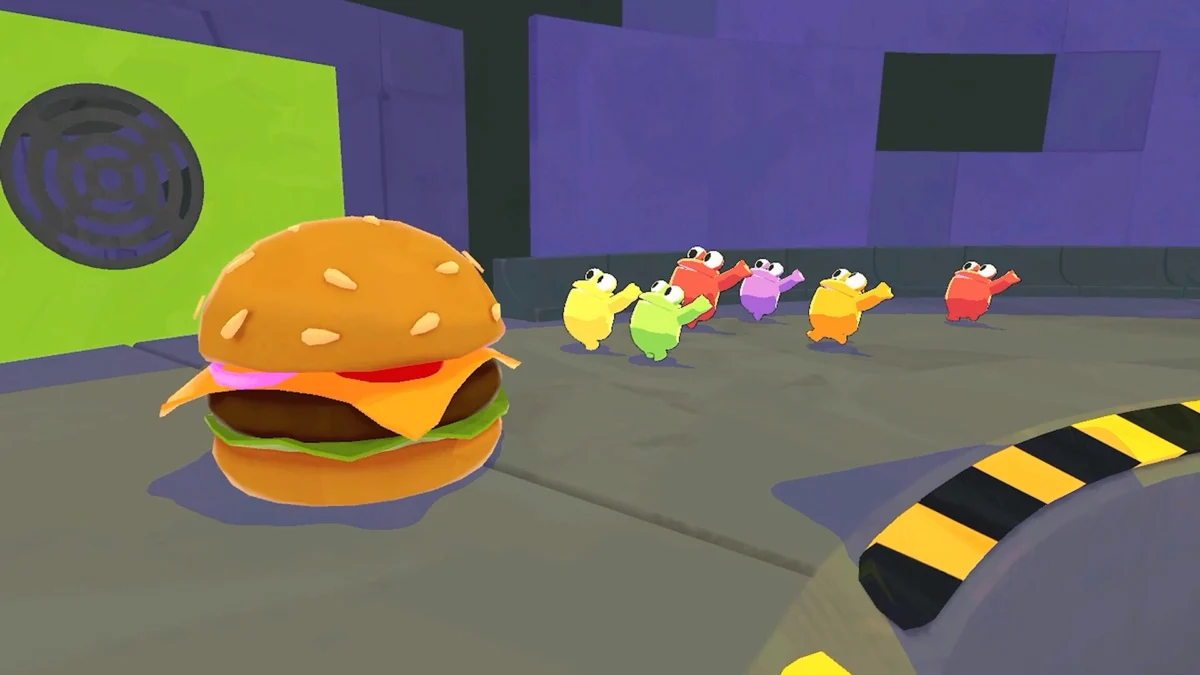
The indie gaming landscape has long been a fertile ground for experimental multiplayer experiences that prioritize "emergent chaos" over rigid competitive structures. Joining the ranks of physics-defying titles like Human Fall Flat and Gang Beasts is Frog Sqwad, a cooperative party game that blends chaotic traversal with a unique resource-management loop. Developed with an emphasis on "sticky" mechanics and frantic social interaction, the title challenges players to serve a gluttonous deity known as the Swamp King.
As the game makes its debut on the Steam platform following a successful showing at the London-based "New Game Plus" event, it presents a compelling case study in how "floaty" controls and procedural generation can be leveraged to create a high-energy social environment.
1. Main Facts: The Mechanics of Amphibian Servitude
At its core, Frog Sqwad is a 1-to-8 player cooperative experience that task players with navigating "wacky" environments to secure sustenance for their ruler, the Swamp King. While the game offers a single-player mode, the developers have optimized the experience for large-group play, supporting up to seven additional companions in a single session.
The Tongue as a Primary Interface
The defining mechanic of Frog Sqwad is the frog’s tongue. Eschewing traditional inventory systems or complex button combos, the game centers all interaction around the "sticky froggy tongue." This appendage serves three primary functions:
- Traversal: Players use their tongues to grapple onto surfaces, swinging across gaps and scaling vertical obstacles.
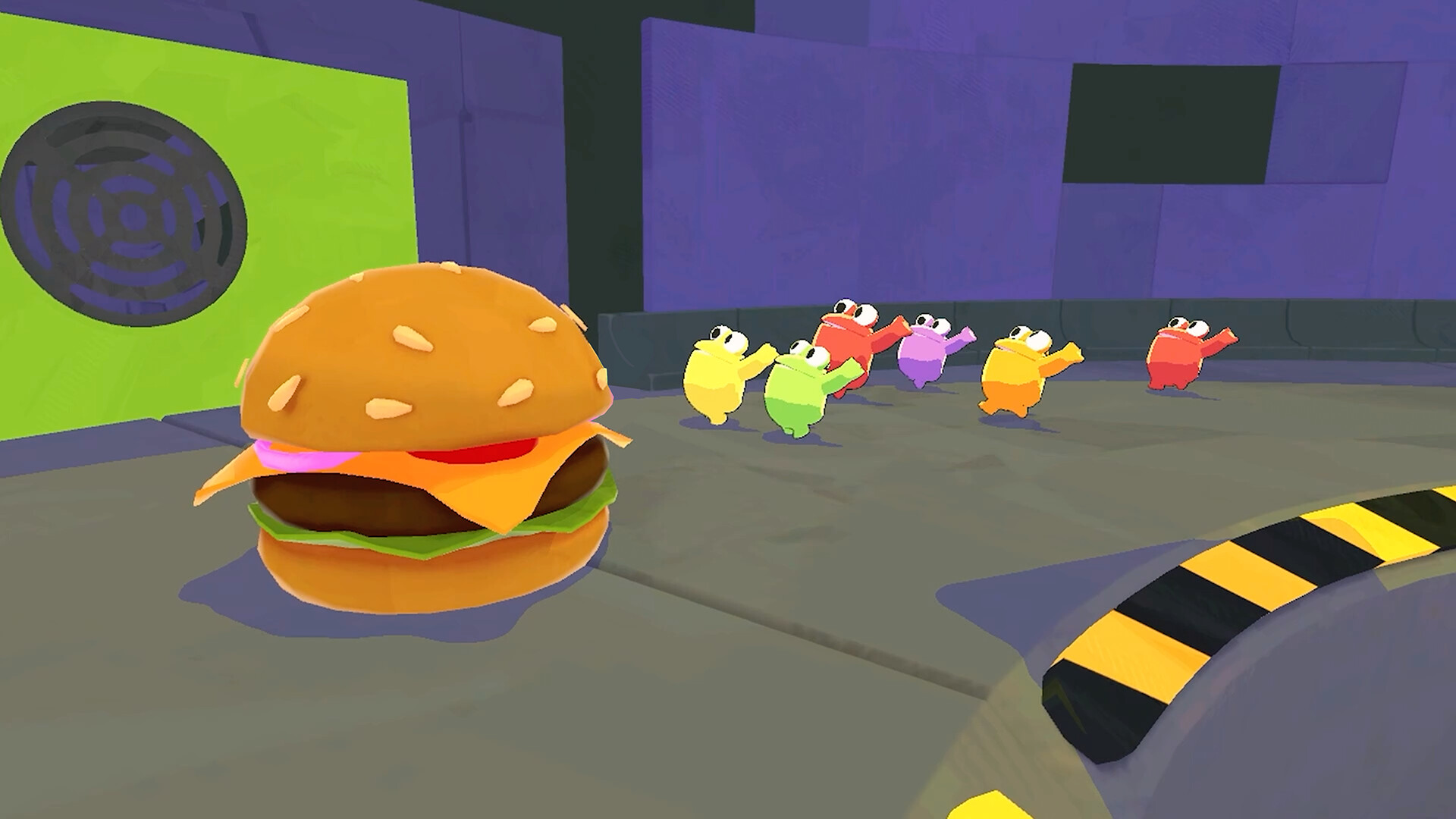
- Resource Acquisition: The tongue is the sole method for grabbing food items—ranging from hamburgers and fries to giant eggs—and dragging them toward a central collection bowl.
- Environmental Interaction: The tongue allows players to trigger switches, move platforms, and solve environmental puzzles necessary to progress through the level.
The Quota System and Metabolic Growth
The gameplay loop is governed by a daily "quota." Players must deposit a specific value of food into the Swamp King’s bowl before time expires. However, the game introduces a risk-reward metabolic system that complicates this task.
Smaller food items can be consumed by the player frogs themselves to replenish health. As a frog eats, it undergoes a physical transformation, growing in size and mass. Eventually, a player can become a "giant ball," a state that sacrifices the agility of jumping and tongue-swinging for the raw power of a wrecking ball. In this spherical form, players can demolish walls and crush obstacles, providing a strategic utility that offsets their loss of precision.
2. Chronology: From Concept to the "New Game Plus" Debut
The journey of Frog Sqwad reflects a modern approach to indie development, where community feedback and hands-on demonstrations at industry events play a pivotal role in shaping the final product.
- Initial Concept and Development: The project began as an exploration of physics-based cooperative play, focusing on the "friction" created when multiple players attempt to move heavy objects (like giant eggs) in a shared space.
- The Procedural Shift: Early in development, the team pivoted toward procedurally generated maps. This decision was made to ensure that the "chaos" remained fresh; by preventing players from memorizing level layouts, the game forces constant communication and adaptation.
- The London Showcase: A significant milestone occurred at the "New Game Plus" event in London. This showcase allowed the public to experience the game’s "floaty" movement first-hand. It was here that critics and players alike noted the game’s steep learning curve regarding precision jumping, which the developers have framed as a deliberate design choice to encourage cooperative problem-solving rather than individual mastery.
- Steam Launch: Following the refinement of its multiplayer infrastructure, Frog Sqwad officially launched on Steam, targeting the "couch co-op" and "online party" demographics.
3. Supporting Data: Procedural Perils and Environmental Hazards
To maintain a high level of difficulty, Frog Sqwad utilizes a variety of environmental hazards that interact with the game’s physics engine. The procedural generation ensures that these hazards are distributed in ways that require players to diversify their roles within the "Sqwad."
Environmental Hazard Typology
| Hazard Type | Effect on Player | Strategy for Mitigation |
|---|---|---|
| Slime Monsters | Immediate consumption/KO | Distraction via tongue-lashing or crushing in "Ball Form." |
| Toxic Ooze | Instant death upon contact | Requires precise grappling or the activation of floating platforms. |
| Spikes | Damage and knockback | Careful timing and utilize the "floaty" jump mechanics to hover over. |
| Fragile Food | Item destruction | Certain items, like eggs, break if dropped from heights, requiring "daisy-chain" passing between players. |
The Physics of "Floatiness"
Technical analysis of the movement in Frog Sqwad reveals a low-gravity approach to character physics. Unlike the "snappy" controls found in traditional platformers like Super Mario, Frog Sqwad utilizes a high-friction, low-acceleration model. This results in a "floaty" sensation that makes precision landings difficult. While this can be a source of frustration in solo play, in a multiplayer context, it serves as a comedic engine, leading to "accidental" collisions and narrow escapes that define the party game experience.
4. Official Responses: Design Philosophy and the "Chaos" Mandate
While formal press releases have focused on the "delightful concept" of the game, internal design philosophies shared during the New Game Plus event highlight a specific vision for the player experience.
The development team has characterized the game not as a test of skill, but as a test of "social coordination under pressure." In response to early critiques regarding the difficulty of the movement, the design stance has been one of intentionality. The goal was to create a game where "the controls are the first puzzle you have to solve."
By allowing up to eight players, the developers have essentially embraced the "strength in numbers" philosophy. Official guidance suggests that players should "play to their strengths"—assigning one player to be the "heavy" (the giant ball), another to be the "scout" (navigating the floaty platforms), and others to manage the logistics of dragging food to the bowl. This role-based emergent gameplay is intended to mitigate the inherent difficulty of the game’s physics.
5. Implications: The Future of High-Player-Count Indie Games
The release and reception of Frog Sqwad carry several broader implications for the indie gaming industry and the party genre at large.
The Expansion of the "Party" Threshold
Historically, local and online party games have been capped at four players (a vestige of the four-port console era). Frog Sqwad’s support for eight players aligns it with a growing trend—seen in games like Pico Park and Jackbox Games—where the "party" is defined by a larger social circle. This shift requires more robust networking code and level designs that don’t become unplayable when crowded.
The "Streamer-Friendly" Design Paradigm
Frog Sqwad is perfectly positioned for the "creator economy." Games that feature physics-based failure, colorful aesthetics, and high-intensity cooperation perform exceptionally well on platforms like Twitch and YouTube. The "floaty" controls, while a potential barrier for "hardcore" gamers, are a boon for content creators because they generate unpredictable, humorous moments that engage an audience.
The Procedural Generation Gamble
By relying on procedural generation for a platformer, the developers are taking a risk. While it boosts replayability, it can occasionally result in "unfair" level segments where the floaty movement is ill-suited for the generated hazards. The success of Frog Sqwad will likely depend on how well the algorithm balances challenge with the inherent limitations of the player’s movement.
Conclusion: A Lesson in Cooperative Friction
Frog Sqwad stands as a testament to the idea that a game doesn’t need to be "tight" to be "good." By leaning into the absurdity of its premise—frogs scavenging human junk food for a swamp deity—and embracing a control scheme that emphasizes the "struggle," the game carves out a niche in the crowded indie market. It is a game that thrives on the friction between players, proving that sometimes, the most fun can be found in the most frantic and chaotic of circumstances. As it continues to grow its player base on Steam, Frog Sqwad may well become a staple of the modern digital party night.