Roboquest VR Arrives on Meta Quest: A New Milestone for Cross-Platform VR Gaming
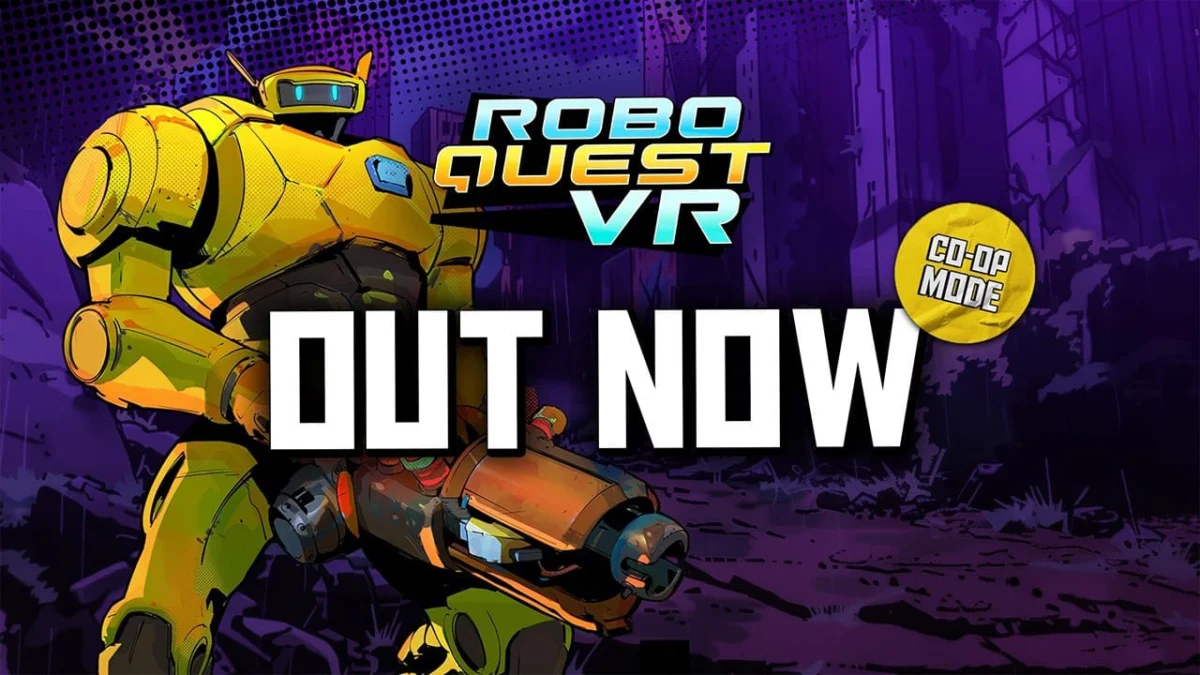
The landscape of virtual reality gaming has reached a significant turning point with the official release of Roboquest VR on the Meta Quest 3 and 3S platforms. Developed by Flat2VR Studios in collaboration with the original creators at RyseUp Studios, this launch marks more than just a port of a successful title; it introduces a robust, cross-platform ecosystem that bridges the gap between standalone VR, PC-based VR, and console-tethered hardware.
Accompanying the Quest launch is a comprehensive, same-day update that enables seamless cross-platform cooperative play across Meta Quest, SteamVR, and PlayStation VR2. This move signals a strategic shift in the VR industry toward unified player bases, ensuring that hardware choice no longer dictates the social experience of high-octane gaming.
Main Facts: The Quest Launch and the Co-op Revolution
Roboquest VR is a reimagining of the 2023 hit roguelite first-person shooter (FPS) originally released for traditional displays. The VR adaptation, which has already garnered critical acclaim on other platforms, is now available for the Meta Quest 3 and the newly released, budget-friendly Quest 3S.
The centerpiece of this release is the "Co-op Update." This free addition allows for two-player cooperative sessions that transcend platform boundaries. Whether a player is using a high-end PC via SteamVR, a PlayStation 5 with PSVR2, or the standalone Meta Quest 3, they can now join forces in the game’s post-apocalyptic world.
The co-op system is designed with modern accessibility in mind, featuring:
- Quickplay Matchmaking: For finding partners instantly.
- Room Codes: For private sessions across different platforms.
- Direct Invites: For friends on the same ecosystem.
- Shared Progression: Campaign progress is saved for both players, regardless of who is hosting.
- Tactical Interaction: Players can trade weapons mid-run, share individual loot drops, and perform cooperative revives to keep the run alive.
Chronology: From Modding Roots to Retail Excellence
The journey of Roboquest VR is a testament to the evolving relationship between community modders and professional game development.
- Late 2023: RyseUp Studios releases the "flat" version of Roboquest to massive success. Its fast-paced movement and cel-shaded aesthetic draw comparisons to Borderlands and Doom Eternal.
- Early 2024: Flat2VR Studios, a professional outfit born from the prolific "Flat2VR" modding community, announces a dedicated VR overhaul. Unlike a simple camera mod, this is a ground-up reconstruction of the game’s mechanics for motion controls.
- Late 2024: Roboquest VR debuts on PC VR and PSVR2. It is immediately hailed as a "near-flawless" adaptation, eventually earning "PC VR Game of the Year 2025" accolades from major industry publications like UploadVR.
- May 2025 (Original Target): The Quest version and cross-play update were initially slated for a spring release. However, Flat2VR Studios made the strategic decision to delay the launch.
- Current Day: The delay concludes with the launch on Meta Quest 3/3S. The extra months were utilized to optimize the game for mobile chipsets and to ensure the cross-platform netcode was stable enough to handle the game’s frantic pace.
Supporting Data: Technical Fidelity and Gameplay Mechanics
The transition from PC and console hardware to the standalone Meta Quest 3 and 3S is a significant technical feat. Roboquest VR relies on high-speed movement—dashing, jumping, and sliding—which requires a high frame rate to prevent motion sickness and maintain the "flow state" essential to the roguelite genre.
The Roguelite Loop
In Roboquest VR, players take control of a "Guardian," a high-tech combat robot discovered by a young scavenger named Max. The goal is to fight through randomized environments to reach "Haven 8," a fabled sanctuary. The gameplay loop consists of:
- Runs: Each attempt is unique, with randomized room layouts and enemy spawns.
- Upgrades: During a run, players find "Perks" and "Corrupted Items" that modify their abilities.
- Meta-Progression: Between runs, players return to a basecamp where they can spend collected "Wrenches" to permanently upgrade their Guardian’s health, damage, and class abilities.
VR-Specific Enhancements
Flat2VR Studios did not merely map buttons to triggers. The VR version features:
- Manual Reloading and Handling: Weapons feel tactile, requiring physical movements that match the robotic aesthetic.
- Spatial Awareness: The ability to physically lean around corners or duck under projectiles changes the tactical layer of the game’s intense boss fights.
- Optimized Performance: On the Quest 3, the game utilizes the Snapdragon XR2 Gen 2 chip to maintain visual clarity while handling the dozens of projectiles and enemies that occupy the screen simultaneously.
Official Responses: Quality Over Speed
The decision to delay the Quest release from May to the current date was a calculated move by Flat2VR Studios. In statements regarding the development process, the studio emphasized that bringing a high-performance PC game to a standalone headset requires more than just lowering texture resolution.
"The goal was to more closely align the quality and user experience across all platforms," the studio noted during the development cycle. By waiting, they were able to launch the Quest version simultaneously with the cross-play update, creating a "Day One" experience for Quest users that feels like a complete package rather than a late port.
Industry analysts have noted that this approach—delaying for the sake of parity—is becoming more common as the VR market matures. Players on standalone hardware like the Quest 3 now expect an experience that is functionally identical to its PC counterparts, even if there are slight graphical concessions.
Implications: The Future of the "Flat2VR" Model
The success of Roboquest VR carries heavy implications for the future of the VR industry. It validates a specific business model: the professional conversion of existing, high-quality "flat" games into virtual reality.
1. The Death of the Platform Silo
For years, the VR market was fragmented. PSVR2 players couldn’t play with Quest players, and SteamVR users were often left in their own bubble. Roboquest VR serves as a blueprint for how to unite these audiences. By implementing cross-platform co-op with room codes and shared progression, Flat2VR Studios has ensured the game’s longevity. A healthy player base is the lifeblood of any cooperative shooter.
2. Validation of Standalone Hardware
The Meta Quest 3 and 3S are the primary drivers of VR adoption today. By delivering a "Game of the Year" caliber title to these devices without sacrificing the core mechanics of the PC version, developers are proving that the gap between mobile and tethered VR is narrowing. This encourages other "flat" developers to consider VR ports as a viable revenue stream.

3. The "Modder-to-Professional" Pipeline
Flat2VR Studios’ rise from a community of enthusiasts to a studio delivering top-tier retail products is a significant cultural shift. It suggests that the best VR developers may not come from traditional backgrounds, but from those who have spent years "fixing" and adapting games for headsets in the fan-modding scene. They possess a unique understanding of "VR comfort" and "VR feel" that is often missing in corporate ports.
4. Roguelites as the Premier VR Genre
The roguelite structure is uniquely suited for VR. Because runs are relatively short (30–60 minutes), they fit the physical demands of standing VR play. The constant sense of progression and the "one more run" hook keep players returning to their headsets, addressing one of VR’s biggest hurdles: long-term engagement.
Conclusion
Roboquest VR on Meta Quest 3 and 3S is more than just a new game in the store; it is a celebration of how far the medium has come. It combines the polish of a successful indie hit with the specialized expertise of VR veterans. As players across the globe begin to team up—regardless of whether they are powered by a console, a PC, or a mobile processor—the message is clear: the future of VR is social, it is high-speed, and it is finally, truly, cross-platform.