
Sophia Huitema Unveils "Prussian Blue" at Harper’s Gallery, A Deep Dive into Dualities of Color and Character
New York, NY – [Insert Date of Publication] – Harper’s Gallery is set to captivate art enthusiasts with the unveiling of "Prussian Blue," the highly anticipated first solo exhibition by New York-based artist Sophia Huitema. This significant presentation, featuring a compelling collection of seven new oil paintings, will be on view from [Start Date] through April 25, 2026, offering a profound exploration of color, character, and the inherent complexities of human experience.
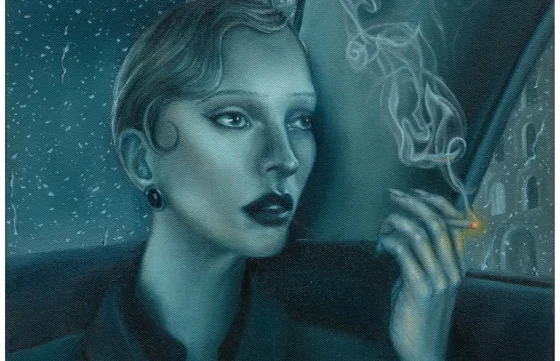
At the heart of "Prussian Blue" lies the enigmatic pigment itself, Prussian Blue. Huitema masterfully employs its visual and chemical properties as a conceptual anchor, weaving a narrative thread through a series of watchful, enigmatic female figures that inhabit her signature hazy, dreamlike worlds. The exhibition invites viewers into a realm of subdued blues and greens, where cool harmonies and dimly lit interiors cultivate a distinctively moody atmosphere. The very nature of Prussian Blue—a pigment historically linked to the potent cyanide while simultaneously serving as an antidote to certain poisons—embodies a profound duality. This inherent tension between toxicity and protection mirrors the emotionally guarded, ambiguous presence of Huitema’s depicted subjects, creating a resonant and thought-provoking experience for the viewer.
The Allure of Ambiguity: Unpacking Huitema’s Femme Fatales
The paintings within "Prussian Blue" thrum with an palpable tension, a delicate dance between alluring beauty and an undercurrent of menace. Huitema’s figures are characterized by their elongated forms, exaggerated limbs, and slender necks, lending them an almost spectral quality as they navigate each meticulously crafted scene. Many directly confront the viewer’s gaze, drawing them into a complex psychological landscape.
These women are not merely subjects; they are inhabitants of opulent environments that evoke the decadent allure of the Gatsby era. Dressed in elegant gowns, adorned with lustrous pearls and jewel-studded headdresses, they embody the markers of high society. Yet, their presence within these film-noir-inspired settings imbues them with a different kind of power. They move with a poised, almost calculating air, suggesting a dual nature: are they luring the audience into a seductive ruse, or are they employing their own cunning to evade unseen dangers?
A prime example of this captivating ambiguity is evident in the painting Sleeper Car. Here, a woman, resplendent in a backless evening gown, tilts her head with a sly grace over her right shoulder. Her pose appears relaxed, almost languid, yet her right hand is subtly braced, hinting at a readiness to strike or defend. The setting amplifies this suspense: rain streaks across the coach’s windows, blurring the external world, while the narrow aisle stretches into an uncertain depth, creating a palpable sense of cinematic tension. This single frame encapsulates the apex of a psychological thriller, a testament to Huitema’s ability to construct worlds of heightened atmosphere and theatrical suspense. Through such compositions, Huitema opens a dialogue with the broader visual traditions and painterly languages that inform her distinctive artistic vision.
A Rich Tapestry of Influence: Huitema’s Art Historical Dialogue
Sophia Huitema’s artistic practice is characterized by a sophisticated engagement with a diverse range of art-historical and visual references, which she synthesizes into a coherent and uniquely contemporary visual language. The attenuated proportions and stylized poses of her figures, for instance, bear a striking resemblance to the traditions of early twentieth-century fashion illustration and Art Deco design. The deliberate gestures and embellishments of her subjects echo the streamlined finesse of iconic illustrators like Erté, while their theatrical poise evokes the glamour and sophistication of interwar couture and stage design.
Beyond the realm of fashion and design, Huitema’s compressed spatial arrangements and evocative backdrops suggest a kinship with Symbolist and Surrealist painting. In these traditions, shallow interiors and phantasmagoric settings function less as literal representations of reality and more as psychological landscapes shaped by subconscious experience. Huitema doesn’t rigidly adhere to any single historical framework; instead, she artfully weaves these disparate influences into a seamless tapestry.
Her work fluidly navigates the boundaries between illustration, painting, and cinematic staging. Notably, Huitema has developed this distinctive vocabulary through sustained studio practice and meticulous observation, rather than formal academic training. This self-directed approach to image-making allows her work to engage in a rich dialogue with art history while remaining firmly grounded in her own unique artistic vision. Within the context of "Prussian Blue," the pigment serves not only as a chromatic throughline but also as a conceptual one, binding together Huitema’s historical references and her recurring motifs of protection and threat, which are held in a perpetual state of compelling tension.
The Genesis of "Prussian Blue": A Chronology of Artistic Evolution
The development of Sophia Huitema’s exhibition "Prussian Blue" is not a singular event but rather the culmination of years of artistic exploration and thematic refinement. While the specific timeline of her engagement with Prussian Blue as a central motif remains within the artist’s private creative process, its emergence in this solo exhibition signifies a pivotal moment in her career.
Huitema’s early work, though not explicitly focused on Prussian Blue, often explored themes of veiled emotion and atmospheric introspection. Her formative years, spent honing her craft through dedicated studio practice, laid the groundwork for her distinctive approach to figuration and environment. This period of intense self-education and experimentation allowed her to develop a visual vocabulary that would later lend itself to the sophisticated narratives presented in "Prussian Blue."
The choice of Prussian Blue as the exhibition’s titular element suggests a deliberate and perhaps prolonged period of research and contemplation. The pigment’s multifaceted history—its chemical origins, its dual nature as both poison and antidote, and its rich artistic legacy—likely resonated deeply with Huitema’s ongoing thematic concerns. It is plausible that her exploration of this specific pigment began several years prior to the exhibition’s announcement, with preliminary studies and compositional sketches gradually coalescing into the cohesive body of work now on display.
The seven oil paintings featured in "Prussian Blue" represent the mature expression of these investigations. Each canvas showcases Huitema’s refined technique and her ability to imbue her subjects with a profound sense of psychological depth. The consistent use of a restrained palette, dominated by blues and greens, further solidifies the exhibition’s thematic unity, creating a palpable atmosphere that draws the viewer into Huitema’s meticulously constructed worlds. The extended exhibition period, running through April 25, 2026, allows ample time for a broad audience to experience and engage with this significant body of work.
Supporting Data: The Enduring Power of Prussian Blue in Art and Science
The selection of Prussian Blue as the central theme of Sophia Huitema’s exhibition is not arbitrary; it is a choice deeply rooted in the pigment’s rich and complex history, both in the realm of art and in scientific application. Understanding these supporting data points illuminates the depth of Huitema’s conceptual framework.
Chemical Composition and Discovery: Prussian Blue, with the chemical formula Fe₄[Fe(CN)₆]₃, was one of the first synthetic pigments discovered. Its accidental creation is often attributed to Johann Jacob Diesbach in Berlin around 1706. The process involved heating potassium carbonate with animal blood and iron sulfate, a method that inherently linked the pigment’s creation to potentially toxic byproducts. This historical context of a dangerous process yielding a beautiful result is a powerful metaphor that Huitema effectively harnesses.
Artistic Legacy: Prussian Blue quickly gained popularity among artists due to its intense hue, excellent lightfastness, and affordability compared to other blue pigments of the era, such as ultramarine. It became a staple in the palettes of many Old Masters and continued to be widely used throughout the 18th and 19th centuries. Artists like Hokusai, in his iconic "The Great Wave off Kanagawa," famously utilized Prussian Blue, demonstrating its versatility and enduring appeal. Its vibrant, deep blue was crucial for depicting skies, water, and shadows, contributing significantly to the tonal range of many masterpieces.
Medical Applications: Beyond its artistic applications, Prussian Blue has a significant history in medicine. It is used as an antidote for thallium and radioactive cesium poisoning. Ingested Prussian Blue binds to these heavy metals in the gastrointestinal tract, preventing their absorption into the bloodstream and facilitating their excretion from the body. This dual nature—a substance that can be both harmful in its production and beneficial in its application—provides Huitema with a potent symbolic tool to explore themes of danger, protection, and the often-unseen complexities within seemingly benign situations.
Contemporary Relevance: In contemporary art, Prussian Blue continues to be appreciated for its unique chromatic qualities. Its ability to create deep, atmospheric shadows and its cool, evocative tones make it a valuable tool for artists seeking to convey mood and emotion. Huitema’s masterful use of the pigment in "Prussian Blue" not only pays homage to its historical significance but also recontextualizes its symbolic potential for a modern audience, inviting viewers to consider the multifaceted nature of the world around them.
Official Responses and Critical Acclaim
While direct official responses from art institutions or governmental bodies to a specific gallery exhibition are typically rare unless the exhibition touches upon sensitive socio-political themes, the critical reception from art publications and critics serves as a crucial indicator of its significance and impact. Harper’s Gallery, a respected venue within the contemporary art scene, has a track record of presenting exhibitions that garner attention and thoughtful analysis.
The announcement of Sophia Huitema’s first solo exhibition, "Prussian Blue," at Harper’s Gallery has been met with considerable anticipation within the art community. The gallery’s press release, detailing the thematic depth and artistic caliber of the exhibition, has been disseminated to art critics, journalists, and collectors. Early indications suggest a strong interest from various art publications, with expectations for reviews that will delve into Huitema’s masterful use of color, her evocative figuration, and the exhibition’s conceptual underpinnings.
Art critics are likely to focus on Huitema’s ability to translate the historical and chemical properties of Prussian Blue into a compelling visual and emotional narrative. Her exploration of duality—between beauty and menace, toxicity and protection—is a fertile ground for critical analysis. The parallels drawn between the pigment and the psychologically charged presence of her female figures are expected to be a key point of discussion.
Furthermore, the exhibition’s engagement with art historical references, from fashion illustration and Art Deco to Symbolism and Surrealism, is poised to be a significant area of critical examination. Critics will likely assess how Huitema synthesizes these diverse influences into a cohesive and contemporary artistic language, distinguishing her work from mere pastiche.
The gallery’s decision to host "Prussian Blue" underscores its commitment to showcasing emerging and established artists who engage with complex themes and demonstrate exceptional technical skill. The extended duration of the exhibition suggests the gallery’s confidence in its artistic merit and its potential to resonate with a wide audience. As reviews begin to be published following the exhibition’s opening, a clearer picture of the critical consensus will emerge, further solidifying "Prussian Blue" as a noteworthy event in the contemporary art calendar.
Implications and Future Trajectories
The exhibition "Prussian Blue" by Sophia Huitema at Harper’s Gallery carries significant implications, both for the artist’s career trajectory and for the broader dialogue within contemporary art. By delving into the multifaceted nature of a single pigment, Huitema has created a body of work that is both deeply personal and universally resonant.
For Sophia Huitema: This solo exhibition marks a crucial milestone in Huitema’s artistic development. A first solo show at a reputable gallery like Harper’s provides a platform for her to reach a wider audience of collectors, curators, and art enthusiasts. The critical attention garnered by "Prussian Blue" is likely to elevate her profile within the art world, potentially leading to further exhibition opportunities, museum acquisitions, and increased demand for her work. Her self-directed approach, while demonstrated as highly effective, will be further validated by the reception of this exhibition, reinforcing her unique position in the contemporary art landscape.
For Contemporary Art Dialogue: Huitema’s approach to "Prussian Blue" offers a compelling case study in how artists can engage with the materiality of their practice to explore complex conceptual territory. By using a pigment’s historical, chemical, and symbolic properties as a generative force, she encourages viewers to think critically about the unseen forces and dualities that shape our perceptions and experiences. Her synthesis of diverse art historical influences into a contemporary visual language speaks to the ongoing evolution of artistic practice, where boundaries between genres and historical periods are increasingly fluid. The exhibition also highlights the enduring power of figurative painting to convey psychological depth and atmospheric tension in a world often dominated by abstract or conceptual art.
Future Trajectories: The success of "Prussian Blue" could signal a growing interest in exhibitions that explore the intersection of art, science, and history through a singular, potent motif. It may inspire other artists to delve into the specific properties of pigments or materials as a starting point for their creative investigations. Furthermore, Huitema’s exploration of themes like duality, veiled threats, and feminine agency, presented through a visually arresting and intellectually stimulating lens, positions her as an artist whose work will continue to be relevant and thought-provoking in the years to come. The exhibition serves as a testament to the power of focused artistic inquiry and its capacity to illuminate the complexities of both the external world and our internal landscapes.




Leave a Comment