
Retro-Computing and Sardonic Wisdom: The Digital Resurrection of Platt and Langford’s 1984 Classic, "Micromania"
Main Facts: A Digital Time Capsule for the Modern Age
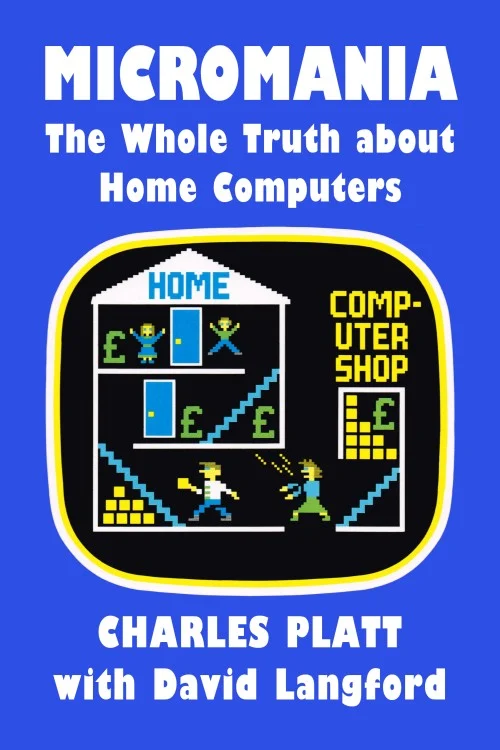
In an era dominated by artificial intelligence, cloud computing, and petabyte-scale data centers, the Trans-Atlantic Fan Fund (TAFF) has released a digital artifact that serves as a stark, humorous, and "horrified" reminder of where it all began. The organization recently announced the addition of Micromania: The Whole Truth about Home Computers to its extensive free library. Authored by Charles Platt with significant contributions and British adaptation by David Langford, the 1984 text has been made available as a free PDF download, inviting readers to revisit the "computer continuum" of forty years ago.
Micromania—known in the United States as The Whole-Truth Home Computer Handbook—is far from a dry technical manual. Instead, it represents a unique intersection of speculative fiction sensibility and consumer advocacy. The book was designed to demystify the burgeoning home computer market of the early 1980s, combining accessible, jargon-free technical explanations with a biting, sardonic critique of industry hyperbole. It famously lampooned the "creatures" of the era, from obsessive hackers to the corporate suits who promised that a machine with 16 kilobytes of RAM would fundamentally revolutionize every aspect of domestic life.
The new digital edition, released via the TAFF website, is presented as an intentional "snapshot of the past." While the core text remains unedited to preserve its historical integrity, the release is bolstered by a new foreword by Charles Platt and a new afterword by David Langford. These additions provide much-needed context, reflecting on how the "micromania" of the 1980s paved the way for the ubiquitous digital landscape of the 2020s. While the download is free, TAFF encourages readers to provide a small donation to support the fund’s mission of facilitating international travel and cultural exchange within the science fiction community.
Chronology: From the 8-Bit Boom to the Digital Archive
The journey of Micromania reflects the rapid evolution and eventual consolidation of the global computing market. To understand the book’s significance, one must trace its development through three distinct phases:
1. The American Inception (1983–1984):
The project began in the United States, authored by Charles Platt. At the time, the American market was flooded with a bewildering array of incompatible systems, including the Apple II, the Commodore 64, and the IBM PC. Platt, already a respected science fiction author and editor, recognized the need for a guide that spoke the truth to consumers who were being pressured into "the computer age" by aggressive marketing. The result was The Whole-Truth Home Computer Handbook, a book that dared to suggest that computers were often frustrating, over-hyped, and populated by a very strange subculture.
2. The British Adaptation and Publication (1984–1985):
As the book crossed the Atlantic, the British computing scene presented a different landscape, dominated by the ZX Spectrum, the BBC Micro, and the Commodore 64. David Langford, a towering figure in British science fiction fandom and a professional technical writer, was tasked with adapting the text. Langford did more than just change "color" to "colour"; he expanded the text to include the specific quirks of the UK market. This version, titled Micromania, was published in hardback by the prestigious house Gollancz in 1984, followed by a Sphere paperback edition in 1985.
3. The TAFF Revival (2024):
For decades, Micromania remained a sought-after item for collectors of retro-computing memorabilia and fans of Langford’s witty prose. In 2024, recognizing the book’s value as a historical document, TAFF worked with the authors to digitize the text. This "revived" edition was released as a PDF, specifically chosen to maintain the original layout and aesthetic of the 1980s publication. The inclusion of new retrospective essays by Platt and Langford ensures that the book is not merely a relic, but a dialogue between the past and the present.
Supporting Data: The 1984 Computing Landscape
To appreciate the "horrified nostalgia" mentioned in the book’s new internal warning, it is necessary to examine the technical and cultural data of the era in which Platt and Langford were writing.
In 1984, the "home computer" was a radical and often misunderstood device. The average machine featured:
- Memory: RAM typically ranged from 16KB to 64KB. To put this in perspective, a single modern smartphone photograph would require thousands of such machines to store.
- Storage: Data was frequently stored on standard audio cassette tapes, which were notoriously slow and prone to loading errors. The high-end alternative was the 5.25-inch floppy disk, which held roughly 160KB to 360KB.
- Display: Most home computers connected to standard television sets, offering "high-resolution" graphics that would appear pixelated and blurry by today’s standards.
Micromania arrived at the peak of this "Micro Revolution." In the UK alone, there were dozens of competing manufacturers, most of whom would be bankrupt or absorbed by larger entities within five years. Platt and Langford’s work was essential because it provided a consumer-centric "BS detector" in a market where manufacturers frequently made claims that bordered on science fiction. Their "jargon-free" approach was a direct response to the deliberate obfuscation used by salesmen to intimidate and confuse the general public.
Official Responses: The Authors Reflect on a Bygone Era
The release of the TAFF edition has prompted fresh commentary from the authors, offering a rare glimpse into the mindset of tech pioneers looking back at their own predictions and observations.
Charles Platt, writing in the new foreword, emphasizes the chaotic energy of the early 80s. He notes that while the technology has changed beyond recognition, the human element—the "mania" of the title—remains remarkably consistent. Platt’s modern perspective acknowledges that while he was skeptical of the hype, the eventual integration of computers into every facet of life exceeded even the most ambitious marketing claims of 1984, albeit in ways no one truly predicted.
David Langford, in his new afterword, brings his trademark wit to the realization that many of the "futuristic" problems they identified in 1984 have simply mutated. Langford reflects on the British "bedroom coder" culture that the book lampooned, noting that many of those "creatures of the continuum" went on to build the multi-billion-pound global gaming industry. His commentary serves as a bridge between the hobbyist enthusiasm of the 1980s and the professionalized digital world of today.
The Trans-Atlantic Fan Fund (TAFF) issued a statement accompanying the release, clarifying the intent of the project:
"This edition should be regarded as a snapshot of the past—an exercise in sometimes horrified nostalgia for the computer scene of the early 1980s. Apart for minor corrections of typos, small omissions, and inconsistencies, the text has not been updated. It is a symptom of its time."
Implications: Preservation, Fandom, and the Evolution of Tech Satire
The digital revival of Micromania carries several significant implications for the fields of digital preservation, science fiction fandom, and technology journalism.
1. The Importance of "Fannish" Preservation:
The release highlights the vital role that fan organizations like TAFF play in preserving cultural history. While mainstream publishers often allow "niche" or "outdated" titles to fall out of print, fan funds ensure that the intellectual history of the community remains accessible. By digitizing Micromania, TAFF is not just preserving a book about computers; it is preserving the voice of the science fiction community as it grappled with the birth of the digital age.
2. The Evolution of Tech Journalism:
Micromania stands as a precursor to modern tech criticism. Before the rise of "snarky" tech blogs or investigative YouTube channels, Platt and Langford were using satire to hold the industry accountable. The book’s success in 1984 proved that there was a massive audience for technology writing that was both technically accurate and culturally critical. This legacy can be seen today in the work of writers who examine the social and ethical implications of Silicon Valley.
3. The Value of "Horrified Nostalgia":
For younger readers, Micromania provides a necessary reality check. It strips away the polished, retro-futuristic aesthetic often found in shows like Stranger Things and replaces it with the messy, frustrating reality of 8-bit computing. For older readers, it is a reminder of the steep learning curve and the sheer audacity of the early adopters.
4. Supporting the Trans-Atlantic Fan Fund:
Finally, the release serves a practical purpose. By offering Micromania as a "free but donation-encouraged" download, TAFF continues its mission to fund travel for fans between Europe and North America. This model of "content for a cause" demonstrates how archival projects can fuel the future of the community by honoring its past.
In conclusion, the digital resurrection of Micromania is more than a mere curiosity for retro-computing enthusiasts. It is a masterclass in science-fictional thinking applied to real-world technology. As we navigate our own era of technological upheaval, the sardonic wisdom of Platt and Langford from 1984 remains a refreshing, if "horrified," guide to the "whole truth."



Leave a Comment