
Southern Poverty Law Center Indicted on Federal Charges, Accused of Funding Extremist Groups
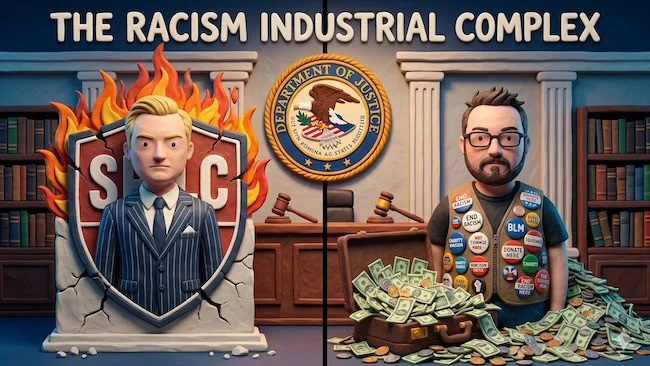
Montgomery, AL – April 21, 2026 – A federal grand jury in Montgomery, Alabama, has returned an 11-count indictment against the Southern Poverty Law Center (SPLC), a prominent civil rights organization. The charges, unsealed today by the United States Department of Justice, include six counts of wire fraud, four counts of false statements to a federally insured bank, and one count of conspiracy to commit concealment money laundering.
The indictment alleges that from 2014 to 2023, the SPLC secretly channeled over $3 million in donor funds to individuals associated with violent extremist groups, including the Ku Klux Klan, Aryan Nations, and the National Socialist Party of America, among others linked to the Unite the Right movement. Prosecutors contend that the organization utilized shell entities, such as "Center Investigative Agency" and "Fox Photography," to obscure these payments, even as it publicly condemned these same groups through its widely recognized "hate map" and fundraising appeals.
Charges Detail Allegations of Financial Misconduct and Deception
Acting Attorney General Todd Blanche, alongside FBI Director Kash Patel, announced the charges, asserting that the SPLC allegedly manufactured racism to legitimize its operational existence. "Using donor money to allegedly profit off Klansmen cannot go unchecked," Blanche stated during a press conference. Director Patel elaborated that the organization is accused of misleading donors about its efforts to dismantle violent extremist movements, while simultaneously providing financial support to leaders within these very groups.
The indictment traces the alleged scheme back to the 1980s, outlining a clandestine network of field sources internally referred to as "the Fs." One such informant, allegedly holding a leadership position within the neo-Nazi National Alliance, is reported to have received over $1 million.
SPLC Denounces Indictment as Politically Motivated; Legal Challenges Loom
In response to the indictment, the Southern Poverty Law Center issued a strong denouncement, characterizing the charges as a politically motivated attack orchestrated by the Trump administration. The organization has pledged to vigorously contest the allegations in court.
The legal ramifications of the indictment are already drawing attention from legal experts. Several former federal prosecutors, speaking anonymously to CBS News, have suggested that the indictment may contain procedural or legal flaws that could potentially lead to its dismissal.
Broader Implications for Publishing and Public Discourse
The implications of this indictment extend beyond the legal arena, particularly for authors and the publishing industry. The SPLC’s "hate group" designations have historically influenced editorial decisions, platform policies, and retail practices, leading to the rejection of books, cancellation of events, and refusal of advertising for writers labeled as racist or extremist.
This federal indictment provides potential ammunition for critics who question the SPLC’s methodology and integrity, suggesting that the organization may have financially supported the very extremists it claimed to oppose. This development occurs amidst a discernible cultural shift, where accusations of racism appear to carry less immediate career-ending weight than in previous years. Authors and creators are reportedly experiencing fewer automatic cancellations when their work touches upon sensitive topics related to race, immigration, or identity, suggesting a growing demand for evidence over reflexive condemnation. This evolving landscape fosters a more permissive environment for authors to explore controversial subjects without immediate professional repercussions.
While the indictment does not diminish the reality of genuine bigotry, it potentially weakens the strategic deployment of the term "racist" by organizations facing newfound scrutiny. Authors who previously self-censored to preempt backlash linked to SPLC classifications may now feel emboldened to publish with greater confidence. Publishers, in turn, may reassess their risk assessments when influential gatekeepers like the SPLC are perceived as compromised. The outcome of the DOJ case, though still in its nascent stages, is poised to significantly impact the established narrative surrounding accusations of racism.
The "Alex Jones Was Right" Phenomenon and SPLC’s Alleged Role
Adding a layer of intrigue, the allegations echo past claims made by figures like Alex Jones, who, around 2017, asserted that the SPLC had funded the Charlottesville rally. The current indictment lends a disturbing credibility to such assertions, prompting discussions about whether the SPLC’s actions align with its stated mission of combating racism.
The SPLC’s defense, positing that payments were made to informants, faces scrutiny. Critics argue that the indictment’s core allegations suggest payments were directed to individuals leading extremist organizations, not merely embedded informants. If the SPLC’s objective was to eradicate racism, the alleged financial control over hate group leaders presents a strategic paradox: instead of dismantling these groups, the organization is accused of perpetuating the very problem it was established to solve.
The Nonprofit Incentive Problem: Manufacturing Crises for Funding
Jonathan, a commentator, highlights a fundamental issue within the nonprofit sector: the inherent incentive to maintain the problem they are ostensibly solving. "Nonprofits don’t sell a product," he explains. "They claim to correct something in culture: ‘We’re here to fight racism.’ But what happens when racism stops seeming like a serious problem? There’s no reason for your nonprofit, no reason for your CEO salary. So you need to manufacture the problem to keep the donations flowing. You have to keep people churned up about racism, or abortion, or whatever your cause is."
This perspective suggests that the SPLC, by ostensibly fighting racism, may have had a vested interest in ensuring that racism remained a prominent and alarming issue to secure ongoing financial support.
Manufacturing Problems for Profit: Historical Parallels
Thomas draws parallels to historical instances where the suppression of one product benefited another, often through manufactured controversy. He recounts an anecdote about parents encountering "professional protesters" funded by DuPont, the manufacturer of Freon, to protest the chemical’s environmental impact. This protest strategy, he posits, served to clear the market for DuPont’s new, patented replacement product, Puron.

This pattern, Thomas argues, has been observed with other substances like glyphosate and DDT, which were deemed safe during patent protection but later vilified once patent exclusivity expired. He further suggests that many large-scale protests, particularly those involving paid participants, are sophisticated public relations strategies designed to influence policy and market dynamics. His experience as a legislative aide revealed that regulations are often championed by the very industries they purportedly constrain, as these regulations can create barriers to entry for smaller competitors, thereby benefiting established large businesses.
Manufactured Conflict as a Strategic Tool
Jonathan offers a grim perspective from his experience in counter-terrorism, where adversaries intentionally positioned military assets under civilian infrastructure like schools and hospitals. This tactic, he explains, exploits media narratives by capitalizing on the public relations fallout when these "soft targets" are hit. The collateral damage, rather than being an unintended consequence, becomes a tool to garner sympathy and donations, thereby sustaining the terrorist organization’s message and operations.
Thomas predicts that the SPLC indictment may be the harbinger of further legal actions against organizations operating within what he terms the "racism industrial complex." He argues that the substantial financial inflows into the anti-racism sector created a demand for more "racism to fight," incentivizing the creation of such problems. He anticipates a series of indictments, released incrementally using a public relations tactic known as "trimming the puppy’s tail," to mitigate the immediate impact and allow for partial recovery before subsequent disclosures. This strategy, he notes, aligns with political campaigns aimed at dismantling institutions perceived as adversarial.
The Undermining of SPLC’s Authority and Influence
The Southern Poverty Law Center has historically wielded significant influence. Its designations could lead to financial institutions like PayPal severing ties with individuals or organizations, and banks closing accounts based on SPLC reports. The organization’s substantial fundraising success, often in the hundreds of millions of dollars, underscored its perceived authority.
For international observers, the indictment represents a critical challenge to the SPLC’s credibility. Its core fundraising appeal—"give us money to fight racism"—is directly contradicted by the allegations of funding extremist groups. This is not merely a case of individual corruption; it is an accusation that the organization actively worked against its stated mission, akin to an environmental group harming the very species it pledged to protect.
The Erosion of "Identity Shields" and the Shifting Cultural Landscape
The SPLC indictment, by exposing potential deception, could significantly erode the power of "identity-based defenses" that have shielded individuals and groups from criticism. For years, belonging to certain identity groups offered a degree of immunity, allowing criticism to be easily deflected as racist, homophobic, or transphobic.
This development may accelerate a broader cultural recalibration. The accusation of racism, once a potent weapon capable of ending careers, appears to be losing its absolute power. This shift is becoming evident globally, with growing nationalist sentiments emerging in regions where such expressions were once unthinkable. This evolution, proponents argue, is not about endorsing racism but about enabling individuals to critique corrupt or harmful behavior without facing an immediate and automatic defense of prejudice.
Collapsing Trust in Charities and the Nonprofit Model
Beyond the SPLC, there is a growing erosion of trust in charitable organizations in general. Concerns about the allocation of funds, executive salaries, and administrative overhead have long plagued the nonprofit sector. Anecdotal evidence suggests a trend towards direct giving to individuals or local community organizations rather than large, established charities.
The SPLC case, in its extremity, exemplifies a broader pattern of nonprofits whose operations appear to diverge significantly from their stated missions. The inherent conflict of interest in funding an organization to "end" a problem is highlighted: success in achieving the mission would render the organization obsolete, jeopardizing its funding and the livelihoods of its staff.
Lessons for Authors in a Changing Media Ecosystem
For authors, particularly those engaged in mission-driven writing, the SPLC indictment offers a crucial lesson: authenticity is paramount. The advice is to avoid corporate-sounding prose and artificiality, and to embrace a personal voice that resonates with readers. The use of AI in communications is cautioned against, as it may strip away personality and lead to homogenized content. Genuine communication, even when it pushes boundaries, is seen as more effective.
The Rise of For-Profit Missions and Transactional Honesty
Thomas advocates for mission-driven businesses structured as for-profit entities, suggesting that transactional relationships are inherently more transparent than donation-based ones. He proposes that in the current era, a subscription-based model for content or services, focused on delivering "good, true, and beautiful" offerings, may be more sustainable and honest than traditional nonprofit structures. This approach allows for clear financial objectives without the inherent conflict of interest found in organizations funded to eliminate problems.
Jonathan draws upon biblical examples, referencing the Apostle Paul’s tent-making as a means of avoiding financial dependence on the churches he established. This practice, he notes, protected Paul from accusations of profiting from his religious work, offering a timeless model for mission-driven endeavors.
Ultimately, the SPLC indictment represents a significant moment, potentially reshaping public discourse, challenging the authority of influential advocacy groups, and prompting a re-evaluation of the nonprofit sector and the dynamics of public trust. The legal proceedings will undoubtedly be closely watched, but the immediate impact on the cultural landscape appears to be a gradual, yet significant, erosion of established power structures.




Leave a Comment