"Spaghettin" Review Unearths Mixed Feelings for Alley Cat Games’ Dexterity Series
LONDON, UK – Alley Cat Games, renowned for its charming and compact "tin-pun" series of dexterity games, has recently released "Spaghettin," a new entry designed to offer quick, accessible fun in a portable format. Following in the footsteps of critically acclaimed titles like "Tinderblox" and "Kittin," "Spaghettin" arrived with considerable anticipation, promising another dose of engaging, tactile gameplay. However, initial reviews suggest that this latest culinary-themed offering may not quite live up to the high standards set by its predecessors, raising questions about its longevity and replayability in a competitive market.
The "tin-pun" series has garnered a loyal following for its ability to condense engaging dexterity challenges into pocket-sized tins, making them ideal companions for travel or quick breaks. "Tinderblox," which tasks players with carefully stacking wooden blocks to construct a campfire, captivated audiences with its simple yet tense premise and vibrant components. "Kittin," building on this success, delighted cat lovers and gamers alike with its challenge of stacking adorable kitten-shaped blocks, further cementing the series’ reputation for innovative, charming design. "Spaghettin," with its thematic nod to Italian cuisine and a core mechanic centered around teasing out strands of spaghetti, was expected to continue this trend of delightful, lighthearted engagement.
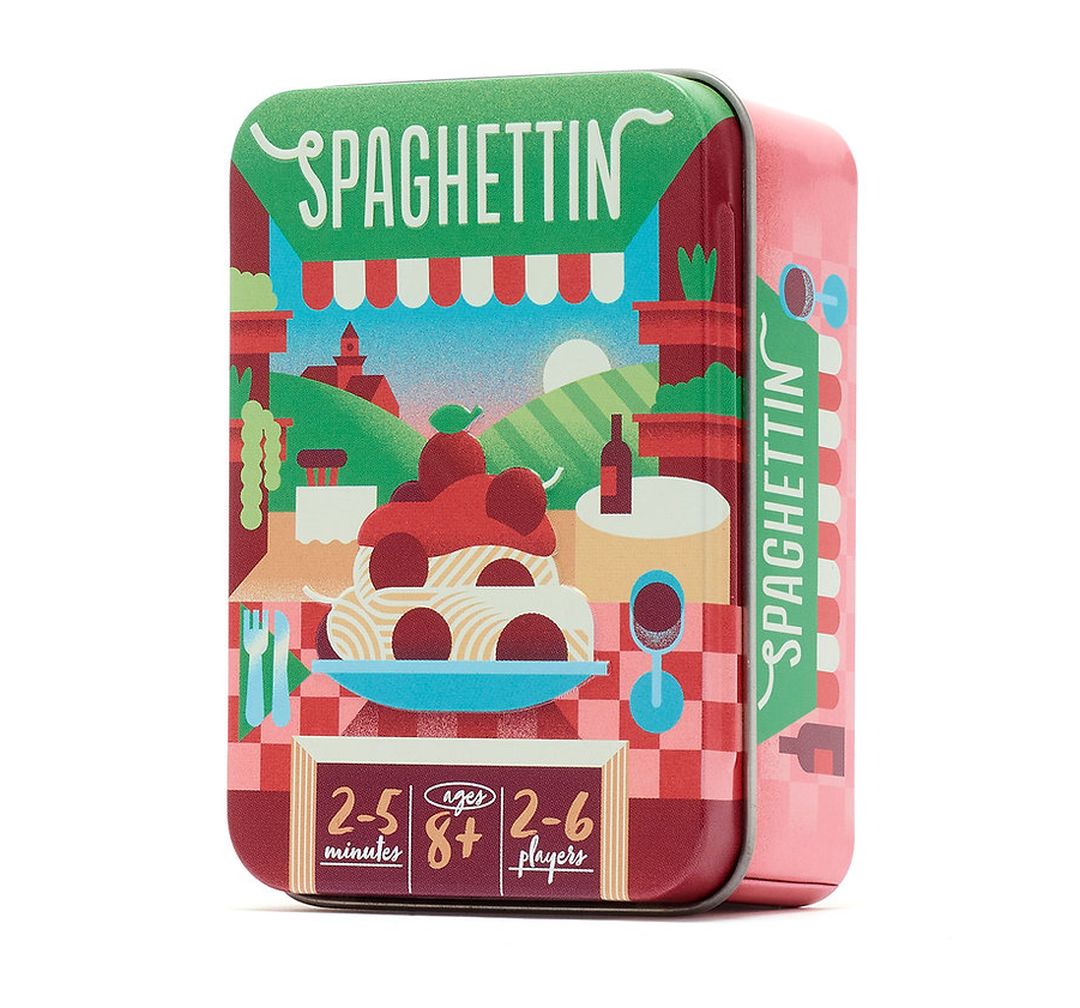
Despite its visually appealing components and the proven track record of its publisher, "Spaghettin" faces criticism for its core gameplay loop, which some reviewers have found to be anticlimactic and lacking the decisive "aha!" or "oh no!" moments that define successful dexterity games. Priced at an RRP of £11.99, and designed for 2-6 players aged 8 and up with an estimated playtime of just five minutes, "Spaghettin" positions itself as a prime candidate for family and party game shelves. Yet, the central challenge of its design appears to be its Achilles’ heel, prompting a closer look at what makes a dexterity game truly land with players.
Main Facts: The Premise and the Pitfall
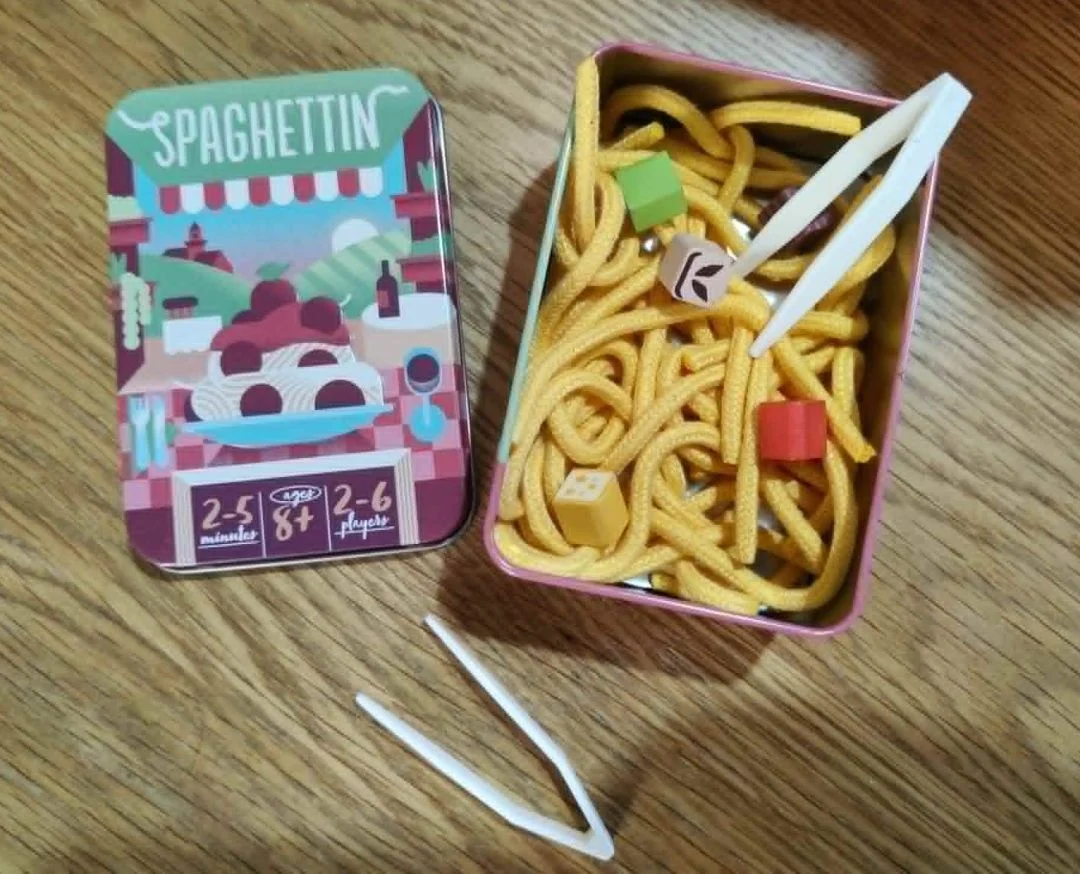
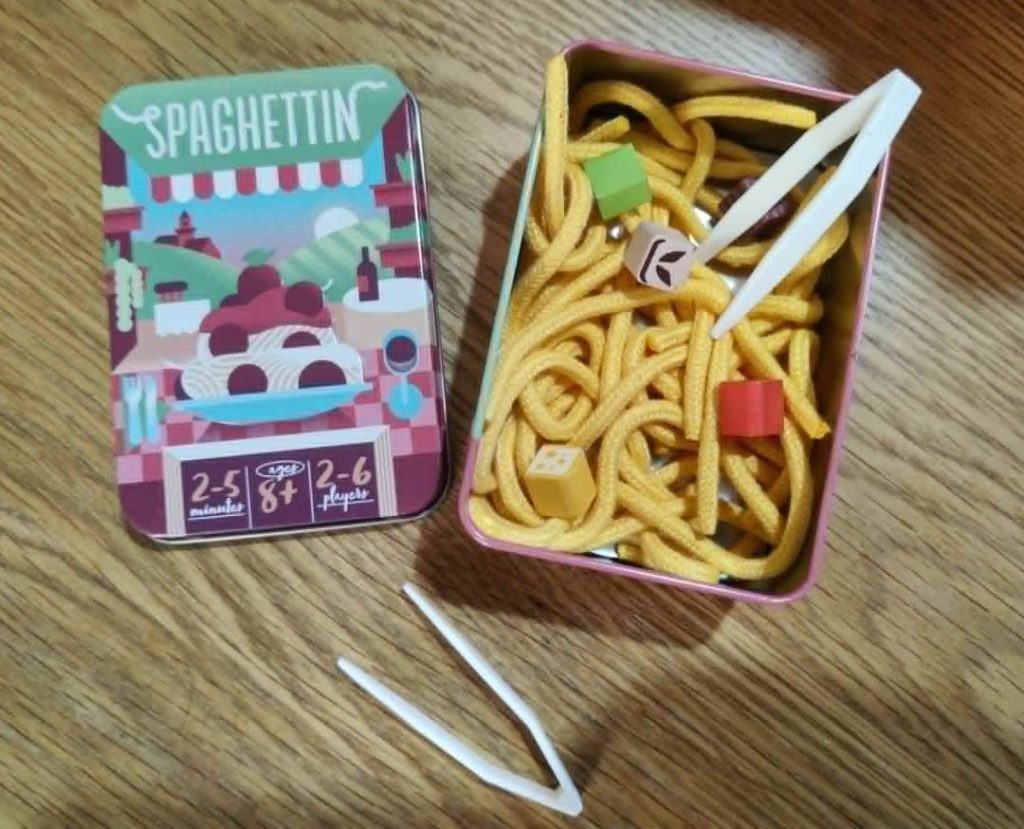
"Spaghettin" introduces a deceptively simple premise: players are presented with a tin filled with varying lengths of string, artfully arranged to resemble a tangled plate of spaghetti. Perched atop this pasta pile are five distinct wooden blocks, representing classic Italian toppings such as a vibrant red tomato and a chunk of golden cheese. The objective is straightforward: on a player’s turn, they must select a single strand of "spaghetti" and, using a pair of provided tweezers, carefully extract it from the tin. The catch? Should any of the precious toppings fall and settle with one face completely flat against the bottom of the tin, that player is immediately eliminated from the game. The ultimate victor is the last player left standing, having navigated the treacherous tangle without disturbing the delicate balance.
The appeal of "Spaghettin" is immediately evident in its presentation. The compact, travel-sized tin, a hallmark of Alley Cat Games’ series, is both practical and aesthetically pleasing. The components—the colourful wooden toppings and the various lengths of string—are bright, tactile, and inviting. The rules, as the reviewer notes, are "so simple as to be practically non-existent," making the game incredibly accessible to players of all ages and experience levels. This ease of entry, combined with a promised maximum playtime of five minutes (which, for two players, could be as brief as ten seconds), positions "Spaghettin" as an ideal filler game, a quick diversion, or a travel companion.
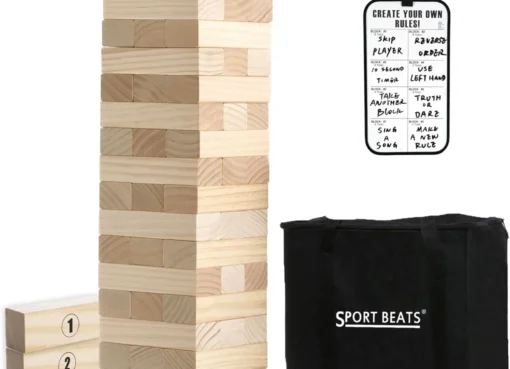
However, beneath this veneer of simplicity and charm lies a critical flaw, identified by reviewer Tim Clare, which significantly impacts the game’s overall enjoyment. The central conceit of elimination—a topping falling and landing "completely flat" on the tin’s bottom—is described as "fiddly" and leading to "anticlimactic conclusions." Unlike the dramatic collapse of a "Jenga" tower or the sudden toppling in "Rhino Hero," where failure is unmistakable and often accompanied by a collective gasp, "Spaghettin" often devolves into moments of uncertainty. Players are forced to "pause and peer into the tangle of string like people hunting for a lost contact lens," meticulously inspecting the fallen topping to determine if it meets the precise elimination criteria. This ambiguity, coupled with the frequent absence of a clear auditory cue (a "dink" when a topping falls), transforms what should be a moment of tension and release into one of hesitant inspection, draining the game of its intended excitement.
This lack of immediate, unambiguous feedback regarding player elimination is a significant departure from the satisfying mechanics of its predecessors and other successful dexterity games. It shifts the focus from the thrill of the pull to the tedium of verification, turning a potentially engaging experience into an "experiment that doesn’t quite land."
Chronology: The Evolution of a Series and the Genesis of a Concept
Alley Cat Games, founded by Caezar Al-Jassar, has carved a distinctive niche in the board game industry since its inception. Known for its diverse portfolio, the publisher has consistently aimed to create engaging, innovative games that span various genres, from strategic eurogames to lighthearted party experiences. Among its most recognizable achievements is the "tin-pun" series, which began with the hugely popular "Tinderblox."
The Birth of the Tin-Pun Series: Tinderblox and Kittin
"Tinderblox" emerged as a breakout hit, demonstrating Alley Cat Games’ ability to package simple yet profound gameplay into a highly portable format. Released to critical acclaim, "Tinderblox" cleverly leveraged familiar dexterity mechanics—block stacking—and infused it with a charming theme of building a campfire. Its chunky, tactile wooden components and clear, immediate failure states resonated deeply with players, establishing a benchmark for what a micro-dexterity game could achieve. The game’s success lay in its perfect balance of challenge and accessibility, making it a staple for family gatherings and quick gaming sessions.
Following "Tinderblox," Alley Cat Games introduced "Kittin," which further solidified the series’ reputation. "Kittin" adopted a similar stacking mechanic but presented players with the delightful challenge of arranging uniquely shaped, kitten-themed blocks. This not only offered a fresh visual appeal but also introduced new spatial puzzles, maintaining the series’ core tenets of portability, quick play, and engaging dexterity. Both "Tinderblox" and "Kittin" succeeded because their failure conditions were immediate, visually apparent, and often resulted in a satisfying, if frustrating, collapse. This created memorable moments, whether of triumphant precision or spectacular downfall, which are crucial for the genre.
Anticipation for Spaghettin and its Design Journey
Given the strong foundation laid by "Tinderblox" and "Kittin," anticipation for "Spaghettin" was naturally high. Gamers and reviewers alike expected another clever twist on dexterity, imbued with the series’ characteristic charm and playability. The game, designed by Franco Sardo, proposed an innovative departure from stacking, instead focusing on the delicate act of extraction. Sardo’s design philosophy, often seen in simple, elegant games, likely aimed to create a new kind of tension, shifting from vertical instability to horizontal entanglement.
The development process for a game like "Spaghettin" involves careful consideration of components and mechanics. The choice of strings to represent spaghetti, for instance, offers a unique tactile experience, distinct from the rigid blocks of its predecessors. The wooden toppings needed to be designed with specific weights and shapes to interact realistically with the strings, creating moments of precarious balance. The inclusion of tweezers, a departure from bare-hand manipulation, introduces a layer of fine motor skill challenge, adding to the dexterity aspect. The thematic integration of spaghetti and toppings is whimsical and inviting, promising a lighthearted experience.
While the exact timeline of "Spaghettin’s" development and announcement is not detailed in the provided snippet, the context suggests it was introduced as a continuation of a proven, beloved series. The images provided, dated "2026/06," might indicate a future release date or simply be a placeholder, but the review itself points to an experience that is already being evaluated in the current gaming landscape. The journey from concept to consumer for any game is fraught with challenges, and translating a novel idea into a perfectly executed, engaging experience is a delicate art, especially within the confines of a micro-game format.
Supporting Data: A Deep Dive into Mechanics and Comparative Analysis
To truly understand why "Spaghettin" falters where its predecessors shone, a deeper examination of its mechanics and a comparative analysis with other dexterity games is crucial.
Detailed Breakdown of "Spaghettin’s" Gameplay Loop
The core loop of "Spaghettin" is remarkably sparse. Players take turns, select a string, pull it out with tweezers. If a topping falls flat, that player is out. This minimalist approach is characteristic of many successful micro-games, designed for immediate understanding and quick engagement. However, the elegance of simplicity can quickly unravel if a crucial element—like the feedback mechanism for success or failure—is flawed.
- The Spaghetti Strings: The game includes 20 spaghetti strings of different lengths. This variation is intended to introduce an element of strategic choice or increased difficulty, as longer strings might be more intertwined and harder to extract cleanly. However, without a clear visual or tactile indicator of risk, the choice can feel arbitrary rather than strategic. The strings themselves, while visually appealing in the tin, might lack the satisfying tension or resistance that would make their extraction feel impactful.
- The Topping Blocks: The five wooden topping blocks (a red tomato, cheese, etc.) are the critical elements whose fall dictates elimination. Their shapes and weights are crucial. If they are too light, they might easily be dislodged without much effort, leading to quick, unsatisfying eliminations. If they are too heavy or oddly shaped, they might not fall "flat" easily, leading to the ambiguity described by the reviewer. The rule that a topping must land "completely flat against the bottom of the tin" is highly specific, almost overly so, and this precision requirement is at the heart of the "fiddly" conclusions.
- The Tweezers: The inclusion of two tweezers adds a layer of precision and fine motor skill. This is a common tool in dexterity games (e.g., "Operation," "BEAKS"). While tweezers can enhance the sense of careful manipulation, they also introduce potential frustration if the strings are too slippery or the grip is insufficient. The tactile feedback from pulling a string with tweezers is different from the direct hand-eye coordination of stacking blocks, and it might not generate the same level of satisfying tension.
Analysis of the "Anticlimactic Conclusion"
The reviewer’s primary criticism revolves around the anticlimactic nature of player elimination. This is where "Spaghettin" deviates significantly from the genre’s best examples.
- The Psychology of Game Failure: In dexterity games, failure is not just an outcome; it’s a dramatic event. Games like "Jenga" and "Rhino Hero" are masterpieces of escalating tension culminating in a spectacular, undeniable collapse. The visual and auditory cues are instant and universally understood: the tower tumbles, the structure crumbles. This instant feedback loop is vital for player engagement and emotional investment. It creates the "Oh no!" moment, the shared experience of suspense and release.
- The Fiddly Aspect: The ambiguity in "Spaghettin" stems from the "completely flat" rule. This objective, precise condition often requires subjective interpretation in the heat of the moment. Is it flat enough? Is that edge slightly raised? This forces players to pause, scrutinize, and often debate, disrupting the flow and excitement. The tactile experience of the string-topping interaction may not be robust enough to consistently produce clear falls, leading to partial dislodgements or bounces that don’t quite meet the elimination criteria.
- Lack of Auditory Feedback: The absence of a consistent "dink" when a topping falls is a critical oversight. Sound plays a significant role in enhancing game feedback. The distinct clatter of "Jenga" blocks or the snap of plastic in other games provides immediate, undeniable confirmation of an action or consequence. Without this, players are left relying solely on visual inspection, which can be prone to error or disagreement.
Comparative Analysis with Series Predecessors and Other Dexterity Games
- Tinderblox & Kittin: Both games feature stacking mechanics where gravity is the primary antagonist. The moment a block is misplaced, or the tower becomes unstable, the risk is palpable. The eventual collapse is a clear, dramatic, and often spectacular failure. The tactile satisfaction of placing solid wooden blocks and the visual progression of the tower’s height contribute to a strong sense of achievement or impending doom. "Spaghettin’s" extraction mechanic, while innovative, seems to lack the same visceral, immediate feedback loop.
- Jenga & Rhino Hero: These are benchmarks for dexterity games. "Jenga" is pure, unadulterated tension, with each block pull visibly affecting the tower’s stability. "Rhino Hero" adds a charming theme and unique structural challenges, but its core principle of building a wobbly tower remains. Both games deliver clear, exciting failure states that are central to their enduring appeal.
- BEAKS (Alley Cat Games’ Recommendation): The article recommends "BEAKS," another tin-based party game by Alley Cat, where players use tweezers to grab chips as seagulls. This game also uses tweezers and extraction, but the goal is to collect items, not avoid dropping them. The success condition (grabbing a chip) is clear. If "BEAKS" successfully implements a clear objective with tweezers, it highlights that the problem with "Spaghettin" might be specific to its failure condition rather than the tool itself. Perhaps the physics of grabbing a chip are more forgiving or provide clearer feedback than delicately extracting a string from under unstable toppings.
The market for small, portable games is robust, driven by demand for quick entertainment, travel-friendly options, and accessible price points. "Spaghettin" undoubtedly fits the physical description and price category. However, in a crowded market, distinct and satisfying gameplay is paramount. A game that leads to confusion rather than clarity, or mild frustration rather than exhilarating tension, struggles to stand out.
Official Responses: Navigating Design Intent and Player Feedback
As the provided review does not include direct official responses from Alley Cat Games or designer Franco Sardo, we must consider the likely perspectives and intentions behind the game’s creation, and how a publisher might address such critical feedback.
Alley Cat Games’ Perspective (Hypothetical)
From Alley Cat Games’ standpoint, "Spaghettin" would likely have been conceived as a natural extension of their successful "tin-pun" series. The publisher’s core objective for this line is to deliver quick, accessible, and highly portable dexterity games that capture a unique charm.
"We are incredibly proud of our ‘tin-pun’ series and the joy it brings to families and gamers worldwide," an imagined statement from Alley Cat Games might begin. "With ‘Spaghettin,’ our goal was to introduce a fresh, innovative dexterity challenge that moves beyond traditional stacking, offering a new kind of tactile puzzle. We aimed for extreme simplicity and a fast-paced experience, perfect for those moments when you want a quick burst of fun. The theme of tangled spaghetti and delicate toppings felt like a perfect fit for a lighthearted, family-friendly game."
Addressing the specific criticisms, the publisher might emphasize the design’s intent: "We understand that players seek clear and dramatic moments in dexterity games. ‘Spaghettin’ was designed to evoke a different kind of tension – the subtle, meticulous act of disentanglement. The ‘completely flat’ rule was intended to add a layer of precision, rewarding careful play and creating moments of suspense as players verify the outcome. We always value player feedback and continuously strive to refine our designs to enhance the gaming experience."
This hypothetical response would highlight the positive attributes of the game – its visual appeal, accessibility, and portability – while acknowledging the nuanced feedback regarding the failure state. It would underscore their commitment to innovation within the series, even if some experiments are received differently than others.
Designer Franco Sardo’s Intent (Hypothetical)
Franco Sardo, as the designer, would have approached "Spaghettin" with a specific creative vision. His aim might have been to explore a less conventional form of dexterity, focusing on extraction rather than construction or balance.
"My vision for ‘Spaghettin’ was to create a game that challenged players’ fine motor skills and spatial reasoning in a unique way," Sardo might explain. "I wanted to capture the everyday frustration and eventual satisfaction of untangling something, like a knot or a plate of pasta, and turn it into a playful game. The simplicity of the rules was paramount, ensuring that anyone could pick it up and play instantly. The idea was to create a game where every pull of a string felt significant, and the consequences of a wrong move were felt immediately, albeit subtly."
Regarding the "fiddly" aspect, Sardo could elaborate on the design choices: "The ‘completely flat’ condition for elimination was an attempt to make the outcome crystal clear, removing any ambiguity from a partial fall. We aimed for a game that was about absolute precision. While we hoped the auditory ‘dink’ would provide consistent feedback, the primary challenge was always intended to be the visual verification and the careful handling required."
These hypothetical responses reflect a common challenge in game design: the gap between design intent and player experience. A mechanic that seems clear and elegant in theory might, in practice, lead to unintended friction or ambiguity, especially in the dynamic environment of a social game.
Implications: The Ripple Effect of "Spaghettin’s" Reception
The reception of "Spaghettin," particularly the pointed criticisms from reviewers, carries several implications for Alley Cat Games, the broader dexterity game market, and consumers.
Impact on Alley Cat Games’ "Tin-Pun" Series
The "tin-pun" series has been a consistent performer for Alley Cat Games, celebrated for its quality and innovation within a specific niche. A lukewarm or negative reception for "Spaghettin" could potentially:
- Dampen Enthusiasm for Future Releases: If players perceive a dip in quality or consistency, it might temper their excitement for subsequent titles in the series, impacting pre-orders and initial sales. Maintaining a high standard is crucial for brand loyalty.
- Prompt Re-evaluation of Design Principles: Alley Cat Games might need to critically examine what core elements made "Tinderblox" and "Kittin" so successful. Is it the stacking mechanic? The clarity of failure? The tactile satisfaction of the components? This review suggests that the "extraction" mechanic, as implemented, may lack the immediate gratification of its predecessors.
- Influence Component and Rule Refinements: The feedback regarding "fiddly" conclusions and lack of clear feedback could lead to internal discussions about future component design (e.g., heavier toppings, more resistant strings) or rule clarifications (e.g., simpler elimination criteria, perhaps even including a rule that if any part of a topping touches the bottom, it’s an elimination).
Lessons for Dexterity Game Design
"Spaghettin’s" experience offers valuable lessons for game designers working within the dexterity genre:
- Clarity of Failure is Paramount: A dexterity game’s success often hinges on its failure state. It must be unambiguous, immediate, and ideally, dramatic. Players need to know, without question, when they have succeeded or failed. Ambiguity saps tension and leads to frustration.
- Tactile Feedback is Key: Dexterity games are inherently physical. The components should feel good to manipulate, and the interaction should provide clear tactile and auditory feedback. The "dink" of a falling piece, the wobble of a tower, the satisfying click of a component – these sensory inputs enhance engagement.
- Balance Simplicity with Meaningful Gameplay: While "Spaghettin" champions simplicity, the challenge is to ensure that simplicity doesn’t equate to superficiality. The rules may be minimal, but the gameplay experience should still offer strategic depth or engaging tension.
- Avoid "Fiddliness": Components or rules that require excessive precision, microscopic inspection, or lead to frequent debates can quickly detract from the fun. The game should play smoothly, allowing players to focus on the challenge, not the interpretation of results.
Consumer Perspective
For potential buyers, reviews like this are invaluable.
- Value Proposition: At £11.99, "Spaghettin" is positioned as an affordable, quick-play option. However, if the experience is brief and unsatisfying, the perceived value diminishes. Consumers might opt for other games in the series or genre that offer a more robust and enjoyable experience for a similar price point.
- Informed Purchasing Decisions: The review highlights the importance of understanding the nuances of gameplay beyond just theme and component aesthetics. It encourages consumers to look for games with well-designed mechanics and clear, satisfying feedback loops, especially in dexterity games where physical interaction is central.
- The "Try This Instead" Recommendation: The suggestion to try "BEAKS" serves as a direct alternative, guiding consumers towards another Alley Cat Games title that (presumably) succeeds where "Spaghettin" struggles, potentially salvaging a sale for the publisher even if "Spaghettin" is passed over.
Future of "Spaghettin" and Potential Revisions
While the review is critical, it doesn’t necessarily mean the end for "Spaghettin." Game designers and publishers often listen to feedback. Potential avenues for improvement could include:
- Rule Clarifications/Amendments: A revised rulebook could simplify the "completely flat" condition or offer alternative interpretations that reduce ambiguity.
- Component Redesign: Slightly heavier toppings, or strings with more friction, could alter the physics of the game to create clearer falls or more satisfying pulls.
- Expansion/Variant Rules: Perhaps an expansion could introduce new topping types or alternative game modes that address the core issues.
Ultimately, "Spaghettin" serves as a poignant reminder that even within a successful series, not every experiment can be a resounding triumph. While it aims for the same charming, portable, and accessible experience as its brethren, its "experiment that doesn’t quite land" underscores the delicate balance required to craft truly engaging dexterity games, where the thrill of the play is intimately tied to the clarity and drama of both success and failure. For those seeking immediate, decisive, and exciting dexterity challenges, the enduring appeal of games like "Jenga," "Rhino Hero," or even Alley Cat’s own "Tinderblox" and "Kittin" continues to set a high bar.