Spanish Animation’s Pillar Crumbles: Movistar Plus+ Abruptly Ends Short Film Support, Sparking Industry Outcry

The vibrant landscape of Spanish short film, a crucial incubator for emerging talent and innovative storytelling, faces a seismic shift as Movistar Plus+, the country’s telecommunications giant, has abruptly shuttered its short film acquisitions department and terminated the long-standing Proyecto Corto initiative. This decision, coinciding with the international acclaim of Alberto Vázquez’s animated feature Decorado at the prestigious Annecy festival, marks the abrupt end of nearly three decades of private sector support for Spanish short films, leaving a void that industry professionals fear will have profound and lasting repercussions.
The closure has ignited a firestorm of criticism from producers, directors, and animation organizations across Spain. Many credit Guadalupe Arensburg, the long-time executive who spearheaded Movistar Plus+’s short film endeavors, with nurturing hundreds of careers and providing a vital platform for creative expression at a critical juncture in filmmakers’ journeys. Proyecto Corto, for generations of Spanish filmmakers, represented more than just financial backing; it offered crucial television exposure and industry validation, enabling new voices to bring ambitious visions to life before they had the established profiles to secure funding independently. The impact on the animation sector is expected to be particularly severe, as short films have traditionally served as the primary proving ground for emerging animators and studios.
A Legacy of Support Brought to an End
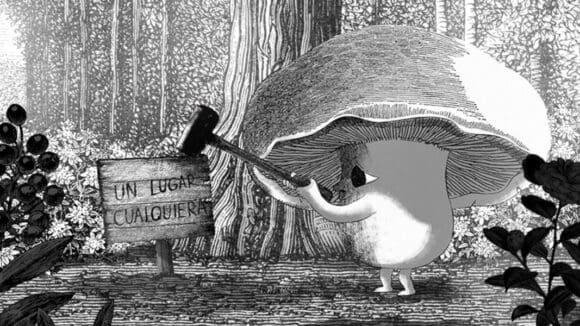
The news of Movistar Plus+’s decision sent shockwaves through the industry, particularly in the wake of the triumph of Alberto Vázquez’s Decorado. The animated feature, based on his 2016 short film of the same name, garnered significant international recognition by winning the esteemed Paul Greimault Award at the Annecy International Animation Film Festival. This prestigious accolade, awarded at the world’s foremost animation festival, highlights the caliber of talent nurtured and supported by initiatives like Proyecto Corto.
However, as Decorado basked in global spotlight, a starkly different reality was unfolding in Spain. Movistar Plus+, a dominant force in the country’s telecommunications market, was dismantling the very department that had been instrumental in fostering such artistic achievements. The termination of Proyecto Corto, which had provided essential financing for countless short films, including Vázquez’s original short, signals the end of an era. For nearly thirty years, this private initiative had been a consistent and vital source of support, offering a lifeline to filmmakers navigating the challenging early stages of their careers.
The Crucial Role of Proyecto Corto
For generations of Spanish filmmakers, Proyecto Corto was more than just a funding mechanism; it was a gateway to opportunity. It provided the financial resources necessary to complete ambitious projects, the television exposure that brought their work to a wider audience, and the industry validation that opened doors to future collaborations and larger productions. In a sector where securing funding is often the most significant hurdle, Proyecto Corto offered a vital pathway for emerging directors and producers to realize their creative potential.
The program’s impact is especially pronounced within the animation industry. Short films have long served as the primary proving ground for animators and studios, allowing them to experiment with new techniques, develop their unique visual styles, and build a portfolio that can attract further investment. The loss of such a dedicated support system is anticipated to disproportionately affect this sector, potentially stifling the growth of new talent and the exploration of innovative animated narratives.

Damián Perea, the founder and director of Animayo, Spain’s sole Oscar-qualifying animation festival with two dedicated categories, emphasized the program’s multifaceted value. He stated that while financing was crucial, the "most valuable aspect was the visibility." Perea elaborated, "Having a short film broadcast on a channel like Movistar gave it a reach that’s very difficult to achieve through other means. It brought the format closer to a wider audience and helped people appreciate it more." This sentiment underscores the program’s success in not only supporting creators but also in cultivating a broader appreciation for the short film format.
Perea further warned that the consequences of this closure would extend far beyond the projects currently in production. "Losing initiatives like this doesn’t just affect current projects," he stated. "It affects the future of animation and audiovisual storytelling in general. Hopefully, new platforms or institutions will step in to carry the torch, because short films need support and, above all, places where they can reach audiences." His words reflect a widespread concern that the cessation of Proyecto Corto represents a significant setback for the long-term health and dynamism of Spanish cinema.
An Outpouring of Criticism and Calls for Reconsideration
The abrupt termination of Movistar Plus+’s short film support has triggered a wave of condemnation from various stakeholders within the Spanish film and animation community. Many have voiced their deep disappointment and concern, highlighting the detrimental impact this decision will have on the future of independent filmmaking in the country.
MIA (Mujeres en la industria de la animación), an organization dedicated to supporting women in animation, issued a strong statement urging Movistar Plus+ to reconsider its decision. MIA, which has collaborated with Movistar+ on the MIANIMA market since 2021, argued that "supporting short films means investing in the future of Spanish cinema, in the diversity of voices, and in the innovation that drives our industry." The organization described the elimination of the department as the loss of "one of the few private initiatives providing stable support for short films in Spain," and expressed particular concern about the impact on emerging filmmakers and women directors, who often face greater challenges in accessing funding and visibility.
The collective outcry has placed a significant spotlight on Guadalupe Arensburg, who dedicated over two decades to overseeing Movistar Plus+’s short film acquisitions. Her tireless efforts in championing short films and creating opportunities for hundreds of filmmakers have been widely acknowledged. MIA lauded her for defending short films "as a form of artistic creation with its own identity," a sentiment echoed by numerous industry professionals who have benefited from her dedication and vision.
Chelo Loureiro, the head of Abano Producións, a production company behind acclaimed animated shorts such as Decorado, To Bird or Not to Bird, and The Body of Christ, expressed a strong belief that Proyecto Corto should be expanded, not eliminated. "I don’t think Proyecto Corto should disappear," Loureiro stated in an interview with Cartoon Brew. "Quite the opposite, it should be strengthened, because I sincerely believe there has never been another initiative in Spain dedicated to promoting short films like the one Movistar+ built."
.png)
Loureiro attributed much of the program’s success to Arensburg, describing her as "a tireless professional who travels to all the major festivals and markets in search of talent." She highlighted that Arensburg’s work resulted in support for an impressive 223 filmmakers, who collectively represented "the finest breeding ground for Spanish cinema." Loureiro further pointed out that Movistar+ itself had reaped the benefits of this investment by selecting directors who emerged from Proyecto Corto for larger productions that have since achieved international success. She concluded with a hopeful note, stating, "For all of these reasons, I don’t believe Movistar+ will abandon this project or allow Guadalupe Arensburg, whose depth of knowledge is unmatched in Spain, to stop dedicating herself to supporting Spanish cinema through short films."
Iván Miñambres, founder of Uniko and producer of several of Alberto Vázquez’s celebrated works, including Birdboy: The Forgotten Children, Unicorn Wars, and Decorado, characterized the closure as the end of "an era that shaped the history of Spanish short filmmaking." He emphasized that Arensburg’s contribution went far beyond mere acquisition. "She believed in them, championed them, gave them visibility, and helped hundreds of filmmakers find an audience," Miñambres said. "Her sensitivity, generosity, and trust have left an indelible mark on all of us."
Leticia Montalva of Valencia’s Pangur Animation recounted a long-standing and fruitful relationship with Arensburg and Movistar Plus+, which had supported every one of the studio’s shorts, from Interns and Pietra to Carmela and Only Rats. "Guadalupe was present at every stage of that journey," Montalva stated. "Her trust and commitment were fundamental to the growth and consolidation of our studio."
Director Alicia Núñez, whose short film One-Way Cycle received support from Movistar Plus+, articulated the reliance of filmmakers on programs like Proyecto Corto to bridge the crucial gap between creation and audience reach. She described the decision as "a step backward for the industry" that will inevitably lead to "fewer opportunities, fewer voices, and fewer chances for unique and distinctive projects to come to life."
Rocío Benavent of Saltarinas shared a similar narrative of growth and opportunity, detailing how Movistar Plus+’s acquisition of the Goya-nominated animated short Todo Bien was transformative for her small production company, introducing their work to a broad audience. She further noted that Arensburg’s subsequent pre-buy for the studio’s upcoming animated documentary, Cuidadoras, was instrumental in establishing Saltarinas’s presence within Spain’s animation industry.
Implications for the Future of Spanish Cinema
The abrupt cessation of Movistar Plus+’s short film support initiative, Proyecto Corto, carries significant implications for the future of Spanish cinema, particularly for its vibrant short film sector and the burgeoning animation industry. While the ultimate decision of Movistar Plus+ to reverse course remains uncertain, the immediate impact is a palpable sense of loss and apprehension within the independent film communities.
For decades, Proyecto Corto has served as a vital institutional pillar, a reliable source of both financial backing and crucial industry exposure. Its absence leaves a substantial void, one that many fear will be exceedingly difficult to fill. The program’s ability to nurture talent, foster experimentation, and provide a launchpad for innovative storytelling has been instrumental in shaping the careers of numerous filmmakers and contributing to the rich tapestry of Spanish audiovisual culture.
The departure of such a significant private supporter raises critical questions about the sustainability of short film production in Spain. While public funding exists, the consistent and dedicated support provided by Proyecto Corto offered a unique blend of commercial viability and artistic encouragement. The loss of this private sector engagement could lead to a reduction in the number of short films produced, a narrowing of creative ambition due to increased financial pressures, and a diminished capacity for emerging filmmakers to gain the experience and visibility necessary to progress in their careers.
Furthermore, the impact on the animation industry, where short films serve as an indispensable training ground, is particularly concerning. The closure of Proyecto Corto could mean fewer opportunities for animators to hone their skills, develop new visual languages, and break into the competitive global market. This, in turn, could affect the pipeline of talent that feeds into feature film production and other larger-scale animation projects.
The industry’s collective hope now rests on the emergence of new platforms, institutions, or private initiatives that can step in to fill the void left by Movistar Plus+. The calls for public-private partnerships and increased investment in short film development are likely to grow louder in the coming months. Without such support, the vibrant ecosystem that has nurtured so much creative talent and delivered impactful stories to audiences risks being significantly diminished, potentially impacting Spain’s standing on the international film stage for years to come. The legacy of Guadalupe Arensburg and the success of initiatives like Proyecto Corto serve as a stark reminder of the invaluable role that consistent and dedicated support plays in fostering artistic innovation and ensuring the continued evolution of cinematic storytelling.