Stars Reach: Raph Koster’s Playable Worlds Unveils Massive Visual Overhaul and Simulation Deep-Dive
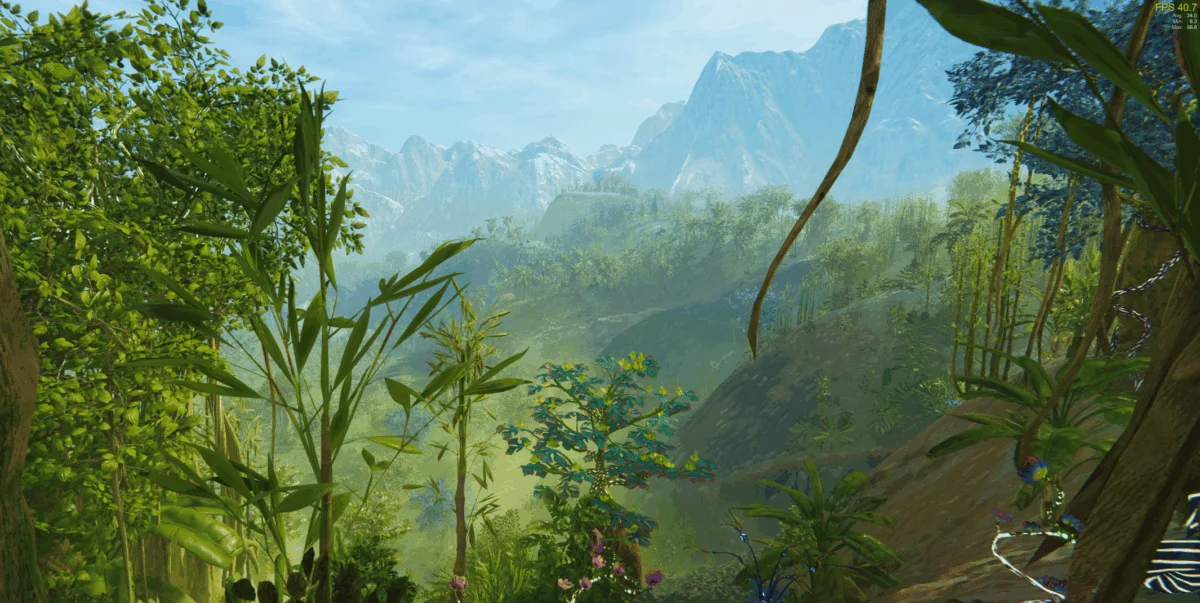
In a significant development update, Playable Worlds has revealed a comprehensive visual and technical transformation for its upcoming sandbox MMO, Stars Reach, signaling a move from early technical prototypes to a high-fidelity, living simulation.
The evolution of a modern MMORPG is rarely a linear path, particularly when the project is led by a figure as influential as Raph Koster. Known for his foundational work on Ultima Online and Star Wars Galaxies, Koster has long championed the concept of "living worlds"—environments where the simulation is more than just a backdrop for combat. In a detailed progress report released this week, Koster and his team at Playable Worlds showcased a massive overhaul of the Stars Reach engine, bridging the gap between deep, systemic simulation and modern visual standards.
The update focuses on a total rewrite of the game’s shaders, a complete retouching of environmental assets, and the introduction of a "stylized realism" that seeks to distinguish the title from the increasingly crowded field of photorealistic but indistinguishable competitors.
Main Facts: The Technical Pillars of the Overhaul
The transformation of Stars Reach is not merely "skin deep." While many developers prioritize aesthetics at the cost of interactivity, Playable Worlds is attempting to deliver both. The update highlights several key technical achievements:
1. The Procedural Flora System
Unlike traditional MMOs where trees and bushes are placed manually by level designers, every plant in Stars Reach is a product of the simulation. The team has redone hundreds of flora assets to support a dynamic lifecycle. Plants now grow, respond to seasonal changes, shed leaves, and eventually die. Crucially, these assets are integrated into the game’s chemistry system; they can catch fire, burn to ash, or be frozen by environmental triggers.
2. Derived Biomes and Soil Complexity
One of the most ambitious claims in the update is the abandonment of pre-designed biomes. Instead, Stars Reach derives its landscapes on the fly based on environmental variables. The game tracks temperature, humidity, and—uniquely—a dozen different soil types. This data determines which plants will thrive in a specific location. If a player pours water on a specific soil type in a cold region, the simulation responds by freezing the ground, creating slippery surfaces that affect player movement.
3. Fully Deformable Landscapes
The team reaffirmed that the world of Stars Reach is entirely dynamic. The updated visuals now support real-time terrain modification that includes melting cliff faces into lava, flattening mountains for construction, and carving roads through the wilderness. The goal is to ensure that the visual quality of these deformations matches the fidelity of the rest of the world, removing the "blocky" look often associated with voxel-based destruction.
4. Advanced Lighting and Atmospheric Effects
The overhaul introduces volumetric fog and an improved global illumination model. These updates are intended to create "truly dark caves" and more realistic lighting transitions between day and night cycles. By moving toward a more sophisticated lighting model, the developers aim to enhance the sense of immersion without relying on the hardware-heavy requirements of pure photorealism.
Chronology: From Criticism to Refinement (2021–2025)
The journey of Stars Reach (formerly known as Project Stars) has been one of public iteration. Koster acknowledged that early reveals of the game’s graphics met with some skepticism from the community.
- 2021: The Prototype Phase. Initial screenshots revealed a world that was technically functional but visually sparse. The focus at this stage was on the "Living World" backend—ensuring that the simulation could handle thousands of interacting systems.
- 2022–2023: Shader Iteration. The team began experimenting with new terrain shaders. The visuals moved away from flat textures toward more layered, reactive surfaces, though the "stylized" look was still in its infancy.
- 2024: The Jungle Milestone. By late 2024, the team had successfully implemented complex jungle environments. This served as a proof of concept for the "derived biome" system, showing that high-density flora could exist within a fully simulated environment.
- 2025: The Current Overhaul. The current phase represents the "Big Patch" era. Playable Worlds is currently rolling out the finalized shaders and retouched assets. The focus has shifted from "making it work" to "making it beautiful," while simultaneously optimizing the engine to ensure smooth framerates.
Supporting Data: Simulation by the Numbers
To understand the scale of what Playable Worlds is building, one must look at the underlying data structures that drive the visual output:
- Asset Count: Hundreds of individual plant and environmental assets have been manually retouched to support the new shader system.
- Soil Diversity: The game utilizes 12 distinct soil types, each with unique properties that affect plant growth, moisture retention, and player interaction.
- Environmental Variables: Biomes are calculated using a matrix of temperature and humidity, meaning the "world map" is a living grid rather than a static image.
- Optimization Goals: Despite the increase in visual fidelity, the team reports "significant optimizations," targeting a wider range of hardware by utilizing intelligent asset streaming and shader efficiency.
Official Responses: A Philosophy of "Stylized Realism"
Raph Koster has been vocal about the creative direction of Stars Reach, particularly regarding the choice to avoid photorealism. In his commentary, Koster addressed the feedback from earlier development stages and explained the studio’s strategic pivot.
"We are sticking to a somewhat stylized realism look since the games market is currently chock full of photorealistic games that are indistinguishable from one another," Koster stated. He emphasized that the goal is for Stars Reach to have a distinct "paperback sci-fi" aesthetic—reminiscent of classic genre art—while maintaining the technical depth that modern players expect.
Regarding the balance between gameplay and graphics, Koster noted, "We are finally at a place where we do not need to compromise on the visual quality in order to deliver the simulated living world we have had working for years now." This indicates that the "simulation tax"—the loss of visual fidelity often required to keep complex CPU-bound simulations running—is being mitigated by the team’s new rendering pipeline.
Implications: The End of the Static MMO?
The updates to Stars Reach carry significant implications for the future of the MMORPG genre. For decades, the genre has been split into two camps: "Theme Parks" (like World of Warcraft), which offer beautiful but static worlds, and "Sandboxes" (like EVE Online or early Minecraft), which offer deep systems but often struggle with visual immersion or accessibility.
The Impact on Player Agency
By allowing players to not just build on the land, but to fundamentally change its geological and biological state, Stars Reach is attempting to move the genre toward a "true sandbox." If a player government (a feature noted as "coming real soon") decides to clear-cut a forest to build a city, the impact on the local ecosystem—the humidity, the soil health, and the local fauna—will be a tangible part of the gameplay.
Market Differentiation
In an era where "Triple-A" photorealism has become prohibitively expensive and often leads to visual homogeneity, Playable Worlds’ focus on "stylized realism" and "procedural life" offers a middle path. It allows for a world that feels vast and organic without requiring a thousand-person art team to hand-place every blade of grass.
The Evolution of Community Interaction
The mention of player-run shops, banks, and the destruction of entire planets suggests that Stars Reach is leaning heavily into emergent gameplay. The visual overhaul serves as the "hook" to bring players into a world where their actions have permanent, visible consequences. When a mountain is melted into lava, it isn’t just a combat effect; it is a permanent change to the map that other players will see and navigate around.
Looking Ahead
As Playable Worlds moves from environmental assets to redoing characters and creatures, the industry will be watching closely. The success of Stars Reach could prove that the "living world" dream—stymied for years by hardware limitations—is finally achievable. With player governments on the horizon and a world that grows and dies in real-time, Stars Reach is positioning itself as a potential successor to the complex social and systemic experiments of the early 2000s, updated for a modern audience.