
Sylvia Trotter Ewens’ "Echoes of Elsewhere" Unveils a Poignant Exploration of Belonging and Transcultural Identity at Plato Gallery
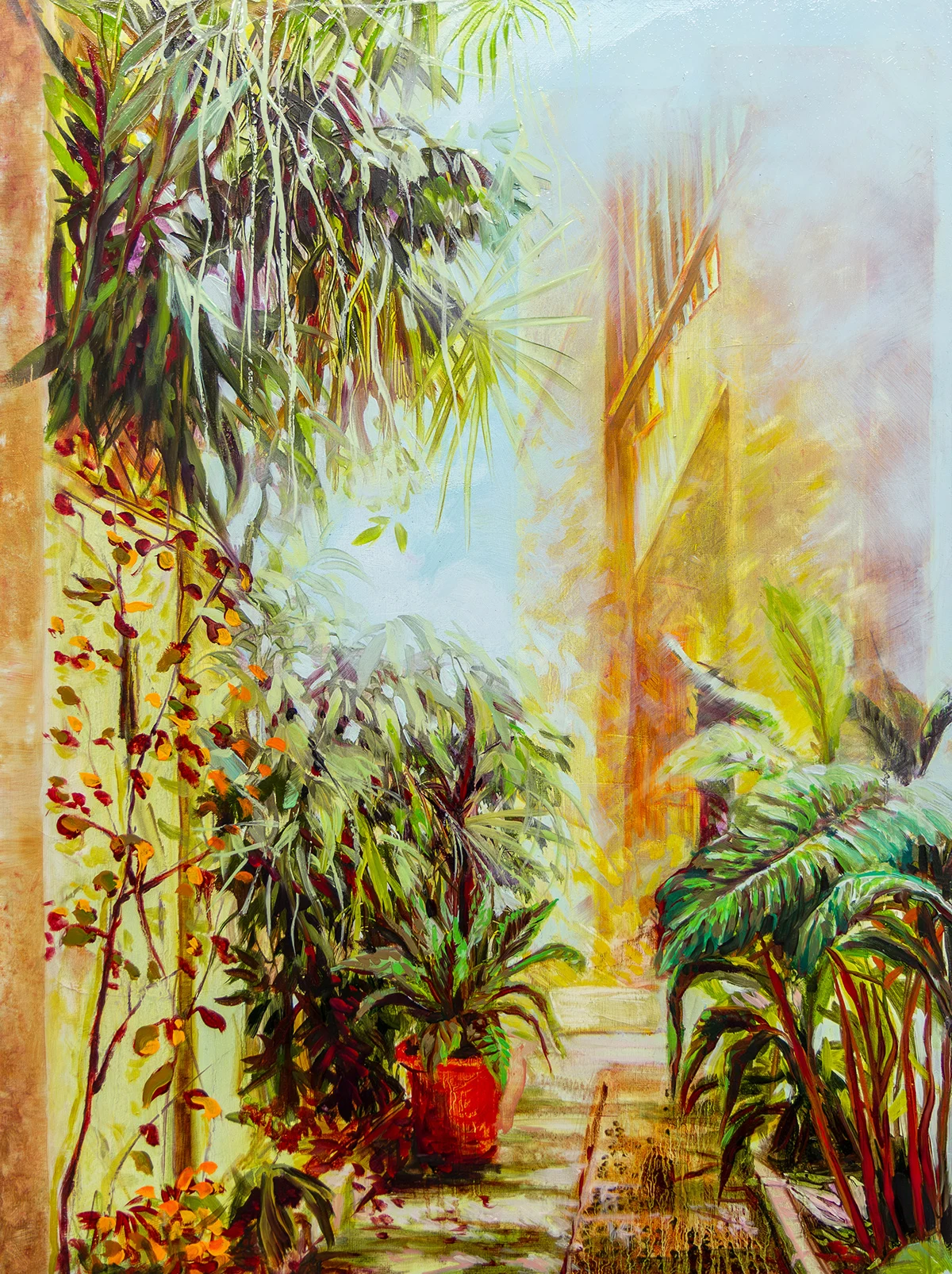
Montreal, QC – In an era increasingly defined by global interconnectedness and the complex tapestry of human migration, the art world continues to offer vital platforms for artists to articulate their unique experiences. Montreal-based artist Sylvia Trotter Ewens, through her compelling exhibition "Echoes of Elsewhere," currently on display at Plato Gallery until May 30th, invites viewers into a profound meditation on memory, identity, and the ever-shifting terrain between cultures. Her work, characterized by a sophisticated fusion of architectural aesthetics, ecological discourse, and deeply personal narrative, constructs fragmented visual spaces that resonate with the fluidity of landscapes and the subtle nuances of human psychology.
Trotter Ewens’ artistic journey is rooted in a rigorous academic foundation. She earned her DEC in Fine Arts from Dawson College, a pivotal step that nurtured her nascent creative impulses. This was followed by the pursuit of higher education at Concordia University, where she completed both a Bachelor of Fine Arts (BFA) and a Master of Fine Arts (MFA) in Painting. This academic trajectory, steeped in the traditions of visual arts, has equipped her with the technical mastery and conceptual depth to articulate her complex thematic concerns. Her chosen medium, often painting and mixed media, allows for the layering of meaning, mirroring the layered nature of memory and cultural inheritance.
"Echoes of Elsewhere" is not merely an exhibition of artworks; it is an immersive experience designed to provoke introspection. The fragmented environments depicted within the collection are shaped as much by the artist’s lived experience as by the evocative power of distance and imagination. Born in Honduras, Trotter Ewens was adopted as an infant. This foundational aspect of her life has instilled in her a lifelong exploration of dual belonging, a sense of being connected to two distinct worlds yet not entirely rooted in either. The artworks on display are a direct manifestation of this exploration, drawing inspiration from photographs taken in both Honduras and Québec. These two distinct geographies, rendered through Trotter Ewens’ artistic lens, merge seamlessly, creating a visual dialogue that reflects her own lived reality of being "neither completely of here nor there."
The Genesis of "Echoes of Elsewhere": A Chronology of Artistic Exploration
The development of "Echoes of Elsewhere" can be understood as a culmination of Trotter Ewens’ ongoing artistic investigation into the complexities of displacement and cultural assimilation. While the exhibition itself is a contemporary presentation, its thematic underpinnings have likely been a consistent thread throughout her artistic practice.
Early Influences and Academic Foundations: Trotter Ewens’ initial engagement with art began with her studies at Dawson College. This period likely served as a crucial phase for developing her fundamental artistic skills and exploring various mediums. The decision to pursue a BFA and then an MFA at Concordia University, a renowned institution for its arts programs, signifies a commitment to deepening her understanding of artistic theory and practice. Concordia’s vibrant artistic community and its emphasis on critical discourse would have provided a fertile ground for her developing ideas.
Thematic Convergence: It is during her graduate studies, or perhaps in the years immediately following, that the specific themes of memory, identity, and transcultural experience likely began to crystallize as central to her work. The inherent duality of her personal history – birth in Honduras, upbringing in Québec – would naturally lead to an artistic exploration of this duality. The act of creating art, particularly painting, offers a powerful means to process and represent such profound personal experiences.
The Role of Photography and Archival Material: The exhibition’s reliance on photographs taken in both Honduras and Québec suggests a deliberate use of archival and personal imagery as source material. This practice is common among artists exploring themes of memory and heritage. The act of photographing these locations, and then reinterpreting them through painting, becomes a process of re-membering and re-imagining. It is a way of engaging with the past and present simultaneously, filtering them through the artist’s unique perspective.
The "Fragmented Spaces" Aesthetic: Trotter Ewens’ signature style of creating "fragmented spaces" is not an arbitrary choice. This aesthetic directly mirrors the fragmented nature of memory, particularly for individuals who have experienced displacement or a sense of divided identity. The way memories are recalled, often in disjointed pieces, and the way one navigates multiple cultural contexts, can feel like piecing together a mosaic. Her work visually embodies this psychological and cultural reality.
Culmination in "Echoes of Elsewhere": The exhibition at Plato Gallery represents a significant moment where these years of exploration and artistic development are brought to fruition. "Echoes of Elsewhere" serves as a public manifestation of Trotter Ewens’ ongoing dialogue with her heritage and her lived experience as a transcultural individual. The selection of works for this exhibition would have been a deliberate process, curating pieces that best articulate the exhibition’s core themes and present a cohesive narrative to the viewer.
Supporting Data: Unpacking the Visual Language of "Echoes of Elsewhere"
To fully appreciate "Echoes of Elsewhere," it is essential to delve into the specific visual and conceptual elements that define Trotter Ewens’ artistic language. Her approach is multifaceted, weaving together seemingly disparate elements to create a cohesive and emotionally resonant body of work.
Architectural Aesthetics and the Structure of Memory
A prominent feature of Trotter Ewens’ art is her engagement with architectural forms. These are not merely decorative elements; they serve as potent metaphors for the structures of memory, identity, and cultural belonging. The way buildings stand, decay, and are re-purposed can be seen as analogous to how personal histories are built, fragmented, and reinterpreted over time.
- Fragmented Structures: The architectural elements in her work often appear fractured, incomplete, or layered. This visual fragmentation mirrors the way memories are often recalled in bits and pieces, rather than as a seamless whole. A wall might be depicted with missing sections, revealing glimpses of what lies beneath, much like a half-remembered event.
- Symbolism of Homes and Spaces: Homes, in particular, are imbued with profound symbolic meaning. For Trotter Ewens, the concept of "home" is complex and multi-layered. The architectural representations can evoke the physical spaces of her birth in Honduras and her upbringing in Québec, but also the internal, psychological spaces of belonging and displacement.
- The Interplay of Interior and Exterior: Her works often blur the lines between interior and exterior spaces. This can symbolize the permeable boundaries between the inner self and the external world, or the way external environments shape our internal landscapes. A window might look out onto an unfamiliar landscape, or an interior space might feel exposed to the elements.
Ecological Discourse and the Environment as a Mirror
Beyond the man-made structures, Trotter Ewens also incorporates elements of the natural world, lending an ecological dimension to her work. This engagement is not simply about depicting landscapes; it’s about understanding how our environments, both natural and built, shape our identities and our sense of place.
- The Landscape of Memory: The natural landscapes of Honduras and Québec serve as potent backdrops for her explorations. These environments are not just scenery; they are imbued with the artist’s personal history and emotional resonance. The lushness of a Honduran jungle might evoke feelings of origin and connection, while the starkness of a Québec winter could speak to adaptation and resilience.
- Environmental Impact and Personal Identity: The condition of the environment can also reflect the state of the human psyche. Perhaps subtle hints of environmental change or decay in her landscapes can serve as a metaphor for the personal toll of displacement or the erosion of cultural connections.
- The Interconnectedness of Being: By weaving together architectural and ecological elements, Trotter Ewens underscores the interconnectedness of human experience with the world around us. We are not separate from our environments; they are integral to who we are.
Personal Narrative and the Subtleties of Psychology
At the heart of "Echoes of Elsewhere" lies Trotter Ewens’ deeply personal narrative. The exhibition is a powerful testament to the enduring impact of early life experiences and the ongoing process of reconciling different facets of one’s identity.
- The Feeling of "Dual Belonging": The core of her artistic inquiry revolves around the experience of being adopted and feeling a sense of dual belonging. This isn’t a simple matter of having roots in two places; it’s about the emotional and psychological complexities of navigating these multiple connections.
- "Neither Completely of Here Nor There": This phrase, central to the exhibition’s description, encapsulates the artist’s profound insight into the liminal spaces of identity. It speaks to the feeling of existing in a state of perpetual transition, constantly negotiating one’s place in the world.
- Subtle Psychologies: Trotter Ewens excels at conveying subtle psychological states through her visual language. The viewer is invited to feel the weight of memory, the yearning for connection, and the quiet introspection that accompanies such deeply personal explorations. The ambiguity in her fragmented spaces allows for a multitude of interpretations, inviting viewers to project their own experiences and emotions onto the work.
- The Power of Distance and Imagination: The exhibition highlights how distance, both physical and temporal, can shape our perception of memory and identity. It also underscores the crucial role of imagination in bridging these gaps, in constructing narratives, and in forging a sense of self.
Official Responses and Critical Reception
While specific direct quotes from Plato Gallery officials or art critics are not provided in the initial content, the very act of Plato Gallery hosting "Echoes of Elsewhere" speaks volumes about its recognition of Trotter Ewens’ artistic merit and the relevance of her themes. Art galleries and institutions serve as arbiters of artistic significance, selecting works that they deem to be culturally important, conceptually engaging, and artistically accomplished.
Plato Gallery’s Role: Plato Gallery, by providing a platform for "Echoes of Elsewhere," signals its commitment to showcasing contemporary artists who are pushing boundaries and engaging with significant social and personal issues. Their decision to exhibit this work suggests an alignment with Trotter Ewens’ exploration of identity, memory, and the transcultural experience, recognizing its resonance with a contemporary audience.
Anticipated Critical Engagement: Based on the description of Trotter Ewens’ work, one can anticipate that art critics would likely respond to:
- The Sophistication of her Technique: Her background in painting and her ability to blend diverse elements suggest a high level of technical skill that would be appreciated by critics.
- The Depth of her Thematic Exploration: The complex interplay of memory, identity, and cultural navigation is a rich area for critical analysis. Critics would likely comment on the intellectual rigor and emotional honesty of her approach.
- The Evocative Power of her Visual Language: The "fragmented spaces" and the blend of architectural and ecological imagery are likely to be seen as distinctive and impactful visual strategies that create a unique aesthetic.
- The Universality of her Personal Narrative: While rooted in her personal story, the themes of belonging, displacement, and identity are universally relatable. Critics would likely acknowledge how her individual experience speaks to broader human concerns.
The duration of the exhibition, running until May 30th, also suggests a commitment from the gallery to allow ample time for the public and critics to engage with the work.
Implications and Broader Significance
Sylvia Trotter Ewens’ "Echoes of Elsewhere" resonates with profound implications for understanding the contemporary human condition and the evolving landscape of identity. Her exhibition offers a powerful lens through which to examine several critical contemporary issues.
The Evolving Nature of Identity in a Globalized World
In an increasingly interconnected world, where migration, diaspora, and cultural exchange are commonplace, the notion of a singular, static identity is becoming increasingly obsolete. Trotter Ewens’ work highlights the fluidity and complexity of identity formation, particularly for those who navigate multiple cultural spheres. Her experience of "dual belonging" is not an anomaly but a growing reality for many individuals. The exhibition suggests that embracing these hybrid identities, rather than viewing them as a source of conflict, can lead to a richer and more nuanced understanding of self.
The Power of Art as a Tool for Reconciliation and Understanding
Art has always served as a powerful medium for processing complex emotions and fostering empathy. "Echoes of Elsewhere" offers a deeply personal yet universally resonant narrative that can bridge cultural divides and promote understanding. By giving visual form to the often-invisible struggles of navigating transcultural identity, Trotter Ewens provides a valuable contribution to conversations around belonging, heritage, and the immigrant experience. Her work invites viewers to contemplate their own connections to place, memory, and identity, potentially fostering greater empathy for those whose experiences differ from their own.
The Enduring Significance of Personal Narrative in Art
Despite the prevalence of conceptual and abstract art, Trotter Ewens’ success in "Echoes of Elsewhere" underscores the enduring power of personal narrative in engaging audiences. Her ability to translate deeply felt personal experiences into compelling visual art demonstrates that authentic stories, when rendered with skill and insight, can resonate profoundly with viewers. This emphasis on personal narrative serves as a reminder that art can be a vital space for individuals to articulate their truths and connect with others on an emotional and intellectual level.
A Testament to Artistic Resilience and Exploration
Sylvia Trotter Ewens’ journey, from her foundational studies at Dawson College to her MFA at Concordia and her current exhibition at Plato Gallery, is a testament to her dedication and artistic resilience. Her willingness to delve into the complexities of her own identity and translate those explorations into compelling visual art is an inspiration. "Echoes of Elsewhere" stands as a significant contribution to the contemporary art scene, offering a poignant and thought-provoking exploration of what it means to belong in a world that is constantly shifting and reimagining itself. Her work encourages us to look beyond simplistic definitions of identity and to embrace the rich tapestry of human experience.



Leave a Comment