The $200 Phenomenon: How ‘Niu Lai’ and Corporate Sequels Defined the 2026 Animation Landscape
The cinematic landscape of 2026 has been defined by a jarring dichotomy: the relentless, high-gloss output of multi-billion-dollar corporate machines and the inexplicable, viral ascent of micro-budget anomalies. While industry titans gathered at the D23 Expo to announce a slate of safe, iterative sequels, a bizarre animated feature from China titled Niu Lai (translated as The Bull is Coming) has shattered traditional metrics of profitability. Produced for a sum that wouldn’t cover a single frame of a Disney feature—roughly $200—Niu Lai has emerged as a global "so-bad-it’s-good" phenomenon, challenging the very definition of what constitutes a "successful" film in the digital age.
Main Facts: The Anatomy of a Cinematic Anomaly
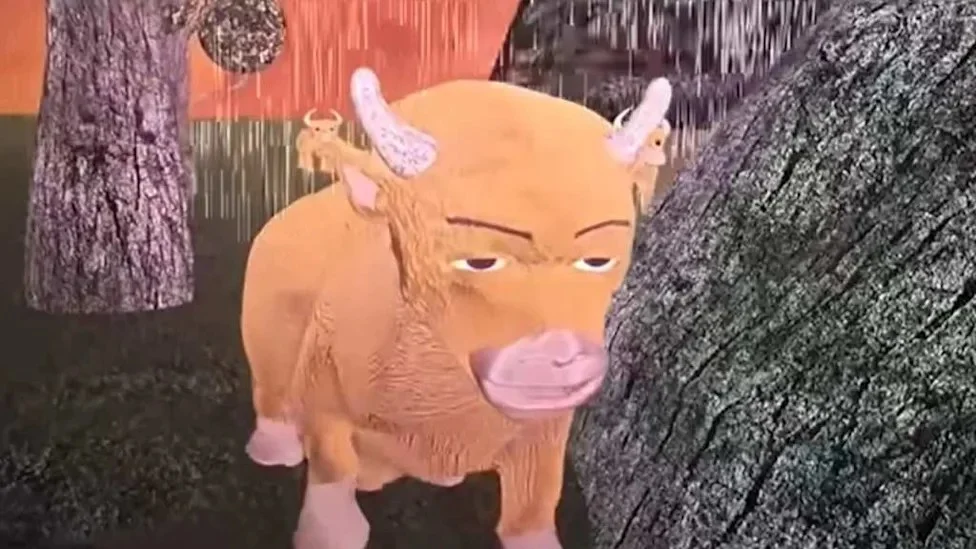
Niu Lai is a 85-minute animated feature that defies every standard of professional production. Created by a mother-and-son duo in Dalian, China, the film utilizes SketchUp—a software typically reserved for architectural modeling and interior design—rather than industry-standard animation suites like Maya or Blender. The result is a visual experience that critics have described as "rougher than a first-generation Nintendo 64 title," characterized by stuttering frame rates, sparse environments, and character models that resemble eerie, low-poly hybrids.
Despite these technical deficiencies, or perhaps because of them, the film has grossed over ¥31.54 million (approximately $4.8 million USD) in China as of late August 2026. This represents a return on investment (ROI) that is virtually unparalleled in the history of cinema. While Hollywood blockbusters like Spider-Man: Brand New Day and The Odyssey have struggled to maintain momentum in the Chinese market, Niu Lai has seen its ticket sales spike due to "lolcow culture"—a digital-age phenomenon where audiences flock to media specifically to mock its perceived incompetence.
Simultaneously, the D23 Expo has underscored a different trend: the "Sequel Trap." Disney and Pixar’s 2026 roadmap is dominated by legacy titles, including Frozen 3, Incredibles 3, and Zootopia 3. This reliance on established IP stands in stark contrast to the organic, chaotic success of "outsider art" like Niu Lai, suggesting a growing rift between what studios provide and what the internet-native generation finds compelling.

Chronology: The Rise of an Unlikely Icon
The Dalian Origins (2016–2021)
The story of Niu Lai began not in a film studio, but in the offices of Dalian Jingyuan Decoration Engineering. Founded in 2016 by Sun Lifang and her son, Xin Yumeng, the company originally focused on interior design. In 2021, the duo made a pivot that baffled their peers: they decided to transform their design firm into a production company. Lacking formal training in animation, Xin Yumeng took on the roles of director and lead animator, while Sun Lifang composed the soundtrack, performed the theme song, and shared voice-acting duties for every character in the film.
The Production Grind (2021–2026)
Over five years, the duo labored on the project using SketchUp. The choice of software dictated the film’s aesthetic—or lack thereof. Because SketchUp is not designed for character rigging or fluid motion, the characters move with the mechanical stiffness of a PowerPoint presentation. The budget remained minuscule, consisting primarily of the cost of electricity and basic hardware, totaling several thousand yuan (less than $1,000 USD).
The August Pivot and Viral Explosion
On August 5, 2026, the film was quietly released in Chinese theaters by Tianjin Yamazaki Film. With no marketing budget and a single, crudely designed poster, it was expected to vanish instantly. However, the film caught the attention of users on Douban (a movie review platform) and Weibo. Clips of the film’s "hardest-to-watch" moments—such as the title character, a calf, blinking for a full minute in silence—went viral. By the second week of August, Niu Lai had become a cultural rite of passage for Gen Z moviegoers, leading to the dramatic box office surge that outperformed American imports.
Supporting Data: The Profitability of the Absurd
To understand the magnitude of Niu Lai’s success, one must look at the comparative data.

| Feature | Niu Lai | Spider-Man: Brand New Day (China) |
|---|---|---|
| Estimated Budget | ~$200 – $800 | ~$200,000,000 |
| Box Office (China) | $4,800,000+ | ~$3,200,000 (Opening Week) |
| ROI Percentage | >600,000% | Negative (to date) |
| Software Used | SketchUp | Proprietary High-End CGI |
| Marketing Spend | $0 | ~$100,000,000 (Global) |
The film’s narrative is as sparse as its budget. It follows a calf named Niu Lai in a "shifting dreamscape" forest. Over 85 minutes, Niu Lai encounters various animals—a leopard, a pack of wolves, and a skylark—as his mother attempts to protect him. The plot is described as "abstract" and "meandering," drawing comparisons to the "slow cinema" of Edward Yang, though critics argue this is an accidental byproduct of technical limitations rather than a deliberate stylistic choice.
Official Responses and Market Reactions
The industry reaction to Niu Lai has been a mix of bewilderment and cautious fascination.
Tianjin Yamazaki Film, the distributor, issued a brief statement acknowledging the "unexpected enthusiasm" of the audience, though they have remained largely silent on the film’s quality. Analysts suggest the distributor is simply riding the wave of irony-driven ticket sales without attempting to defend the film as a masterpiece.
Industry Critics have been more vocal. "We are seeing the birth of ‘Outsider Animation,’" says film historian Dr. Elena Vance. "Much like Tommy Wiseau’s The Room, Niu Lai succeeds because it is a pure, unfiltered expression of a creator’s vision, unburdened by the ‘rules’ of the medium. It is incompetent, yes, but it is also undeniably human."

The D23 Counter-Response:
At the D23 Expo, Disney executives focused on "quality and legacy." While they did not mention Niu Lai by name, the heavy emphasis on sequels like Frozen 3 and Incredibles 3 was seen by many as a defensive crouch—a retreat to safe territory in an increasingly unpredictable market. However, the announcement of a Kingdom Hearts anime series, inspired by the convoluted video game franchise, was met with a similar type of "chaos-theory" excitement. Fans are anticipating a narrative mess that could rival Niu Lai in its complexity, albeit with a much higher production value.
Implications: Human Incompetence in the Age of AI Slop
The success of Niu Lai carries profound implications for the future of the animation industry, particularly regarding the rise of Artificial Intelligence (AI).
1. The Rejection of "Perfect" AI Content
As AI-generated "slop"—content that is technically proficient but narratively hollow—floods the internet, audiences are showing a surprising preference for human-made failure. Niu Lai is undeniably ugly, but its ugliness is specific, quirky, and clearly the result of two humans struggling with inadequate tools. There is a "soul" to its incompetence that AI currently cannot replicate.
2. The Global Cult of the ‘Disasterpiece’
The viral success of Niu Lai has already begun to leak out of China. Reports from San Francisco and London indicate that "underground" screenings are being organized by bad-film aficionados. This suggests that the "cult of the disasterpiece" is no longer a localized Western phenomenon (e.g., Plan 9 from Outer Space) but a globalized digital trend where irony serves as the primary driver of consumption.

3. Aesthetic Bankruptcy vs. Corporate Safety
The D23 announcements highlight a different kind of "bankruptcy." While Disney’s films are aesthetically perfect, they are often criticized for being narratively safe and repetitive. Niu Lai is the opposite: aesthetically bankrupt but narratively baffling and "new." The fact that a $200 film can compete for headspace with a $200 million sequel suggests that the "spectacle" of high-end CGI may be losing its luster.
4. The Rise of "SketchUp Cinema"
There is a concern among industry veterans that the success of Niu Lai might encourage a wave of low-effort productions looking to "catch lightning in a bottle" through viral irony. However, most experts believe that Niu Lai’s success is a "black swan" event—a perfect storm of mother-son sincerity, bizarre software choices, and a specific cultural moment in 2026.
Conclusion
As 2026 progresses, the animation industry finds itself at a crossroads. On one path lies the D23 model: polished, expensive, and deeply familiar. On the other lies the Niu Lai model: ugly, cheap, and utterly unpredictable. While the corporate giants will continue to dominate the global box office, the "Bull" from Dalian has proven that in the age of the algorithm, there is still a massive market for the human, the weird, and the spectacularly incompetent. Whether Niu Lai is a flash in the pan or the beginning of a new "outsider art" movement remains to be seen, but for now, it stands as the most profitable, baffling, and hilariously human film of the year.