The Digital Dean: Harvard Business School Embraces AI Avatars to Scale Elite Education
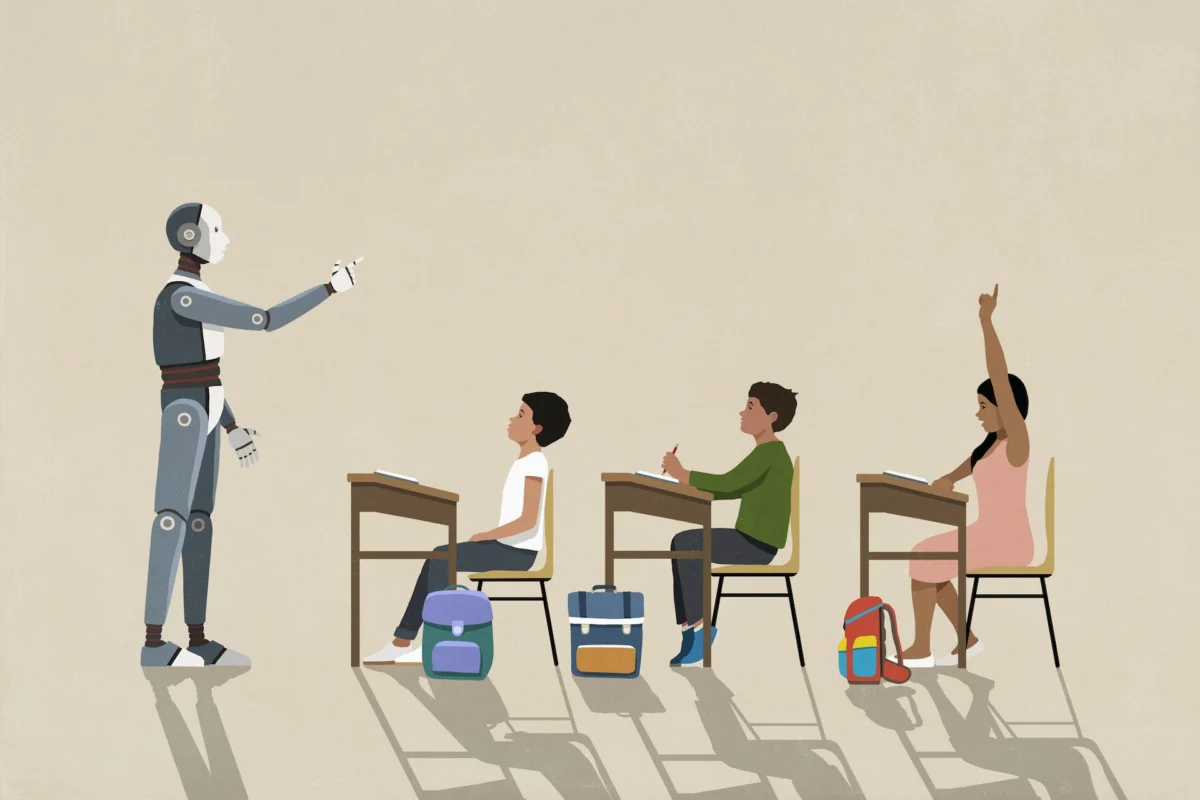
CAMBRIDGE, MA — In the hallowed, ivy-covered halls of Harvard Business School (HBS), the traditional Socratic method—a pedagogical staple involving rigorous back-and-forth dialogue between professor and student—is undergoing a radical digital transformation. As the institution seeks to project its brand far beyond the confines of its Massachusetts campus, it has turned to an unlikely group of instructors: photorealistic AI avatars.
The integration of these digital "simulacra" into the HBS curriculum represents a significant milestone in the intersection of generative artificial intelligence and high-stakes executive education. Through a partnership with the AI video startup HeyGen, Harvard is testing whether the "magic" of an Ivy League classroom can be bottled, automated, and distributed at scale without losing the prestige that defines the HBS brand.
Main Facts: The HBS Foundry and the Rise of the Virtual Faculty
The centerpiece of this technological leap is the HBS Foundry, a newly launched, eight-week intensive bootcamp designed for aspiring entrepreneurs. Priced at $699—a fraction of the cost of a traditional MBA credit—the program aims to provide high-level mentorship to a global audience.
While the Foundry includes weekly live sessions with human instructors, the bulk of the personalized, interactive feedback is delivered by AI avatars. These avatars are digital clones of real-world HBS faculty and successful venture capitalists, trained to simulate the experience of a high-pressure pitch or a contentious board meeting.
Key features of the AI integration include:
- Pitch Simulation: Students present their business models to an AI avatar that analyzes their tone, content, and strategy in real-time.
- Simulated Board Meetings: The AI takes on the persona of a skeptical board member, challenging students on their financial projections and operational pivots.
- Asynchronous Feedback: Unlike human professors, the avatars are available 24/7, providing immediate critiques on assignments.
The technology behind these avatars is provided by HeyGen, a leader in the "generative video" space. HeyGen’s platform uses deep learning to map a person’s facial expressions and voice onto a digital model, allowing the avatar to "speak" new text with uncanny realism.
Chronology: From Text-Based Chatbots to Humanoid Avatars
The road to the HBS Foundry’s current form was an iterative process that reflects the rapidly changing expectations of digital learners.
Phase 1: The Chatbot Concept (Early 2025)
Initially, project director Katharina Rings and her team envisioned the AI component of the Foundry as a sophisticated, text-based chatbot. The goal was to provide a "knowledge base" where students could ask questions about market sizing or unit economics.
Phase 2: The Pilot and Student Pushback (Late 2025)
When HBS released a trial version of the text-based system, the feedback was unexpectedly critical. Students reported that while the information was accurate, the experience felt "dry" and disconnected from the high-energy environment of a real startup incubator. The data suggested that students didn’t just want information; they wanted mentorship—or at least the feeling of it.
Phase 3: The Avatar Pivot (Spring 2026)
In response to student demands for a more "guided" and "human" experience, the Foundry team pivoted to video synthesis. By partnering with HeyGen, they were able to create digital versions of faculty members like Jeff Bussgang, a co-founder of Flybridge Capital and a long-time HBS senior lecturer.
Phase 4: Full Integration (August 2026)
The program officially launched its current iteration, placing the avatars at the forefront of the student experience. This move coincided with a broader push by Harvard University to explore "AI-first" educational models, following a year of intense debate over the role of Large Language Models (LLMs) in academia.
Supporting Data: Testing the "Uncanny Valley"
The effectiveness of these avatars was recently put to the test by New York Times business reporter Sarah Kessler, who participated in a simulation featuring the digital version of Jeff Bussgang.
Kessler’s experience highlighted both the impressive capabilities and the lingering limitations of the technology. She pitched a satirical business idea—"Uber for bananas"—to the virtual Bussgang. The results were telling:

- Analytical Depth: The AI avatar correctly identified the logistical flaws in the "Uber for bananas" model, offering critiques that mirrored the real Bussgang’s skeptical investment style.
- The "Uncanny Valley" Effect: Kessler noted that while the voice and likeness were remarkably accurate, the avatar maintained a "noticeably frozen smile" during her pitch, a common artifact in AI-generated video where the software struggles to transition between neutral and reactive expressions.
- Human Comparison: When the real Jeff Bussgang reviewed the pitch, his feedback was nearly identical to his digital clone’s, though delivered with more nuance and spontaneous humor.
Despite these technical "glitches," the data from Foundry participants suggests a high level of satisfaction. Early surveys indicate that students value the "presence" of an avatar over a text box, noting that it forces them to take the simulation more seriously.
Official Responses: Innovation vs. "The Creepy Factor"
The reaction from the HBS faculty has been a mix of pragmatic optimism and self-aware hesitation.
Jeff Bussgang, the venture capitalist whose likeness is now a permanent fixture of the Foundry, has been vocal about the strange experience of seeing himself automated. "It’s a little creepy," Bussgang admitted in an interview. "Seeing a version of yourself say things you haven’t technically said in that moment is a surreal experience for any educator."
However, Bussgang also emphasized the pedagogical value. "My students love it. They get to practice their pitches at 2:00 AM when I’m asleep. If we can democratize the type of feedback that was previously only available to the 900 students on our physical campus, that’s a win for entrepreneurship globally."
Katharina Rings, the project director, views the avatars as a necessary evolution for HBS Online. "We are in the business of transformation," Rings stated. "The technology allows us to scale the ‘HBS experience’ to people who could never afford to move to Boston or step away from their jobs for two years. The avatars are a bridge between pure self-study and a full-time degree."
Implications: The Future of the "Brand-Name" MBA
The HBS Foundry’s use of AI avatars signals a broader shift in the business of higher education. As elite institutions face pressure to justify their high costs and expand their social impact, AI offers a path toward "mass-market prestige."
1. The Scalability of the Ivy League
For decades, the value of an Ivy League education was rooted in its scarcity. By using AI to replicate the feedback of its faculty, Harvard is testing a new hypothesis: Can you maintain "elite" status while serving tens of thousands of students simultaneously? If the Foundry succeeds, it could pave the way for "AI-Faculty-as-a-Service," where the world’s top minds are licensed out to global learners via digital clones.
2. The Displacement of Adjuncts and Tutors
While HBS positions these avatars as a supplement to human instruction, the long-term economic implications are clear. If an AI can provide 80% of the feedback of a human teaching assistant at 1% of the cost, the demand for human labor in introductory and mid-level education may plummet. This raises significant questions about the future of the academic career path.
3. The "Uncanny Valley" of Mentorship
There is a psychological risk in replacing human mentors with simulations. Mentorship is often built on shared vulnerability and authentic connection—traits that AI, by definition, cannot possess. If a student knows they are pitching to a "frozen smile" that doesn’t actually care about their success, does the feedback carry the same weight?
4. Intellectual Property and "Digital Legacy"
The creation of faculty avatars opens a legal Pandora’s box regarding intellectual property. Who owns the "Jeff Bussgang" avatar? Does the faculty member receive royalties every time a student interacts with their likeness? As professors age or leave the university, HBS could theoretically maintain a "digital library" of active, teaching avatars, keeping faculty "on the clock" long after they have retired.
Conclusion
The HBS Foundry is more than just a bootcamp; it is a high-stakes experiment in the future of human-AI collaboration. By leaning on HeyGen’s avatars, Harvard Business School is betting that the future of education isn’t just about what you learn, but who (or what) you learn it from.
As the program continues to evolve, the "frozen smiles" of the digital faculty may eventually thaw, becoming indistinguishable from the real thing. For $699, the next generation of entrepreneurs seems more than willing to overlook a little "creepiness" in exchange for a seat—even a virtual one—at the most prestigious table in business education.