The Evolution of Ascent: Why Modern Rockets are Shedding Their Fins
For decades, the popular image of a rocket was inseparable from the fins at its base. From the sleek, silver rockets of 1950s science fiction to the massive V-2 missiles of World War II and the iconic Saturn V that carried humans to the moon, stabilizing fins were a hallmark of aerospace design. To the casual observer, a rocket without fins looks unfinished—naked, perhaps, or dangerously unstable.
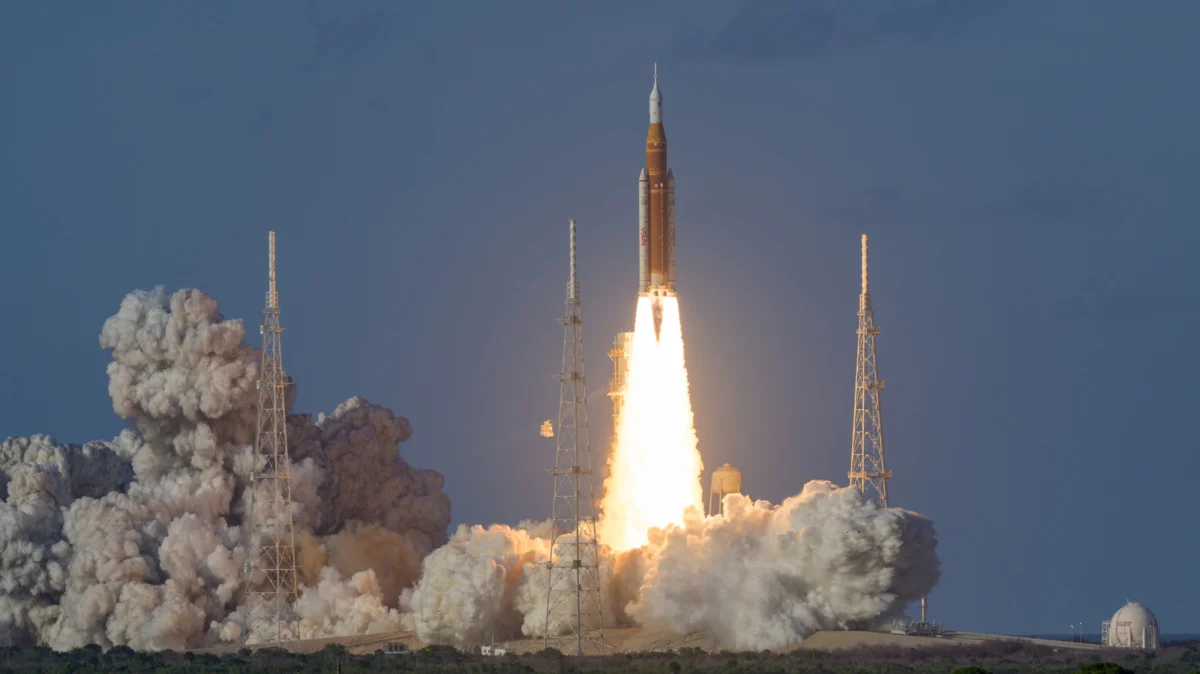
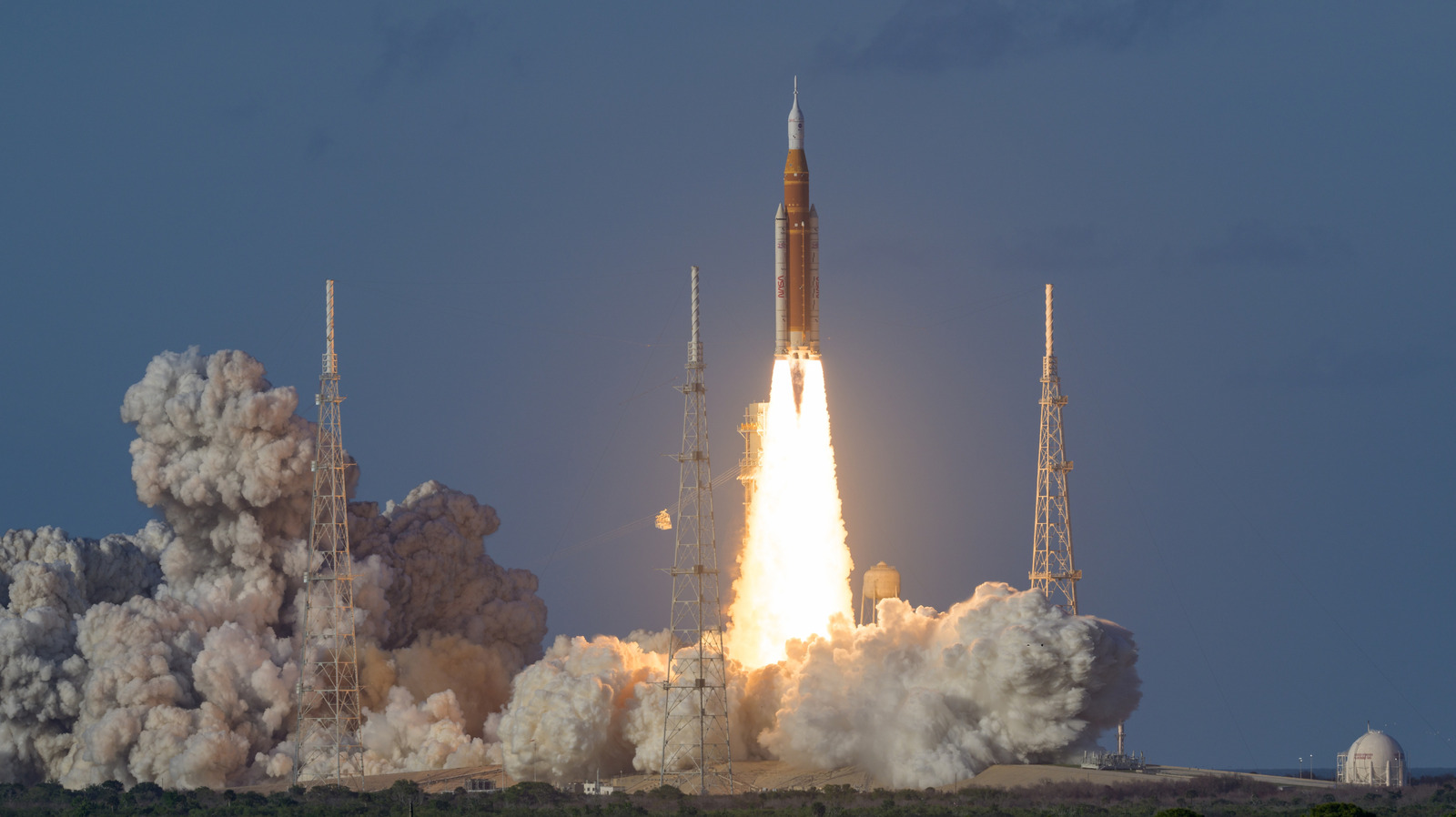
However, a glance at a modern launchpad reveals a different reality. The SpaceX Falcon 9, the United Launch Alliance (ULA) Vulcan Centaur, and NASA’s Space Launch System (SLS) largely eschew the classic tail fin. This shift represents more than just an aesthetic trend; it is the result of a fundamental evolution in aerospace engineering, computing power, and the brutal mathematics of orbital mechanics. In the high-stakes world of spaceflight, where every gram of weight and every Newton of drag is a liability, fins have transitioned from a necessity to a redundancy.
Main Facts: The Physics of Stability and the Cost of Drag
The primary purpose of a rocket fin is passive aerodynamic stability. In the lower atmosphere, where the air is thick, fins act much like the feathers on an arrow. They shift the "Center of Pressure" (CP)—the point where aerodynamic forces act—behind the "Center of Gravity" (CG). If a rocket begins to tilt off-course, the air pushing against the fins creates a corrective torque that pushes the tail back into alignment.
While effective, this passive system comes with three significant drawbacks that modern engineers seek to avoid:
- Parasitic Drag: Fins increase the surface area of the rocket, creating significant air resistance (drag) as the vehicle accelerates through the atmosphere. This drag requires more fuel to overcome, which in turn requires a larger rocket, creating a cycle of diminishing returns.
- Structural Weight: To withstand the immense pressures of "Max Q" (the point of maximum dynamic pressure during flight), fins must be incredibly strong and heavily reinforced. This adds "dead weight" that the rocket must carry all the way to orbit.
- Atmospheric Dependency: Fins only work when there is air. As a rocket ascends into the vacuum of space, aerodynamic surfaces become useless. For a vehicle destined for orbit, carrying a heavy structural component that only functions for the first two minutes of a ten-minute flight is often considered an "anathema to efficient design."
Modern rockets replace these physical surfaces with Active Guidance Systems, primarily Thrust Vector Control (TVC). By using hydraulic or electric actuators to "gimbal" (tilt) the engine nozzles, the rocket can steer itself. If the onboard computer detects a one-degree deviation from the flight path, it instantly tilts the engine to push the base of the rocket back into place, performing the same job as a fin but with far greater precision and zero drag.
Chronology: From the V-2 to the Falcon 9
The transition away from fins was not an overnight revolution but a steady progression dictated by the advancement of control technology.
- The 1940s: The Era of Passive Stability. The German V-2 rocket relied heavily on four massive plywood and steel fins. Early guidance systems were rudimentary, consisting of simple gyroscopes and analog computers. Without the massive surface area of those fins, the V-2 would have tumbled end-over-end seconds after clearing the launch tower.
- The 1960s: The Hybrid Approach. During the Apollo era, the Saturn V utilized four large fins at the base of its S-IC first stage. While the Saturn V used engine gimbaling for steering, the fins were included as a safety redundancy. If the engines failed to gimbal correctly during the high-pressure ascent through the lower atmosphere, the fins provided enough passive stability to prevent the rocket from disintegrating before the crew could escape.
- The 1980s: The Space Shuttle Anomaly. The Space Shuttle featured a large vertical stabilizer (a tail fin), but this was a unique requirement. Because the Shuttle was a glider designed to land on a runway, it needed aerodynamic surfaces for its return to Earth. During ascent, however, these surfaces were a major source of aerodynamic complexity.
- The 2010s-Present: The Digital Supremacy. With the advent of ultra-high-speed flight computers and high-torque actuators, the need for passive stability has vanished for most vertical-launch vehicles. Modern rockets like the Falcon 9 are designed as "aero-statically unstable" during certain phases of flight, meaning they would flip over if the computer weren’t making micro-adjustments to the engine gimbal every millisecond.
Supporting Data: The High Cost of Aerodynamic Surfaces
To understand why engineers are so eager to remove fins, one must look at the "Rocket Equation" and the impact of weight on payload capacity. In orbital rocketry, the "mass fraction" is critical—usually, about 85% to 90% of a rocket’s initial weight is fuel. The remaining 10% must account for the engines, tanks, hull, and finally, the payload.
Every kilogram of fin is a kilogram removed from the satellite or the crew capsule. For a heavy-lift vehicle:
- Weight Penalty: A set of fins for a rocket the size of the SLS could weigh several tons. In the context of orbital mechanics, adding 2,000 kg of structure to the first stage might reduce the final payload to orbit by hundreds of kilograms.
- Drag Coefficient: A finned rocket can have a drag coefficient up to 15-20% higher than a "smooth" cylindrical rocket during the transonic phase (crossing the speed of sound). This translates to thousands of gallons of extra propellant needed just to fight the air.
- The Max Q Factor: At Max Q, the stresses on fins are astronomical. On the Saturn V, the fins had to withstand roughly 50 tons of aerodynamic load. Engineering a hull to support those concentrated load points requires even more heavy internal "stringers" and reinforcement, further bloating the vehicle’s mass.
Official Responses and Engineering Perspectives
Designers from major aerospace firms emphasize that the removal of fins is a sign of engineering maturity.
A spokesperson for United Launch Alliance (ULA), discussing the design of the Vulcan Centaur, noted that "Efficiency is the primary driver of our architecture. By utilizing high-bandwidth Thrust Vector Control, we can maintain a perfectly stable flight profile without the mass and drag penalties associated with fixed aerodynamic surfaces."
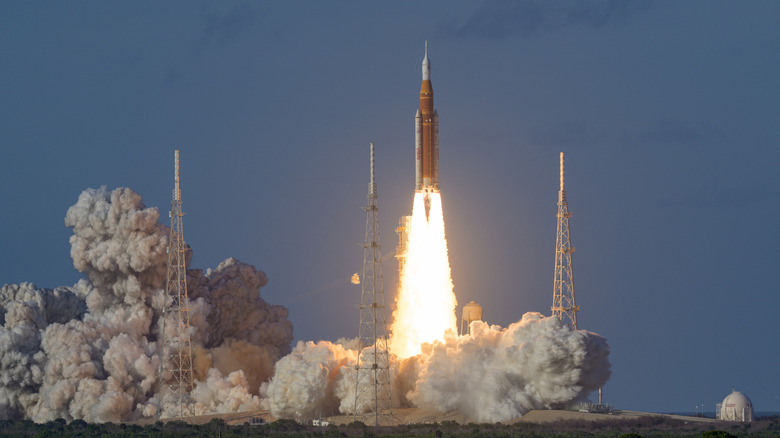
NASA engineers working on the Artemis program have echoed these sentiments. While the SLS looks somewhat traditional, its lack of large fins is a calculated move. "We rely on the four RS-25 engines at the base of the core stage to provide all necessary stability," a NASA propulsion specialist explained. "The precision of modern gimbaling is so high that the passive correction of a fin is no longer worth the trade-off in payload capacity."
SpaceX provides perhaps the most interesting nuance to this debate. While the Falcon 9 does not use fins for ascent, it uses Grid Fins for descent. "The mission profile of a reusable rocket changes the math," Elon Musk has noted in past technical presentations. Unlike the fixed, solid fins of the past, SpaceX’s grid fins are "waffle-iron" shaped surfaces that remain folded against the rocket during the climb to space to minimize drag. They only deploy when the booster is falling back through the atmosphere, providing the high-drag, high-control authority needed to steer a 15-story tall cylinder to a precise landing on a drone ship.
Implications: The Future of Rocket Morphology
The disappearance of fins signals a broader shift toward "Software-Defined Rocketry." We are moving away from vehicles that are stable because of their shape and toward vehicles that are stable because of their intelligence.
1. Increased Design Flexibility
Without the requirement for fins, rockets can become taller and thinner (higher fineness ratio). This allows for easier transport by road or rail and reduces the "footprint" of the rocket as it punches through the atmosphere.
2. The Rise of Reusability
As seen with SpaceX’s Starship, fins are evolving into "actuated flaps." Starship uses four "body flaps" that look like fins but are actually moving control surfaces. These are not for stability during launch, but for "belly-flopping" through the atmosphere during re-entry. This suggests that while fixed fins are dead, smart fins—surfaces that move and fold—are the future for any vehicle intended to return to Earth.
3. Cost Reduction
Fins are complex to manufacture. They require specialized composite materials or high-strength alloys and rigorous wind-tunnel testing. Eliminating them simplifies the manufacturing process, reduces the number of failure points, and ultimately lowers the cost per kilogram to reach orbit.
4. Interplanetary Considerations
As we look toward Mars, the "no-fin" philosophy becomes even more critical. Mars has a very thin atmosphere—about 1% of Earth’s. Fins that provide stability on Earth would be useless on Mars, yet the weight penalty for carrying them would remain the same. By perfecting TVC-based stability on Earth, we are developing the technology necessary for landing and taking off from worlds where aerodynamic surfaces offer no help.
Conclusion
The "naked" look of modern rockets is a testament to the invisible power of modern computing. The iconic fins of the 20th century were a brilliant solution to the problem of stability in an era of limited control technology. Today, however, they represent a bygone era of "passive" engineering. As we push further into the cosmos, the rockets of the future will continue to shed their external appendages, relying instead on the invisible, lightning-fast corrections of onboard AI and the brute force of gimbaled thrust to carve their path through the heavens. The rocket has evolved from an arrow into a needle—sharper, faster, and infinitely more efficient.