The AI-First Evolution: Googlebooks and the Strategic Pivot of the Personal Computer
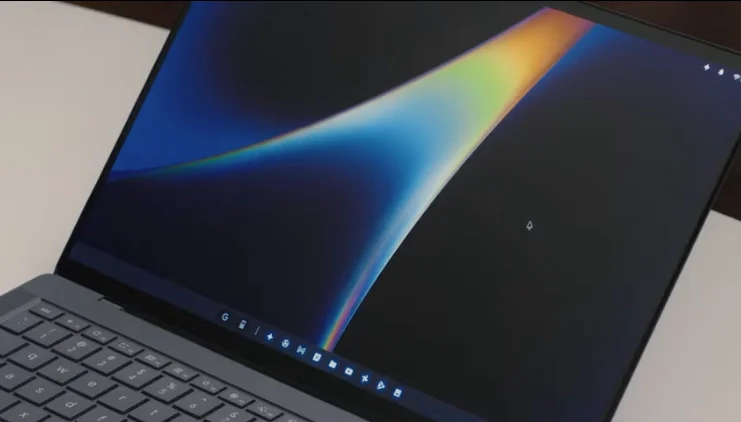
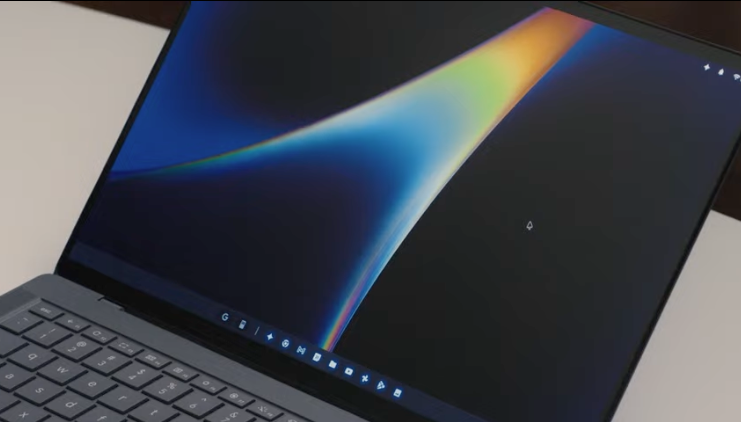
In the rapidly shifting landscape of personal computing, the industry is witnessing a transition as profound as the move from command-line interfaces to graphical user interfaces. While OpenAI and former Apple design chief Jony Ive continue to develop their highly anticipated, yet still shrouded, AI hardware device, Google has quietly begun a fundamental transformation of its own hardware legacy. The transition from the "Chromebook" to the "Googlebook" marks a definitive end to the era of the minimalist cloud appliance and the dawn of the AI-first agent.
Main Facts: The Birth of the Googlebook
The "Googlebook" represents a paradigm shift in how Google approaches mobile and desktop computing. For over a decade, the Chromebook served as a testament to the power of the web browser, operating on the philosophy that the cloud could handle the heavy lifting while the local hardware remained thin, light, and inexpensive. However, the rise of generative artificial intelligence has rendered the "cloud-only" model insufficient for the next generation of user demands.
The core of this transition lies in a fundamental change of the underlying operating system. While Chromebooks were built on ChromeOS—a Gentoo Linux-based system designed to run the Chrome browser—Googlebooks are reportedly moving toward a foundation rooted deeply in Android. This technical pivot is designed to solve two primary issues: the historically clunky integration of Android apps on ChromeOS and the need for deep, system-level integration of AI models like Gemini.
By unifying the desktop experience with the Android ecosystem, Google aims to create a device that isn’t just a window to the web, but a proactive "AI agent." Unlike its predecessor, the Googlebook is designed to prioritize on-device processing, leveraging Neural Processing Units (NPUs) to handle complex AI tasks without the latency or privacy concerns associated with constant cloud communication.
Chronology: From Browser-in-a-Box to AI Agent
To understand the gravity of the Googlebook launch, one must look at the decade-long trajectory of Google’s hardware ambitions.
2011–2015: The Minimalist Era
Google launched ChromeOS with the CR-48 prototype, followed by consumer models from Samsung and Acer. At the time, the message was clear: "Everything is the web." These devices were affordable, secure, and easily managed, making them the darlings of the K-12 education sector.
2016–2021: The Pichai Pivot
As Sundar Pichai took the helm as CEO, he famously declared Google to be an "AI-first" company. During this period, we saw the first attempts to bring the Play Store to ChromeOS. While functional, the experience was often fragmented, as Android apps designed for touchscreens struggled with the windowed environment of a laptop.
2022–2023: The Rise of Chromebook Plus
Recognizing a gap in the market for "premium" cloud computing, Google and its partners launched the Chromebook Plus category. These devices featured better screens, faster processors, and early AI-integrated features like "Magic Eraser" in Google Photos. This served as a successful market test, proving that consumers were willing to pay more for a Google-centric laptop if the build quality and software capabilities were elevated.
2024 and Beyond: The Googlebook Emergence
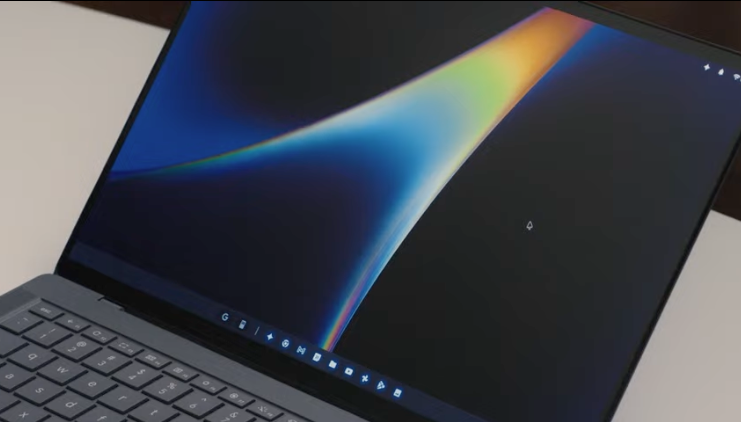
The current era sees the formalization of the "Googlebook." This is no longer just an "enhanced Chromebook." It is a reimagining of the laptop as an AI-driven tool that utilizes a unified Android-based kernel to provide a seamless experience across phones, tablets, and laptops.
Supporting Data: The Technical and Market Rationale
The shift to Googlebooks is backed by significant market data and technical necessity. According to industry analysis, the education market—which Google dominates—is reaching a saturation point. To grow, Google must move into the professional and "prosumer" segments currently held by Apple’s MacBook and high-end Windows laptops.
The App Performance Gap
Data from user experience studies has long shown that "containerized" Android apps on ChromeOS suffer from a 15–25% performance penalty compared to native execution. By moving to an Android-based foundation for Googlebooks, Google eliminates this overhead, allowing professional-grade creative and productivity apps to run with the same fluidity they do on a high-end Samsung tablet or Pixel phone.
The Hardware Arms Race
The Googlebook is arriving at a time of unprecedented hardware innovation. While early Chromebooks ran on low-power Intel Celeron or ARM chips, the new generation of Google-designed silicon (and partnerships with MediaTek) focuses on TOPS (Trillion Operations Per Second). This is essential for running Large Language Models (LLMs) locally.
In comparison, Microsoft’s recent "Build" conference highlighted the "RTX Spark" architecture, a collaboration with Nvidia and MediaTek. This architecture brings high-performance AI processing to the Windows ecosystem. Google’s move to the Googlebook is a direct response to this, ensuring that Android-based laptops aren’t left behind in the "NPU wars."
Official Responses and Industry Perspectives
While Google has remained strategic in its public messaging, the company’s actions speak to a long-term phase-out of the traditional ChromeOS branding in favor of a more unified "Google" identity.
Google’s Vision
Sundar Pichai has consistently emphasized that AI will transform the PC from a tool you use into an agent that works for you. Inside Google, the "Better Together" initiative has been the driving force behind the Googlebook, aiming to erase the friction between different device types. Sources within the Android engineering team suggest that the goal is a "single code base" that scales from a 6-inch phone to a 16-inch laptop.
The Microsoft Counterpoint
Microsoft, having seen the success of Chromebooks in education, attempted to compete with the Surface Laptop SE and Windows 11 SE. However, as noted by industry analysts, this was one of the company’s quickest market retreats since the failure of Windows RT. Microsoft has pivoted away from trying to out-simplify Google. Instead, they are doubling down on "Copilot+ PCs," betting that users want maximum power and deep integration with the Office 365 suite.
Analyst Insight: Ross Rubin
Ross Rubin, principal analyst at Reticle Research, notes that Google has a unique opportunity. "Google has the chance to provide a more capable alternative to a generation of kids who grew up with Chromebooks," Rubin states. He argues that as these students enter the workforce, they will demand devices that maintain the ease of use of their childhood laptops but offer the power of a "real" computer.
Implications: The Future of the Desktop
The transition to Googlebooks carries heavy implications for the future of the technology ecosystem.
1. The Death of the "Thin Client"
The original dream of the Chromebook was the ultimate "thin client"—a device that was useless without an internet connection. The Googlebook kills this concept. By prioritizing on-device AI and native Android apps, Google is acknowledging that local processing power is once again king. This is a significant reversal in computing philosophy.
2. The Convergence of Mobile and Desktop
For years, Apple has resisted merging macOS and iPadOS, insisting they are distinct experiences. Google is taking the opposite gamble. If the Googlebook succeeds, it will prove that a mobile-first operating system (Android) can evolve to handle desktop-class productivity. This could force Apple to reconsider the limitations of the iPad or the touch-screen-less nature of the MacBook.
3. The "Agentic" Workflow
As the Googlebook integrates Gemini more deeply into the OS, the user experience will shift from "searching for files" to "asking for outcomes." For example, instead of opening a spreadsheet to calculate a budget, a user might simply tell their Googlebook to "analyze last month’s spending and suggest a savings plan." This "agentic" workflow requires the level of system access that only a native, AI-first OS can provide.
4. Competitive Pressure on Windows
Microsoft currently faces the challenge of scaling its AI features down to affordable hardware. Windows is a "heavy" operating system with decades of legacy code. Google, by starting with the relatively leaner Android kernel for its new "books," may be able to offer a high-performance AI experience on hardware that is significantly cheaper than a "Copilot+" Windows PC.
Conclusion
The Googlebook is more than a rebranding; it is a strategic repositioning of Google’s hardware identity. By leveraging the strengths of Android and the necessity of on-device AI, Google is attempting to graduate from the classroom to the boardroom. While Chromebooks will likely remain in schools for years to come, the Googlebook is the company’s true contender for the future of the personal computer. In the coming battle between Google’s AI agents and Microsoft’s Copilots, the winner will be determined by who can best bridge the gap between the simplicity of the cloud and the power of local intelligence.