The Fractured Mirror: The 2026 White House Correspondents’ Dinner and the Erosion of Political Decorum
The annual White House Correspondents’ Association (WHCA) dinner, once a symbol of the "necessary friction" and mutual respect between the American press and the executive branch, has devolved into what critics are calling an "overwrought embarrassment" and a "debacle" for the profession of journalism. The 2026 iteration of the event, marked by vitriolic personal attacks from the President, a controversial standing for award recipients, and a resurgence of Cold War-era rhetoric, has prompted a nationwide debate over the utility of the "nerd prom" and the state of the First Amendment in an era of unprecedented polarization.
Main Facts: A Night of Insults and Irony
The 2026 WHCA dinner was intended to celebrate journalistic excellence and provide scholarships for the next generation of reporters. However, the event was overshadowed by the presence and rhetoric of the President, who utilized the platform to launch pointed attacks against the very organizations hosting him.
The primary flashpoint of the evening occurred when the President directed a series of insults at CNN’s Kaitlin Collins, who was in attendance to receive a prestigious award. Despite the public nature of the derision, Collins remained in her seat—a move that has sparked intense debate regarding the "etiquette of the insulted."
Furthermore, the evening highlighted a growing rift within the press corps regarding professional neutrality. Observers noted that several attendees applauded the President’s more aggressive remarks, a gesture that critics argue undermines the fundamental role of the journalist as a neutral observer. Beyond the ballroom, the political landscape remains fraught with tension, as the administration continues to navigate a trade war with Canada over wildfire-related tariffs and a domestic strategy centered on a "New Red Scare," including claims that "communists" intend to destroy national monuments like Mount Rushmore.
Chronology of the Debacle
The Invitation and the Award
The tension began weeks prior to the dinner. Traditionally, award winners are notified in advance, often through their employers, to ensure their attendance. Kaitlin Collins, a frequent target of the administration’s ire, was informed she would be honored for her reporting. This created a paradoxical situation: a journalist being recognized for excellence by her peers while simultaneously being litigated against and publicly maligned by the guest of honor.
The Speech
Upon taking the podium, the President eschewed the traditional self-deprecating humor associated with the event. Instead, he delivered a series of prepared remarks that targeted specific news organizations—many of which are currently involved in legal battles with the administration. The rhetoric shifted from political critique to personal animosity when he addressed Collins directly.
The Reaction in the Room
As the insults were hurled, the room remained largely divided. While some journalists sat in stony silence, others—either out of habit or a misguided sense of decorum—offered applause. The decision by Collins to remain in the room was a calculated professional choice. Walking out would have likely been framed by the administration as a "victory" or a sign of weakness; by staying, she maintained a stoic presence that many analysts suggest made her the "bigger person" in the exchange.
The Post-Dinner Fallout
In the hours following the event, social media and news cycles were dominated by "outraged reactions" and summaries of the President’s "unfunny" performance. Public figures, including Hunter Biden, weighed in on the President’s inability to deliver effective satire, citing a lack of self-reflection and empathy as the primary causes of the comedic failure.
Supporting Data: Humor, Tariffs, and the Environment
The Mechanics of Humor
The failure of the President’s "jokes" has been analyzed through the lens of psychological empathy. Satire requires an understanding of the audience’s expectations and the ability to subvert them with an insightful twist. Critics argue that the President’s literalist and self-centered worldview prevents this "flip." This is often compared to the limitations of Artificial Intelligence; like an AI that can predict needs but cannot feel emotion, a leader without empathy can recite words but cannot master the "human" element of humor.
The Canadian Wildfire Tariff Dispute
The dinner occurred against a backdrop of bizarre international policy. The administration recently imposed tariffs on Canadian goods, citing the "burden" of smoke crossing the border from Canadian wildfires. This move has been met with derision by environmentalists and economists alike.

- Historical Context: Canada and Mexico have historically provided significant firefighting resources to the United States.
- Climate Reality: Wildfires in Spain and France, as well as the ongoing refinery fires in Saudi Arabia (caused by Houthi drone strikes), underscore a global environmental crisis that ignores international borders. The administration’s focus on tariffs rather than climate mitigation is seen by many as a diversionary tactic.
The "New Red Scare"
Data from recent GOP messaging suggests a strategic shift toward anti-communist rhetoric ahead of the midterms. This "New Red Scare" involves:
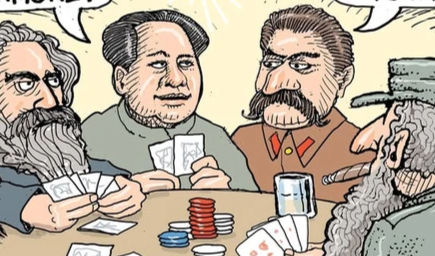
- Hyperbolic Claims: Asserting that "communists" are planning to blow up Mount Rushmore.
- Poll-Driven Desperation: Analysts suggest this rhetoric is a sign of desperation in the face of dismal polling numbers, echoing the McCarthyism of the 1950s.
- Digital Echo Chambers: Troll factories and social media bots have been documented amplifying these themes to create a sense of internal domestic threat.
Official Responses and Public Critique
The response to the dinner has been swift and largely critical from various sectors of society.
Hunter Biden’s Assessment:
In a widely circulated statement, Hunter Biden slammed the President’s performance, stating, "A man who’s a joke can’t tell one." He argued that the President lacks the necessary self-reflection to engage in the type of humor the WHCA dinner requires.
The Journalistic Community:
Serious journalists have expressed a desire to "lance the growing boil" of the dinner. There is a burgeoning movement to recast the event entirely, moving away from the "celebrity" atmosphere and back toward a somber celebration of the First Amendment. The presence of organizations that the President has sued—sitting in the same room and applauding him—has been described as a "puzzlement" and an "embarrassment for the profession."
The Political Opposition:
Democratic strategists have pointed to the "Red Scare" tactics as a revival of the John Birch Society’s conspiratorial thinking. They argue that the administration is attempting to resurrect the "Great Communist Conspiracy" to distract from legislative failures and environmental negligence.
Implications: The Future of the WHCD and National Discourse
The 2026 WHCA dinner may serve as a definitive turning point for the relationship between the American press and the presidency. The implications of this night extend far beyond the ballroom of the Washington Hilton.
The Death of the "Nerd Prom"?
There is a growing consensus that the WHCA dinner, in its current format, is untenable. If the event continues to provide a platform for a leader to insult the press while the press provides him with an audience and applause, the credibility of the Fourth Estate is at risk. We may see a shift toward smaller, more focused events that exclude the executive branch entirely to preserve the appearance of neutrality.
The Normalization of Extremist Rhetoric
The President’s claims regarding Mount Rushmore and the "communist threat" represent a shift toward a "post-truth" political strategy. By framing political opponents not just as rivals but as existential threats to national monuments and the American way of life, the administration is deepening the national divide. This rhetoric has a "sirocco" effect—like the dust storms of the Sahara, it settles on everything, making it difficult for the public to see through the "smog" of misinformation.
The International "Small World" Effect
The administration’s attempt to use environmental disasters (like the Canadian fires) as a tool for protectionist trade policy sets a dangerous precedent. It suggests that natural disasters can be weaponized for political gain. As the world becomes "smaller" through shared environmental risks, the failure to cooperate across borders—and the choice to instead litigate and tax those who are also suffering—could lead to a breakdown in international diplomacy.
Conclusion: A Call for Decency
The ultimate question arising from the 2026 debacle is one famously posed during the original McCarthy era: "Have you no sense of decency, at long last?" The juxtaposition of journalists being insulted while receiving awards, of global fires burning while leaders bicker over tariffs, and of a "Red Scare" being used to mask political desperation, suggests a system in dire need of recalibration. For the press, the lesson of the night is clear: neutrality is not the same as passivity, and being an observer does not require being a doormat. As the "wind shifts," the American public and the press must decide whether they will continue to hold their breath in the smog or demand a clearer, more honest atmosphere.