
The Architect of Virtual Worlds: Raph Koster Unveils Comprehensive Five-Year Design Archive
By Senior Tech Correspondent
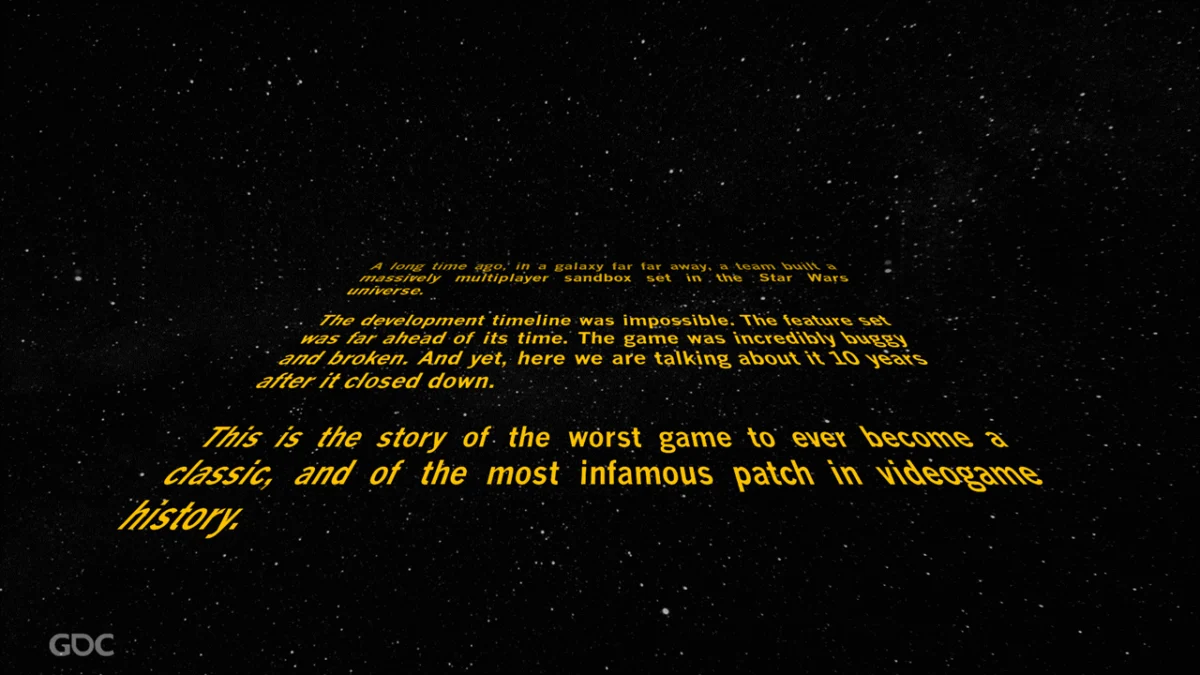
In the rapidly evolving landscape of digital entertainment, few voices carry as much weight as Raph Koster. A legendary game designer, theorist, and the creative force behind seminal titles like Ultima Online and Star Wars Galaxies, Koster has long been regarded as the "designer’s designer." This week, Koster released a massive update to his professional archive, synthesizing over five years of industry-defining thought leadership into a curated roadmap for the future of interactive media.
The update, his first major site reorganization since 2019, arrives at a critical juncture for the games industry. As developers grapple with the collapse of "Metaverse" hype, the rise of generative AI, and a shifting economic landscape, Koster’s updated index serves as both a post-mortem of the last half-decade and a manifesto for the next generation of virtual worlds.
Main Facts: A Synthesis of Five Years of Innovation
The newly reorganized archive on RaphKoster.com is more than a simple blog update; it is a structured curriculum covering the mechanics of digital societies. The update categorizes hundreds of articles, talks, and technical deep-dives into several key pillars:
- Game Design Theory: Overviews of ludology that bridge the gap between abstract fun and mechanical execution.
- Multiplayer Dynamics: A specialized focus on the "social physics" of online spaces—a field Koster effectively pioneered.
- The Business of Play: An unvarnished look at the economic realities facing modern developers.
- The Metaverse Critique: A technical and philosophical deconstruction of the 2021–2023 "Metaverse" craze.
- Historical Preservation: New post-mortems and historical contexts for the birth of the MMORPG (Massively Multiplayer Online Role-Playing Game) genre.
Central to this update is the inclusion of "Riffs by Raph," a series of essays that serve as the foundational philosophy for his current venture, Playable Worlds, and its upcoming title, Stars Reach. These "riffs" advocate for a return to deep simulation and player agency, moving away from the "theme park" models that have dominated the industry for two decades.
Chronology: From the Peak of MMOs to the "Metaverse Madness"
To understand the significance of Koster’s updated archive, one must look at the timeline of the industry over the last five years—a period Koster describes as one of immense noise and frequent misunderstanding.
- 2019–2020: The Quiet Before the Storm. Following his last major site update, Koster focused on the early stages of Playable Worlds. During this time, the industry was focused on the refinement of the "Games as a Service" (GaaS) model.
- 2021: The Metaverse Boom. The industry saw a massive influx of capital into "Metaverse" projects, often driven by blockchain and NFT speculation. Koster emerged as a prominent skeptic, not of the concept of virtual worlds, but of the technical and social ignorance of many new entrants.
- 2022: The Technical Deep Dive. As the hype reached a fever pitch, Koster published a series of technical breakdowns (now indexed in "Metaverse Madness") explaining why blockchains do not solve the fundamental data problems of high-concurrency virtual worlds.
- 2023: The Great Correction. As the Metaverse bubble burst, Koster’s writings shifted toward "Postmortems" and historical context, reminding the industry that the problems being "discovered" in 2023 had often been solved in the 1990s.
- Late 2024: The Synthesis. The current update brings these disparate threads together, offering a cohesive vision of "Living Worlds" as the industry moves past the blockchain era and toward more sophisticated simulations.
Supporting Data: The Technical Reality of Virtual Spaces
One of the most valuable sections of the new archive is Koster’s data-driven critique of modern infrastructure. Koster argues that many contemporary "Metaverse" proponents failed because they ignored the "hard realities" of building persistent spaces.
In his series on data points, Koster provides a technical rebuttal to the idea of "interoperability" via blockchain. He notes that the primary challenge of virtual worlds is not the ownership of an asset (the token), but the "simulation state"—the way an object behaves within a specific world’s physics and logic. A sword in World of Warcraft cannot simply "exist" in Call of Duty because the data structures defining its weight, swing speed, and damage are incompatible at a fundamental code level.
Furthermore, Koster’s work on Emulation highlights a growing concern in the industry: digital obsolescence. By documenting his work on emulators, Koster provides data on how the "living history" of games is being lost and offers a technical framework for how developers can build more resilient, preservable systems.
His book Postmortems, which he notes was released during this five-year window, spans over 700 pages. It provides a data-rich history of virtual worlds, documenting the player metrics and social experiments that shaped Ultima Online. This historical data serves as a warning against "reinventing the wheel" in modern game design.
Official Perspectives: The "Riffs" and the Manifesto for Stars Reach
The most forward-looking portion of the update is the "Riffs by Raph" section. While Koster acknowledges these were written partially as marketing for his studio, Playable Worlds, they function as a professional manifesto for the future of the medium.
Koster’s perspective is that the industry has become "stuck" in a cycle of content-heavy, simulation-light games. His "Riffs" outline a vision for games like Stars Reach that prioritize:
- Simulated Ecologies: Trees that grow, spread, and react to the environment, rather than being static background art.
- Emergent Gameplay: Systems that allow players to solve problems in ways the designers didn’t explicitly program.
- Governance and Digital Society: Applying the lessons of the 1990s MUDs (Multi-User Dungeons) to create sustainable online communities that can self-regulate.
"Most people had no clue what the hell they were talking about [regarding the Metaverse]," Koster writes in his update. His "official response" to the industry’s recent trends is a call for technical literacy. He reminds his peers that he was building "Metaverses" in the 90s and 2000s, and that the "new" problems of digital governance and economy are actually well-trodden ground for those who study the history of the medium.
Implications: Why Koster’s Index Matters for the Future
The release of this curated archive has significant implications for several sectors of the technology and entertainment world.
For Game Designers
The index provides a "masterclass" in systems design. In an era where many junior designers are trained on specific tools (like Unity or Unreal) rather than design philosophy, Koster’s archive offers the "why" behind the "how." The focus on multiplayer dynamics is particularly relevant as more games move toward social-first experiences.
For the "Metaverse" Successors
As companies like Meta and Epic Games continue to build persistent platforms, Koster’s technical warnings about data and governance remain vital. His assertion that blockchains are not a "panacea" for virtual world problems is a foundational lesson for any architect of a decentralized space.
For Academic and Historical Preservation
By organizing his post-mortems and emulation work, Koster is providing a primary-source history of the internet’s social evolution. As virtual worlds become a larger part of human culture, the "social physics" Koster describes will be studied not just by designers, but by sociologists and urban planners.
The Evolution of Playable Worlds
Finally, the update signals that Stars Reach is nearing a phase where its underlying philosophy will be put to the test. By laying out his "Riffs" so clearly, Koster has set a high bar for his own project. The industry will be watching to see if his theories on "living trees" and simulated worlds can truly revitalize a genre that many critics believe has stagnated.
In conclusion, Raph Koster’s five-year update is more than a personal milestone; it is a vital resource for anyone interested in the intersection of technology, society, and play. By bridging the gap between the pioneering days of the 90s and the high-tech simulations of the future, Koster remains the essential cartographer of the virtual frontier.



Leave a Comment