The Architecture of Arrakis: Deconstructing the Visual World-Building of Denis Villeneuve’s ‘Dune’
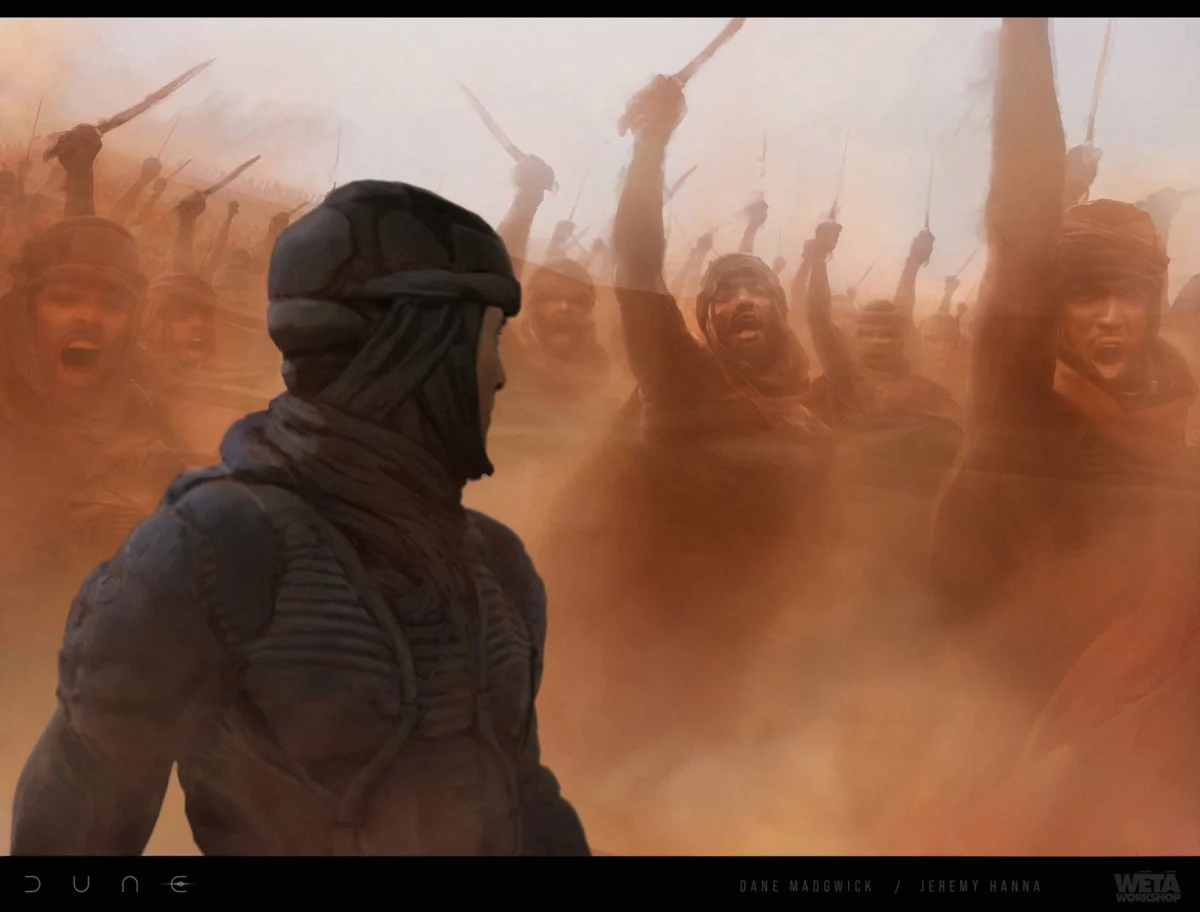
The 2021 release of Denis Villeneuve’s Dune: Part One marked a watershed moment in contemporary science fiction cinema. While Frank Herbert’s 1965 novel had long been considered "unfilmable" due to its dense political machinations and esoteric philosophy, Villeneuve’s adaptation succeeded by grounding the narrative in a stark, overwhelming visual reality. Central to this achievement was an extensive pre-production phase that saw some of the world’s most renowned concept artists collaborate to define the "Dune aesthetic"—a unique synthesis of ancient brutalism, high-tech utility, and harsh naturalism.

The recent release of comprehensive concept art portfolios from the film’s production team offers a rare glimpse into the iterative process of world-building. From the dragonfly-inspired ornithopters to the oppressive shadows of Giedi Prime, these designs illustrate how the production team translated Herbert’s "soft" science fiction into a "hard" visual language that resonated with both critics and the Academy of Motion Picture Arts and Sciences.

Main Facts: A Unified Vision of a Divided Galaxy
The visual development of Dune: Part One was overseen by production designer Patrice Vermette, who worked in close tandem with Villeneuve to ensure that every frame felt tactile and lived-in. The core objective was to move away from the "shiny" futurism often associated with the genre, opting instead for a "pre-historic future."

The collection of work featured in the production archives highlights several key pillars of the film’s design:

- House Atreides (Caladan): A world of water and mist, characterized by "Nordic" architectural influences, lush greenery, and a sense of fading nobility.
- The Fremen (Arrakis): A culture defined by survival. Their technology—most notably the stillsuit—is depicted as a biological necessity rather than a luxury, with designs favoring camouflage and resource reclamation.
- House Harkonnen (Giedi Prime): An industrial nightmare of oil, plastic, and obsidian. The designs emphasize scale and intimidation, utilizing rounded, insectoid, and predatory shapes to evoke a sense of inherent malice.
- The Spacing Guild and Bene Gesserit: These factions utilize a more abstract, monolithic design language, emphasizing their status as ancient, transcendent powers that operate above the concerns of planetary nobility.
This artistic foundation was so robust that it earned the film the Academy Award for Best Production Design, among five other technical Oscars, cementing its place as a modern benchmark for cinematic world-building.

Chronology: From Script to Screen
The visual evolution of Dune did not happen overnight; it was the result of a multi-year effort that began long before the first camera rolled in the deserts of Jordan.

2017–2018: The Conceptual Genesis
Shortly after the success of Blade Runner 2049, Villeneuve began assembling his "dream team" of concept artists. Unlike many modern blockbusters that rely on a single visual effects house to dictate the look of the film, Villeneuve sought out individual artists known for specific niches—be it mechanical design, creature work, or environmental storytelling. During this phase, artists like George Hull and Steve Burg began sketching the foundational silhouettes of the Heighliners and Harvesters.

2019: Practical Integration
As the project moved into pre-production, the 2D concept art was translated into 3D models and, eventually, massive physical sets. Patrice Vermette insisted on building as much as possible to give the actors a sense of "gravity." The concept art for the Arrakeen Palace, for instance, informed the construction of sets in Budapest that featured 20-foot-tall walls and real stone textures, minimizing the reliance on green screens.

2020–2021: Post-Production and Refinement
The final stage involved the integration of the concept art with the visual effects (VFX) work led by DNEG. The concept paintings provided the "lighting keys"—detailed guides on how the harsh Arrakis sun should bounce off the brutalist concrete structures. This ensured that the digital elements, such as the colossal sandworms designed by Carlos Huante, felt indistinguishable from the practical footage shot on location.

Supporting Data: The Architects of the Imperium
The richness of Dune’s world is a direct result of the diverse talents involved. Each artist brought a specific lens to the project, as evidenced by the recently showcased materials.

The Industrialists: George Hull and Steve Burg
George Hull, a veteran of the industry, was instrumental in designing the film’s larger-scale machinery. His work on the Harkonnen Harvester and the Bene Gesserit Ramp emphasizes the "industrial scale" of the Dune universe. Steve Burg complemented this by focusing on the Heighliners—the massive transport ships of the Spacing Guild. Burg’s designs for the "Carryall" and the "Heighliner" avoided traditional rocket aesthetics, opting instead for cylindrical, hollow shapes that suggest a mastery of gravity rather than combustion.

The Environmentalists: Deak Ferrand and Peter Popken
Deak Ferrand’s contributions were vital in establishing the "mood" of the different planets. His work on the Caladan coastlines and the Arrakeen balconies provided the production team with a clear color palette: the cool blues and greens of the Atreides homeland versus the scorched ochre and deep shadows of Arrakis. Peter Popken’s detailed renders of the Arrakeen Palace interiors highlighted the film’s "soft brutalism," showing how light filters through massive slits in the stone to create a sense of religious awe.

The Character Designers: Jerad S. Marantz and Keith Christensen
Character design in Dune is inseparable from environmental survival. Jerad S. Marantz and Keith Christensen focused on the Stillsuits and Harkonnen Armor. Marantz’s work on the Baron Vladimir Harkonnen is particularly noteworthy; he explored the Baron’s physical deformity and the "suspensor" technology required to support his massive weight, treating the character as a grotesque architectural object in his own right. Christensen’s work on the Bene Gesserit attire utilized intricate lace and veils to suggest a culture of secrets and ancient ritual.

The Creature Master: Carlos Huante
The Sandworm, or Shai-Hulud, is the heart of the Dune mythos. Carlos Huante’s concept art explored various iterations of the creature, moving away from the "toothed maw" of previous adaptations. His final designs emphasized a "baleen-like" structure, suggesting the worm is a filter feeder of the sands, making it feel like a legitimate biological entity rather than a mere movie monster.

Official Responses: The Philosophy of "Grounded" Sci-Fi
In various interviews and in the companion book The Art and Soul of Dune, the creative leads have articulated a clear philosophy behind these designs.

Patrice Vermette, the Production Designer, famously stated that he wanted the architecture to look as though it were "built to withstand 800-kilometer-per-hour winds." This functional approach dictated the sloped walls and lack of decorative flourishes in Arrakeen. "We weren’t looking for ‘cool’ shapes," Vermette explained. "We were looking for shapes that made sense for the environment."

Denis Villeneuve echoed this sentiment, noting that he wanted to avoid the "Star Wars" aesthetic of used-future technology. Instead, he wanted the technology to look like it had been in use for ten thousand years—repaired, modified, and deeply integrated into the culture. "The design is not a backdrop; it is a character," Villeneuve said during a 2021 press tour. "When Paul Atreides touches the wall of the palace, he is touching history."

Tanya Lapointe, the film’s executive producer and author of the definitive art book, emphasized the collaborative spirit: "Every artist was encouraged to look at nature first. The ornithopters weren’t based on planes; they were based on dragonflies. The Baron wasn’t based on a villain; he was based on a hippopotamus and a rhinoceros. Nature provided the logic."

Implications: A New Standard for the Genre
The success of the concept art for Dune: Part One has had ripple effects throughout the film industry, signaling a shift in how high-concept science fiction is approached.

The Return of Tactility
For years, the "Marvel-ization" of cinema led to a reliance on flat, brightly lit CGI environments. Dune proved that there is a massive audience appetite for "tactile" sci-fi—films that use shadow, texture, and scale to create a sense of physical presence. This has influenced subsequent productions, encouraging directors to return to practical locations and rigorous conceptual planning.

The "Brutalist" Revival
The film has sparked a renewed interest in brutalist architecture. By framing these massive concrete structures as beautiful and sublime rather than just "ugly" or "utilitarian," the film’s artists have influenced modern aesthetic trends in everything from interior design to video game environments (as seen in the design language of titles like Starfield and Control).

Setting the Stage for ‘Part Two’ and Beyond
The foundational work established in Part One allowed for a seamless expansion into Dune: Part Two. Because the "rules" of the world were so clearly defined by the concept art team—the way sunlight works, the way sand behaves, the way different factions build—the sequel was able to introduce new locations like the Harkonnen arena on Giedi Prime without feeling disconnected from the first film.

In conclusion, the concept art for Dune: Part One is more than just a collection of pretty pictures; it is a masterclass in world-building through logic and restraint. By hiring specialists to imagine every detail—from a Fremen compass to a Guild Heighliner—Villeneuve and his team created a universe that feels as old and immutable as the sands of Arrakis itself. For aspiring artists and filmmakers, this collection serves as a definitive guide on how to translate the impossible scale of the imagination into the tangible reality of the screen.