The Architecture of Excellence: Reclaiming Aristotle’s Blueprint for the Good Life
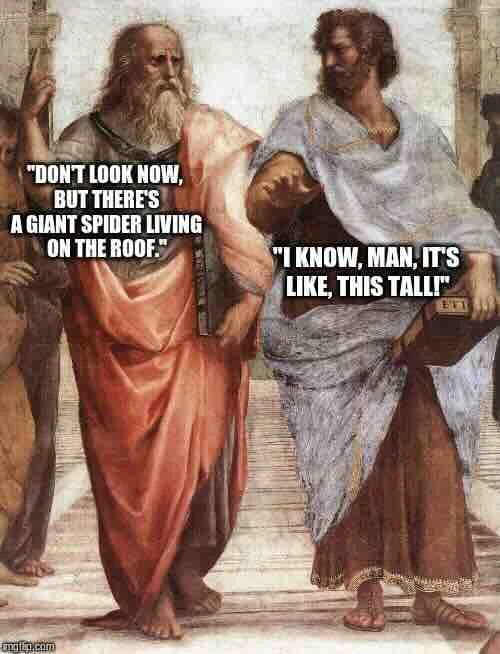
In an era defined by the "self-care" industrial complex and a relentless pursuit of fleeting dopamine hits, the fundamental question of human existence remains as elusive as ever: What does it mean to live a good life? While modern discourse often pivots toward the "soothing" of the self, a growing movement of philosophers and psychologists is looking backward—specifically 2,300 years—to the foundational ethics of Aristotle.
The transition from viewing happiness as a passive mood to an active "flourishing" represents a seismic shift in personal development. Aristotle, a man who believed the brain was a radiator for the blood but simultaneously mapped the complexities of the human soul with uncanny precision, argued that a good life is not something one finds, but something one builds through the rigorous application of habit, virtue, and social connection.
Main Facts: The Aristotelian Framework for Modernity
At the heart of the Aristotelian "Good Life" is the concept of Eudaimonia. Often mistranslated as "happiness," it more accurately describes "flourishing" or "living up to one’s full potential." Unlike the modern conception of happiness—which is frequently equated with Hedonia (pleasure)—Eudaimonia is an activity, not a state of mind.
Aristotle’s philosophy rests on five pillars that challenge contemporary assumptions:
- Character as Habit: Virtue is not an innate trait but a practiced behavior. We are what we repeatedly do.
- The Integration of Desire: True excellence is reached when our desires align with our reason, eliminating the need for exhausting willpower.
- Happiness as Activity: Living well is the exercise of human capacities toward worthwhile ends, regardless of the immediate emotional "vibe."
- Strategic Realism: Understanding manipulation and rhetoric is a moral necessity for the virtuous to survive in an imperfect world.
- The Social Imperative: Human flourishing is impossible in isolation; deep, long-term relationships are the primary engine of well-being.
Chronology: From the Lyceum to Modern Psychology
The Classical Foundation (384–322 BCE)
Born in Stagira, Aristotle spent two decades at Plato’s Academy before founding his own school, the Lyceum. His work, specifically the Nicomachean Ethics, was written during a period of intense political experimentation in Greece. While his contemporaries focused on the ideal state, Aristotle focused on the ideal person within that state. He posited that the "Golden Mean"—the desirable middle between two extremes (deficiency and excess)—was the key to virtue. Courage, for instance, was the mean between cowardice and recklessness.
The Enlightenment and the Rise of Utilitarianism
For centuries, Aristotelian ethics dominated Western thought. However, during the 18th and 19th centuries, philosophy shifted toward Utilitarianism (the greatest good for the greatest number) and Kantian ethics (duty-based morality). These frameworks often separated the "good life" from the "pleasant life," creating a dichotomy that Aristotle had originally sought to bridge.
The 20th Century "Virtue Ethics" Revival
In the mid-20th century, philosophers like G.E.M. Anscombe and Alasdair MacIntyre argued that modern moral philosophy had become bankrupt. They urged a return to Aristotle’s "Virtue Ethics," focusing on the character of the individual rather than abstract rules. This coincided with the birth of Positive Psychology in the late 1990s, led by Martin Seligman, which scientifically validated Aristotle’s distinction between pleasure and flourishing.
Supporting Data: Validating Ancient Wisdom
Modern empirical research has provided a robust scaffolding for Aristotle’s ancient claims.
The Science of Habit and Identity
Aristotle’s claim that "we become just by doing just acts" is now mirrored in the study of neuroplasticity. Research into habit formation suggests that the "self" is a malleable construct. According to James Clear and other modern habit theorists, every action you take is a "vote" for the type of person you wish to become. This aligns with Aristotle’s rejection of the "cinematic fireball" of instant transformation in favor of the slow, grinding accumulation of character.
The Willpower Paradox
Aristotle argued that the truly virtuous person does not struggle with temptation but eventually loses the desire for vice. A 2011 study published in the Journal of Personality and Social Psychology supports this, finding that people with high self-control do not actually use more willpower. Instead, they have built better habits and avoid tempting situations altogether. They "demote the donut," as it were, making the virtuous choice the path of least resistance.
The Harvard Study of Adult Development
Perhaps the most significant data point supporting Aristotle’s "political animal" theory is the Harvard Study of Adult Development. Spanning over 85 years, the study has tracked the lives of 724 men (and later their families). The primary finding, according to current director Robert Waldinger, is that "good relationships keep us happier and healthier. Period." This validates Aristotle’s "bushel of salt" metaphor—the idea that deep connection requires the slow, shared consumption of time and experience.
Official Responses: Philosophical and Scientific Perspectives
The contemporary "official" response to Aristotelian thought is a blend of reverence and refinement.
The Psychological Community:
Mainstream psychology has largely adopted the "Eudaimonic" model. Clinical psychologists often point to the "Paradox of Happiness"—the finding that the direct pursuit of happiness often leads to a decrease in well-being. By focusing on "exercising capacities" (Aristotle’s energeia), patients often find that happiness arrives as a byproduct rather than a goal.
The Ethical Discourse:
Modern ethicists acknowledge Aristotle’s pragmatism regarding rhetoric and manipulation. While some critics argue that studying "manipulation" is a slippery slope to Machiavellianism, the prevailing Aristotelian view is that the "good" must be as persuasive as the "bad." As noted in the original text, "bringing a fact-check to a feeling-fight" is a recipe for the failure of truth. Ethics, in the Aristotelian sense, is not just about being right; it is about being effective in a world of "determined idiots."
The Educational Sector:
There is a burgeoning movement in "Character Education" that seeks to implement Aristotelian principles in schools. Rather than teaching ethics as a set of rules to be memorized, these programs treat character as a "muscle" to be developed through community service, debate, and habituation.
Implications: The Path Forward in a Hyper-Digital Age
The resurgence of Aristotelian thought carries profound implications for how we structure our lives in the 21st century.
The End of "Self-Care" as Numbing
If we accept that happiness is an activity, then the modern definition of self-care—often involving withdrawal, consumption, and "numbing out"—must be re-evaluated. True self-care, in an Aristotelian framework, would involve the difficult work of developing a skill, repairing a relationship, or engaging in civic life. It is the "pants-on" approach to wellness.
The Rejection of Passive Identity
In a culture that often views identity as an immutable, internal "truth" to be discovered, Aristotle offers a more empowering, albeit more demanding, alternative: identity is a performance. By decoupling "who I am" from "how I feel," individuals can break free from the paralysis of "being bad at things." You are not "bad at hard conversations"; you are simply out of practice.
The Necessity of "Salt-Eating" Relationships
As social media replaces deep community with "thin" connections, the implication of the "bushel of salt" is clear. We are experiencing a loneliness epidemic not because we lack "contacts," but because we lack the shared, repeated, and often inconvenient experiences that Aristotle deemed necessary for true friendship. The good life requires us to "answer the text" and "go to the dinner," even when it is inconvenient.
Conclusion: The "Insight Gap"
The primary obstacle to the Aristotelian life is what psychologists call the "knowledge-action gap." Reading about virtue provides a "warm zzzt of insight," but as Aristotle warned, understanding is not the same as being.
The architecture of a good life is built in the mundane moments of the "next action." It is found in the decision to text a grieving friend, to start the project that triggers fear, or to admit a mistake before being caught. Aristotle’s enduring legacy is the realization that we are not the victims of our personalities, but the authors of our habits. The "Secret Pamphlet" to life does not exist; there is only the "garage" of daily effort, where character is built one grocery bag at a time.
The good life is not a mood to be captured. It is a job to be done. Roll up your sleeves.