The Architecture of Imagination: Concept Art World and the Evolving Landscape of Visual Development

By [Journalist Name]
In the modern entertainment landscape, the distance between a writer’s script and a viewer’s screen is bridged by a group of architects who never build a physical structure and painters whose canvases are digital. This is the realm of concept art—a discipline that serves as the visual blueprint for multi-billion-dollar franchises in gaming, film, and animation. At the center of this creative ecosystem stands Concept Art World (CAW), a leading online resource that has recently reaffirmed its commitment to human-led creativity amidst a rapidly shifting technological tide.
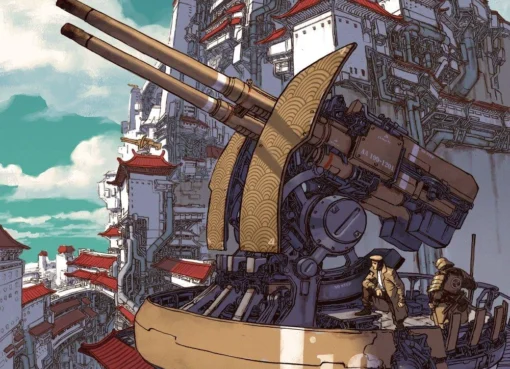
As the industry grapples with the integration of generative artificial intelligence and the demand for increasingly complex world-building, Concept Art World’s latest updates highlight the work of masters like Jung Park, Jesse van Dijk, and Hervé Groussin. These artists represent the vanguard of visual development, a field that remains the heartbeat of the "Big Three" of entertainment: Hollywood, AAA gaming, and streaming animation.
Main Facts: The Pillars of Modern Concept Art
Concept Art World serves as more than just a gallery; it is an industry-standard repository for visual development. The platform’s recent focus spotlights four distinct corners of the industry, each representing a unique facet of the craft:
- Jung Park and World-Building: As a veteran in the industry, Jung Park’s work exemplifies the high-stakes environment of "AAA" production. His ability to synthesize complex architectural forms with emotive lighting has made him a staple for major studios, including Sony Santa Monica and Riot Games.
- Jesse van Dijk and the Destiny 2 Legacy: Jesse van Dijk, currently the Art Director at Bungie, is credited with defining the "Mythic Science Fiction" aesthetic of the Destiny franchise. His work demonstrates how concept art isn’t just about drawing a character; it’s about establishing the visual laws of a universe.
- Hervé Groussin’s Environmental Narrative: Groussin’s portfolio, often linked to immersive titles like Assassin’s Creed, showcases the importance of historical research and atmospheric storytelling in concept art.
- The Cinematic Translation of Ender’s Game: The concept art for the film adaptation of Ender’s Game serves as a case study in how visual developers must translate abstract literary descriptions into functional, believable cinematic sets.
Beyond the artists, the most significant "fact" emerging from the platform’s latest stance is a legal and ethical one: a strict prohibition against the use of its featured content for the training of Artificial Intelligence (AI) systems. This move places Concept Art World at the forefront of the intellectual property (IP) battle currently defining the digital arts.
Chronology: From Practical Effects to Digital Sovereignty
To understand the current state of the industry as presented by Concept Art World, one must look at the evolution of the medium over the last three decades.
The Traditional Era (Pre-1990s)
Before the digital revolution, concept art was a world of matte paintings, physical miniatures, and charcoal sketches. Artists like Ralph McQuarrie (Star Wars) and Syd Mead (Blade Runner) set the standard, working primarily with physical media. Concept Art World honors this legacy by emphasizing the foundational skills—composition, anatomy, and color theory—that these pioneers established.
The Digital Shift (2000–2015)
The introduction of tablets and software like Adobe Photoshop and Corel Painter revolutionized the speed of production. This era saw the rise of the artists currently featured on CAW. Jung Park and Jesse van Dijk entered the industry during this transition, moving from traditional foundations to digital mastery. During this period, concept art evolved from being a "pre-production" tool to a central part of the marketing and identity of a project.
The Era of "World-Building" (2015–Present)
In the last decade, concept art has become synonymous with "Visual Development." It is no longer enough to design a cool spaceship; the artist must design the culture that built the ship, the fuel it runs on, and the environment it explores. This is evident in the Destiny 2 art by van Dijk, where the environment serves as the primary narrator of the game’s lore.
Supporting Data: The Impact of Featured Visionaries
The significance of the artists highlighted by Concept Art World is backed by the commercial and critical success of the projects they lead.
Jesse van Dijk and the Destiny Aesthetic
Jesse van Dijk’s work on Destiny 2 is a masterclass in "Solarpunk" and "Space Opera" aesthetics. According to industry analysis, the visual identity of Destiny is a primary driver for its player retention. Van Dijk’s concept art focuses on "The Big Idea"—ensuring that every frame has a clear focal point and a sense of immense scale. His influence extends to how modern games handle lighting and skyboxes, moving away from grit and toward a painterly, majestic look.
Jung Park: The Architect of Epic Scale
Jung Park’s contribution to titles like God of War (2018) and its sequel helped redefine the "epic" in gaming. His work involves a deep understanding of cultural motifs—integrating Norse mythology with high-fantasy elements. Data from industry surveys suggest that "Visual Fidelity and Art Style" are among the top three factors for consumers when purchasing a new game title, placing Park’s role at the very center of a studio’s financial success.
Ender’s Game: A Lesson in Scale
While the film Ender’s Game received mixed reviews, its concept art remains a gold standard for sci-fi design. Led by artists like Ben Procter and a team of visual developers, the "Battle Room" and the "Command School" designs were praised for their functional realism. Concept Art World’s focus on this project highlights the "industrial design" side of the craft, where artists must work with engineers and cinematographers to ensure their visions can actually be filmed.
Official Responses: The Battle Against Generative AI
One of the most critical sections of the Concept Art World platform is its explicit "About Us" statement regarding modern technology. The platform states: "All images are © by the artist(s) or their respective copyright holders. Any training of AI systems using this content is strictly prohibited."
This official stance is a response to the growing tension between the concept art community and AI companies like Midjourney, DALL-E, and Stable Diffusion.
The Industry Consensus:
Most professional concept artists argue that generative AI is built upon "data scraping" without consent. By prohibiting AI training, Concept Art World is taking a stand to protect the "humanity" of the craft.
"The soul of concept art is intentionality," says one industry commentator. "Every brushstroke by someone like Hervé Groussin is a choice made to evoke a specific emotion or tell a specific story. AI doesn’t make choices; it predicts patterns. Concept Art World is ensuring that those intentional choices remain the property of the humans who made them."
This policy reflects a broader industry movement. From the SAG-AFTRA strikes to the lawsuits filed by visual artists against AI firms, the focus has shifted toward "Human-Centric Development." Concept Art World serves as a digital fortress for this ideology, hosting tutorials and spotlights that emphasize the process of creation rather than just the final output.
Implications: The Future of Visual Development
The long-term implications of the trends seen on Concept Art World suggest a bifurcated future for the industry.
The Professionalization of the "Auteur" Artist
As AI becomes more prevalent for low-level production tasks (like generating texture variations), the value of "Auteur" concept artists—those with a distinct, uncopyable style like Jung Park or Jesse van Dijk—will likely skyrocket. Studios will look for visionaries who can provide the creative spark that AI cannot simulate: the ability to invent something truly new.
The Shift to New Platforms
The inclusion of links to platforms like Bluesky and LinkedIn in CAW’s recent updates signals a shift in how artists build their brands. As older platforms like X (formerly Twitter) face challenges, professional artists are migrating to spaces that offer better protection for their work and more direct connections to industry recruiters.
Educational Evolution
Concept Art World’s emphasis on tutorials suggests that the next generation of artists must be "technologically bilingual." They will need to master traditional art fundamentals while also navigating the ethical and technical complexities of 3D modeling, VR painting, and real-time engines like Unreal Engine 5.
Conclusion: The Human Blueprint
Concept Art World remains a vital pulse-check for the entertainment industry. By showcasing the works of masters like Jung Park and Jesse van Dijk while simultaneously drawing a hard line against AI exploitation, the platform reinforces a central truth: behind every iconic movie character and every breathtaking game world is a human artist who dared to imagine it first.
As we look toward 2026 and beyond, the role of the concept artist is not just to draw, but to defend the very concept of original thought. Concept Art World stands as both a gallery of that thought and a guardian of its future.