The Architecture of Self-Sabotage: Why Philosophy and Psychoanalysis Suggest We Secretly Enjoy Our Failures
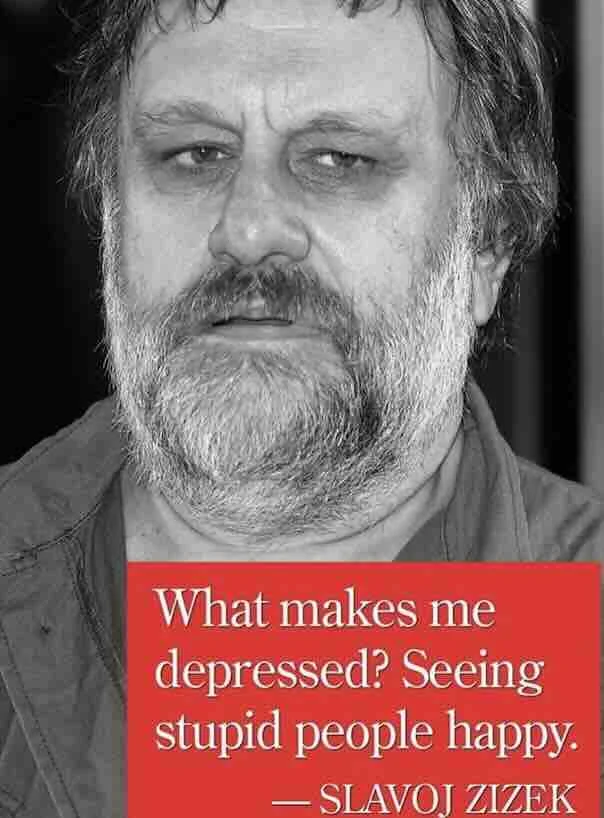
LJUBLJANA, SLOVENIA — The modern self-help industry is built upon a foundational premise: that human beings are rational, well-meaning agents who occasionally lose their way on the path to self-actualization. However, a growing body of philosophical inquiry, led by the provocations of Slovenian philosopher and cultural critic Slavoj Žižek, suggests a more unsettling reality. According to this school of thought, self-sabotage is not a failure of the will, but a highly efficient, unconscious strategy to maintain a hidden form of satisfaction.
While traditional productivity experts advocate for "positive habits" and "finding one’s true self," Žižekian analysis argues that these concepts often mask the "madness" inherent in modern life. By examining the mechanisms of jouissance, pseudoactivity, and interpassivity, we find that the reason we cannot "fix" our lives is often that some part of us is deeply invested in staying stuck.
Main Facts: The Paradox of Intentional Failure
Self-sabotage is frequently framed as a glitch in the human software—a momentary lapse in judgment or a lack of discipline. Yet, the consistency with which individuals repeat self-destructive patterns suggests a darker intentionality. Slavoj Žižek, often referred to as the "most dangerous philosopher in the West," posits that humans are not unified subjects. Instead, we are fragmented, frequently working against our stated goals to satisfy unconscious drives.
The core of the issue lies in the distinction between "desire" and "drive." While we may desire a promotion, a healthy relationship, or a fit body, our underlying drive may be tethered to the "ugly thrill" of the struggle itself. This explains why individuals often find themselves at the finish line of a goal only to retreat into old habits. The "sabotage" is, in fact, a successful achievement of a secret, secondary goal: the preservation of a familiar, albeit painful, status quo.
Chronology: From Lacanian Roots to Modern Performance Culture
The intellectual lineage of these ideas traces back to the mid-20th-century psychoanalysis of Jacques Lacan, whom Žižek has spent decades interpreting for a modern audience.
- The Era of Prohibition (Pre-1960s): Historically, the "Superego"—the internal moral authority—was seen as a prohibitive force. It told individuals "No." Self-sabotage in this era was often a rebellion against strict social and moral codes.
- The Shift to the "Superego of Enjoyment" (Post-1960s): As Western society moved toward consumer capitalism, the mandate shifted. The modern Superego does not prohibit; it commands. It says, "Enjoy! Be happy! Be authentic!" This created a new form of psychological tension where failure to be happy became the ultimate transgression.
- The Rise of the Performance Society (2000s–Present): With the advent of social media and the "hustle culture," the pressure to document a perfect, "actualized" life has intensified. This has led to the proliferation of "pseudoactivity"—the act of being perpetually busy to avoid meaningful action—and "interpassivity," where we outsource our experiences to digital proxies.
In this chronological progression, self-sabotage has evolved from a simple act of rebellion into a complex defense mechanism against the exhausting demand to be "our best selves."
Supporting Data: The Five Pillars of Žižekian Self-Sabotage
To understand why we remain stuck, we must analyze the specific psychological structures that Žižek identifies as the machinery of our misery.
1. The Concept of Jouissance
Lacanian jouissance is often translated as "excessive pleasure," but in a clinical sense, it refers to the "pain-pleasure" found in suffering. Žižek argues that we derive a "greasy emotional satisfaction" from our own martyrdom. Whether it is the "pleasure of outrage" found in doomscrolling or the "noble victimhood" of a toxic relationship, this emotional kickback makes the habit nearly impossible to break. We do not stop the behavior because, on an unconscious level, the "cost" of the misery is outweighed by the "surplus enjoyment" it provides.
2. Pseudoactivity and the Productivity Trap
In the corporate world, self-sabotage often takes the form of "pseudoactivity." This is the phenomenon of remaining in constant motion—clearing inboxes, attending unnecessary meetings, or reorganizing task lists—to avoid the one "scary" task that would actually create change. Žižek likens this to "changing everything so that nothing actually changes." By being "too busy," we create a perfect alibi for our lack of progress.
3. The Myth of the "True Self"
Modern psychology often encourages individuals to "find their true self." Žižek dismisses this as a "commercially successful fairy tale." He argues that there is no "pure essence" beneath our social roles. The paralysis of modern life often stems from treating every decision as an existential referendum: "Is this really me?" By waiting for inner certainty before taking action, individuals enter a state of permanent postponement. The "sabotage" here is the refusal to act until an imaginary, perfect version of the self is discovered.
4. The Superego of Enjoyment
In previous generations, a weekend was a period of rest. Today, it is a "performance review" for leisure. The command to "maximize your time" has turned relaxation into a chore. When we feel we have "failed" at our vacation because it wasn’t restorative enough, we are experiencing the "Superego of Enjoyment." We sabotage our rest by grading it, ensuring that we never actually experience true tranquility.
5. False Hope and the Trap of Resilience
Perhaps the most controversial of Žižek’s points is his critique of hope and resilience. He argues that "false hope"—the belief that things will get better if we just stay positive—is often what keeps people trapped in intolerable situations. Similarly, "resilience" can be a form of self-sabotage; it trains the individual to withstand conditions that they should instead be trying to escape. By "adapting" to a "house on fire," we sabotage the radical action required to put the fire out.
Official Responses: The Conflict Between Philosophy and Clinical Psychology
The Žižekian view of self-sabotage stands in stark contrast to mainstream psychological practices.
The Cognitive Behavioral Therapy (CBT) Perspective:
Mainstream clinicians often argue that Žižek’s approach is overly pessimistic and lacks actionable "tools." CBT practitioners focus on "reframing" thoughts and "incremental habit change." From their perspective, identifying a "hidden thrill" in suffering might be intellectually stimulating but is often less effective for a patient than practical behavioral interventions.
The Humanistic Response:
Followers of Carl Rogers and Abraham Maslow argue that the "true self" is a vital North Star for mental health. They contend that dismissing authenticity as a myth ignores the genuine human need for congruence and meaning.
The Philosophical Defense:
Supporters of Žižek argue that "positive thinking" is merely an anesthetic that prevents people from addressing the systemic and structural causes of their unhappiness. They suggest that until a person admits they are "getting something" out of their misery, no amount of habit-tracking apps or "gratitude journaling" will lead to lasting change.
Implications: The "Embarrassing Business" of Living
The implications of this analysis suggest that the path away from self-sabotage requires a "brutal honesty" that most self-help books avoid. If we accept the Žižekian premise, several radical shifts in perspective become necessary:
- Abandoning the Quest for Essence: Rather than looking inward for a "true self," individuals must "experiment outward." We build ourselves through action and commitment, not through introspection.
- Accepting "Interpassivity": We must recognize when we are "outsourcing" our lives. Buying a book is not the same as reading it; subscribing to a fitness app is not the same as exercising. We must stop "collecting the signs of a life" and begin the "embarrassing business of actually living one."
- The Power of Hopelessness: In some cases, the first step toward change is not "feeling better" but accepting that a situation is genuinely bad. By stripping away the anesthesia of optimism, the individual is finally forced to act.
In conclusion, Slavoj Žižek’s insights suggest that we are our own most sophisticated jailers. We sabotage our success not because we are weak, but because we are terrified of the responsibility that comes with actually getting what we want. To stop self-sabotaging, we must first be willing to identify the "ugly thrill" we find in our failures. Only when we stop lying to ourselves about why we are stuck can we begin the difficult, unglamorous work of moving forward.
As the "rumpled philosopher" might suggest, the truth about our lives is rarely polite—but it is the only thing that can actually set us in motion.