
The Avian Detective and the Alternate Empire: An In-Depth Review of Bryan Talbot’s The Casebook of Stamford Hawksmoor
The landscape of contemporary graphic literature is often crowded with "funny animal" noir—stories that utilize anthropomorphic characters to soften the blow of grim, hardboiled detective tropes. From the atmospheric, watercolor depths of Juanjo Guarnido and Juan Díaz Canales’s Blacksad to the cynical, gritty streets of Inspector Canardo, the genre risks becoming a collection of visual ornaments rather than a vehicle for profound storytelling. However, Bryan Talbot’s Grandville series has long stood as a defiant exception. With the release of the prequel, The Casebook of Stamford Hawksmoor, Talbot returns to his steampunk-infused, alternate-history version of London, offering a narrative that is as much about the birth of a nation as it is about a series of murders.
Main Facts: The Return of the Grandville Universe
The Casebook of Stamford Hawksmoor marks a significant return for Bryan Talbot, a seminal figure in British comics known for his pioneering work on The Adventures of Luther Arkwright and Alice in Sunderland. After a hiatus of nearly eight years following the conclusion of the fifth Grandville volume, Talbot revisits his meticulously constructed world, but with a shift in perspective.
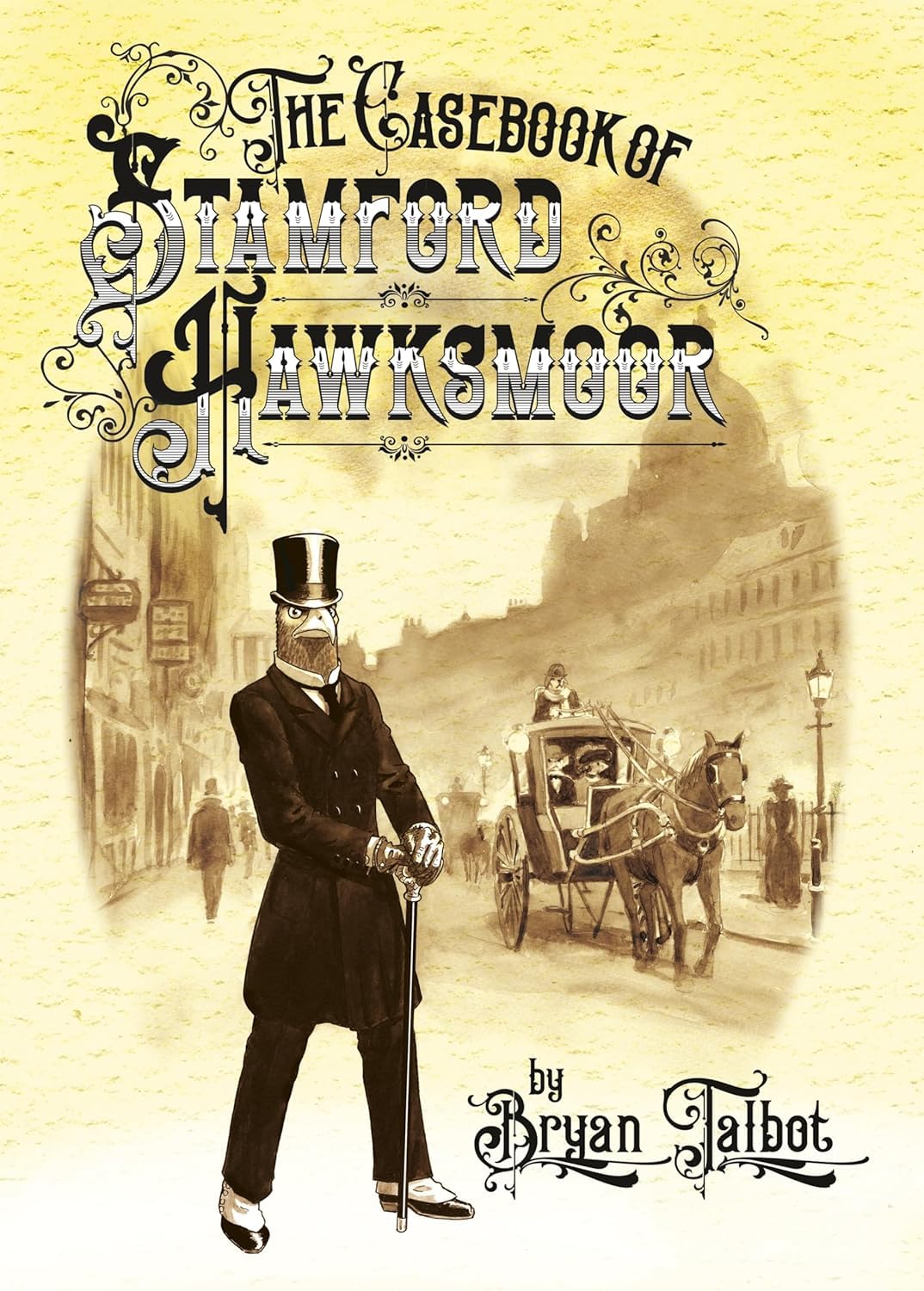
While the original series followed the badger-faced Detective Inspector Archibald "Archie" LeBrock—a powerhouse of muscle and deductive violence—The Casebook of Stamford Hawksmoor serves as a prequel. It centers on LeBrock’s mentor, Stamford Hawksmoor, a hawk-headed detective who is an explicit pastiche of Sherlock Holmes. The book explores the sociopolitical landscape of Britain during the final days of the French occupation, a period defined by terror attacks, public upheaval, and the messy transition from colonial outpost to independent social democracy.
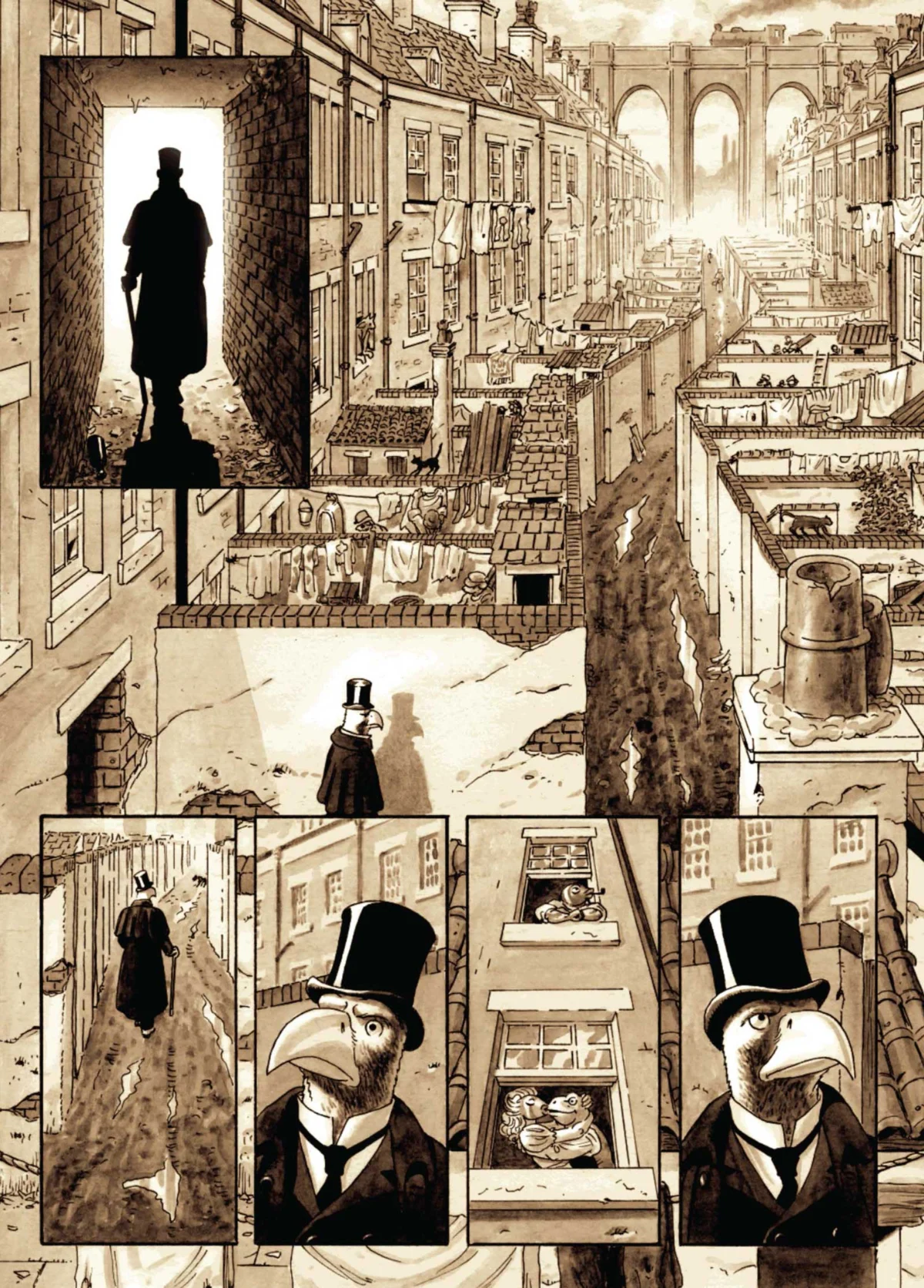
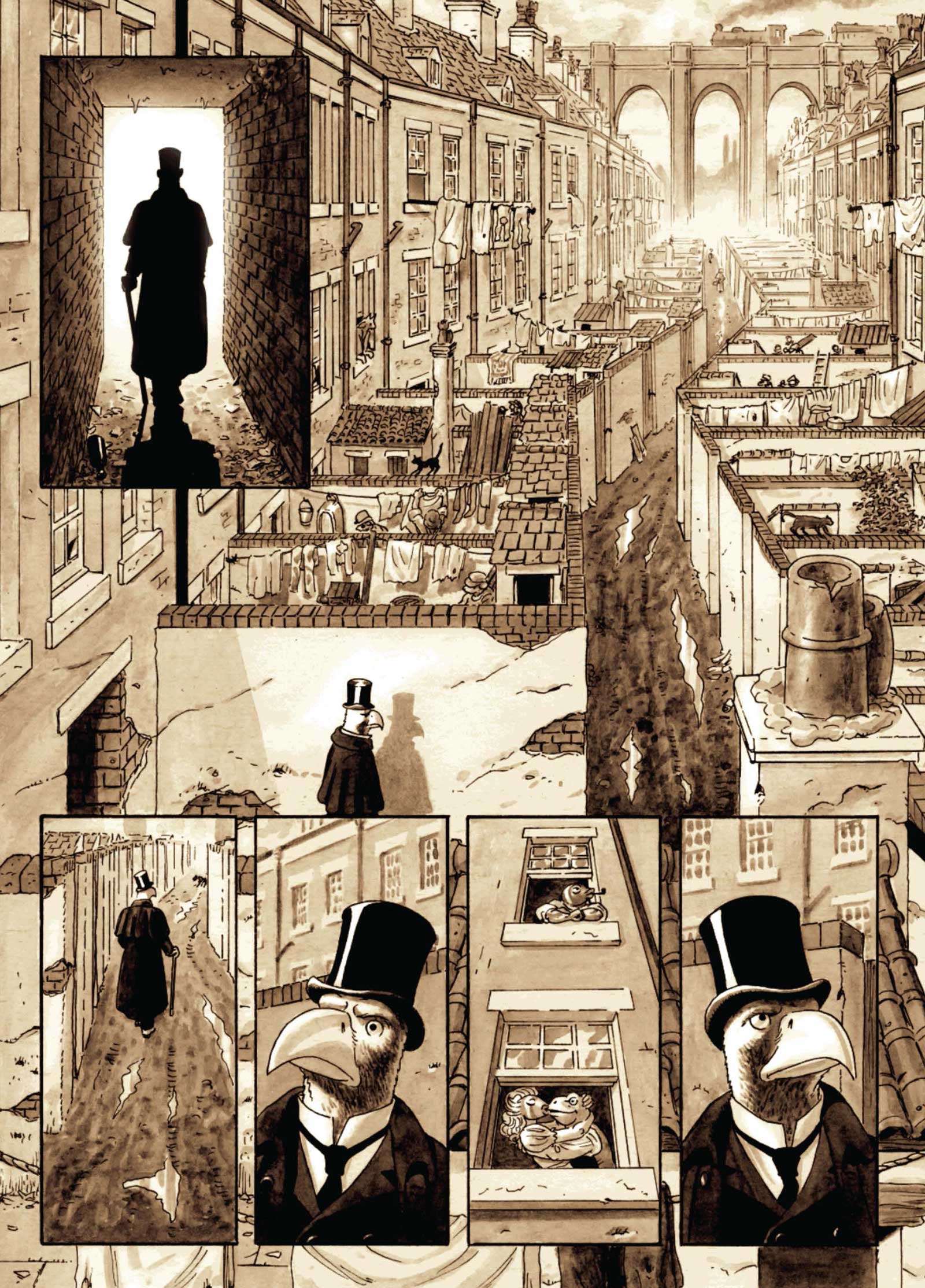
The volume is characterized by Talbot’s signature "solid" British art style, which rejects the rubbery cartoonishness of Disney-style anthropomorphism in favor of anatomical precision and historical texture. However, this installment takes a tonal shift in its visual presentation, opting for a monochromatic palette of brown hues—a "pea-souper" aesthetic—that distinguishes it from the vibrant, high-contrast colors of the previous entries.
Chronology: From Napoleonic Conquest to Post-Colonial Struggle
To understand the weight of Stamford Hawksmoor, one must look at the timeline Talbot has constructed across the Grandville saga. The series operates on a radical counter-factual history:
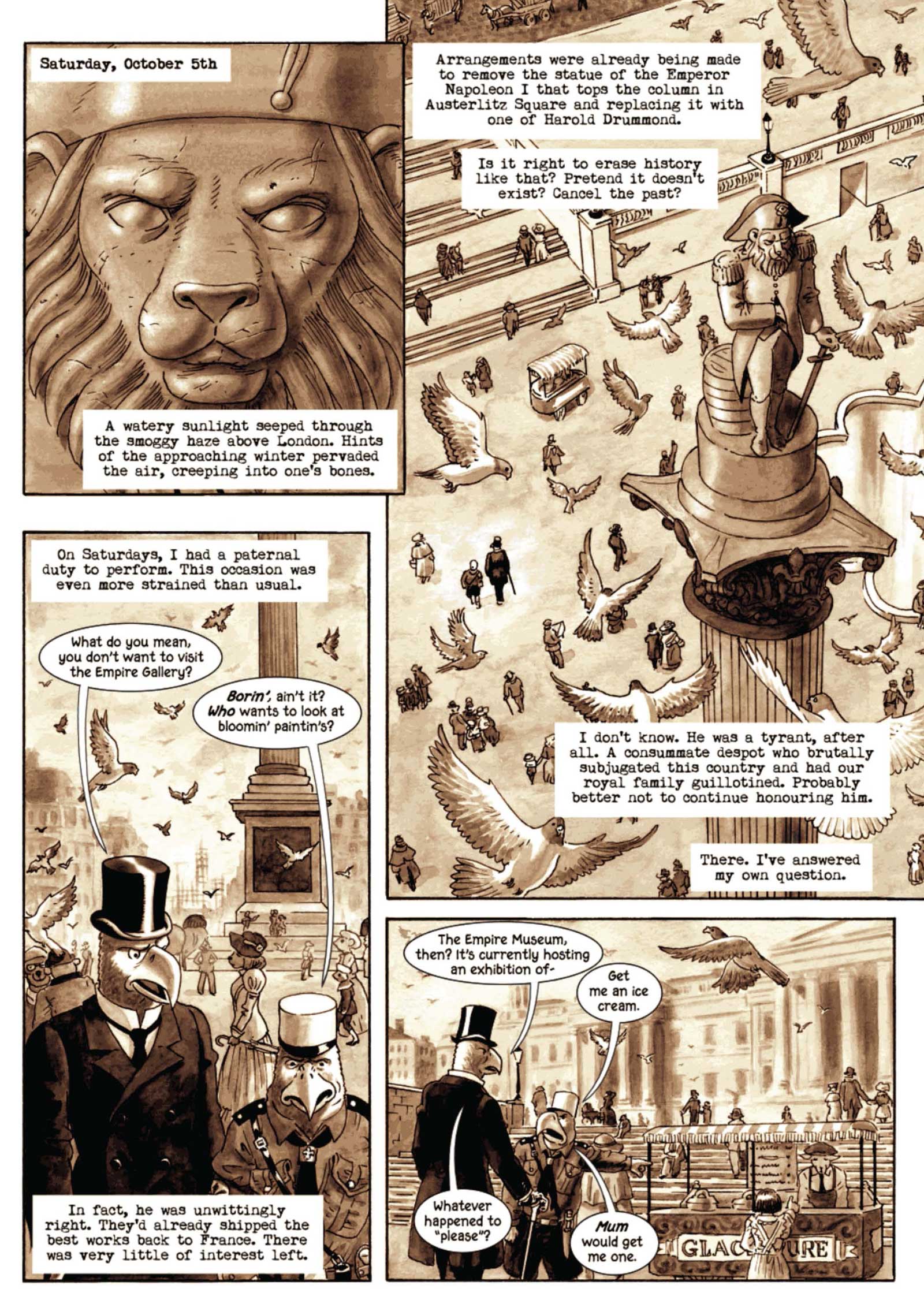
- The Napoleonic Victory: In this universe, Napoleon Bonaparte successfully invaded and conquered Britain, executing the royal family and turning the British Isles into a French province.
- Two Centuries of Occupation: For 200 years, London (rechristened "Grandville" in the broader sense of the French empire’s influence) was a secondary city to Paris. British culture was suppressed, and the population was relegated to a subservient status.
- The Rise of the Resistance: The original series begins after Britain has gained independence, but Stamford Hawksmoor rewinds the clock. It is set during the "withdrawal" phase—a chaotic era where the French have decided to leave after a prolonged campaign of urban guerrilla warfare.
- Publication History: The first Grandville graphic novel debuted in 2009. Over the next decade, Talbot produced four sequels, concluding the LeBrock arc. The eight-year gap between the fifth book and this prequel allowed the themes of the series to age alongside real-world shifts in British politics, specifically the populist sentiments surrounding Brexit.
Supporting Data: Artistic Intent and Social Hierarchy
Talbot’s work is famously research-heavy and visually dense. In The Casebook of Stamford Hawksmoor, several key elements provide the data points for his success and his occasional failures.
The "Doughface" Underclass
A unique element of Talbot’s world is the presence of "regular" humans, referred to as "doughfaces." In most anthropomorphic media, humans are either absent or are the only characters. In Grandville, humans are a hairless, inferior species. They are treated with a mixture of pity and contempt, even by progressive characters. This serves as a potent, if uncomfortable, allegory for class and racial hierarchies. Talbot uses the biological differences between species to ask questions that Blacksad or Animal Noir often ignore: How does a lobster-person feel about boiling a non-anthropomorphized lobster? How does a hawk perceive a world built for ground-dwellers?
Visual Tradition and the Brown Palette
Talbot’s art is rooted in the "solid" tradition of British comics, where every muscle, seam on a coat, and architectural gargoyle is rendered with exacting detail. Unlike Kevin O’Neill’s more comedic, grotesque work on Nemesis the Warlock, Talbot’s animals look "plausible."
However, Stamford Hawksmoor makes a controversial aesthetic choice. While the previous books used strong, primary colors to emphasize the contrast between the characters and their environments, this prequel is bathed in various shades of brown. While intended to evoke the smog-choked atmosphere of Victorian-era London, some critics find it reminiscent of the "muddy" period of 1990s Vertigo comics. This choice arguably obscures some of the fine linework that is Talbot’s trademark, though it succeeds in creating a somber, historical tone.
The Mystery Framework
The book follows a classic detective structure: multiple murders, conspiratorial tones, and a plethora of red herrings. Hawksmoor, despite his brilliance, is portrayed as socially and politically tone-deaf. He is a man of logic in a world of irrational revolutionary fervor. This character flaw provides the narrative friction, though the mystery itself is often cited as the weakest element of the book—a mere scaffolding for the more interesting political world-building.
Official Responses and Critical Context
The reception of The Casebook of Stamford Hawksmoor highlights Bryan Talbot’s standing as an "elder statesman" of the medium. Critics have noted that even in his seventies, Talbot displays a visual inventiveness that outshines artists half his age.
The Comparison to Alan Moore
Reviewers frequently compare Talbot’s work to Alan Moore’s From Hell and The League of Extraordinary Gentlemen. Like Moore, Talbot crams every page with literary and historical allusions. However, where Moore uses the "mystery" to "solve the society" (as seen in his Jack the Ripper opus), Talbot is often seen as retreating into the comfort of genre. The presence of a Ripper-esque killer in Hawksmoor feels to some like an anti-climax—a familiar trope that doesn’t quite reach the audacious heights of Talbot’s science-fiction world-building.
The Author’s Perspective
Talbot has historically viewed anthropomorphism not as a visual gimmick but as a tool for satire. Raised in the trenches of science fiction comics, he sees the animal-people as a way to alienate the reader just enough to make them look at human history with fresh eyes. His Britain is a "backwater province" struggling for identity, a theme he has explored in various forms since the 1970s.
Implications: The Future of the Grandville Saga
The release of The Casebook of Stamford Hawksmoor suggests that the Grandville universe still has stories to tell, but it also signals a crossroad for the series.
The Limits of Pastiche
The primary implication of this latest volume is the tension between original science fiction and literary pastiche. Hawksmoor is a compelling protagonist, but he is tethered to the Sherlock Holmes archetype. For the series to move forward and regain the "freshness" of the early volumes, Talbot may need to break away from the established detective tropes. As long as the narrative is forced to "color within the lines" of a traditional whodunit, the vast, terrifying, and fascinating world of the French-occupied British Isles remains somewhat sidelined.
A Reflection of Modern Britain
The shift from the 2009 debut to the 2024 release of Hawksmoor cannot be ignored. The early books were written in a pre-Brexit era where British "independence" from the continent was a counter-factual fantasy. Today, the themes of isolationism, the struggle to define national identity after a period of union (or occupation), and the messiness of "taking back control" resonate with a grimace rather than a grin. Talbot’s work serves as an accidental mirror to the current British zeitgeist, portraying nation-building as a "messy affair" where former terrorists become politicians and the shadow of a larger world power always looms.
Conclusion: A Flight with Clipped Wings?
The Casebook of Stamford Hawksmoor is a masterclass in visual storytelling and world construction. It confirms Bryan Talbot’s status as a visionary who refuses to take the easy path of "human-looking" animals. Yet, the book also serves as a reminder of the gravity of genre. While the world of Grandville is ready to soar into deep sociological and historical exploration, its protagonist—the hawk—is currently held down by the weight of the detective’s magnifying glass. For fans of the series, it is a pleasurable, intellectual, and visually stunning return, even if it leaves them yearning for Talbot to finally let his creation fly into uncharted territory.


Leave a Comment