The Blanche Confirmation and the $9 Billion Shadow: A Crisis of Ethics and Governance
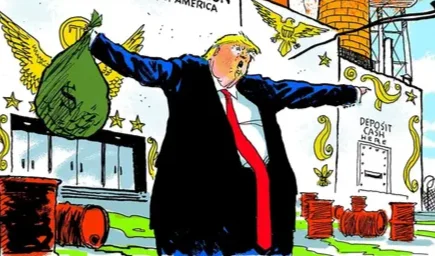
WASHINGTON D.C. — In a series of rapidly unfolding developments that have sent shockwaves through the capital, the path for Todd Blanche’s confirmation as Attorney General appears to have cleared following a controversial pivot by key Republican senators. However, the breakthrough is being overshadowed by mounting allegations of a massive insider trading scheme linked to the administration’s Iran policy and a fundamental shift in the American economic landscape characterized by unprecedented state intervention in private industry.
As the Senate prepares for a full floor vote, the administration finds itself embroiled in internal dissent, with high-profile figures like Jeanine Pirro and Homeland Security Secretary Markwayne Mullin facing executive ire, all while the mysterious absence of Senate veteran Mitch McConnell creates a vacuum of leadership in the upper chamber.
Main Facts: The Path to Confirmation and the $9 Billion Allegation
The primary hurdle to Todd Blanche’s ascension to the head of the Department of Justice was removed this week when Senators Thom Tillis (R-NC) and John Cornyn (R-TX) signaled their intent to support his confirmation. The senators had previously expressed deep reservations regarding Blanche’s involvement in two specific proposals: the establishment of the "1776b Slush Fund"—derisively labeled "Payoffs for Punks" by critics—intended to provide financial restitution to January 6 rioters, and a provision that would grant members of the Trump family permanent immunity from federal tax audits.
Blanche’s "concessions" involved a formal meeting with victims of Jeffrey Epstein and a written certification purportedly ending the slush fund and the audit immunity. However, legal experts and whistleblowers have been quick to label these moves as "meaningless lip service."
Simultaneously, a bombshell report from the Hormuz Report, corroborated by investigative analysts at MeidasPlus, has alleged a $9 billion insider trading operation. The scheme reportedly involves high-ranking administration insiders, including Jared Kushner and Steve Witkoff, who are accused of leveraging non-public information regarding U.S.-Iran relations to manipulate global oil markets. The report suggests a pattern where major trades were executed moments before presidential announcements that sent oil prices into a tailspin or a surge.
Chronology of the Crisis
The Spring of Scrutiny (March – May 2026)
The seeds of the current insider trading scandal were sown in the spring of 2026. In April, Democratic lawmakers and members of the Senate Banking Committee, led by Senators Elizabeth Warren and Sheldon Whitehouse, called for a formal probe into "suspicious oil trades" surrounding the administration’s Iran announcements. By May, the Commodity Futures Trading Commission (CFTC) and the Department of Justice (DOJ) confirmed they were looking into oil prediction markets, while the White House issued a perfunctory memo cautioning staff against the use of non-public information.
The Summer Standoff (June – July 2026)
As the Blanche nomination stalled in committee, the administration pivoted toward a more aggressive economic policy. In July, reports surfaced that the Central Government had begun taking equity positions in major private corporations. By the end of the month, the government held stakes in 30 private industries, totaling an estimated $27 billion. This "State Equity Program" sparked a firestorm of debate over the transition from a market economy to a state-directed system.
The August Breakthrough (August 1–4, 2026)
- August 1: Todd Blanche holds a closed-door meeting with Epstein victims.
- August 2: Blanche issues a memo to Senators Tillis and Cornyn "terminating" the 1776b fund and clarifying that tax audit immunity would not apply to future earnings.
- August 3: Senators Tillis and Cornyn announce their support for Blanche, clearing the way for a committee vote.
- August 4: Reports emerge of a confrontation at the White House between the President and Jeanine Pirro over the "Reflecting Pool Vandalism" narrative.
Supporting Data: A State in Flux
The "Bogus" Memo and Tax Immunity
Detailed analysis of the Blanche memo by legal journalists like Adam Kasfeld and former prosecutor Joyce Vance suggests the document lacks any binding legal authority. Specifically, regarding the tax immunity for the Trump family, Blanche did not renounce the proposal entirely. Instead, he clarified that it applies only to tax years completed by the time of his confirmation. This distinction is significant: it potentially shields the President and his immediate family from audits on an estimated $2 billion to $3 billion in "side-gig" income earned during the current term.
The $27 Billion Nationalization
The administration’s shift toward state-directed economics is backed by staggering figures. The Central Government’s $27 billion investment in private industry represents the largest peace-time expansion of government ownership in U.S. history. Critics argue this mirrors features of a command economy, while proponents claim it is necessary for "national economic security."
The Brooklyn Bridge Metric
Public skepticism has reached a fever pitch, with commentators using the "Brooklyn Bridge" metaphor to describe the current political climate. With 103,051 vehicles crossing the bridge daily, analysts suggest that the public is being "sold" a version of reality that is as structurally unsound as a fraudulent deed to the bridge itself. The metaphor highlights the gap between the administration’s stated goals (justice and security) and the perceived reality (insider trading and legal shielding).
Official Responses and Internal Dissent
The Senate Judiciary Committee
Senator Cornyn, a former state Attorney General and Texas Supreme Court Justice, has defended his reversal, stating that Blanche’s willingness to meet with victims and put his promises in writing satisfies the constitutional requirement of advice and consent. However, Carissa Byrne Hessick, a law professor at the University of North Carolina, countered this, stating: "I see nothing in Blanche’s letter that would prevent him from reviving the fund the moment he is confirmed. Cornyn, given his background, is almost certainly aware of this."
The White House and the "Reflecting Pool" Dispute
Internal friction reached a boiling point this week regarding the "Reflecting Pool Case." The administration has maintained that damage to the Lincoln Memorial Reflecting Pool was the result of a coordinated "vandalism" plot by political enemies. However, Jeanine Pirro, a long-time ally, broke ranks by suggesting the damage was actually caused by "poor workmanship" and peeling paint.
The President reportedly summoned Pirro to the White House on August 3. While she was not fired, the President publicly stated she "choked" under pressure. This clash follows a similar dispute with DHS Secretary Markwayne Mullin, who is reportedly on the "bad side" of the executive branch for a speech supporting legal pathways to citizenship—a stance that contradicts the administration’s current mass-deportation policy.
The Silent Minority Leader
Perhaps the most glaring absence in the current discourse is that of Senator Mitch McConnell. The "Little Man Who Isn’t There" has not been seen in public for several weeks, prompting Kentucky Governor Andy Beshear to demand a formal update on McConnell’s health or a resignation to fill the potential vacancy. The silence from McConnell’s office has been described by observers as "grave."
Implications: The Erosion of Institutions
The confluence of these events suggests a profound shift in the American "Rule of Law." If Todd Blanche is confirmed, the Department of Justice will be headed by an individual who has already signaled a willingness to facilitate selective immunity and questionable financial disbursements for political allies.
1. Legal and Ethical Precedents
The use of "meaningless memos" to bypass Senate opposition sets a dangerous precedent for future confirmations. If a nominee can satisfy "principled objections" with non-binding letters, the Senate’s role as a check on executive power is effectively neutralized. Furthermore, the partial tax immunity for the first family creates a "tier of citizenship" where the highest levels of government are exempt from the fiscal scrutiny applied to the general public.
2. Economic Destabilization
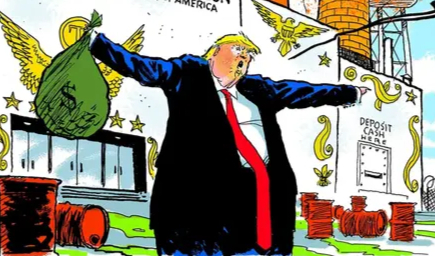
The allegations of $9 billion in insider trading by Kushner and Witkoff, if proven, would represent one of the largest financial scandals in history. It suggests that foreign policy—specifically regarding Iran and the Strait of Hormuz—is being leveraged as a tool for private wealth accumulation. Coupled with the $27 billion state-equity positions, the U.S. economy is moving toward a model of "crony state capitalism" that could deter foreign investment and destabilize global markets.
3. The Collapse of the Unified Front
The public spats with Pirro and Mullin indicate that the administration’s internal "orthodoxy" is beginning to fracture. When even the most loyal media surrogates and cabinet members find themselves at odds with the official narrative, the ability of the executive branch to maintain a coherent policy becomes compromised.
4. The Power Vacuum
The disappearance of Mitch McConnell leaves the Republican establishment without its most seasoned navigator. Without McConnell to bridge the gap between the populist wing of the party and the traditionalists, the Senate may descend into further tribalism, making the passage of any substantive legislation—beyond confirmations—nearly impossible.
As the Senate prepares for the final vote on Todd Blanche, the nation remains at a crossroads. The choice facing lawmakers is no longer just about a single cabinet position, but about whether they will validate a system where "meaningless lip service" and "insider trades" define the new standard of American governance.