The Resonance of Exile: Thabo Rametsi to Portray Jazz Legend Hugh Masekela in Bill Condon’s ‘The Road Home’
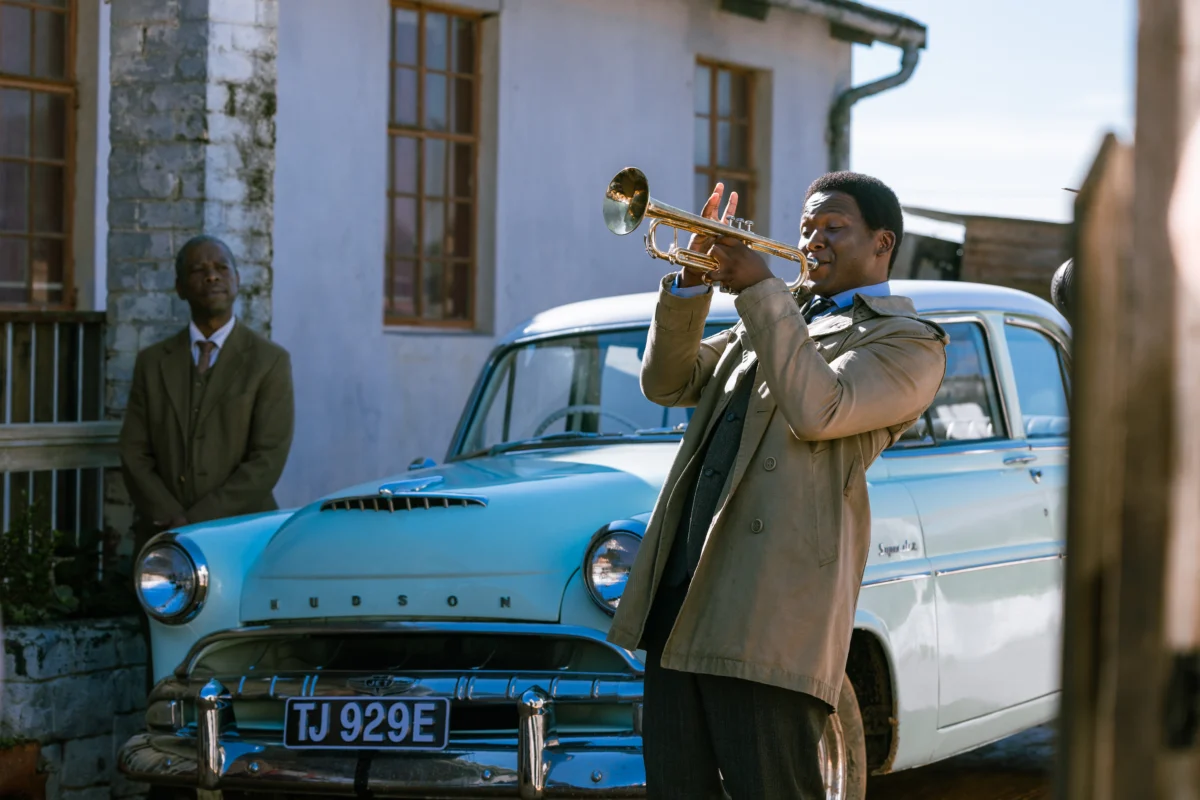
The landscape of South African cinema and international biographical drama is set to converge in a monumental new production titled The Road Home. As filming continues across the vibrant but historically scarred vistas of South Africa, the production has officially unveiled its lead: Thabo Rametsi. The acclaimed South African actor, writer, and director—best known for his searing performance in Silverton Siege—has been cast to embody the "Father of South African Jazz," Hugh Masekela.
Directed by Academy Award winner Bill Condon (Gods and Monsters, Dreamgirls), The Road Home promises to be more than a traditional biopic. It is a socio-political exploration of music as a tool for liberation, centered on a pivotal moment in the 1980s when the global struggle against Apartheid collided with the Western pop charts.
Main Facts: A Production of Global Scale
The announcement of Rametsi’s casting was accompanied by a striking first-look image released by the film’s financial backers and producers, including Canal+, Studiocanal, and Flora Film. The image captures Rametsi in a moment of profound musical intensity, clutching the trumpet that became a symbol of defiance for millions.
A Powerhouse Ensemble
The production has assembled a high-caliber international cast to represent the titans of the Anti-Apartheid movement and the global music scene:
- Thabo Rametsi as Hugh Masekela: The protagonist, navigating the complexities of exile and the moral weight of artistic collaboration.
- Cynthia Erivo as Miriam Makeba: The Grammy-winning "Mama Africa," Masekela’s lifelong collaborator and former wife, whose voice provided the soundtrack to the resistance.
- Guy Pearce as Archbishop Trevor Huddleston: The English Anglican bishop and anti-apartheid activist who served as a mentor to Masekela.
- Johnny Flynn as Paul Simon: The American singer-songwriter whose 1986 album Graceland became a flashpoint for international debate.
The Creative Vision
The film is directed by Bill Condon, a filmmaker renowned for his ability to weave intimate character studies into larger historical or theatrical tapestries. The screenplay is penned by Michael Bronner, whose previous credits include The Mauritanian and United 93, based on a story developed by Bronner and the legendary South African novelist and playwright Zakes Mda.
The production is a collaborative effort between international giants and local experts. Producers include Academy Award nominee Laura Bickford (Traffic), Greg Yolen (The Good Liar), and Anant Singh, the veteran South African producer behind Mandela: Long Walk to Freedom. South African co-producer Blue Ice, led by Tebogo Maila and Adam Friedlander, ensures the project maintains its authentic roots.
Chronology: From Sharpeville to ‘Graceland’
To understand the narrative weight of The Road Home, one must look at the historical timeline that shapes the film’s protagonist. The movie focuses on the period where Masekela’s personal history of exile meets the controversial production of Paul Simon’s Graceland.
1960: The Catalyst of Exile
The film’s emotional foundation is rooted in the 1960 Sharpeville Massacre, where South African police opened fire on a crowd of Black protesters, killing 69 people. In the wake of the subsequent state of emergency and the banning of liberation movements, a young Hugh Masekela fled his homeland. This began a 30-year odyssey through the United Kingdom and the United States. It was during this period that Masekela’s music transformed from township jazz to a global fusion of protest and melody.
1985–1986: The ‘Graceland’ Controversy
The core conflict of the film arises in the mid-1980s. Paul Simon, seeking a new creative direction, traveled to Johannesburg to record with South African musicians. While the resulting album, Graceland, was a global phenomenon that introduced the world to the "Township Jive" and the vocal group Ladysmith Black Mambazo, it ignited a firestorm of criticism.
Simon was accused of violating the United Nations’ Cultural Boycott, a policy designed to isolate the Apartheid regime. The film depicts Masekela at a crossroads: torn between his loyalty to his mentor, Archbishop Trevor Huddleston—who spearheaded the boycott—and his belief that the music of South Africa deserved a global stage, regardless of the political cost.
1987: The Global Tour
The narrative follows Masekela as he eventually chooses to join forces with Miriam Makeba and Paul Simon for the Graceland world tour. This "supergroup" became a vessel for South African voices, using the platform to demand the release of Nelson Mandela and the end of white minority rule.
Supporting Data: The Cultural and Political Stakes
The significance of The Road Home is underscored by the immense cultural footprint of its real-life subjects.
The Weight of the Boycott
The United Nations Cultural Boycott was a cornerstone of the anti-Apartheid struggle. It wasn’t merely a suggestion but a strict mandate that artists should not perform in or collaborate with South Africa. By working with Paul Simon, Masekela and Makeba were essentially challenging the established tactics of the movement they had championed for decades. The Road Home delves into this nuanced "gray area" of activism, where the desire for cultural visibility clashes with the necessity of political isolation.
Masekela’s Musical Legacy
Hugh Masekela was not just a musician; he was a diplomat of the spirit. His 1987 hit "Bring Him Back Home (Nelson Mandela)" became an unofficial anthem for the movement. By casting Rametsi—an actor known for his physical and emotional intensity—the production signals an intent to capture the raw, unyielding energy Masekela brought to the stage and the picket line.
The Significance of the Producers
The involvement of Anant Singh is particularly noteworthy. Singh has dedicated much of his career to chronicling the South African struggle through film (Sarafina!, Yesterday). His participation suggests that The Road Home will adhere to a high standard of historical accuracy and cultural sensitivity, ensuring the story is told through a South African lens despite its international backing.
Official Responses: Honoring the "Giants"
The production has been met with a sense of reverence from those involved. Thabo Rametsi, who also serves as an Executive Producer on the project, expressed the profound responsibility of portraying a figure of Masekela’s stature.
“When you tell the story of Giants, you must shout it from the highest mountain,” Rametsi stated. “These are our giants and this film is the highest mountain we could find. We hope our humble tribute honors them accordingly.”
Rametsi’s dual role as lead actor and EP highlights a growing trend in the industry where South African talent is taking ownership of their national narratives. This sentiment was echoed by the production team, who emphasized that the film is intended to be a "humble tribute" to a generation of artists who sacrificed their homes for their principles.
The backers, Canal+ and Studiocanal, have signaled that The Road Home is a flagship project for their slate, representing a commitment to high-end, politically resonant cinema that appeals to a global audience while maintaining local integrity.
Implications: Cinema as a Vessel for History
The production of The Road Home carries significant implications for the film industry and the preservation of South African history.
1. Reclaiming the Narrative
For decades, stories of the Anti-Apartheid movement were often told through the eyes of "white saviors" or focused solely on the political leadership. The Road Home shifts the focus to the cultural workers—the musicians and artists—who fought a parallel war in the hearts and minds of the global public. By focusing on the Graceland controversy, the film tackles a complex chapter of history that involves questions of cultural appropriation, artistic freedom, and political solidarity.
2. Boosting the South African Film Economy
Filming on location in South Africa provides a significant boost to the local industry. The collaboration between Blue Ice and international giants like Studiocanal demonstrates the technical maturity of the South African film sector, capable of hosting and co-producing world-class historical epics.
3. Educational and Cultural Impact
As the generation that lived through Apartheid ages, films like The Road Home serve as vital educational tools for younger generations. It contextualizes the music of Hugh Masekela and Miriam Makeba, ensuring that their contributions are understood not just as "world music" but as acts of profound political bravery.
4. The "Biopic" Evolution
Under Bill Condon’s direction, the film is expected to avoid the tropes of the "cradle-to-grave" biography. By focusing on a specific, high-stakes conflict—the Graceland boycott—the film creates a concentrated narrative that can explore the psychology of its characters in depth. This approach mirrors successful modern biopics that prioritize thematic resonance over chronological checklists.
Conclusion
The Road Home stands as a testament to the enduring power of Hugh Masekela’s legacy. With Thabo Rametsi at the helm and a creative team of international repute, the film is poised to be a definitive cinematic exploration of a time when music was the most dangerous and effective weapon against oppression. As the cameras continue to roll in the landscapes that Masekela was once forced to leave, the production brings his story full circle—back to the home he never stopped fighting for.