The Canon Reliability Paradox: Why Industry Giants Are Facing Scrutiny in the All-in-One Market
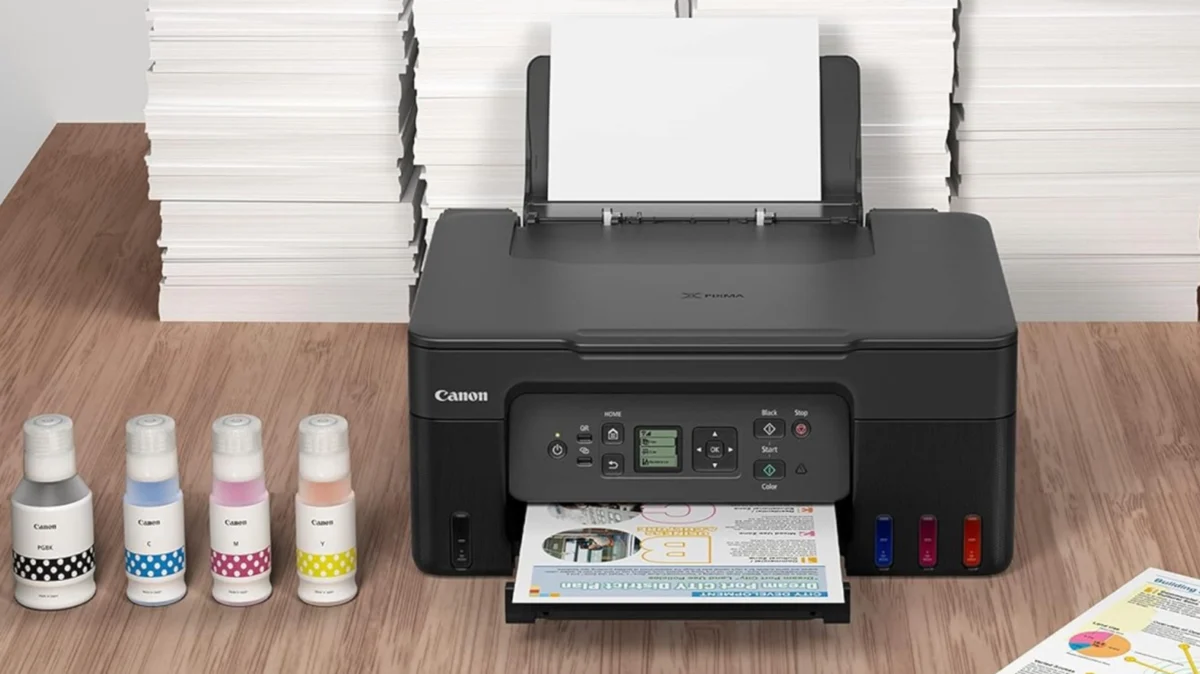
The home office revolution of the 2020s has cemented the all-in-one inkjet printer as a staple of the modern household. Among the "Big Four" of the printing world—HP, Epson, Brother, and Canon—the latter has long enjoyed a reputation for excellence, particularly among photographers and creative professionals. However, a recent wave of critical assessments from Consumer Reports (CR) and a surge of polarizing user feedback have cast a shadow over Canon’s standing. While the brand remains a titan in image reproduction, new data suggests that its hardware reliability and quality control may be lagging behind its competitors.
Main Facts: The Great Divide in Brand Perception
The central tension in the current printer market lies in the discrepancy between professional laboratory reviews and long-term consumer reliability data. Canon, a brand synonymous with high-end optics and imaging, is currently navigating a reputational crisis regarding its entry-level and mid-range all-in-one (AIO) inkjet models.
Consumer Reports, an organization renowned for its rigorous, independent testing and extensive owner satisfaction surveys, has recently flagged several Canon models as underperformers. Their data indicates that Canon’s cartridge and tank-based inkjet printers are currently among the least reliable in the industry. This is a significant blow to a brand that often leads the market in sheer print quality.
The core of the issue appears to be a trade-off between output quality and mechanical durability. While outlets like PCMag and Tom’s Guide often award Canon printers high marks for their vibrant color accuracy and skin tone reproduction, Consumer Reports focuses more heavily on the "ownership experience"—a metric that includes hardware longevity, software stability, and the frequency of mechanical failures. This divide has left many prospective buyers questioning whether a Canon printer is a wise investment or a ticking time bomb of "Error 502" messages.
Chronology: From Photo Excellence to Reliability Concerns
To understand Canon’s current predicament, one must look at the evolution of the inkjet market over the last decade.
The Rise of the Pixma (2010–2018)
During this era, Canon’s Pixma line became the gold standard for home photo printing. By utilizing a fine-nozzle printhead technology (FINE), Canon was able to produce droplets as small as one picoliter, resulting in grain-free photos that rivaled professional labs. Reliability was generally considered "standard" for the industry, as most consumers accepted that inkjets were somewhat disposable.
The Tank Revolution (2018–2022)
As consumers grew weary of expensive ink cartridges, Epson pioneered the "EcoTank" system. Canon responded with its "MegaTank" series (the G-series). These printers moved away from the high-margin cartridge model in favor of large, refillable reservoirs. While this solved the "ink cost" problem, it introduced new mechanical complexities. The MegaTank models required more robust internal plumbing to move ink from the tanks to the printheads, a shift that appears to have coincided with a spike in hardware complaints.
The Post-Pandemic Quality Shift (2023–Present)
The surge in demand for home office equipment during the pandemic placed immense pressure on global supply chains. Some analysts suggest that the "quality control issues" currently cited by Consumer Reports may be a byproduct of accelerated manufacturing cycles and the use of lower-cost components to maintain aggressive price points in a competitive market.
Supporting Data: Examining the Failure Points
The evidence against Canon’s current lineup is not merely anecdotal; it is supported by a combination of lab testing and thousands of consumer data points.
The MegaTank G3270 Case Study
The Canon MegaTank G3270 is a prime example of the brand’s current paradox. On Amazon, the device maintains a respectable 4.1 out of 5-star rating based on over 4,800 reviews. Users frequently praise the "insane" ink yields and the low cost per page. However, a deeper dive into the 1-star and 2-star reviews reveals a pattern of catastrophic failures.
- Early Mortality: One documented case involved a total hardware failure after only 236 pages—a fraction of the printer’s intended duty cycle.
- The "Startup Loop": Multiple users reported a recurring firmware glitch where the printer becomes stuck in a permanent start-up cycle, rendering the device a "brick" shortly after the warranty expires.
The Entry-Level Struggle: Pixma TS3722 and MG3620
Consumer Reports specifically flagged the Pixma TS3722 and the aging MG3620 for poor owner satisfaction. While these models are often priced under $100—and sometimes as low as $69 at retailers like Best Buy—the "true cost" of ownership is high.
- Mechanical Failure: Walmart shoppers and CR testers alike reported a disproportionate number of paper jams.
- Performance Metrics: These models were also criticized for abysmal print speeds, often failing to reach even half the pages-per-minute (PPM) advertised on the box when printing high-resolution documents.
The "Expert" Counter-Point
Contrastingly, PCMag and Tom’s Guide have given the G3270 and G3290 positive reviews. Their data focuses on:
- Color Accuracy: Canon remains the leader in reproducing natural skin tones.
- Ease of Setup: Their mobile apps (Canon PRINT) are generally rated higher for UI/UX than Epson’s older interfaces.
- Upfront Value: For a user who prints only occasionally but requires high-quality output, the initial low price point is a powerful draw.
Official Responses and Industry Context
While Canon has not issued a formal "rebuttal" to the Consumer Reports findings, the company’s corporate strategy and technical documentation provide some context for these issues.
The "Proper Maintenance" Defense
Canon’s technical support frequently emphasizes that inkjet printers—especially those with high-density printheads—require regular use. Inkjet ink is a suspension of pigment or dye in a liquid carrier; if left idle, the carrier evaporates, leaving behind a "sludge" that clogs the microscopic nozzles. Canon suggests that many "reliability issues" are actually maintenance failures, recommending that users print at least one or two color pages per week to keep the lines clear.
The Market Pressure for "Aggressive Pricing"
Industry analysts note that Canon is competing in a "race to the bottom" regarding price. With models like the Pixma TR4720 retailing for $69, the profit margins on hardware are razor-thin. To achieve these prices, manufacturers often use plastic gearing and lightweight chassis that may not withstand the rigors of a high-volume home office.
Quality Control Initiatives
In recent shareholder reports, Canon has highlighted its commitment to "Supply Chain Resilience." This is often corporate shorthand for stabilizing manufacturing after the disruptions of the early 2020s. The company maintains that its failure rates remain within "acceptable industry standard deviations," though they acknowledge that the shift to tank-based systems requires a more educated consumer base regarding maintenance.
Implications: The Future of Home Printing
The fallout from these reliability reports has broader implications for the consumer electronics market and how we perceive "value."
The Death of the "Disposable" Printer
For years, the industry operated on a "razor and blades" model: sell the printer at a loss and make money on the ink. As consumers move toward MegaTank models, they are paying more upfront (often $200–$400) for the hardware. When a $400 MegaTank printer fails after 18 months, the consumer backlash is significantly more severe than when a $50 cartridge printer fails. Canon’s current struggle suggests they may need to over-engineer their hardware to match the increased financial investment of the "tank" consumer.
The Reliability vs. Quality Trade-off
For the average consumer, the choice is now clear but difficult. If you are a photographer or a graphic designer who prioritizes the aesthetic quality of the final print, Canon remains the superior choice despite the reliability risks. However, for the "utility" user—students, small business owners, or families printing shipping labels and homework—brands like Brother (often cited by CR as the most reliable) may be the safer bet, even if their color reproduction is less "vibrant."
Maintenance as a Necessity
The data from this report underscores a vital lesson for all tech owners: maintenance is not optional. The "clogged printhead" is the leading cause of inkjet death. Regardless of the brand, users must adopt a "use it or lose it" mentality.
Conclusion
Canon finds itself at a crossroads. Its legacy of imaging excellence is being challenged by the practical realities of hardware durability in the "tank" era. While Consumer Reports’ findings are a sobering warning for the brand, they also serve as a guide for the savvy shopper. In 2026, the best printer isn’t necessarily the one that prints the prettiest picture—it’s the one that actually turns on when you need it. For Canon to regain its crown, it must bridge the gap between its world-class optics and the mechanical reliability that modern consumers demand.