The Canvas of the Code: Jacob Holster and the Rise of Painterly AI Aesthetics
Introduction: Beyond the Silicon Sheen
In the current epoch of digital transformation, generative artificial intelligence has become synonymous with a specific, often criticized aesthetic: the hyper-realistic, high-gloss "plasticity" of perfectly rendered faces and clinical, neon-soaked landscapes. As tools like Midjourney and DALL-E 3 have proliferated, the digital art world has found itself saturated with imagery that, while technically impressive, often lacks the visceral, tactile soul of traditional media.
However, a new vanguard of creators is emerging—artists who view the algorithm not as a shortcut to perfection, but as a new kind of brush capable of mimicking the imperfections of the human hand. At the forefront of this movement is Jacob Holster, known to the digital art community as @bandyquantguy. An academic by day and an AI filmmaker by night, Holster is redefining the boundaries of generative media by infusing it with a "painterly" sensibility that bridges the gap between the 19th-century salon and the 21st-century server farm.
Main Facts: The Academic as Artist
Jacob Holster occupies a unique position in the contemporary art landscape. He serves as an Assistant Teaching Professor of Music Education at Penn State University, a role that places him at the intersection of pedagogy, technology, and creative theory. His academic research focuses on how artificial intelligence can be integrated into educational frameworks, particularly in the realm of music and creative practice.
This scholarly background is the bedrock of his artistic output. Operating primarily on Instagram and YouTube, Holster has released a series of influential AI-driven short films and visual experiments, most notably his Paint World series. His work is characterized by:
- Warmth and Texture: A rejection of "clean" digital lines in favor of visible brushstrokes, impasto effects, and color bleeding.
- Humanistic Narrative: A focus on consciousness, memory, and the "human terrain" of artistic creation.
- Acoustic Integration: Utilizing his background in music education to create a symbiotic relationship between soundscapes and visual textures.
His recent short film, Art Is Human Terrain, has served as a manifesto for this approach, arguing that even when technology provides the medium, the landscape of art remains fundamentally human.
Chronology: The Evolution of a Digital Impressionist
The journey of Jacob Holster’s digital aesthetic can be traced through the rapid evolution of generative tools over the last three years.
The Early Experiments (2021-2022)
As latent diffusion models first became accessible to the public, the initial trend was toward "prompt engineering" for realism. Holster, however, began experimenting with how these models could be "broken" or guided toward abstraction. His early posts under the handle @bandyquantguy showed a fascination with the way AI interpreted light—not as rays of data, but as patches of color.
The Emergence of the Paint World Series (2023)
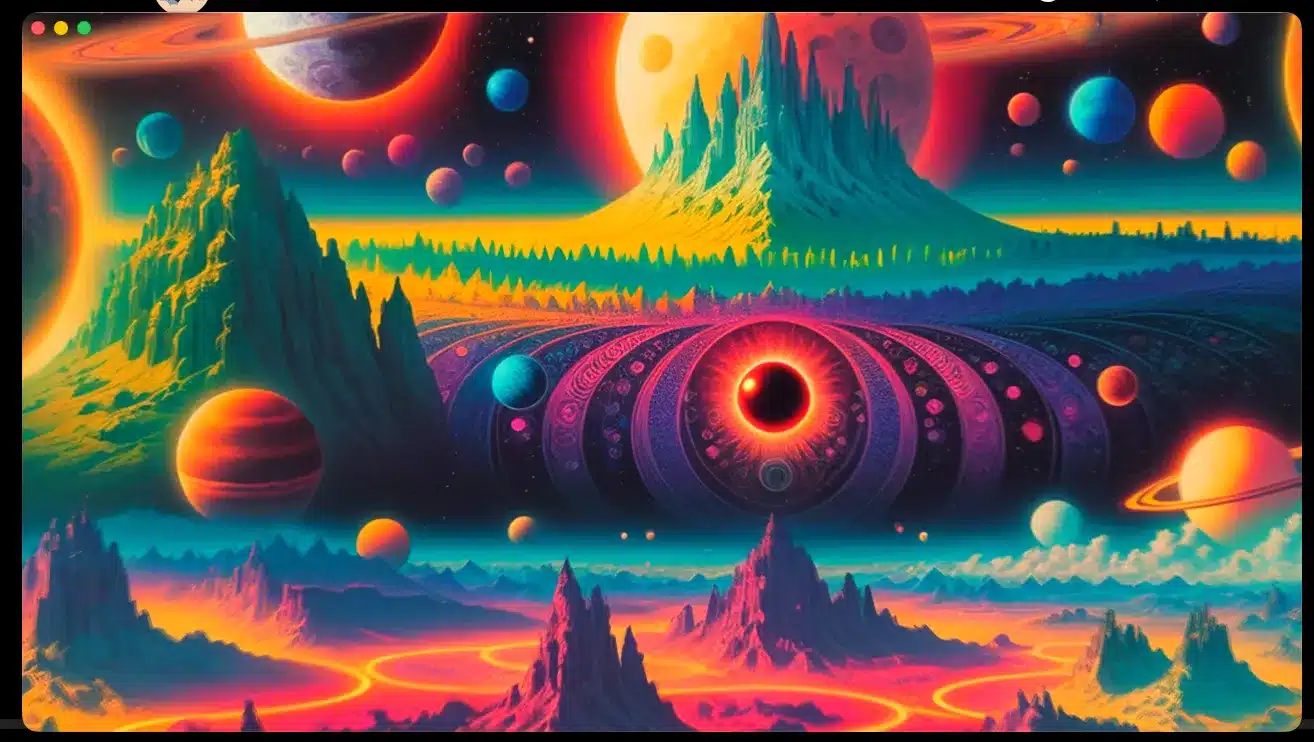
In 2023, Holster began releasing segments of what would become the Paint World series. Pieces like Le Voyage [Paint World 28] marked a significant shift. Here, the AI was no longer trying to simulate a photograph; it was simulating the act of painting. The frames moved with the fluid logic of a dream, where a boat or a figure might dissolve into a flurry of oil-like textures before reforming.
Academic Integration and Art Is Human Terrain (2024)
By 2024, Holster’s role at Penn State and his artistic persona began to merge fully. He started presenting his work not just as "AI art," but as a case study in "Creative Practice Pedagogy." The release of Art Is Human Terrain represented the culmination of this effort—a cinematic piece that explores the philosophical implications of AI while maintaining a visual style that feels thousands of years old.
Supporting Data: The Mechanics of Tactile AI
To understand why Holster’s work is significant, one must look at the technical "noise" of current AI art. According to industry surveys from 2023, over 70% of AI-generated images are classified as "photorealistic" or "3D render" styles. This has led to a phenomenon known as "AI Fatigue," where audiences become desensitized to high-detail digital imagery.
Holster’s work functions as a counter-trend. By utilizing specific "LoRA" (Low-Rank Adaptation) models and custom-trained checkpoints that emphasize traditional art movements—such as Impressionism, Fauvism, and Tonalism—he bypasses the "uncanny valley" of digital realism.
Data from creative platforms suggests that "painterly" and "lo-fi" AI aesthetics have seen a 40% increase in engagement over the last twelve months, as users seek out content that feels "authentic" and "human-made." Holster’s Recipe for Consciousness [Paint World 38] exemplifies this, using a color palette dominated by ochres, deep blues, and earthy reds—colors that evoke the physical materials of the earth rather than the RGB spectrum of a monitor.
Official Context: The Intersection of Pedagogy and Practice
As an Assistant Teaching Professor, Holster’s work is framed within the broader institutional discussion regarding AI in the classroom. At Penn State, the conversation around AI has shifted from "prevention of misuse" to "integration of creative potential."
In his research, Holster examines how the "black box" of AI can be used as a mirror for human intuition. He posits that the role of the teacher in the age of AI is to help students find their "human terrain"—the unique set of experiences and aesthetic preferences that a machine cannot replicate.
"The technology is a medium, not the artist," is a sentiment often echoed in Holster’s academic contributions. His work serves as a living laboratory for these theories. When he creates a piece like Wait for the Blue Boat [Paint World 18], he is demonstrating how an artist can "curate" the chaos of an algorithm to produce a specific emotional resonance that is intentionally designed, not accidentally generated.
Implications: The Future of the "Humanistic" Machine
The work of Jacob Holster carries significant implications for the future of digital media and the broader art market.

1. The Death of the "Prompt," the Rise of the "Process"
Holster’s work suggests that the future of AI art lies not in the "perfect prompt," but in the iterative process of layering, masking, and sound-syncing. As AI tools become more sophisticated, the "art" will be found in the artist’s ability to manipulate the output until it bears a personal signature. Holster’s "signature" is his texture—a grainy, heavy, oil-on-canvas feel that is instantly recognizable across his portfolio.
2. A New Era for Music Education
By bridging music education with visual AI, Holster is opening new doors for multi-sensory learning. His films are often rhythmic, with visual "brushstrokes" appearing in sync with acoustic swells. This suggests a future where music students might "paint" their compositions or visual artists might "compose" their galleries using unified AI frameworks.
3. Ethical Re-framing of AI
Much of the resistance to AI art stems from the fear that it replaces human skill. Holster’s work offers a different narrative: AI as a preservation tool for "human" aesthetics. By using AI to explore painterly styles that are increasingly rare in a digital-first world, he is actually keeping the tradition of the "painterly eye" alive in a new format.
4. The Challenge to Digital Platforms
As platforms like Instagram and TikTok prioritize high-contrast, "scroll-stopping" visuals, Holster’s more subtle, textured, and atmospheric work challenges the algorithm. It demands a slower pace of consumption—a "slow art" movement within the fast-paced world of generative media.
Conclusion: The Human Terrain
Jacob Holster’s work as @bandyquantguy is a vital reminder that technology does not have to be cold. By applying the rigors of academic inquiry to the fluid world of generative art, he has created a body of work that feels both ancient and futuristic.
In films like Art Is Human Terrain, we see a vision of the future where the machine is not our replacement, but our apprentice—learning the weight of a brushstroke, the warmth of a sunset, and the complexity of human consciousness. As we move deeper into the age of artificial intelligence, it is the "painterly" touch of artists like Holster that will ensure the digital landscape remains, above all else, human.
Where to Explore His Work:
To experience the tactile world of Jacob Holster, follow his journey on Instagram @bandyquantguy or subscribe to his YouTube channel, where he continues to document the evolution of the Paint World series.