The Case of the Controller-Free Sleuth: ‘Detective VR’ Brings Rare Hand Tracking Support to PlayStation VR2 and Steam
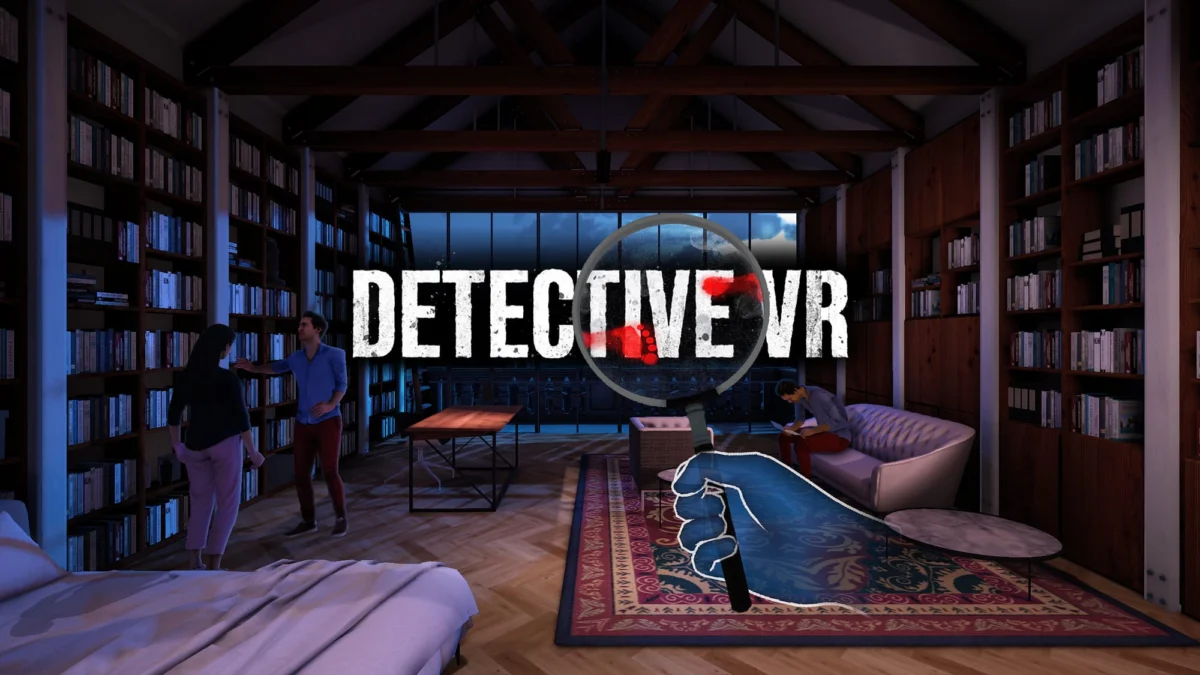
The landscape of virtual reality gaming is often defined by the tactile feedback of haptic controllers, yet a new title is challenging the status quo by placing the power of investigation directly into the player’s hands—literally. Detective VR, the acclaimed murder mystery puzzle game from Studio Chipo y Juan, has officially expanded its jurisdiction beyond the Meta Quest ecosystem, launching this week on SteamVR and PlayStation VR2 (PS VR2).
While the transition to high-end tethered headsets is a significant milestone for any indie title, the PS VR2 version of Detective VR has garnered particular attention for its inclusion of hand tracking support—a feature that remains a distinct rarity on Sony’s flagship VR platform. This release marks a pivotal moment for the title, transitioning from its origins as a mixed-reality (MR) showcase into a fully immersive, cross-platform investigative procedural.
Main Facts: A New Frontier for Virtual Investigation
Detective VR is an atmospheric puzzle-solving experience that casts players as a forensic investigator tasked with deconstructing complex crime scenes. Its arrival on SteamVR and PS VR2 brings the title to a broader audience of high-fidelity VR enthusiasts. The game is priced as a premium indie title and offers a unique blend of traditional escape-room mechanics and narrative-driven detective work.
The most striking technical highlight of the PS VR2 release is the implementation of controller-free hand tracking. Since the launch of the PS VR2 in early 2023, the vast majority of its library has relied exclusively on the Sense controllers. By enabling hand tracking, Studio Chipo y Juan allows players to interact with the world through natural gestures—pinching to pick up evidence, pointing to navigate menus, and physically "grabbing" virtual tools.
Key features of the new release include:
- Cross-Platform Availability: Now playable on Meta Quest (2, 3, and Pro), SteamVR-compatible headsets, and PS VR2.
- Hand Tracking Optimization: Specific gesture-based controls for the PS VR2, allowing for a more tactile, "hands-on" forensic experience.
- Immersive Environments: Unlike the Quest 3 version, which focuses heavily on Mixed Reality (MR) where clues appear in the player’s actual room, the PC and PS5 versions feature fully realized virtual crime scenes.
- The "Meta-VR" Mechanic: A unique gameplay loop where the player, already in VR, dons a pair of "in-game VR glasses" to view reconstructions of the crime.
Chronology: From Mixed Reality Origins to Multi-Platform Expansion
The journey of Detective VR began on the Meta Quest platform, where it was initially conceived as a showcase for the Quest 3’s color passthrough capabilities.

The Quest 3 Debut (Late 2023)
When Detective VR first arrived on the Meta Store, it was praised for its innovative use of Mixed Reality. Players could transform their own living rooms into a "Crime Lab," pinning evidence to their real-world walls and using their coffee tables as interactive murder boards. This version capitalized on the growing trend of "spatial gaming," where the digital and physical worlds blur.
The Shift to High-End VR (Mid-2024)
Following the success of the Quest version, Studio Chipo y Juan recognized a demand for the game on platforms with higher graphical overhead. However, the move to SteamVR and PS VR2 presented a design challenge: these platforms do not emphasize Mixed Reality in the same way the Quest 3 does. To adapt, the developers shifted focus toward "Immersive VR," building out detailed, moody environments that replace the player’s physical room.
The PS VR2 Launch (September 2024)
The launch this week represents the culmination of that adaptation. By bringing the game to PS VR2 with hand tracking, the developers have managed to retain the "natural feel" of the Quest version while leveraging the superior processing power of the PlayStation 5 to enhance lighting, textures, and atmospheric effects.
Supporting Data: Mechanics and Technical Implementation
To understand why Detective VR is resonating with the community, one must look at the specific mechanics that differentiate it from standard "point-and-click" adventure games.
The Investigative Toolkit
The gameplay is built around three core pillars:
- Evidence Collection: Using a "pinch-and-pull" gesture, players operate a virtual camera to document clues. In the PS VR2 version, the precision of the hand tracking allows for minute adjustments to the camera’s focus and angle, mimicking the actions of a real forensic photographer.
- The Interactive Murder Board: A staple of the genre, the murder board in Detective VR is fully spatial. Players must physically move photos, notes, and strings to connect suspects to motives. This tactile interaction is where hand tracking shines, as it removes the barrier of buttons and joysticks.
- Witness Interrogation: The game features a branching dialogue system where players must weigh evidence against witness statements to find inconsistencies.
Technical Performance and Patching
Launching a hand-tracking title on PS VR2 is not without its hurdles. Early adopters of the PS VR2 version reported minor issues with "jitter" during fast movements and some inconsistencies in locomotion (moving within the virtual space).

Demonstrating a commitment to the platform, Studio Chipo y Juan issued a Day 1 patch specifically targeting these areas. The update improved the "smoothing" algorithms for the PS VR2’s external cameras, which are responsible for tracking the player’s hands. Data from early user feedback suggests that the patch significantly stabilized the experience, particularly during the "pinch" gestures required for fine-motor tasks.
Official Responses and Critical Context
The reception of Detective VR has been largely positive, with critics highlighting the game’s ambition despite its indie roots.
In a review of the original Quest version, UploadVR’s Josh Petersel noted: "While there’s room for improvement with the gameplay, it’s an impressive effort from Studio Chipo y Juan that’s a delight to play, with so much room for more to come." This sentiment has carried over to the new versions, with players praising the "meta-level" mechanic of putting on VR glasses within the game as a clever way to handle scene reconstructions.
Studio Chipo y Juan has remained vocal about their design philosophy. In recent developer communications, the team emphasized that their goal was to make the player feel like a detective, rather than just playing as one. They noted that the transition to PS VR2 was driven by a desire to see their lighting and shadow work—essential for a noir-style mystery—rendered with the depth that only OLED displays and high-end GPUs can provide.
Implications: The Future of Hand Tracking on Consoles
The release of Detective VR on PS VR2 carries implications that extend beyond a single game. It serves as a "proof of concept" for the viability of hand tracking on Sony’s hardware.
Challenging the Controller Paradigm
For a long time, the industry assumption has been that console VR requires dedicated controllers for "serious" games, leaving hand tracking to casual social apps. Detective VR proves that complex, multi-layered puzzle games can function—and perhaps even thrive—without plastic peripherals. This could pave the way for more "lifestyle" or "professional" simulators on the PS VR2, such as medical training apps or advanced architectural visualization tools.

The Evolution of the Mystery Genre
VR is uniquely suited for the detective genre. The ability to look under a desk, peer behind a painting, or physically lean in to inspect a bloodstain adds a layer of "presence" that flat-screen games like L.A. Noire or Sherlock Holmes cannot replicate. Detective VR sets a benchmark for how indie developers can utilize spatial awareness to create "Aha!" moments that feel earned rather than scripted.
Accessibility and Immersion
Finally, the move toward hand tracking is a win for accessibility. For players who find complex controller layouts intimidating or physically taxing, the ability to simply use their hands lowers the barrier to entry. As VR moves toward the mainstream, "natural input" will likely become the standard rather than the exception.
Detective VR is available now on the PlayStation Store, Steam, and the Meta Quest Store. For PC players still on the fence, a free demo is currently available on Steam, allowing prospective sleuths to test their investigative instincts before committing to the full case. With its successful expansion to new platforms, Studio Chipo y Juan has not only solved the mystery of the "missing" PS VR2 hand tracking games but has also laid the groundwork for the future of immersive storytelling.