The Phoenix Rises: Inside Meta’s Radical Shift to Ultralight Spatial Computing

The landscape of wearable technology is on the precipice of its most significant transformation since the introduction of the original Oculus Rift. Recent discoveries within Meta’s own software ecosystem have provided the first definitive look at the company’s next-generation hardware—a device that represents a fundamental departure from the "goggle" form factor that has defined virtual reality for over a decade.
Codenamed Project Phoenix (and referred to in various development stages as Stanley and Loma), Meta’s upcoming flagship headset has moved from the realm of speculative industry rumors to a concrete reality. Evidence found within the Horizon OS firmware reveals a device designed not just for gaming, but as a sophisticated, open-periphery "spatial computer" intended to challenge the high-end market currently occupied by the Apple Vision Pro and Meta’s own Quest Pro.
Main Facts: A New Architecture for the Face
The leaked visuals and firmware data confirm that Project Phoenix is an ultralight, premium headset. Unlike the Quest 3 or Quest 3S, which house their processing units, batteries, and cooling systems within the head-mounted display (HMD), Phoenix utilizes a tethered compute puck. By offloading the "brains" and power supply of the device to an external unit—likely worn on a belt or placed in a pocket—Meta has been able to achieve a form factor that more closely resembles high-end eyewear than a traditional VR headset.
Key specifications and features identified include:
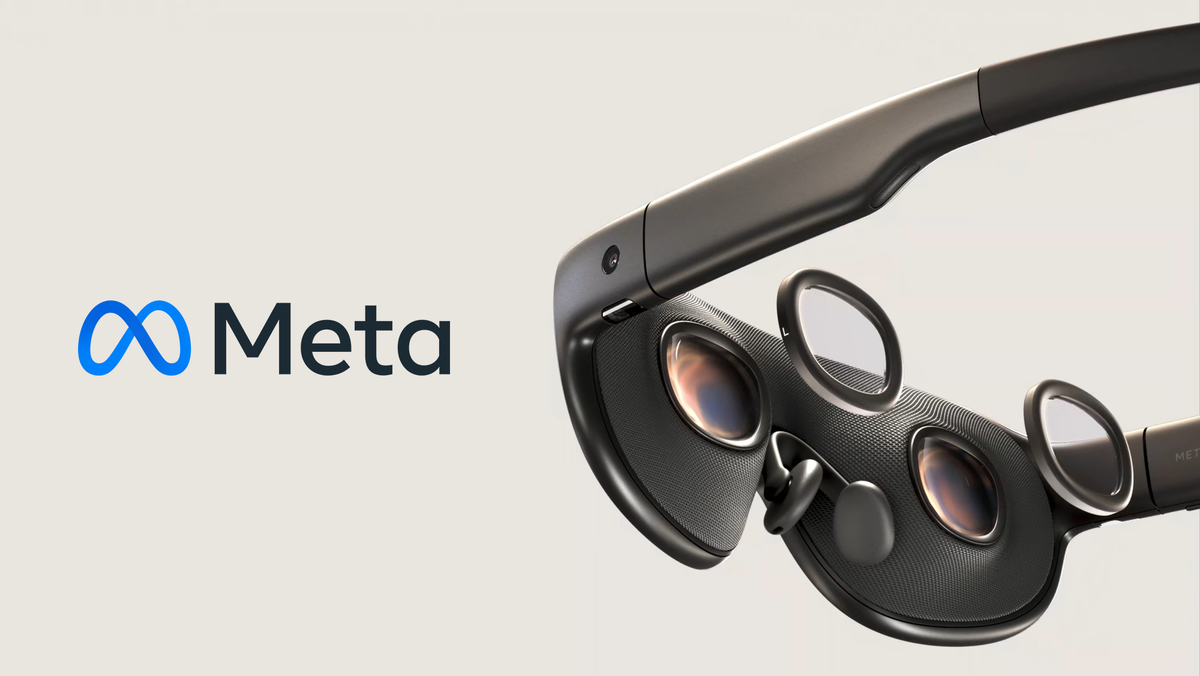
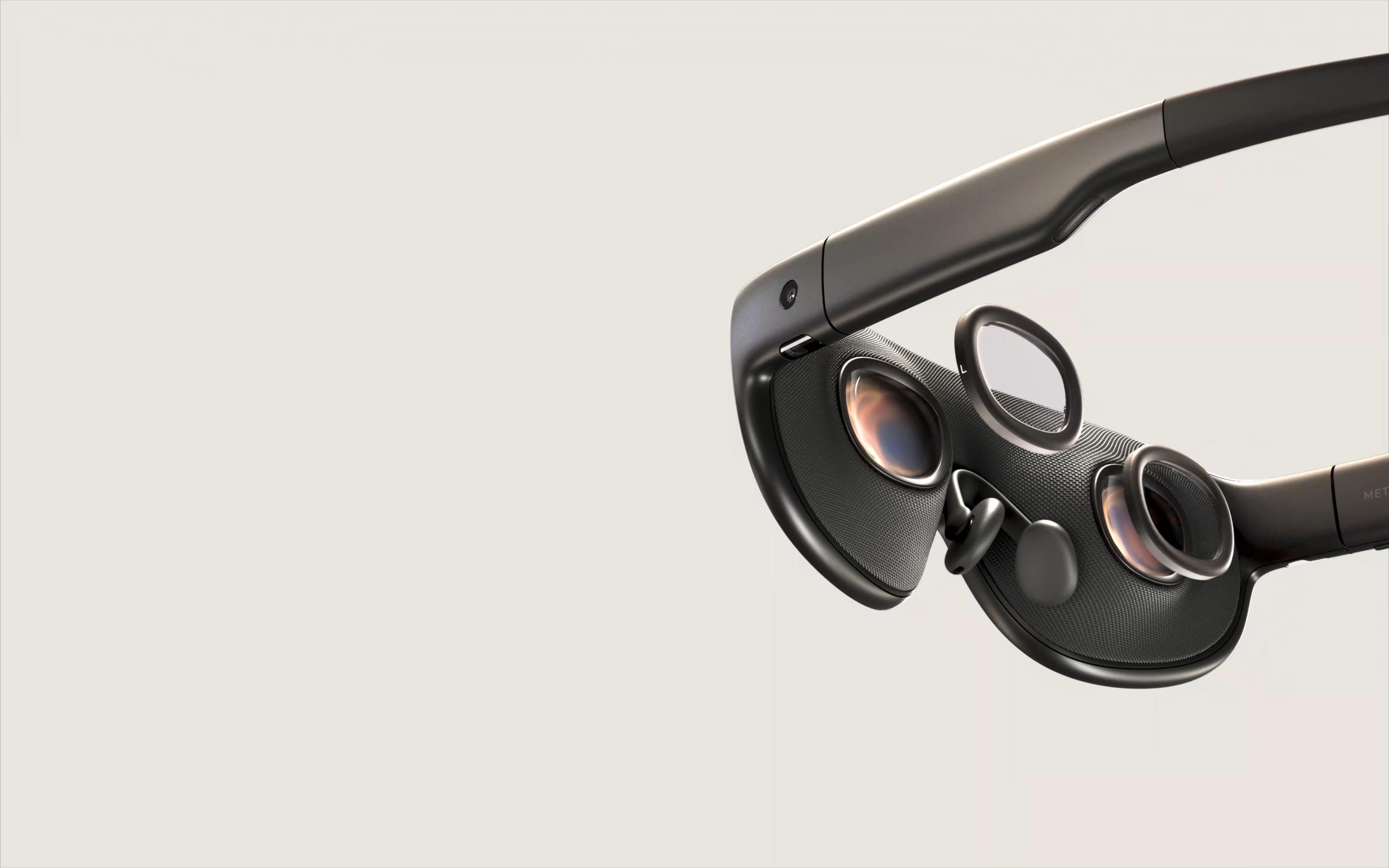
- Open-Periphery Design: The headset lacks a traditional "facial interface" (the foam or silicone gasket that blocks out light). Instead, it uses glasses-style nose pads, allowing the user to maintain natural peripheral vision of the physical world.
- Advanced Sensor Array: Multiple sensors are integrated into the temples and the underside of the frame, facilitating high-fidelity inside-out tracking and environmental mesh mapping.
- Controller-Free Focus: The hardware appears optimized for eye and hand tracking, aligning with Meta’s internal push toward "natural" interfaces.
- Magnetic/Snap-on Prescription Integration: A dedicated software suite handles the pairing of custom prescription lenses, which are essential given the device’s slim profile.
Chronology of the Leak: From Placeholder to Product Reveal
The path to this discovery began in late August 2026, when Meta quietly published a seemingly innocuous application to the Horizon Store titled "HorizonOS Prescription Lens."
August 2026: The Initial Anomaly
When the app first appeared, it immediately drew the attention of the "Quest-com" (Quest community) and firmware dataminers. The app was categorized as a system-reliant package, yet it did not appear in the standard App Library after installation. Technical analysis revealed that the app was served to devices as a ZIP file rather than a standard Android APK.
At this stage, the package was largely a "skeleton." It contained code hooks for pairing external hardware but lacked the high-resolution assets needed to identify the hardware. It was widely theorized to be a internal tool for Meta employees testing the Phoenix prototypes.
September 2026: The Visual Breakthrough
In early September, Meta pushed a significant update to the HorizonOS Prescription Lens package. This update replaced the placeholders with high-fidelity instructional animations and 3D models. These assets were designed to guide users through the process of attaching prescription inserts and scanning QR codes to calibrate the lenses to the headset’s software.

These animations provided the first clear, unobstructed views of the Phoenix hardware. They showcased the "temples" of the device (the arms of the glasses), the placement of the compute cable at the rear of the left temple, and the unique sensor geometry that distinguishes Phoenix from the Quest Pro.
Supporting Data: Technical Analysis of the Phoenix Design
The shift to a tethered compute puck is the most controversial and significant design choice Meta has made since the transition to standalone VR with the original Quest. Data extrapolated from the firmware suggests several technical justifications for this move.
1. Thermal and Weight Distribution
By removing the chipset and battery from the face, Meta has reportedly reduced the front-end weight of the headset by over 50% compared to the Quest 3. This addresses the "comfort gap"—the primary reason users cite for ending VR sessions after less than an hour. The compute puck allows for a more powerful processor (potentially a custom Meta-designed silicon or a next-gen Snapdragon XR2+ variant) because it can utilize a larger cooling fan and heat sink without adding weight to the user’s neck.
2. The Optics and the "Prescription Problem"
In traditional VR headsets, there is enough internal volume to allow users to wear glasses underneath the HMD. The Phoenix visuals confirm there is no such room in the new design. The lenses sit extremely close to the eyes to maximize the Field of View (FoV) despite the small frame size.

The leaked "Prescription Lens" app is Meta’s solution to this. The animations show a seamless magnetic attachment system. Furthermore, the software requires the user to scan a QR code on the lens box, which likely tells the Horizon OS to adjust the distortion profiles and IPD (Interpupillary Distance) settings automatically to match the user’s specific vision requirements.
3. Sensor Integration
The visuals show at least four visible camera sensors on the exterior:
- Two side-firing cameras for wide-angle hand tracking and peripheral SLAM (Simultaneous Localization and Mapping).
- Two downward-firing cameras to track torso movements and lower-hand interactions.
- Internal sensors (not visible in the external render but confirmed via code) dedicated to high-speed eye tracking for foveated rendering.
Official Responses and Context: The Road to Meta Connect 2026
As of this writing, Meta has maintained its standard policy of not commenting on "rumors or unreleased products." However, the company’s public-facing actions provide significant context that validates the Phoenix leaks.
The official agenda for Meta Connect 2026, scheduled for later this month, includes several high-profile sessions that seem specifically tailored for Phoenix. Most notably, a session titled "A Practical Guide to Controller-Free Interaction" has been highlighted by developers. While the Quest 3 supports hand tracking, it is still primarily a controller-based device. A dedicated session on "controller-free" interaction suggests that Meta is preparing to launch a device where hands and eyes are the primary—or perhaps only—input methods.

Furthermore, Meta’s CTO, Andrew "Boz" Bosworth, has hinted in recent Q&A sessions that the company is interested in "breaking the form factor barriers" that prevent VR from being a daily-wear technology. The Phoenix visuals represent the physical manifestation of that strategy.
Implications: A New Era for Meta and the Industry
The emergence of Project Phoenix marks the end of the "Quest Pro" era and the beginning of a new "Spatial Eyewear" era for Meta. The implications of this device are three-fold:
1. The Challenge to Apple
Apple Vision Pro set the standard for high-end spatial computing, but its weight and "closed" nature have been points of criticism. Meta’s Phoenix appears to be a direct rebuttal: a device that is lighter, more breathable (thanks to the open periphery), and more focused on long-term wearability. If Meta can deliver a similar level of visual fidelity at a lower weight, they may reclaim the "prosumer" market.
2. The Death of the Controller?
If Phoenix is indeed a controller-free device, it will force a massive shift in the Horizon OS developer ecosystem. Developers who have spent years perfecting haptic-based gunplay or tool manipulation will need to pivot to gesture-based interfaces. This move signals Meta’s intent to move beyond "gaming" and into "productivity and social presence," where controllers are often seen as a barrier to entry.
3. The "Puck" Paradigm
The success of Phoenix will depend on whether consumers accept a tethered cable. While the VR community has spent years striving for "wireless freedom," the trade-off has always been weight and battery life. Meta is betting that users will prefer a thin, high-quality cable running to a pocketed puck if it means they can wear the headset for four hours instead of forty minutes.
Conclusion
The leaked visuals from the Horizon OS firmware have pulled back the curtain on Meta’s most ambitious hardware project to date. Project Phoenix is not merely an incremental update; it is an attempt to redefine what a "headset" is. By moving toward an ultralight, open-periphery design, Meta is signaling that the future of the Metaverse isn’t about being "locked in" a virtual box, but about enhancing the real world with a digital layer that is light enough to wear all day.
All eyes now turn to Meta Connect 2026, where Mark Zuckerberg is expected to officially unveil the Phoenix and, with it, Meta’s vision for the next decade of human-computer interaction.