The Clock Stays at Midnight: Re-evaluating the Legacy and Impact of Alan Moore’s Watchmen
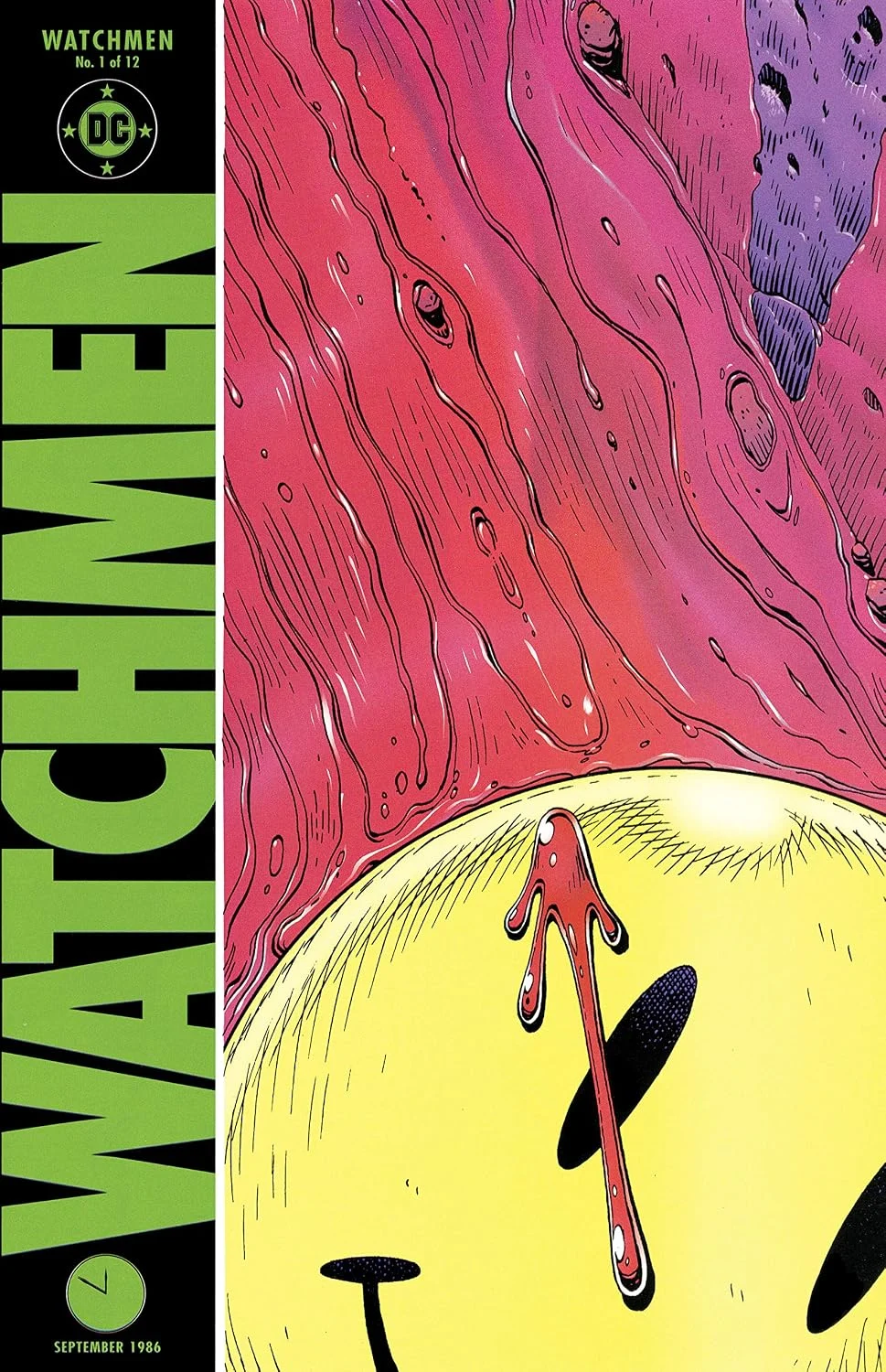
Forty years after its initial publication, Alan Moore and Dave Gibbons’ Watchmen remains the singular monolith of the graphic novel medium. Originally released as a 12-issue limited series by DC Comics between 1986 and 1987, it did more than just "deconstruct" the superhero; it dismantled the American mythos during the height of Cold War paranoia. Today, as it oscillates between being a staple of high school curricula and a target for book bans in states like Missouri, the work’s "knife-edge" remains as sharp as ever.
Main Facts: The Genesis of a Literary Landmark
Watchmen was born from the mind of a 33-year-old British writer, Alan Moore, who sought to explore what the world would actually look like if costumed vigilantes had existed since the late 1930s. Joined by illustrator Dave Gibbons and colorist John Higgins, Moore constructed an alternate history where the United States won the Vietnam War and Richard Nixon remained in the White House for five terms.
The series is widely credited with elevating the comic book medium to the status of serious literature. It was the only graphic work included in Time magazine’s 2005 list of the "100 Best English-language Novels from 1923 to the Present." Despite this mainstream adoration, its standing within the "elitist" circles of comic criticism has been more nuanced; The Comics Journal famously ranked it 91st on its list of the 100 best English-language comics of the 20th century, a placement that suggests a lingering tension between the work’s commercial success and its artistic purity.
The narrative is famous for its "story within a story" structure, its rigid nine-panel grid layout, and its use of supplemental materials—essays, police reports, and book excerpts—to flesh out a world that feels uncomfortably real.
Chronology: A History of Costumes and Consequences
To understand Watchmen, one must understand the timeline Moore and Gibbons meticulously crafted, which blends real-world events with fictional superhero interventions.
The Golden Age: The Minutemen (1939–1949)
The appearance of "Superman" in Action Comics #1 (1938) serves as the catalyst in this reality. Inspired by fiction, real people began donning masks to fight crime. In 1939, the Minutemen were formed, featuring characters like Captain Metropolis, The Comedian, and the original Silk Spectre. However, this "Golden Age" was far from pure. The group was plagued by alcoholism, sexual deviancy, and mental illness. By 1949, as the House Un-American Activities Committee (HUAC) began investigating masked heroes, the group disbanded, leaving a legacy of trauma and unfulfilled ideals.
The Silver Age and the Advent of the Super-Power (1959–1977)
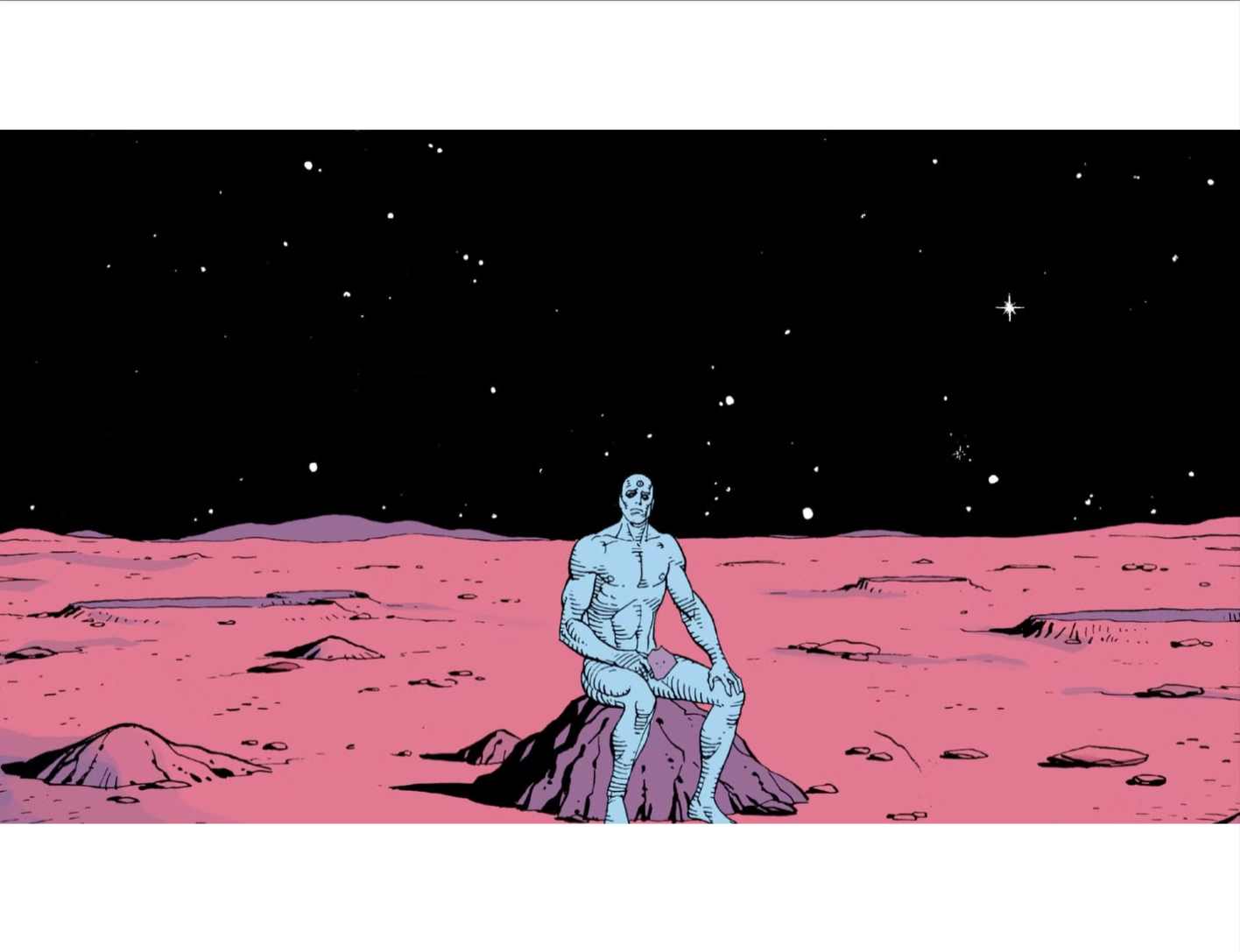
In 1959, a nuclear accident transformed physicist Jon Osterman into Dr. Manhattan. He became the only truly "super" human, capable of manipulating matter and perceiving time non-linearly. His existence shifted the global balance of power, allowing the U.S. to win the Vietnam War in a matter of days and ensuring Nixon’s continued presidency. In 1966, a second generation of heroes, the "Crimebusters," attempted to form but failed to find a cohesive purpose.
The Keene Act and the Ban (1977)
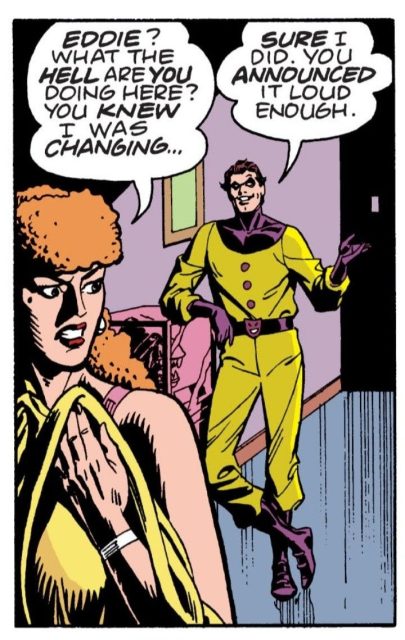
Public sentiment eventually soured on vigilantes. Masked adventurers were seen as due-process-bashing fascists. Following widespread police strikes and riots, the Keene Act was passed in 1977, outlawing non-government-sanctioned costumed heroism. Most retired into obscurity, while two—The Comedian and Dr. Manhattan—became state-sponsored agents.

The Main Narrative: October 1985
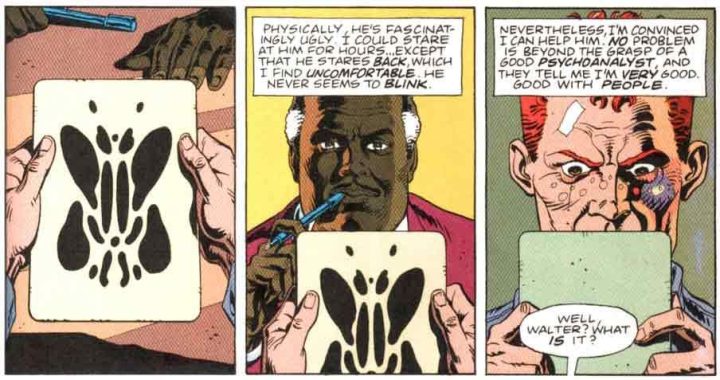
The story begins with the murder of Edward Blake (The Comedian). This event pulls the retired "masked adventurers" out of their civilian lives. Walter Kovacs, the uncompromising and paranoid vigilante known as Rorschach, suspects a "mask killer" is targeting former heroes. This investigation unfolds against the backdrop of an imminent nuclear exchange between the United States and the Soviet Union.
Supporting Data: Narrative and Visual Innovation
The enduring power of Watchmen lies in its technical sophistication. Moore and Gibbons utilized a variety of formalist techniques that had rarely been seen in mainstream comics.
The Formalist Grid
Dave Gibbons utilized a strict nine-panel grid for the majority of the 12 issues. This layout provided a rhythmic, cinematic pace that allowed for intricate "match cuts" between panels. It also served as a visual metaphor for the "clockwork" nature of the universe—a central theme of the book.
Meta-textual Layering: "Tales of the Black Freighter"
Interspersed throughout the main narrative is a comic-within-a-comic titled Tales of the Black Freighter. Read by a teenager at a New York City newsstand, this pirate saga about a shipwrecked mariner serves as a psychological mirror to the main plot. The mariner’s descent into madness and his accidental slaughter of his own family parallel the "utilitarian" atrocities committed by the story’s antagonist in the name of the "greater good."
The Psychology of Color
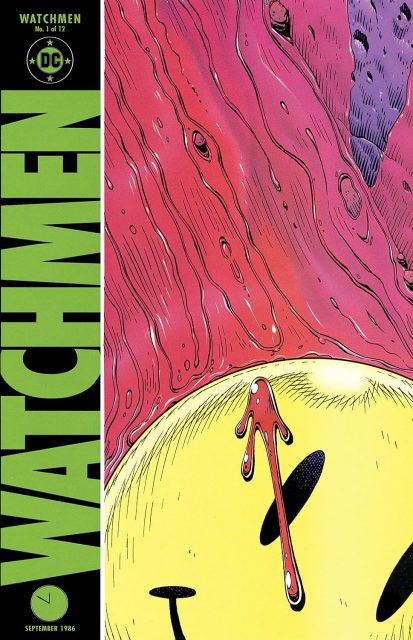
John Higgins’ coloring was revolutionary for 1986. Eschewing the primary colors (reds, blues, yellows) typical of superhero comics, Higgins employed a secondary palette of purples, oranges, and pastels. These "unnatural" hues created a sense of atmospheric dread and emotional instability. As noted by critics, Higgins didn’t just illustrate for the eye; he "flipped emotional control switches," using color to dictate the reader’s psychological response to the deteriorating world on the page.
Official Responses: From Controversy to Canonization
The reception of Watchmen has evolved through several distinct phases over the last four decades.
Literary Acceptance
Upon its release, Watchmen was hailed as the "Ulysses" of comics. It proved that the medium could handle complex adult themes, including sexual violence, nihilism, and geopolitical theory. Its inclusion in university literature programs marked a turning point in the "Graphic Novel" movement, providing a blueprint for the "grim and gritty" era of the late 80s and 90s.
Modern Resistance and Censorship
Despite its status as a classic, Watchmen has faced renewed scrutiny in the 21st century. In 2024 and 2025, several U.S. school districts—most notably in Missouri—banned the book from libraries, citing its graphic depictions of violence and sexual content. This pushback highlights the work’s persistent ability to disturb, even in an era saturated with superhero media.
Adaptation and Expansion
The "official" response from DC Comics has been one of commercial expansion, often against the wishes of Alan Moore. Zack Snyder’s 2009 film adaptation was met with mixed reviews, with critics arguing that the medium-specific nuances of the book were lost in translation. Conversely, the 2019 HBO limited series by Damon Lindelof was highly lauded for using the Watchmen framework to explore racial trauma and the Tulsa Race Massacre, proving the original work’s themes could be successfully recontextualized for a modern audience.
Implications: The Deconstruction of the Hero and the Modern World
The final act of Watchmen presents one of the most debated moral dilemmas in literature. Adrian Veidt (Ozymandias), the "World’s Smartest Man," orchestrates a false-flag alien invasion that kills millions in New York City. His goal is to unite the U.S. and the U.S.S.R. against a common "extra-terrestrial" threat, thereby preventing a total nuclear holocaust.
The Failure of the Super-Hero
Moore’s ultimate implication is that the concept of a "hero" is inherently flawed. Rorschach is a sociopathic bigot; The Comedian is a nihilistic rapist; Dr. Manhattan is an emotionally detached god; and Veidt is a mass murderer. The book suggests that the desire to "save the world" is often a mask for deep-seated personal trauma or a megalomaniacal need for control.
Reflections of 2026
Looking back from the vantage point of 2026, the anxieties of Watchmen feel eerily prophetic. The "Doomsday Clock," a recurring motif in the book, currently stands at its closest point to midnight in history—90 seconds (or 85, by some contemporary estimates). Moore’s exploration of a society retreating into nostalgia while the world burns resonates in an era of political polarization and environmental collapse.
Furthermore, the rise of Artificial Intelligence has added a new layer to the character of Dr. Manhattan. As we move toward a world where "super-intelligent" systems make decisions beyond human comprehension, Manhattan’s perspective—that "the universe will not notice if everyone dies"—is no longer just a nihilistic trope; it is a burgeoning technological reality.
Ultimately, Watchmen concludes with Dr. Manhattan’s haunting final words: "Nothing ever ends." As the work continues to be read, banned, adapted, and debated, its cycle of influence remains unbroken. It stands as a reminder that we are, perhaps, "incapable of dealing with the problems caused by our existence," yet we continue to look to the masks to save us.