The Crisis of Perception: Rhetoric, Reality, and the Asymmetric Challenges Facing the Trump Administration
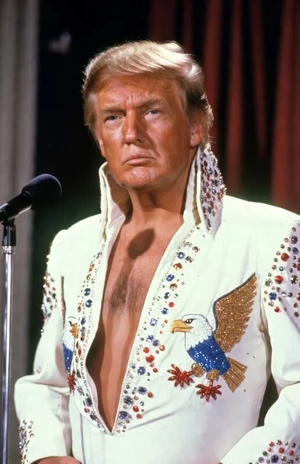
The metaphor of Hans Christian Andersen’s The Emperor’s New Clothes has been a staple of political commentary for centuries, yet its application to the current American political landscape has taken on a surreal, modern twist. In the original fable, the emperor’s nudity is hidden by a collective delusion born of vanity and fear of being labeled incompetent. In the contemporary iteration, the "clothes"—the narratives of military triumph, administrative competence, and historical heroism—are increasingly recognized as non-existent by the public and even elements of the state apparatus. However, the administration continues to insist on their presence, demanding that subordinates and supporters alike describe the fine silks of a wardrobe that has long since vanished.
This disconnect between official rhetoric and empirical reality has recently manifested in two distinct but equally revealing arenas: the domestic controversy surrounding the Lincoln Memorial Reflecting Pool and the escalating, costly military engagement with Iran.
Main Facts: A Tale of Two Realities
The administration currently finds itself embroiled in a credibility crisis stemming from a series of high-profile discrepancies. At the center of the domestic narrative is the "Reflecting Pool Imbroglio," where the Department of the Interior and the White House have maintained a narrative of malicious vandalism despite internal admissions that the damage was the result of a failed renovation project.
Simultaneously, on the global stage, the administration’s "Maximum Pressure" campaign against Iran has reached a paradoxical juncture. While official communications suggest that Iranian influence has been "cornered" and neutralized, the tactical reality in the Persian Gulf tells a different story. U.S. naval assets and regional bases remain under constant threat from low-cost drone swarms and missile strikes, creating a state of asymmetric warfare that is rapidly depleting American high-tech munitions.
The common thread between these two disparate issues is the administration’s refusal to acknowledge "the naked truth," preferring instead to double down on fabricated successes or manufactured grievances. This posture has begun to alienate even the most loyal segments of the conservative media and political establishment.
Chronology of Disconnect: From Vandalism Claims to Military Stalemate
To understand the current state of affairs, one must trace the timeline of how the administration’s narratives have diverged from the facts on the ground.
The Reflecting Pool Controversy
The saga began when the Department of the Interior, led by Secretary Doug Burgum, announced that the Lincoln Memorial Reflecting Pool had been the victim of "vicious vandalism." Images circulated showing peeled paint and structural degradation, which the administration quickly framed as a political attack on American heritage.
However, the narrative began to crumble when the Department of Justice (DOJ) quietly withdrew criminal charges against a primary suspect—a man who had been caught examining the "peeled paint." Shortly thereafter, Justice Jeanine Pirro, a frequent administration ally, admitted on-air that there was no factual basis for the vandalism claims. Investigations revealed that the "damage" was actually the result of a rushed, incompetent attempt by contractors to renovate the pool, leading to catastrophic failure of the new coatings.
Despite these revelations, President Trump took to Truth Social to deny the findings, insisting on the existence of video evidence showing vandals. Secretary Burgum subsequently backed this claim, despite reports from those who viewed the footage that it merely showed tourists dipping their hands in the water while security guards looked on unconcerned.
The Iranian Escalation
The military timeline follows a similar trajectory of over-promising and under-delivering. Following a series of strikes intended to decapitate Iranian military leadership and "shock and awe" the regime into submission, the administration declared a strategic victory.
However, throughout the summer of 2024 and into 2025, the expected Iranian collapse did not materialize. Instead, Tehran pivoted to a strategy of persistent, low-grade attrition. U.S. ships in the Gulf and bases in neighboring Arab nations have faced a relentless barrage of drones and missiles. While the U.S. military has successfully intercepted the majority of these threats, the "victory" has proven to be a strategic quagmire, drawing the U.S. into a protracted conflict that the administration initially promised would be a "quick in-and-out" operation.
Supporting Data: The Economics of Asymmetry and Shifting Public Opinion
The true cost of the administration’s refusal to face reality is best illustrated by the data surrounding military readiness and domestic polling.
The Asymmetric Cost of Defense
Military analysts have raised alarms over the "cost-per-kill" ratio currently defining the conflict with Iran. Iran utilizes "dime-store" technology—interchangeable, mass-produced drones that cost between $20,000 and $50,000 each. To counter these, the U.S. is utilizing sophisticated interceptor missiles, such as the SM-2 or Patriot systems, which can cost upwards of $2 million to $4 million per shot.
- Munitions Depletion: Internal Pentagon reports suggest that the U.S. is expending its stockpile of precision-guided munitions at a rate faster than they can be replaced. This creates a "readiness gap," leaving the U.S. vulnerable should a genuine peer-competitor threat emerge elsewhere.
- Naval Attrition: While the administration "crows" over the destruction of the traditional Iranian navy, they ignore the fact that Iran’s naval strategy relies on small, fast-attack craft and drone swarms that are difficult for traditional carrier strike groups to target effectively.
Domestic Polling and Media Shift
The "emperor’s" insistence on his clothes is also losing its charm with the American electorate.
- The Fox News Factor: In a significant shift, Fox News has begun reporting on polling data that shows the administration at its lowest approval ratings regarding the economy and foreign policy.
- The Right-Wing Schism: High-profile conservative bloggers and media outlets are seeing a decline in audience engagement as they struggle to reconcile the administration’s claims with the lived experience of their readers. A growing faction of "isolationist" right-wingers has begun to vocally oppose the "forever war" in the Middle East, viewing it as a distraction from domestic priorities.
Official Responses: The Denial of the Obvious
The administration’s response to these mounting pressures has been one of total narrative enclosure. Rather than pivoting or admitting error, the strategy has been to attack the messenger and double down on the original claim.
President Trump’s denial of the Reflecting Pool findings is a quintessential example. By labeling the DOJ’s withdrawal of charges as a "misunderstanding" and insisting on the vandalism narrative, he forces his appointees into a position of choosing between factual reality and personal loyalty. Secretary Doug Burgum’s decision to repeat the "video evidence" claim—despite its apparent non-existence—highlights the "loyalty test" that now defines the executive branch.
Regarding the conflict in Iran, the administration has moved to "draw the curtain tighter." The Pentagon, once praised for its transparency during the early stages of the conflict, has become increasingly opaque. Casualty reports are delayed, and the true cost of the munitions being expended is often obscured in classified briefings. The administration’s posture remains that the U.S. is winning, even as the "win" looks increasingly like a stalemate.
Implications: The Erosion of Truth and Military Readiness
The long-term implications of this "Emperor’s New Clothes" approach to governance are profound and multi-faceted.
1. The Death of Fact-Based Policy
When the highest levels of government can publicly dispute documented facts—such as the cause of damage to a national monument—the very foundation of democratic accountability is eroded. If the administration can "will" a vandalism event into existence, it can similarly manufacture justifications for larger, more dangerous adventures. There are already signs that the administration is "beating the war drums" for a similar intervention in Cuba, using the same rhetoric of "threats to the nation" that was used for Iran.
2. Strategic Vulnerability
The obsession with "those damned pictures"—the need for visual triumphs like sinking an Iranian boat—is blinding the administration to the tactical evolution of modern warfare. By ignoring the efficacy of cheap drone warfare, the U.S. is allowing itself to be bled dry by a smaller power. The failure to adapt to drone technology while depleting the national arsenal is a strategic error that could haunt the U.S. for a generation.
3. The Collapse of the "Hero" Narrative
Perhaps the most significant implication is the psychological one. The article notes that the "Dear Leader" sees himself not as a normal man, but as a hero. This self-perception requires a constant stream of victories to sustain. When those victories don’t happen, the administration creates them out of whole cloth. However, as the fable suggests, once the "small child"—be it a whistleblower, a journalist, or a disillusioned pollster—points out the obvious, the spell begins to break.
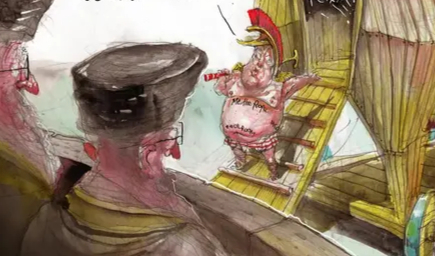
The world is watching, and as international cartoonists from Canada to Australia have noted, they are not seeing a hero in fine silks. They are seeing a leadership blinded by its own reflection, standing in a pool of its own making, while the rest of the world acknowledges the cold reality of the situation. The question remains: how long can a government function when the gap between what it says and what the world sees becomes a chasm?