The Democratization of the Avant-Garde: MoMA PS1 Unveils “PS1 Is Your Place” Campaign for 50th Anniversary
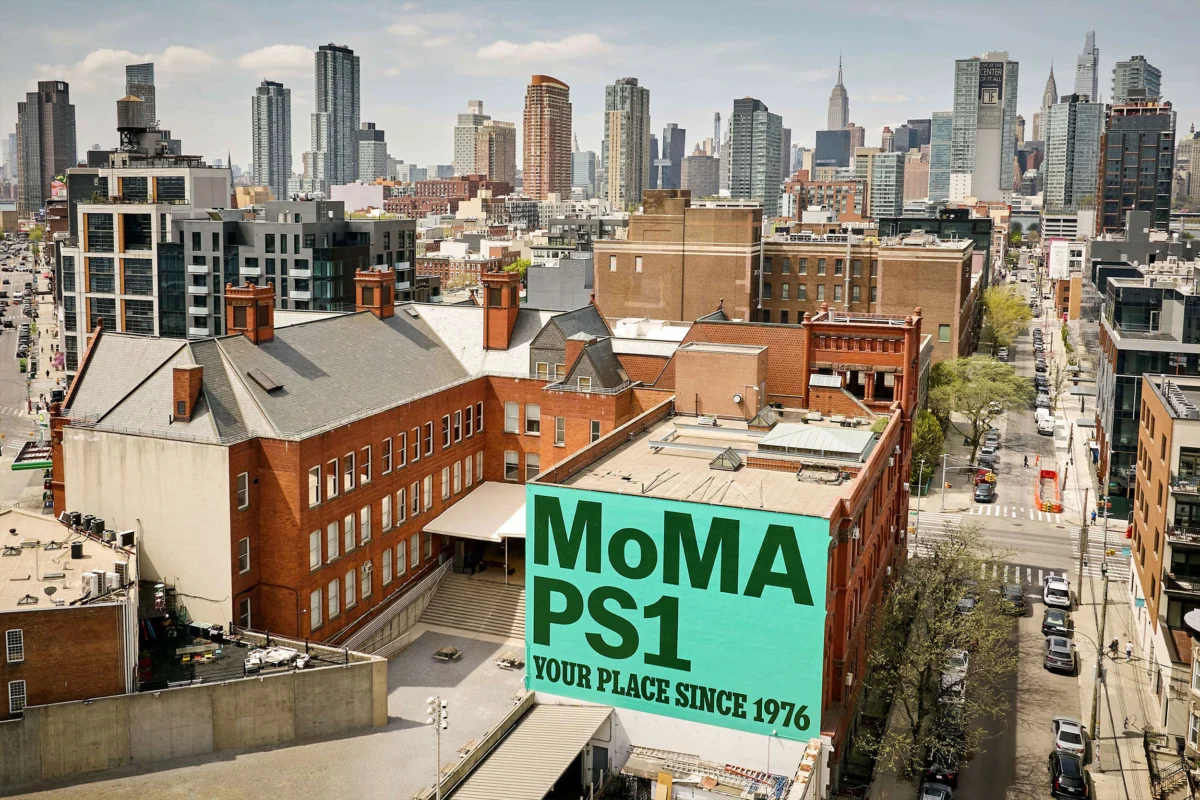
LONG ISLAND CITY, NY — In a move that signals a radical shift in the landscape of New York City’s cultural economy, MoMA PS1 has announced a comprehensive brand evolution and a landmark policy change to celebrate its 50th anniversary. Orchestrated by the New York-based design agency Porto Rocha, the new brand platform, titled "PS1 Is Your Place," seeks to redefine the institution not merely as a repository for contemporary art, but as a vital "third place" for the residents of Queens and the global art community.
The announcement comes at a pivotal moment for the institution. Accompanying the visual and verbal rebranding is the historic decision to make admission free for all visitors starting in January 2026, positioning MoMA PS1 as the largest free museum in New York City. This strategic pivot aims to drive annual attendance to 300,000 by the year 2030, reinforcing the museum’s commitment to accessibility and community-driven cultural exchange.
Main Facts: A Bold Vision for a New Era
The "PS1 Is Your Place" campaign is more than a marketing exercise; it is a structural realignment of the museum’s identity. Since its inception, PS1 has occupied a unique niche in the art world—larger and more established than a grassroots gallery, yet more experimental and "gritty" than its parent institution, the Museum of Modern Art (MoMA) in Midtown Manhattan.
Porto Rocha’s work focuses on several key pillars:
- Identity Evolution: Rather than a total overhaul, the agency has expanded the existing visual language, rotating the iconic bold logo and utilizing the "PS1 Slab" typeface (designed by Berton Hasebe) to create a more dynamic, kinetic feel.
- Verbal Accessibility: The campaign introduces a colloquial verbal identity. The institutional, academic tone often associated with high-art museums has been replaced with messaging that sounds like an invitation from a neighbor.
- The "Third Place" Philosophy: At the heart of the campaign is the concept of the "third place"—a sociological term for social environments separate from the two usual social environments of home ("first place") and the workplace ("second place").
- Strategic Accessibility: The shift to free admission in 2026 is the campaign’s most tangible asset, removing the financial barrier to entry and inviting the diverse population of Long Island City and the wider Queens borough to claim the space as their own.
The campaign launched in tandem with Greater New York 2026, the museum’s signature survey of artists living and working in the New York metropolitan area. This year’s iteration features 53 artists and collectives, showcasing over 150 works that reflect the city’s current creative pulse.
Chronology: From Abandoned Schoolhouse to Global Icon
To understand the weight of the 50th-anniversary rebranding, one must look at the unconventional trajectory of the institution.

1971–1976: The Birth of the Alternative Space
The story began in 1971 when Alanna Heiss founded the Institute for Art and Urban Resources Inc. The mission was radical: to repurpose abandoned or underutilized urban spaces into studios and exhibition venues. In 1976, this vision culminated in the opening of P.S. 1 Contemporary Art Center in a derelict Romanesque Revival school building in Long Island City. This was the cornerstone of the "Alternative Space" movement, which challenged the "white cube" gallery model and encouraged site-specific, often ephemeral, experimentation.
2000: The MoMA Merger
A defining moment in the institution’s history occurred in 2000 when it became affiliated with the Museum of Modern Art. This partnership provided PS1 with financial stability and a global platform, while offering MoMA a venue for contemporary works that were too large, too experimental, or too provocative for its Midtown galleries. Despite the merger, PS1 maintained its independent spirit and its commitment to the Queens community.
2021–2025: Transition and Reimagining
As the museum approached its half-century mark, the leadership recognized a changing New York. The gentrification of Long Island City and the increasing "corporatization" of the arts necessitated a return to the museum’s roots. Porto Rocha was brought in to translate this historical "outsider" energy into a modern brand that could compete in a digital-first, experience-driven economy.
2026 and Beyond: The Free Admission Era
The timeline culminates in January 2026, when the museum officially drops its entry fees. This move is designed to transition the museum from a destination for art tourists to a daily or weekly hub for locals—a place to "explore, gather, dance, create, and discover."
Supporting Data: Attendance Goals and Design Mechanics
The rebranding is backed by ambitious growth targets and a sophisticated design system. MoMA PS1 currently serves as one of the largest non-profit arts centers in the United States, but its leadership is looking to significantly scale its impact.
Quantitative Targets
- Attendance Growth: The museum is targeting 300,000 annual visitors by 2030. This represents a substantial increase from historical averages and relies heavily on the removal of the admission fee.
- Community Engagement: The 2026 Greater New York exhibition serves as a benchmark for local representation, featuring 53 artists, many of whom reside in the outer boroughs.
Design Specifics
Porto Rocha’s design intervention is characterized by "intentional friction." By rotating the logo and using an expanded, vibrant color palette, the agency avoids the static nature of traditional museum branding.

- Typography: The use of PS1 Slab as a primary messaging vehicle allows for a bold, "poster-like" aesthetic that feels rooted in the street culture of New York.
- Messaging System: The "PS1 Is Your Place" framework is modular. It can be adapted to "PS1 Is Your Place to Dance" (for the Warm Up music series) or "PS1 Is Your Place to Discover" (for emerging artist solo shows). This flexibility ensures that the brand remains relevant across diverse programming, from high-concept installations to community block parties.
Official Responses: Reclaiming the Museum’s Soul
While official quotes from the design team emphasize the "vibrant reminder of the museum’s cultural legacy," the broader institutional response highlights a desire to fight the "disappearing third place."
Representatives from Porto Rocha noted that the challenge was to create a brand that didn’t feel like a corporate mask. "We wanted the visual identity to feel as raw and experimental as the art inside the building," the agency shared. The goal was to bridge the gap between the museum’s storied past in the 1970s and its future as a community-centric institution.
Curatorial voices at MoMA PS1 have echoed this sentiment, suggesting that the rebranding is an admission that museums must evolve or become obsolete. By framing the museum as a "place" rather than just a "building," the institution is signaling a shift toward inclusivity. The decision to make the museum free is the ultimate "official response" to the rising costs of living in New York City, acknowledging that art should not be a luxury good but a public utility.
Implications: The Future of Cultural Institutions in New York
The MoMA PS1 rebranding and its shift to a free-admission model have profound implications for the future of the New York art world and the role of museums in urban society.
1. The "Third Place" Crisis
As New York City becomes increasingly expensive, informal spaces for socializing—parks, libraries, and affordable cafes—are under pressure. By positioning itself as a "third place," MoMA PS1 is stepping into a civic role. If successful, this could provide a blueprint for other institutions to move beyond "passive viewing" and toward "active participation."
2. The Economics of Free Admission
The decision to go free is a bold experiment in museum economics. While most major New York museums (like the Met and MoMA Manhattan) have moved toward higher ticket prices to cover operating costs, PS1 is betting that increased foot traffic will lead to higher "secondary" revenue—memberships, shop sales, and cafe revenue—as well as increased interest from donors and corporate sponsors attracted to the museum’s high social impact.

3. Redefining the "MoMA" Relationship
The rebranding further distinguishes PS1 from the "Big MoMA" in Midtown. While MoMA Manhattan remains the "cathedral" of modern art history, PS1 is cementing its status as the "laboratory" of the present. This clear differentiation allows both institutions to thrive without cannibalizing each other’s audiences.
4. A Model for Community-Centric Branding
Porto Rocha’s work demonstrates that institutional branding doesn’t have to be cold or exclusionary. The "colloquial" shift—using language that feels human and inviting—is likely to be emulated by other cultural organizations looking to break down the "ivory tower" perception of the arts.
Conclusion
As MoMA PS1 enters its 50th year, the "PS1 Is Your Place" campaign serves as both a retrospective of its radical roots and a manifesto for its future. By stripping away the financial barriers to entry and adopting a visual identity that celebrates movement and community, the museum is making a definitive statement: in a city that is constantly changing and often exclusionary, there is still a place for everyone to explore the avant-garde. The success of this initiative will be measured not just in visitor numbers, but in how deeply the residents of Queens and beyond embrace the schoolhouse on 21st Street as their own.