The Digital Ancestry of Immersion: How Sony’s Glasstron Defined the Future of PlayStation VR
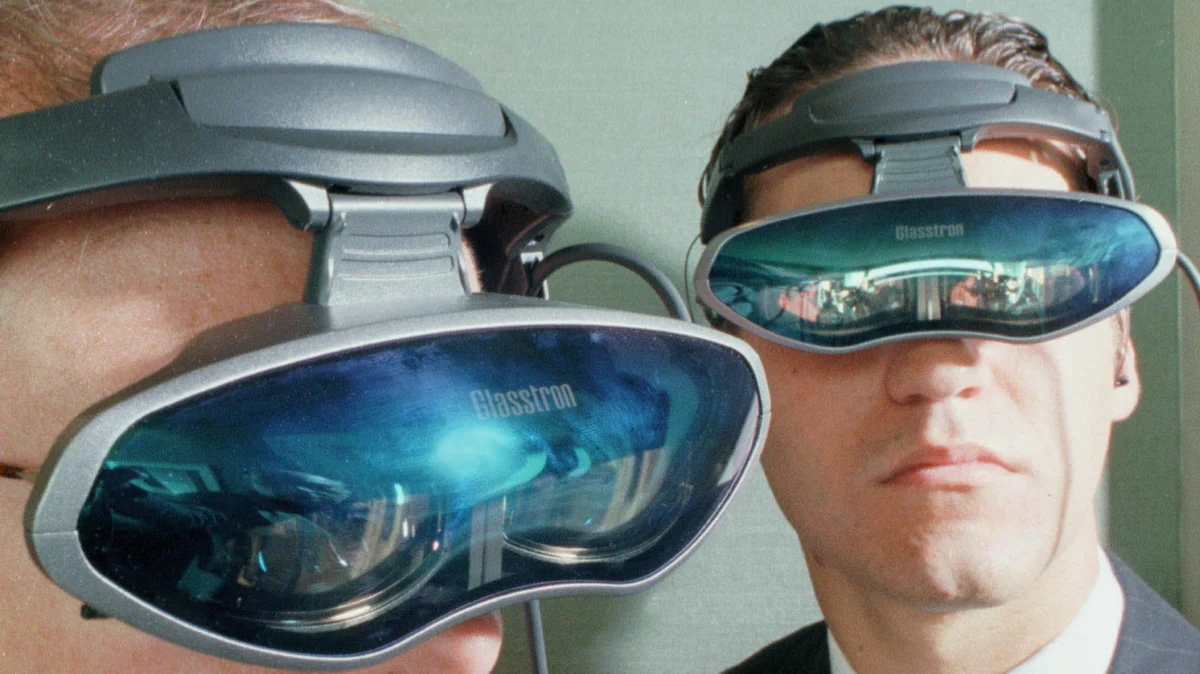
In the pantheon of consumer electronics, few companies possess a lineage as storied or as experimental as Sony. Long before the PlayStation VR2 (PS VR2) redefined the boundaries of immersive gaming on the PlayStation 5, Sony was already tinkering with the concept of the "head-mounted display" (HMD). Decades before the term "Metaverse" became a corporate buzzword, a sleek, silver, and decidedly cyberpunk accessory known as the Sony Glasstron was attempting to bring the silver screen directly to the user’s retinas.
The Sony Glasstron, released in the mid-to-late 1990s, represents a fascinating chapter in technological history. It was a bridge between the analog world of VCRs and the digital frontier of virtual reality. By revisiting this ambitious device, we gain a clearer understanding of Sony’s long-term vision for personal entertainment and how the lessons learned from 90s-era "Personal Viewers" paved the way for the sophisticated VR ecosystems of today.
Main Facts: The Genesis of Personal Cinema
The Sony Glasstron was not marketed as a "Virtual Reality" headset in the contemporary sense—it was primarily branded as a "Personal LCD Monitor." Its objective was simple yet revolutionary for the time: to provide a private, large-screen viewing experience without the need for a massive cathode-ray tube (CRT) television.
Core Features and Design
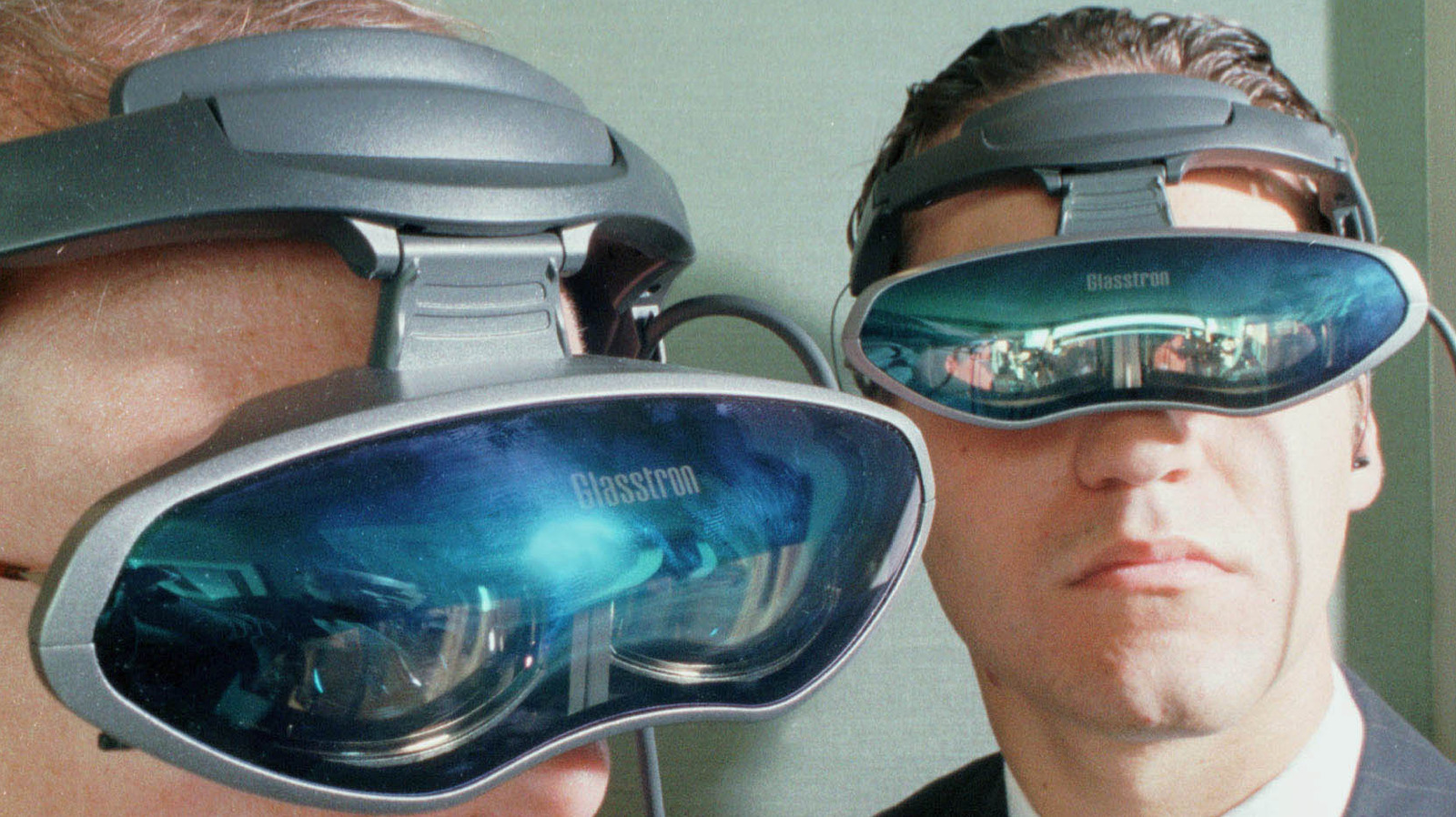
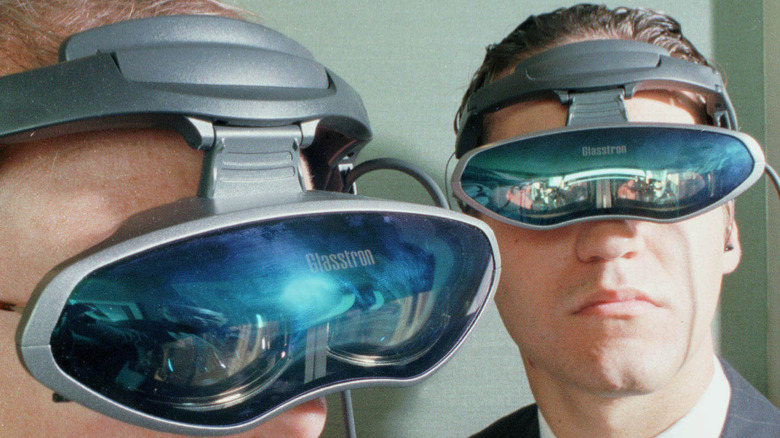
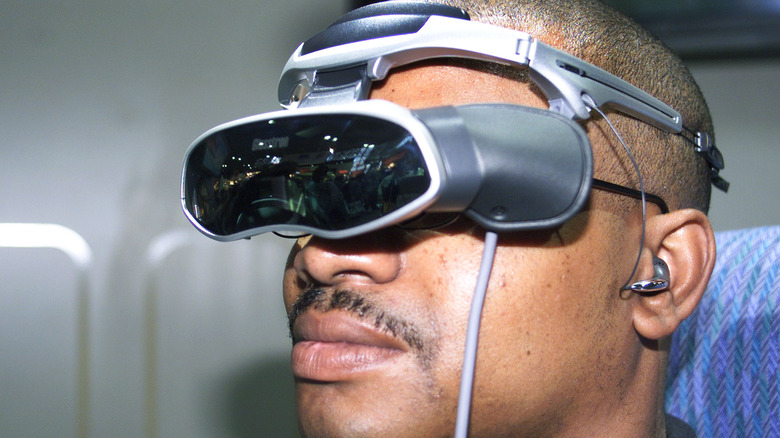
The device resembled a pair of oversized, futuristic goggles. Unlike the bulky, enclosed headsets of today, many Glasstron models featured a semi-transparent design. Key specifications included:
- Virtual Screen Size: The optics were designed to simulate the experience of watching a 52-inch television from a distance of approximately 6.5 feet.
- Dual LCD Technology: The headset utilized two small LCD shutters (one for each eye) to create a unified image.
- The "Shutter" Mechanism: Higher-end models featured a unique "see-through" capability. A mechanical shutter could be flipped up, allowing the wearer to see their surroundings without removing the headset—a primitive precursor to modern "Passthrough" or Augmented Reality (AR) technology.
- Audio Integration: The device came equipped with integrated earbud-style headphones, providing a self-contained audio-visual environment.
Connectivity Requirements
Unlike the modern PS VR2, which utilizes a single USB-C cable, the Glasstron was an "umbilical cord" device. It required a dedicated external power supply and signal processing box. This box acted as the intermediary, accepting inputs from:
- VCRs and LaserDisc players.
- Early DVD players.
- Camcorders.
- Gaming consoles like the original PlayStation or the Sega Dreamcast.
- Computers (via VGA on high-end models).
Chronology: The Evolution and Iteration of the Glasstron Line
Sony’s commitment to the Glasstron was not a one-off experiment. Between 1996 and 1998, the company released several iterations, each pushing the technical envelope of the era.
1996: The Launch (PLM-50)
The journey began with the PLM-50. It was a proof-of-concept for the mass market, focused primarily on video playback. While the resolution was low by today’s standards, it captured the imagination of tech enthusiasts who dreamed of a portable cinema.
1998: The High-Water Mark (PLM-A35 and PLM-S700)
By 1998, Sony expanded the line to cater to both the "affordable" consumer market and the high-end professional sector:
- PLM-A35: This was the mainstream model brought to the United States. It retailed for approximately $500. When adjusted for inflation to 2026 standards (as projected), this represents a cost of over $1,018. It featured improved LCD panels and better ergonomics than the PLM-50.
- PLM-S700: This was the "Pro" version of the Glasstron. It boasted a SVGA resolution (800×600), which was staggering for a head-mounted display in the 90s. However, this technology came at a premium price of $2,500. In 2026 dollars, that equates to a staggering $5,090—more than the price of many professional-grade enterprise VR headsets today.
The Sunset of the Glasstron
As the early 2000s approached, the Glasstron line was eventually phased out. The limitations of LCD technology at the time, combined with the high cost of components and the lack of native "VR" content, relegated the device to a niche collector’s item. Sony would pivot its R&D, eventually returning to the HMD space years later with the HMZ-T1 Personal 3D Viewer in 2011, which served as the immediate spiritual predecessor to the PlayStation VR.
Supporting Data: A Comparison of Two Eras
To understand the leap in technology, one must look at the quantitative differences between the Glasstron and its modern descendant, the PS VR2.
| Feature | Sony Glasstron (PLM-A35/S700) | PlayStation VR2 (2023) |
|---|---|---|
| Display Type | Dual LCD | Dual OLED |
| Resolution | ~180k pixels (A35) / 800×600 (S700) | 2000 x 2040 per eye (4K HDR) |
| Field of View | ~30 Degrees | 110 Degrees |
| Refresh Rate | 60Hz (Interlaced) | 90Hz / 120Hz |
| Price (Adjusted) | $1,018 – $5,090 | $549 (Launch Price) |
| Weight Distribution | Front-heavy, glasses-style | Halo-strap, balanced ergonomics |
| Tracking | None (Static Display) | 6DOF (Inside-out tracking) |
User Experience and Physiological Impact
Historical reviews and contemporary retrospectives from users on platforms like Reddit highlight the physical toll of 90s VR. The Glasstron was notorious for:
- Heat Dissipation: The small LCDs and internal circuitry generated significant heat, often causing the wearer’s face to sweat or the lenses to fog.
- Eye Strain: Because the focal point was fixed and the resolution was low, the "screen door effect" was massive, leading to rapid ocular fatigue.
- The "Vomit Factor": While the Glasstron didn’t have motion tracking (which is usually the cause of VR sickness), the disconnect between the wearer’s movement and the static image often led to disorientation and nausea—a hurdle Sony would spend twenty years trying to clear.
Official Responses: Sony’s Vision of "Personal Space"
While the Glasstron was often viewed by the public as a "gadget," Sony’s internal perspective was more strategic. Archival marketing materials and executive statements from the 90s suggest that Sony viewed the Glasstron as part of a broader "Personal Space" initiative.
Sony’s goal was to decouple the viewing experience from the living room. In an era where the household typically shared one large television, Sony marketed the Glasstron as a way for a teenager to play a PlayStation game or a parent to watch a movie in total privacy.
Archival Context: Sony engineers often noted that the Glasstron was designed with "ergonomics and portability" in mind. The fact that the device was designed to be worn over prescription glasses—a feature still touted by PS VR2 today—shows that Sony was prioritizing accessibility even in the 90s. Despite the high price, Sony’s official stance was that they were "selling the future," a premium experience for early adopters who wanted to live in a sci-fi reality.
Implications: The Legacy of the Glasstron on Modern VR
The Sony Glasstron was not a commercial failure in the traditional sense; rather, it was a "pioneer’s sacrifice." Its existence provided the data and the foundational patents necessary for Sony to eventually dominate the console-VR market.
1. The Concept of the "Cinematic Mode"
Every modern VR headset, including the PS VR2 and the Meta Quest, features a "Cinematic Mode" or "Virtual Desktop." This allows users to watch 2D content on a massive virtual screen. This is the exact value proposition of the Glasstron. Sony essentially perfected the Glasstron’s core mission and integrated it as a secondary feature of its modern VR headsets.
2. Ergonomic Evolution
The Glasstron taught Sony about the importance of weight distribution. The transition from the "glasses-style" mount of the 90s to the "halo-strap" design of the PS VR reflects a deep understanding of human cranial comfort. Sony realized that for VR to be viable, it couldn’t just look cool—it had to be wearable for hours.
3. The Move to OLED
The eye strain and "washed out" colors of the Glasstron’s LCDs likely informed Sony’s decision to use high-contrast OLED panels in the PS VR1 and PS VR2. By providing true blacks and vibrant colors, Sony addressed the "immersion gap" that the Glasstron couldn’t bridge.
4. From Passive to Active
The most significant implication is the shift from passive viewing to active interaction. The Glasstron was a display; the PS VR2 is an input/output system. By adding haptic feedback in the headset and the controllers, Sony took the "Personal Viewer" concept and transformed it into a "Sensory Experience."
Conclusion
The Sony Glasstron remains a stunning example of a company being "too early" to a revolution. It possessed the cyberpunk aesthetic and the visionary goals of modern VR but was limited by the silicon and optics of its time. However, when we look at the PS VR2 today, we aren’t looking at a brand-new invention. We are looking at the final, polished form of a dream that Sony began chasing in 1996. The Glasstron was the rough draft; the PlayStation VR is the masterpiece.