The Digital Brushstroke: Jacob Holster and the Evolution of Painterly AI Aesthetics
In the current era of digital transformation, the art world finds itself at a tumultuous crossroads. The rise of generative artificial intelligence has flooded social media feeds and digital galleries with a specific kind of imagery: hyper-realistic, ultra-glossy, and often sterile renders that prioritize pixel-perfection over emotional resonance. However, amidst this sea of clinical precision, the work of Jacob Holster—known to the digital art community as @bandyquantguy—emerges as a sophisticated counter-narrative.
Holster, an Assistant Teaching Professor of Music Education at Penn State University, occupies a unique position at the intersection of rigorous academic inquiry and avant-garde visual experimentation. His work does not merely use AI to "generate" images; it uses the technology to interrogate the very nature of texture, memory, and the human touch in a post-digital world.
Main Facts: Defining the Holster Aesthetic
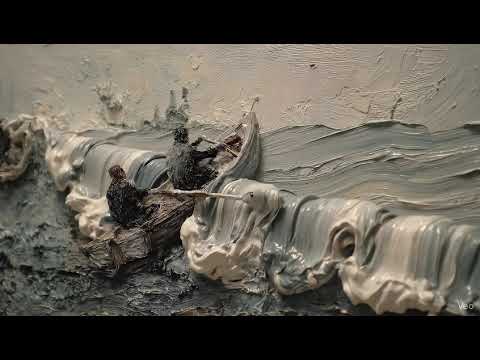
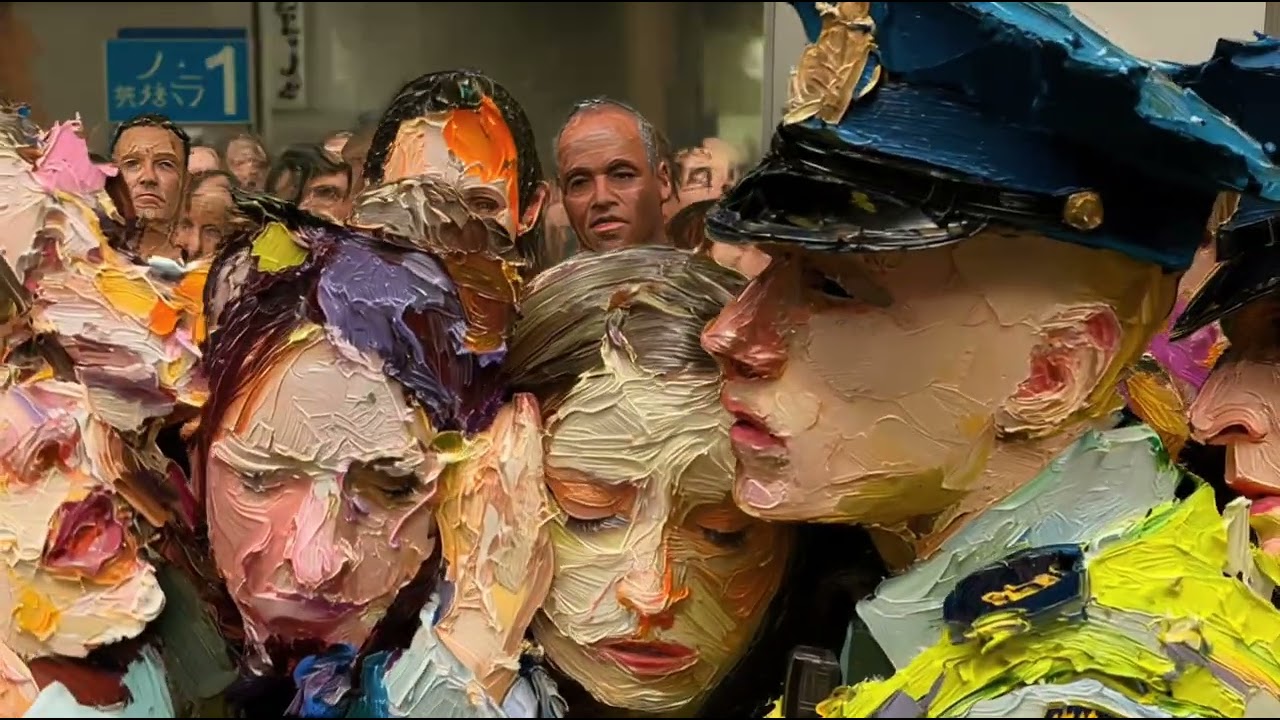
Jacob Holster’s artistic output is characterized by what critics are beginning to call "Digital Impasto." While most AI enthusiasts strive to eliminate the "noise" or "artifacts" of generative models to achieve photographic realism, Holster leans into the abstractions. His work is defined by warm, tactile textures that evoke the physical presence of oil on canvas, the smudge of a thumb on a charcoal drawing, and the organic unpredictability of traditional media.

The Humanistic Approach to Generative Media
At the core of Holster’s philosophy is the belief that technology should serve as a bridge rather than a replacement. His portfolio, specifically the "Paint World" series, serves as a testament to this humanistic approach. Instead of the cold, blue-toned futurism often associated with AI, Holster’s palette is rich with ochres, deep ambers, and textured shadows.
Bridging Music and Visuals
As a professor of music education, Holster brings a rhythmic and compositional sensibility to his filmmaking. His AI short films, such as Art Is Human Terrain, are not merely static images set to motion; they are temporal explorations where the timing of the visual "growth" mirrors musical phrasing. This interdisciplinary background allows him to treat the AI prompt more like a musical score—a set of instructions that requires interpretation and "performance" rather than a simple command-and-control mechanism.
Chronology: From Pedagogy to the "Paint World"
The trajectory of Jacob Holster’s work reflects a broader shift in how academia views generative tools. Understanding his development requires looking at the convergence of his professional and artistic milestones.
Phase 1: Academic Inquiry and Music Education
Before becoming a prominent name in the AI art scene, Holster’s focus was firmly rooted in the pedagogy of music. At Penn State University, his research focused on how students learn and how technology can facilitate creative practice. This period laid the groundwork for his later work, as he began to view "learning" not just as a human endeavor, but as a computational process that could be mirrored and manipulated through AI.
Phase 2: The Emergence of @bandyquantguy
As generative models like Stable Diffusion and Midjourney began to permeate the public consciousness, Holster did not approach them as a casual user. Under the handle @bandyquantguy, he began a series of visual experiments that sought to bypass the "default" settings of these tools. He moved away from the popular trend of "fantasy concept art" and toward a style that felt grounded in art history—specifically Impressionism and Surrealism.
Phase 3: The "Paint World" Series and Film
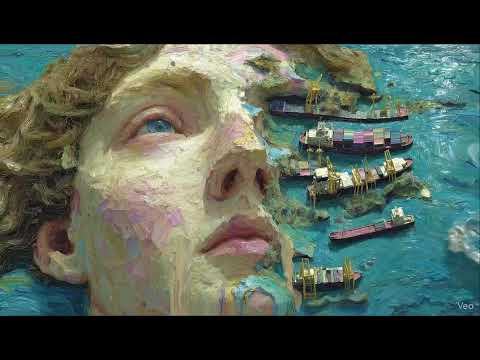
The culmination of his recent efforts is the "Paint World" series, a collection of short-form AI films. Pieces like Le Voyage [Paint World 28] and Recipe for Consciousness [Paint World 38] marked a turning point. These works demonstrated that AI could produce "slow art"—imagery that invites the viewer to linger on a single texture or a shifting shadow, rather than moving quickly to the next high-octane visual.
Supporting Data: Analyzing the "Paint World" Series
To understand why Holster’s work is resonating within the art community, one must analyze the technical and conceptual layers of his most significant works.
Art Is Human Terrain [Paint World 33]
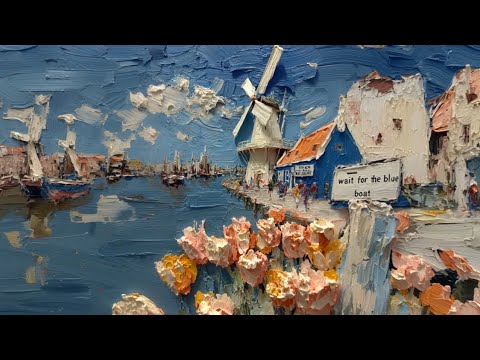
This piece serves as a manifesto for Holster’s style. The title itself suggests that art—even when mediated by an algorithm—is an exploration of the "human terrain" (our emotions, our history, and our physical perceptions). The film features shifting landscapes that look like they were pulled from a 19th-century gallery, yet they move with a fluid, dream-like logic that only AI can provide.
Recipe for Consciousness [Paint World 38]
In this work, Holster explores the meta-narrative of AI. By titling a piece Recipe for Consciousness, he acknowledges the ongoing debate about whether machines can "feel" or "think." However, rather than providing a literal answer, the visual components—swirling colors that suggest neural pathways or perhaps just thick layers of paint—ask the viewer to find the consciousness within their own reaction to the beauty of the work.
Technical Distinction: Texture vs. Resolution
Data from digital art platforms suggests a growing "AI fatigue" regarding hyper-realistic renders. Holster’s engagement metrics and critical reception highlight a pivot toward "intentional imperfection." His work often features:
- Low-frequency detail: Focusing on large, sweeping movements rather than microscopic sharpness.
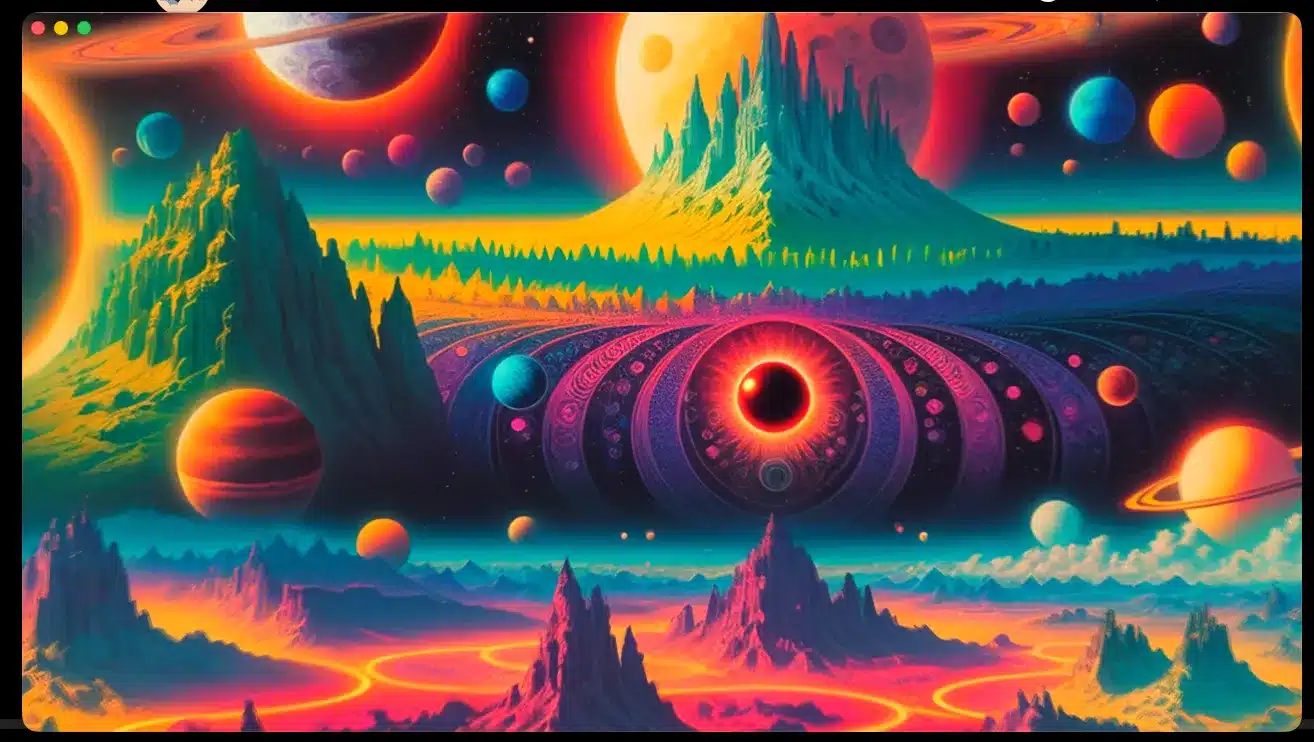
- Organic Palette: A departure from the neon-heavy defaults of many generative models.
- Temporal Coherence: In his films, the way one frame "bleeds" into the next mimics the way paint might be layered over an old sketch (pentimento).
Official Context: The Intersection of AI and Pedagogy
Holster’s work is not performed in a vacuum; it is supported by his role at Penn State University. This academic backing provides a level of "official" weight to his experiments that many independent AI artists lack.
The Role of the Assistant Teaching Professor
At Penn State, Holster is tasked with examining how AI can be integrated into the classroom. This involves more than just teaching students how to use tools; it involves teaching them the ethics of the medium and the importance of maintaining an individual voice. His work as @bandyquantguy serves as a living laboratory for these theories.
Academic Response to AI Art
The academic community has historically been skeptical of AI-generated content, citing concerns over copyright and the "death of the artist." However, Holster’s approach—which emphasizes the artist’s role as a curator of texture and a director of narrative—offers a middle ground. His colleagues and the broader academic community often point to his work as an example of "AI-assisted" rather than "AI-replaced" creativity.
Implications: The Future of the "Painterly" AI
The success of Jacob Holster’s aesthetic has significant implications for the future of digital media and the broader art market.
1. Moving Beyond "Prompt Engineering"
Holster’s work suggests that the future of AI art lies not in who can write the most complex "prompt," but in who can best manipulate the output to reflect a specific, non-digital heritage. As AI tools become more accessible, the value of an artist will shift back toward their unique "eye" and their ability to reference art history.

2. The Return to Tactility
In an increasingly virtual world, there is a psychological craving for texture. Holster’s "Painterly AI" provides a digital version of this tactility. This could lead to a new genre of digital art designed specifically for high-end displays in physical spaces—works that act as "living paintings" rather than movies or static images.
3. Redefining Art Education
As a professor, Holster is at the forefront of redefining what it means to be an "art student." If a machine can handle the technical labor of rendering, the curriculum of the future may focus more on philosophy, composition, and "visual literacy." Holster’s career serves as a blueprint for this transition, showing that a deep understanding of traditional music and art theory is more relevant than ever in the age of the algorithm.
4. The Ethics of the "Human Terrain"
By framing art as "human terrain," Holster reminds the industry that the data used to train these AI models is, at its core, a collection of human effort and history. His work encourages a more respectful and thoughtful engagement with generative tools, viewing them as a way to remix the vast heritage of human creativity rather than a way to bypass it.
Conclusion: The Artist in the Machine
Jacob Holster (@bandyquantguy) represents a new breed of creator: the "Scholar-Artist." By refusing to settle for the easy wins of hyper-realism, he has carved out a space where AI feels warm, ancient, and deeply personal. His work at Penn State and his presence on social media serve as a vital reminder that while the tools of art may change—from the bone flute to the synthesizer, from the charcoal stick to the neural network—the impulse remains the same: to map the terrain of the human soul.
As we look toward the future of generative media, the "Paint World" of Jacob Holster stands as a lighthouse, signaling that the most high-tech future might just look like a beautifully weathered canvas.
Where to Explore His Work:
- Instagram: @bandyquantguy
- YouTube: Jacob Holster
- Academic Profile: Penn State University, School of Music