The Digital Hearth: Linkdaze and the Evolution of the Smart Family Command Center
As the "back-to-school" season transitions from a calendar date to a logistical whirlwind, the American household is facing a perennial crisis: the fragmentation of time. Between the rigid structures of the K-12 school day, the fluid demands of remote and hybrid work, extracurricular commitments, and the domestic labor of meal planning, the traditional paper calendar—once the "source of truth" for the family—has become woefully inadequate.
Enter Linkdaze, a hardware startup that recently disrupted the smart home market with its specialized digital calendars. Designed not as a personal productivity tool like an iPad, but as a communal "command center," Linkdaze aims to solve the problem of "platform silos" within the home. By aggregating various digital ecosystems into a single, wall-mounted touchscreen, the company is positioning itself as the essential infrastructure for the modern, over-scheduled family.
I. Main Facts: Bridging the Digital Divide in Domestic Logistics
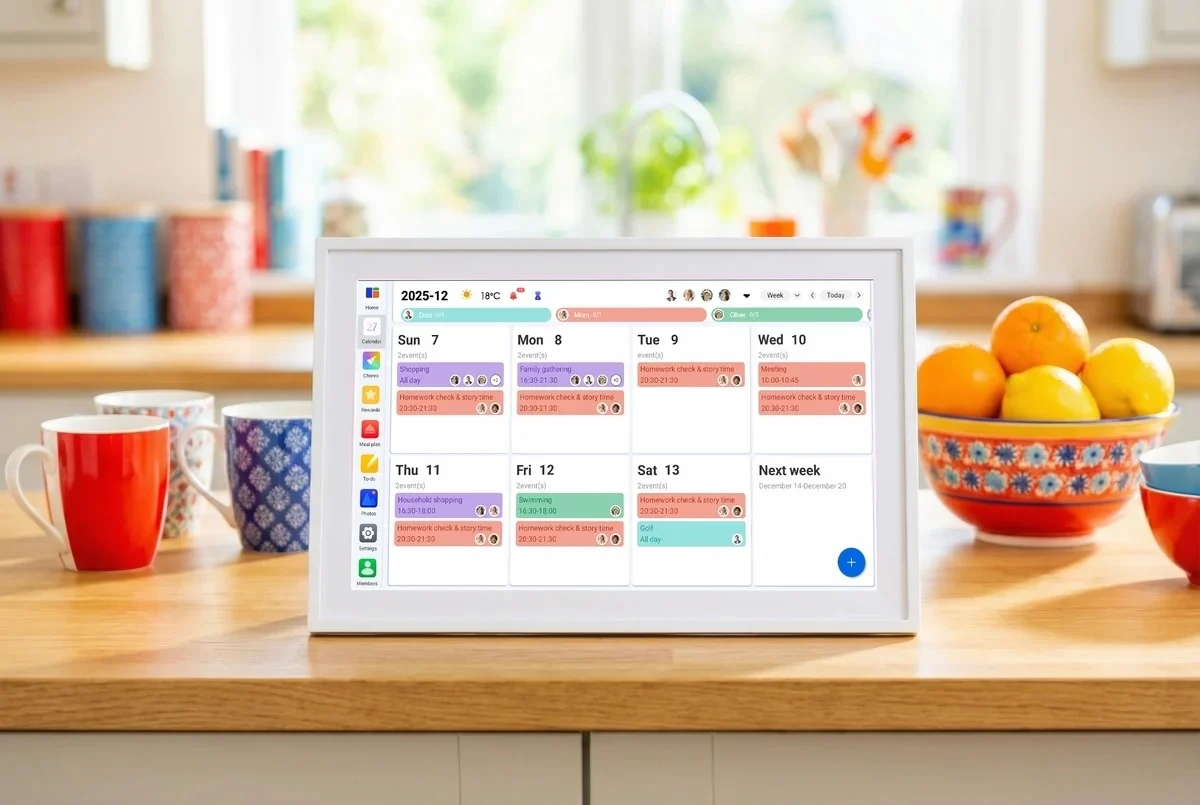
At its core, Linkdaze is a dedicated touchscreen tablet optimized for household synchronization. Unlike a general-purpose tablet that offers a million distractions via social media and streaming, the Linkdaze interface is hyper-focused on utility. It is currently available in two primary form factors: a 15.6-inch model designed for high-traffic areas like kitchens or mudrooms, and a more compact 10.1-inch model suitable for desks or smaller apartments.
Universal Compatibility and Color Coding
The primary value proposition of Linkdaze is its "interoperability." In a typical household, Mom might use Outlook for work, Dad might use Google Calendar, and the kids’ sports schedules might be managed through Cozi or iCloud. Linkdaze acts as a universal translator, synchronizing all these disparate platforms into a single view.
To manage the visual noise of a five-person household, the system employs a sophisticated color-coding engine. Each family member is assigned a specific hue, allowing anyone walking past the device to instantly gauge the day’s density of appointments without needing to interact with the screen.
The AI Advantage: "Snap-to-Sync"
Perhaps the most technologically advanced feature of the Linkdaze ecosystem is its "Snap-to-Sync" AI meal planner. Recognizing that much of the world’s logistical data still exists in physical form—such as printed school lunch menus, hand-written recipes, or grocery store flyers—Linkdaze utilizes Optical Character Recognition (OCR) paired with a proprietary Large Language Model (LLM).
Users can take a photo of a physical document through the Linkdaze mobile app, and the AI automatically parses the text, categorizes meals, and populates a digital meal plan. Crucially, it goes a step further by generating a corresponding shopping list, bridging the gap between "planning" and "execution" in domestic management.
II. Chronology: From Fridge Magnets to AI-Integrated Displays
The evolution of the "family hub" has moved through three distinct eras, culminating in the launch of Linkdaze.
- The Analog Era (Pre-2000s): The refrigerator was the central server of the home. Paper calendars, magnetic whiteboards, and sticky notes managed the flow of information. The "sync" happened during dinner conversations or frantic morning huddles.
- The Mobile Silo Era (2008–2020): With the rise of the smartphone, family members gained individual digital calendars. However, this led to "information asymmetry." While everyone knew their own schedule, no one had a holistic view of the household’s movements, leading to double-booked afternoons and missed appointments.
- The Smart Display Era (2020–Present): Companies like Amazon (Echo Show) and Google (Nest Hub) attempted to fill the gap. However, these devices were often criticized for being too focused on voice assistants and advertising, rather than dedicated organizational tools.
Linkdaze’s Market Entry:
Linkdaze officially entered the market in December 2023, following a period of rapid development. While the "smart calendar" niche was already being explored by companies like Skylight and Hearth Display, Linkdaze targeted a specific pain point: the "subscription tax." By launching a high-performance device that did not require a monthly fee for its core features, Linkdaze quickly gained traction among "subscription-fatigued" consumers.
By mid-2024, Linkdaze expanded its software capabilities to include chore charts and reward systems, transforming the device from a passive display into an interactive tool for parenting and habit formation.
III. Supporting Data: Market Competition and Pricing Analysis
The smart home organizational market is increasingly bifurcated between high-end, subscription-heavy models and budget-friendly alternatives.

Pricing Comparison: Linkdaze vs. Competitors
- Linkdaze (10.1-inch): MSRP $119.99. Often discounted on platforms like Amazon to as low as $66.00. Subscription Fee: $0 for core features.
- Skylight Calendar (10-inch): MSRP $149.99. Subscription Fee: $79.00/year (Skylight Plus) required for features like photo sharing and magic import.
- Hearth Display: MSRP ~$600.00. Subscription Fee: $9.00/month.
The "Subscription Fatigue" Factor
Industry data suggests that the average American household now pays for over 12 monthly subscriptions. Linkdaze’s decision to eschew the recurring revenue model for its primary features is a strategic move to capture the "middle market." While hardware-only margins are slimmer, the lower barrier to entry has allowed Linkdaze to achieve a higher rate of household penetration in its first year than many of its predecessors.
Hardware Specifications
- Display: Full HD Touchscreen (15.6" and 10.1" options).
- Mounting: Integrated kickstand for countertops and VESA-compatible mounts for wall installation.
- Connectivity: 2.4GHz/5GHz Wi-Fi and Bluetooth 5.0.
- Software Ecosystem: Linkdaze OS (based on a hardened version of Android, optimized for privacy).
IV. Official Responses and Industry Context
Industry analysts view the Linkdaze approach as a direct challenge to the "walled garden" strategies of Big Tech.
"The problem with the Amazon Echo Show or the Google Nest Hub is that they want to be everything to everyone," says Marcus Thorne, a senior analyst in home automation. "They want to sell you groceries, play music, and show you ads. Linkdaze is winning because it does one thing—household logistics—and it does it with an agnostic approach to software. It doesn’t care if you’re an Apple family or a Google family."
The Developer Perspective:
In statements regarding their AI integration, Linkdaze’s engineering team emphasized that their "Snap-to-Sync" feature was developed specifically to reduce the "mental load" of parents. "Domestic labor isn’t just doing the dishes; it’s the cognitive work of remembering that it’s Taco Tuesday and we’re out of shells," a company spokesperson noted. "Our AI is designed to automate the data entry of life."
Consumer Feedback:
Early reviews on Amazon and tech forums highlight the "color-coding" and "no-subscription" model as the primary drivers of satisfaction. However, some power users have called for deeper integrations with smart home protocols like Matter or Zigbee, which would allow the calendar to trigger home automation (e.g., turning on the porch light when a kid’s late-night practice is scheduled).
V. Implications: The Future of Domestic Management and Privacy
The rise of devices like Linkdaze carries significant implications for the future of the American home, ranging from sociological shifts to privacy concerns.
1. Redistributing the "Mental Load"
Sociologists have long documented the "mental load"—the invisible labor of managing a household—which disproportionately falls on women. By centralizing information on a communal screen, Linkdaze potentially democratizes this labor. When the grocery list and the chore chart are visible to everyone in the kitchen, the responsibility for managing those tasks can be more easily shared among partners and children.
2. The Privacy Paradox
As with any device that "syncs" with personal calendars and uses AI to "snap" photos of household documents, privacy remains a paramount concern. Linkdaze claims that its processing is handled with high levels of encryption, but the presence of a cloud-connected camera (via the mobile app) and microphone in the kitchen is a trade-off that consumers must weigh against the convenience of the service.
3. Beyond the Nuclear Family
While marketed toward parents, the implications for non-traditional living arrangements are vast. In "co-living" spaces or college apartments, the Linkdaze serves as a neutral arbiter for shared expenses, cleaning rotations, and guest schedules. As housing costs continue to rise and more adults opt for roommates, the need for a "household operating system" will likely expand beyond the suburban family unit.
4. The "Digital Hearth" Concept
We are witnessing a return to the "hearth"—the central gathering point of the home. In the 20th century, it was the fireplace; in the late 20th, it was the television. In the 21st century, the hearth is becoming an interactive data hub. Linkdaze’s ability to toggle between a calendar and a digital photo frame allows it to blend into the home’s aesthetic, serving as both a tool of productivity and a repository of family memories.
Conclusion
Linkdaze represents a pivot in the smart home industry away from "gadgetry" and toward "utility." By focusing on the friction points of daily life—calendar fragmentation, meal planning, and subscription costs—it has carved out a significant niche. As AI continues to become more integrated into the physical objects we interact with daily, the "smart calendar" may soon become as standard in the modern kitchen as the microwave or the refrigerator itself. For the busy parent, the student, or the professional, it is no longer just about keeping time; it is about reclaiming it.