The Elusive Quest for Meaning: A Retired Professor’s Encounter with Student Curiosity
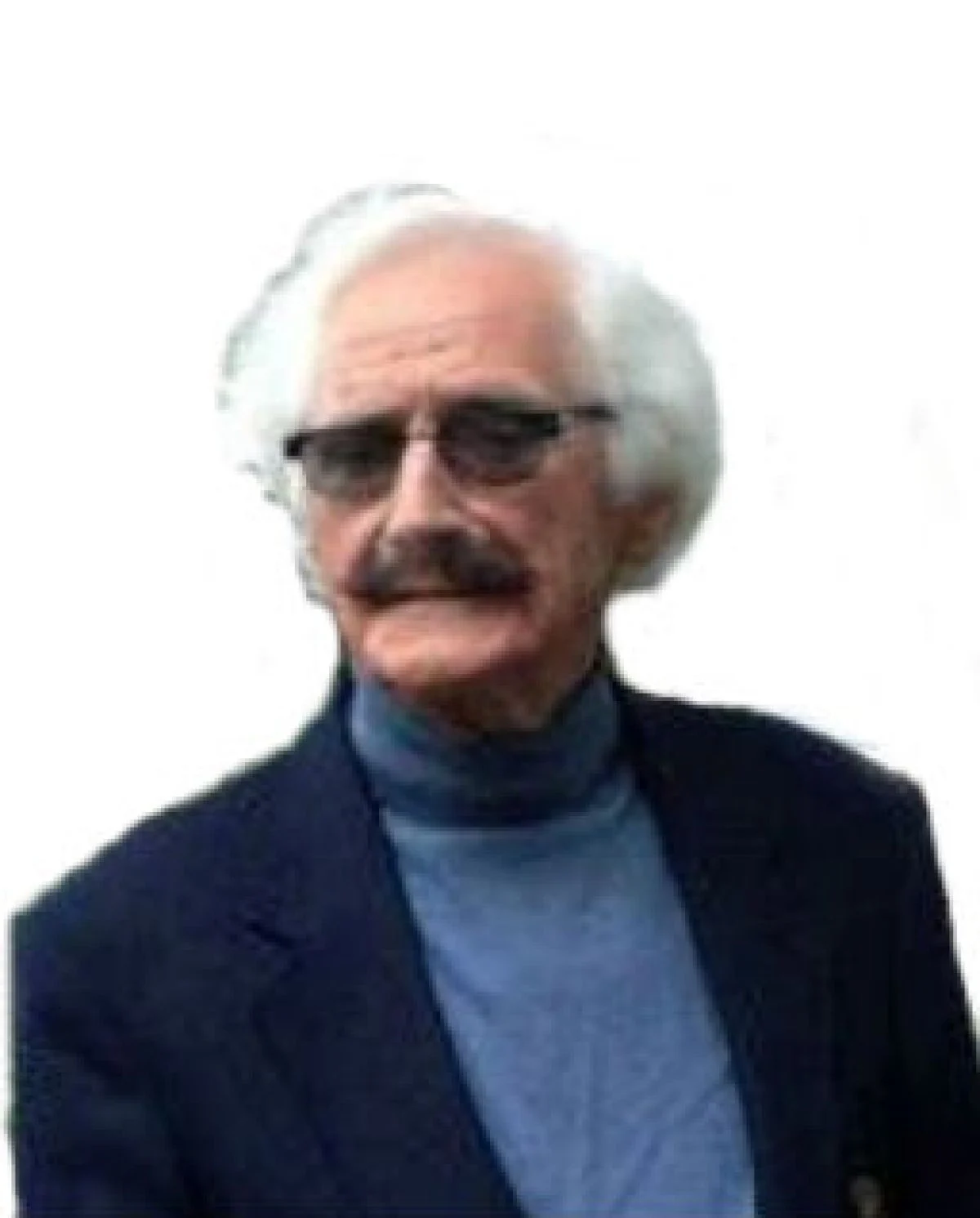
A chance conversation in a local coffee shop, sparked by a routine car service, unearthed profound questions about purpose, consciousness, and the very essence of what it means to be human. A retired professor of philosophy and psychology found himself navigating these complex themes with two university students, revealing a disconnect between academic exploration and everyday understanding of deeply philosophical concepts.
The Spark of Inquiry
The scene was commonplace: a leisurely wait for a car’s routine servicing, a familiar detour to the neighborhood coffee shop for a much-anticipated cappuccino. It was within this ordinary setting that a seemingly ordinary encounter took an unexpected turn. As is often the case, a casual conversation with two students from the nearby university campus blossomed. Upon learning that the gentleman was a retired professor of philosophy and psychology, the students, as they invariably do, posed the inevitable questions. These weren’t the simple queries about academic theories or research findings, but rather the deeper, more existential ponderings that lie at the heart of human experience.
The professor, a seasoned explorer of the human mind and its philosophical underpinnings, found himself confronted with the age-old dilemma of articulating concepts that are often abstract and elusive. The initial question, though not explicitly stated in the provided text, likely revolved around the fundamental human drive for purpose, or perhaps the meaning of existence itself. The professor’s immediate response hinted at the complexity of such discussions, acknowledging the historical prevalence of conflict and suffering between individuals and nations. This immediately grounded the philosophical discourse in the harsh realities of human history, a stark contrast to the serene ambiance of the coffee shop.
A World Still Seeking Benevolence
"I said that it was not easy to talk about purpose; that nations, as well as individuals, have been fighting and killing each other off throughout history," the professor recalled. This candid admission served as a powerful preface to the subsequent discussion. The professor’s observation underscores a persistent challenge in the human narrative: the struggle to cultivate benevolent and spiritually tolerant attitudes. Despite millennia of philosophical inquiry and religious teachings advocating for peace and understanding, the world continues to grapple with interpersonal and international discord. The professor’s words painted a picture of a humanity that, while capable of profound introspection, often falters in its collective application of empathy and tolerance.
However, amidst this somber assessment, a beacon of hope emerged. The professor pivoted to highlight the burgeoning landscape of charitable organizations worldwide, actively engaged in alleviating the suffering of the less fortunate. He pointed to "Doctors Without Borders" as a prime example of a profoundly humanistic endeavor. The dedication of its doctors and nurses, working and even perishing in some of the world’s most perilous regions, serves as a testament to the power of compassion and altruism. These individuals, driven by an intrinsic need to act, voluntarily place their lives and careers on the line, traveling to distant and dangerous locales. Their motivation, the professor emphasized, stems from a noble purpose: to serve the "greatest of all moral persuasions, that internal force known as the human spirit." This section of the conversation served to illustrate that while grand pronouncements of global purpose may be difficult to achieve, tangible acts of selfless service demonstrate the enduring presence of positive human drives.
Unpacking the Metaphysical: A Bridge to Deeper Understanding
The conversation then took a significant turn, delving into the concept of the "metaphysical." This is where the professor encountered a notable gap in the students’ understanding. "Now we come to the point: the significance of the word metaphysical. Only one of the two young men to whom I was talking was aware of what the word signifies," he noted. This observation is crucial, highlighting how fundamental philosophical terms, often encountered in academic settings, may not readily translate into everyday comprehension or intuitive understanding.
The professor proceeded to define "metaphysical" as denoting "a level of awareness in human consciousness that goes beyond the world of appearances; beyond the workings of the five senses." This definition immediately elevates the discussion beyond the purely empirical and sensory, introducing a realm of existence and understanding that is not directly observable or measurable. It speaks to an inner world, a dimension of thought and experience that transcends the immediate and tangible.
He further elaborated on metaphysical awareness as a "silent dialogue constantly asking questions raised by one’s always questing imagination, relating to the how and why of the psychological complexity of one’s self, driven by a psychological force that has long been described as spirit, the human spirit." This description connects metaphysical awareness to the active, imaginative, and introspective processes of the mind. It suggests that this awareness is not a passive state but an ongoing internal exploration, fueled by curiosity and the inherent human desire to understand the intricacies of one’s own psyche. The "human spirit," in this context, is presented not as a nebulous concept, but as a discernible psychological force that drives this quest for self-understanding.
Aristotle and the Duality of Consciousness
The professor then invoked the authority of Aristotle, the ancient Greek scientist and philosopher, to solidify the concept. "It was the Greek scientist/philosopher Aristotle who coined the term metaphysical to denote the abstract nature of this mental activity," he explained. By referencing Aristotle, the professor lends historical and intellectual weight to his definition. He broke down the etymology of the word: "’Meta’ signifies beyond or after, thus introducing the concept of mind, a level of awareness, thoughts, ideas, feelings, hunches, and ruminations." This etymological exploration makes the abstract concept more accessible, grounding it in the very language used to describe it.
The professor continued to illustrate the multifaceted nature of this mental activity, listing "thoughts, ideas, feelings, hunches, and ruminations" as examples. He described these as being part of an "intuitive range of consciousness said to be inspirational, serving the forces of spirit, which are working at the instigation of a soul, no less." This expansive description links the metaphysical to intuition, inspiration, and the deeper, often subconscious, workings of the mind, suggesting a profound connection to the spiritual and the soul.
The culmination of this line of reasoning was the professor’s articulation of human consciousness as a duality. "Thus human consciousness over the years has been seen as comprising this duality of human awareness: the outwardly directed rational and sensory brain, together with the inwardly directed intuitive and spiritual brain. Together, they comprise the mental partnership we call mind." This elegant synthesis presents a holistic view of consciousness, acknowledging both the empirical, external processing of information through our senses and rational faculties, and the introspective, internal exploration of intuition and spirituality. The "mind," in this paradigm, is the harmonious integration of these two seemingly distinct but ultimately complementary aspects of our being.
A Blank Canvas: The Unexplored Depths of Self
Despite the professor’s efforts to illuminate these profound concepts, the response from the students indicated a significant disconnect. "When I asked these two young men if they ever pondered the unique nature of their own personalities, I received a couple of blank looks," he admitted. This moment of realization underscores the potential chasm between academic knowledge and personal reflection. While the students may have encountered terms like "metaphysical" or "spirit" in their studies, the act of applying these concepts to their own individual existence, to the unique tapestry of their own personalities, seemed to be an unexplored territory. The "blank looks" suggest that the intellectual understanding of these concepts had not yet translated into a deeply personal or introspective engagement.
The Neuroscientific Echo: Mind as the Unseen Entity
As the coffee grew cold and the time for departure loomed, the professor sought to leave the students with a final, resonant thought. He chose to quote the late Wilder Penfield, a preeminent Canadian neuroscientist and brain surgeon. Penfield, known for his groundbreaking work in understanding the brain, offered a perspective that aligned with the metaphysical. "I thought I would leave them with the words of the late Wilder Penfield… who said that he could only describe mind as a ‘non-temporal, non-spatial entity,’ hence metaphysical," the professor concluded.
Penfield’s description of mind as "non-temporal, non-spatial" is a powerful reinforcement of the metaphysical concept. It positions the mind as something that exists beyond the constraints of time and space, the very dimensions that define our physical reality. This aligns perfectly with the idea of consciousness transcending the sensory world. By referencing a renowned neuroscientist, the professor bridges the perceived gap between the philosophical and the scientific, suggesting that even within the rigorous framework of neuroscience, there are aspects of human experience that defy purely material explanation and point towards a metaphysical dimension.
The encounter, though brief, highlights a critical aspect of philosophical and psychological inquiry: the journey from intellectual understanding to personal integration. While the students may have possessed a nascent awareness of abstract concepts, the challenge lies in fostering the habit of introspection and the courage to explore the deeper, less tangible aspects of their own consciousness and purpose. The professor’s reflections serve as a poignant reminder that the pursuit of meaning is an ongoing, often personal, quest, one that requires not only intellectual engagement but also a willingness to look beyond the obvious and delve into the profound mysteries of the human spirit.